Category Archives: AMH News

Tested: Yamaha WR250R 4000km review

• 4000-km review
• Introduction
• Stage 1 mods
• Tested in Wales
• Ready for the desert
• Morocco trip report 1-9
• Mitas MC23 Rockrider tyres
• Fuel log

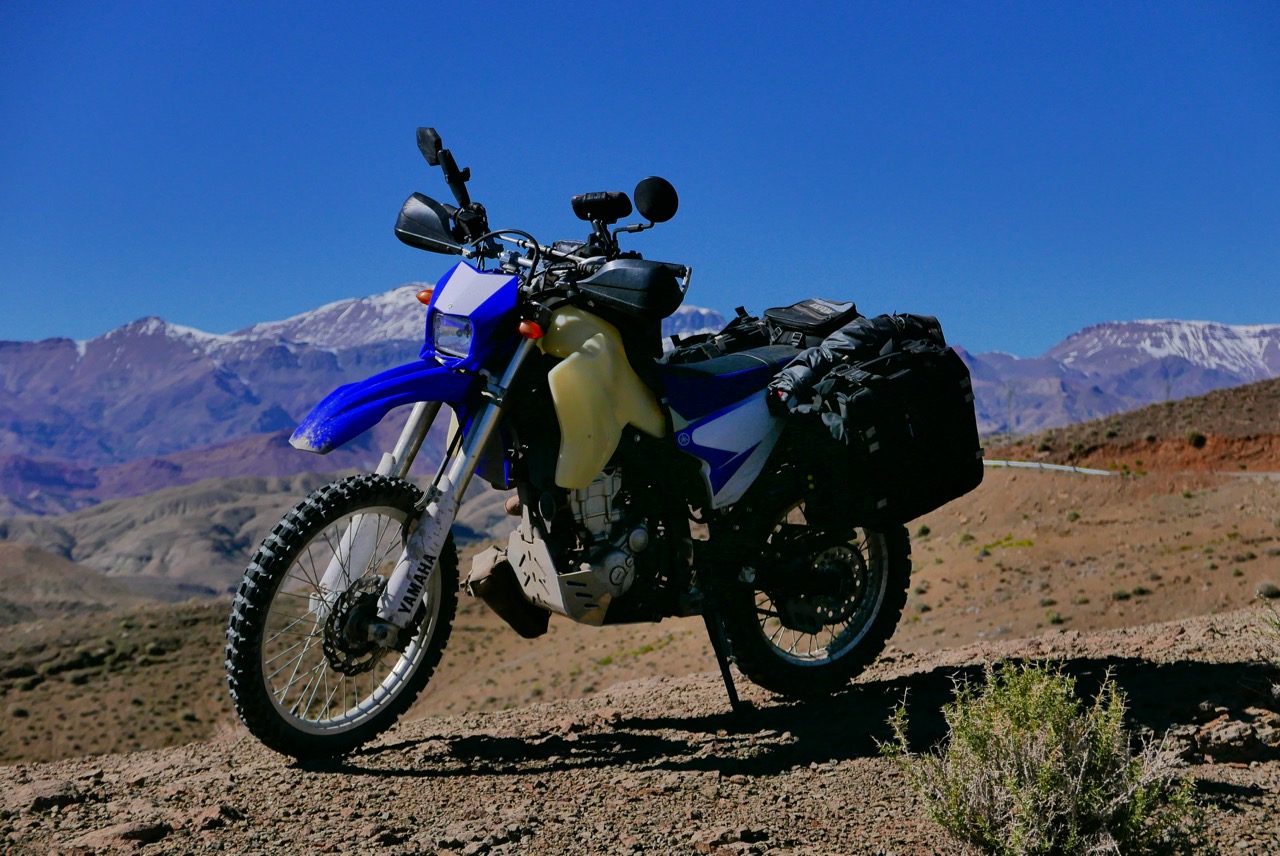
The WR250R is the latest in a series of 250s I’ve been trying over the years in the search for a light, economical, do-it-all travel bike. Other bikes included the CRF250LHonda Tornados (rentals), a carb KLX250S in the US, then a 300L.
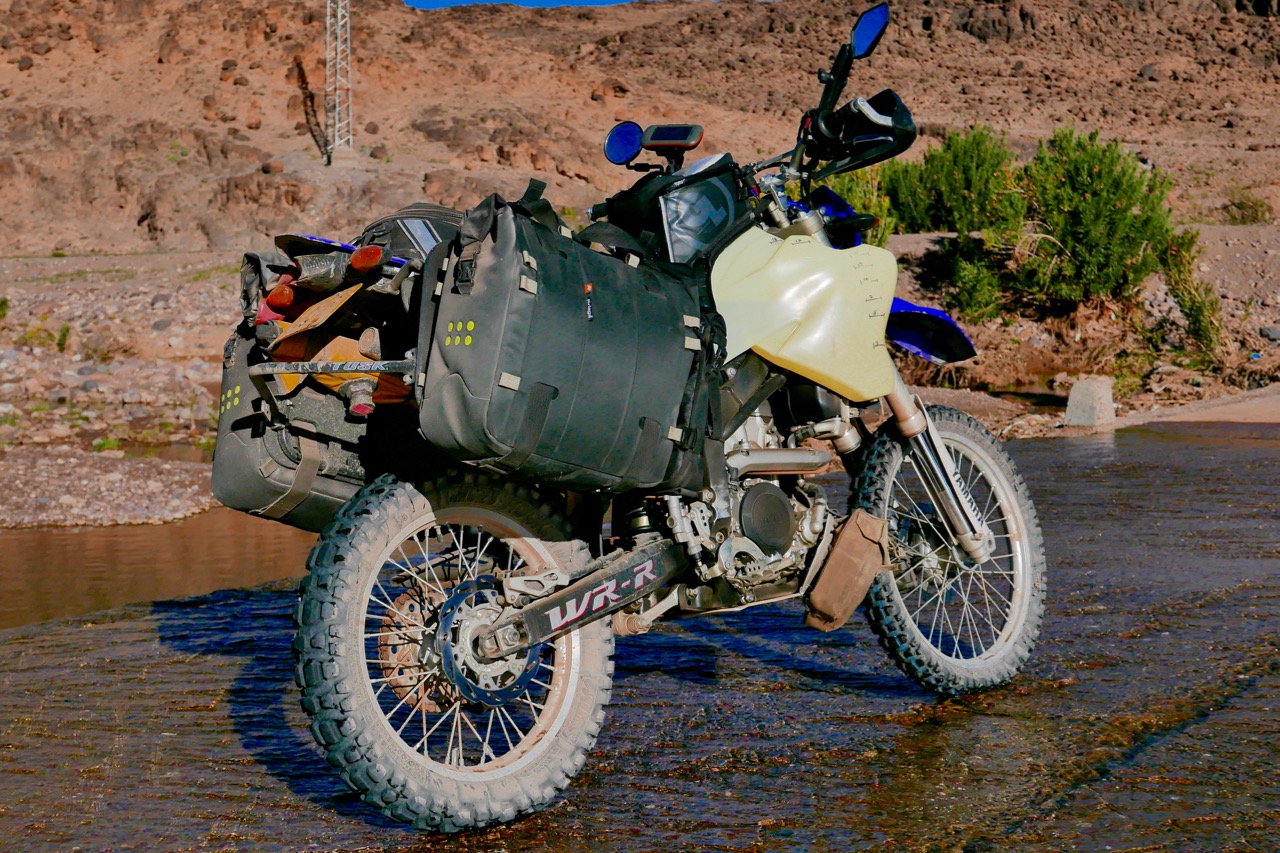
I used my WR principally in March 2017 for a one-month ride in Morocco, researching new routes for my Morocco Overland guidebook.
After 10 years with few changes, the WR250R is no longer listed on the Yamaha US 2018 line-up. It’s the same story in Australia so it’s the end of the line for the unique WR-R.

Short version
• Vanned the WR to Malaga as I couldn’t face crossing Spain and back
• Need to cane it to press on (don’t recall CRF-L/KLX feeling the same)
• Even at 6’ 1’’, the tall saddle is a pain
• Suspension is of course, brilliant, compared to stock CRF-L (mine had Hyperpro)
• Amazingly economical: 550km to a tank. Fuel Log
• Back pain from stock saddle lasted months
• Super build quality explains the price over a CRF-L… almost
• Huge 350-w alternator output for the size and age of this bike
• Fuel pump worries in hot conditions (played up but never went)
• Clearly suited to predominantly off-highway travels

Long version – read on… Good 2023 summary here

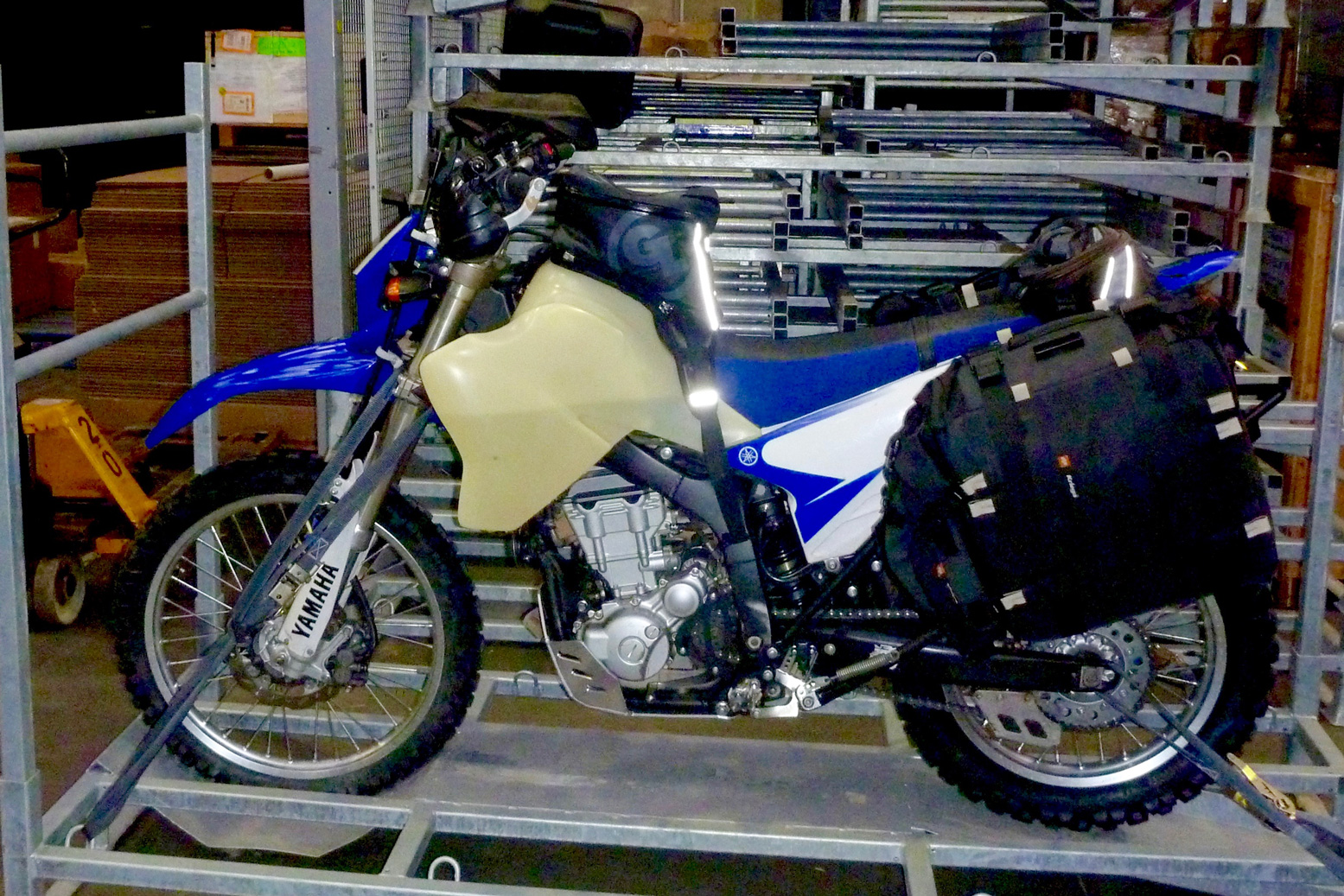
I did all the usual things to the WR; protection; tyres; bigger tank and luggage capacity. See this for the full story.
Comfort
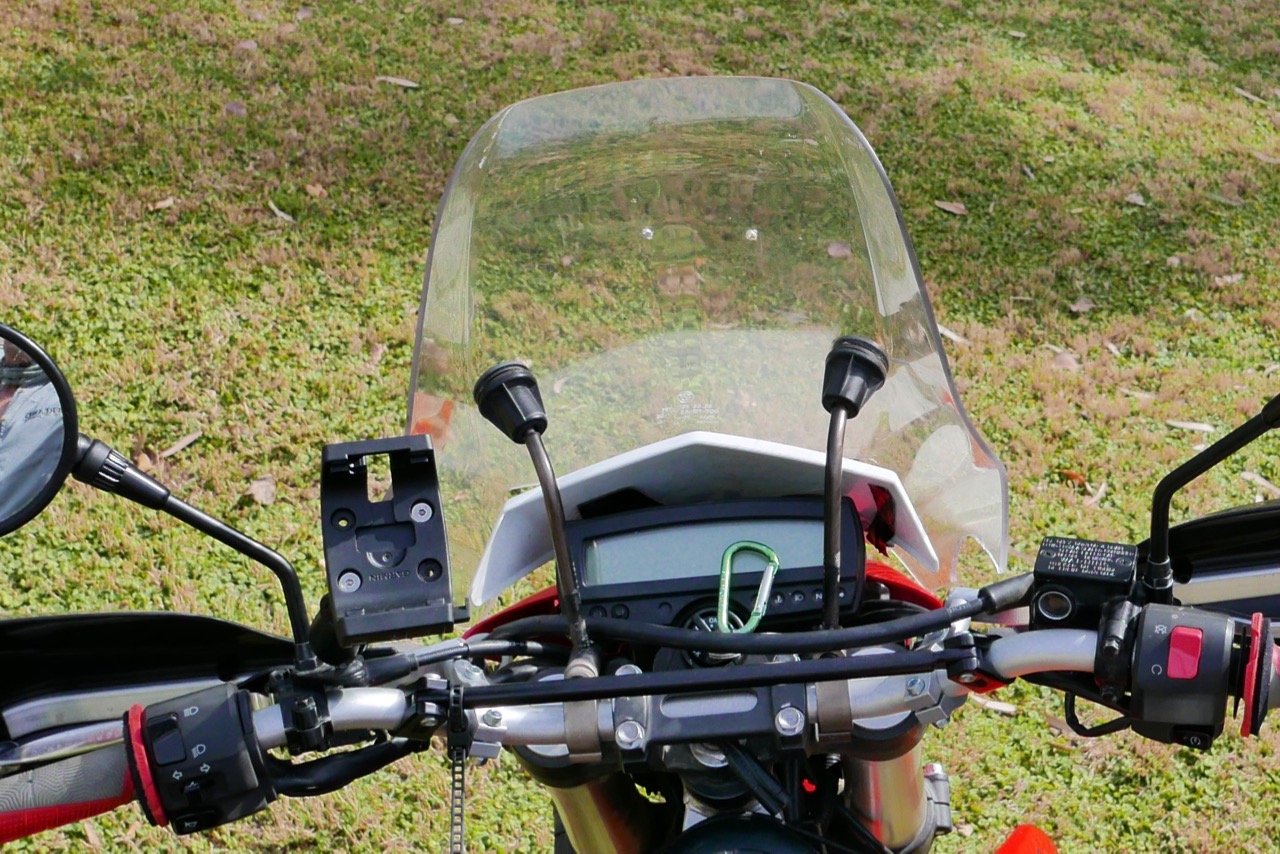
For me the WR was not comfortable when sat on the road at a steady speed. Tooling around off road sees you move around more, so you get tired before you get uncomfortable. I could’ve improved things by fitting my small Spitfire screen (left) from previous bikes, but figured it’s only Morocco, not the full run across Spain.
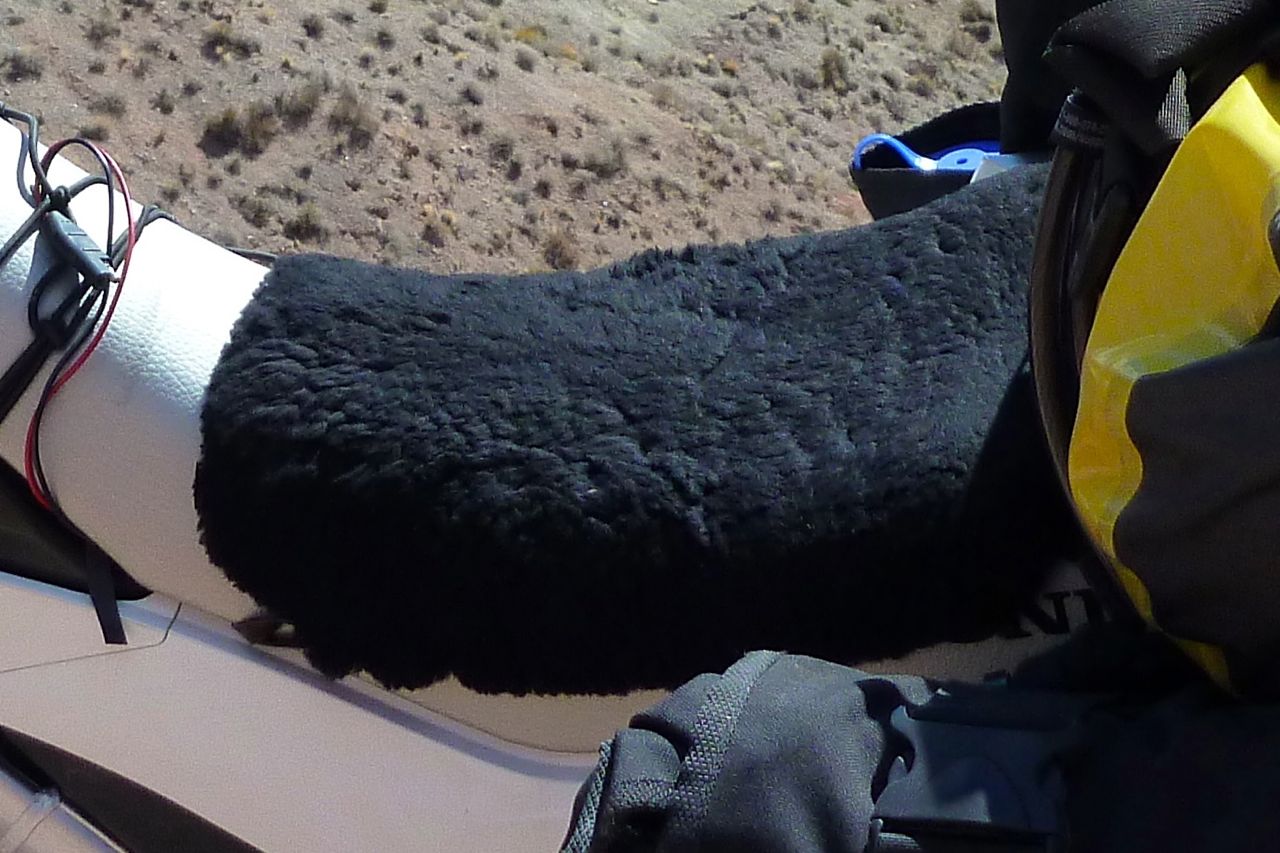
And I could have bought an alternative seat from the US, but these can be a gamble; what’s comfy to one is no great improvement to another. I could also have fitted my Aerostich woollen pad (left), but that would have made the seat even higher.
And I sometimes wonder whether leather trousers create less butt soreness than slidier jeans.
I didn’t do any of these things and as a result my memory of the WR is perhaps unfairly sore. A huge fuel range doesn’t help, as when I have a job to do I tend to keep going until I’m worn out or the fuel runs out. It took months for the pain in the base of my back to subside.
At my height, bar risers certainly made standing sustainable and I can’t say my legs felt cramped as the saddle was quite high. The Hyperpro suspension also went a long way towards smoothing out the ride (but actually proved to have had a too-light spring fitted. And one good thing about small capacity singles is there is no vibration to speak of.
Fuel economy
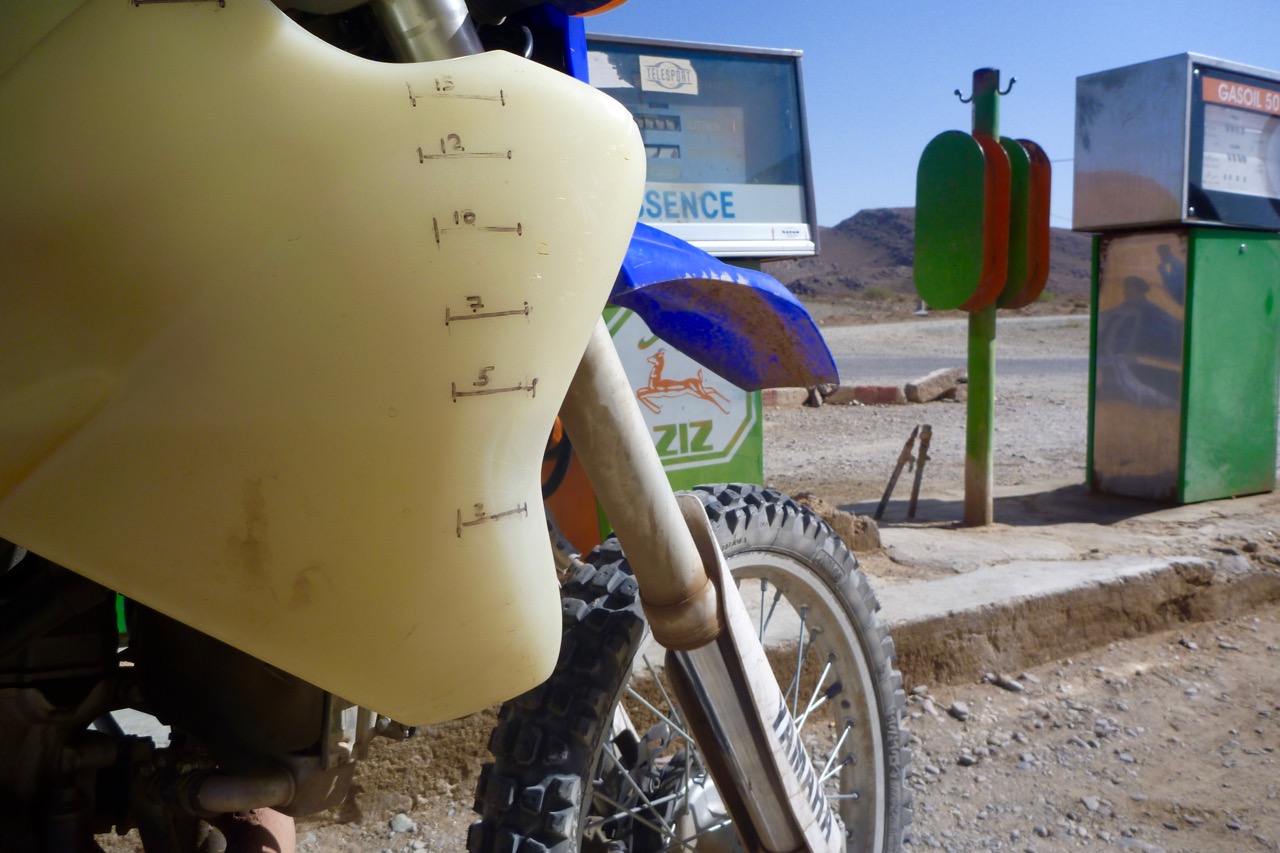
As expected, the WR was very economical for a relatively high-powered engine. Average was 83mpg (29.5kpl). Worst was 71mpg (25.2 kpl) and the best was 94mpg (33.3 kpl). Full details here. Fuel conversion chart here.
By comparison my CRF250 managed 86.7 with a best of 98.5 (about the same as carb’d XR250 Tornados). The KLX may have been a bit less than the WR – 88mpg was the best. iirc.
So you can safely rely on 25kpl from the WR which, x 17 litres is an impressive, butt-numbing 425 clicks, or more like 500.
But, as I ask here: is a small bike really more economical? When you think of the easy cruising speed of a bigger twin for 10-15% less economy, the answer may be not really. What you’re really getting with a 250 is much less weight: my XSR700 which came after was 195 kg tanked up ready to go; WR was about 155kg.

Oil and water consumption
Zero. I was very careful to ride the bike on the temp gauge mounted off an exhaust header – generally cruising at 100-110°C. If it got much above 120 I slowed down or stopped as hot temps are said to bring on fuel pump woes.
Performance
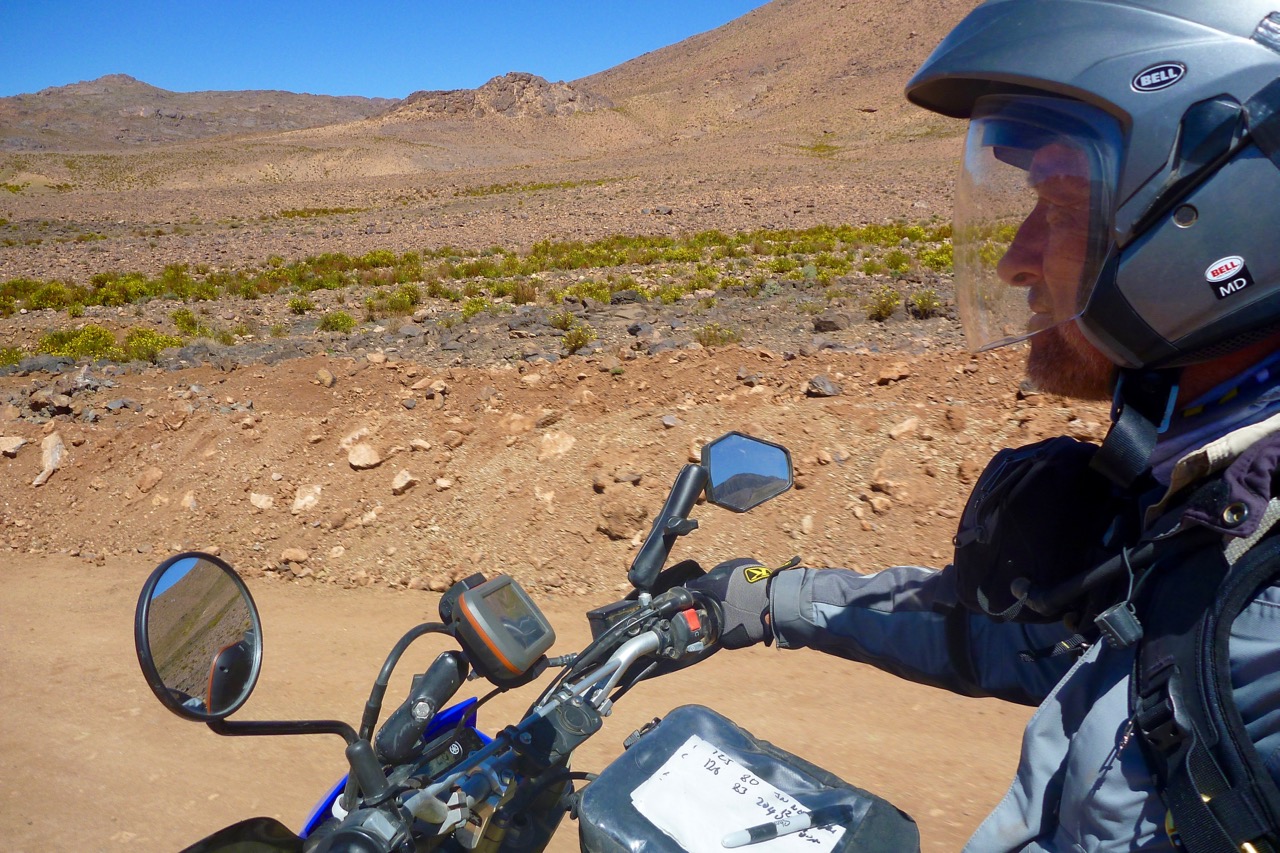
The WR was supposedly a good 20% more powerful than my KLX or CRF; it’s lighter too, until I loaded it up with equipment, gear and myself. I have to say I was disappointed by the performance, most probably because I could not bear to rev it hard. In some situations (uphill; headwind wind) I’m not sure it would have made much difference, anyway. Day 1 in Morocco in a headwind gale on the motorway was not a good start. Rarely did I get over a true 60mph which was not uncommon on the other 250s. Some days (some fuels?) were better than others, and there was nothing wrong with the bike other than the bulk of me and my gear. The brakes feel pretty ordinary with that load.

Suspension
I never rode the bike on the standard suspension and with Hyperpro front fork springs and a 461 shock with a HPA on the back I didn’t have much to complain about until I came back over Jebel Sarhro with a full tank and souvenir carpets. By then the preload was surprisingly maxed out. I could have fixed that by turning the HPA collar down on the shock body. I found out months later that HP had fitted an ’80kg’ rear spring – presumably 80kg rider weight? I weigh at least 20% more in my gear. They knew my weight from before. Seems odd they went so light knowing what I was going to use it for.
Road riding
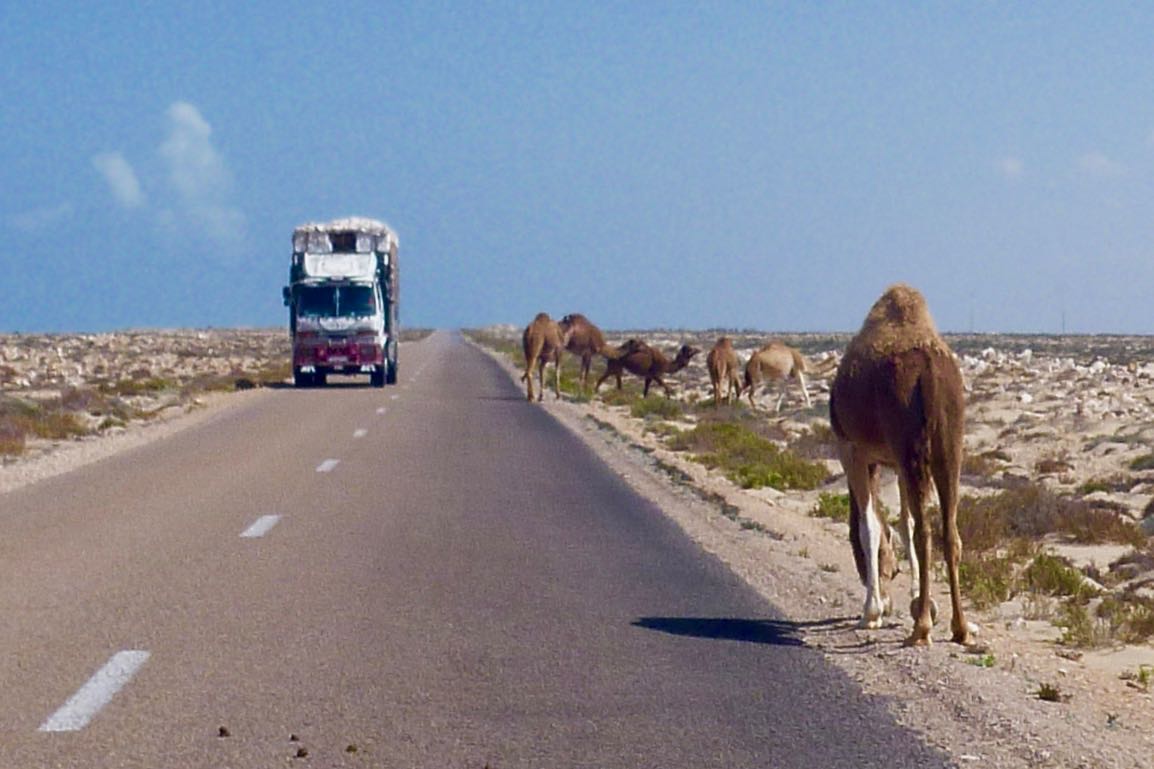
With a 21” front wheel, knobblies and modest power, I can’t say the WR ever got a handful on the road. With the big load, it was the brakes which limited speeds.
Off road
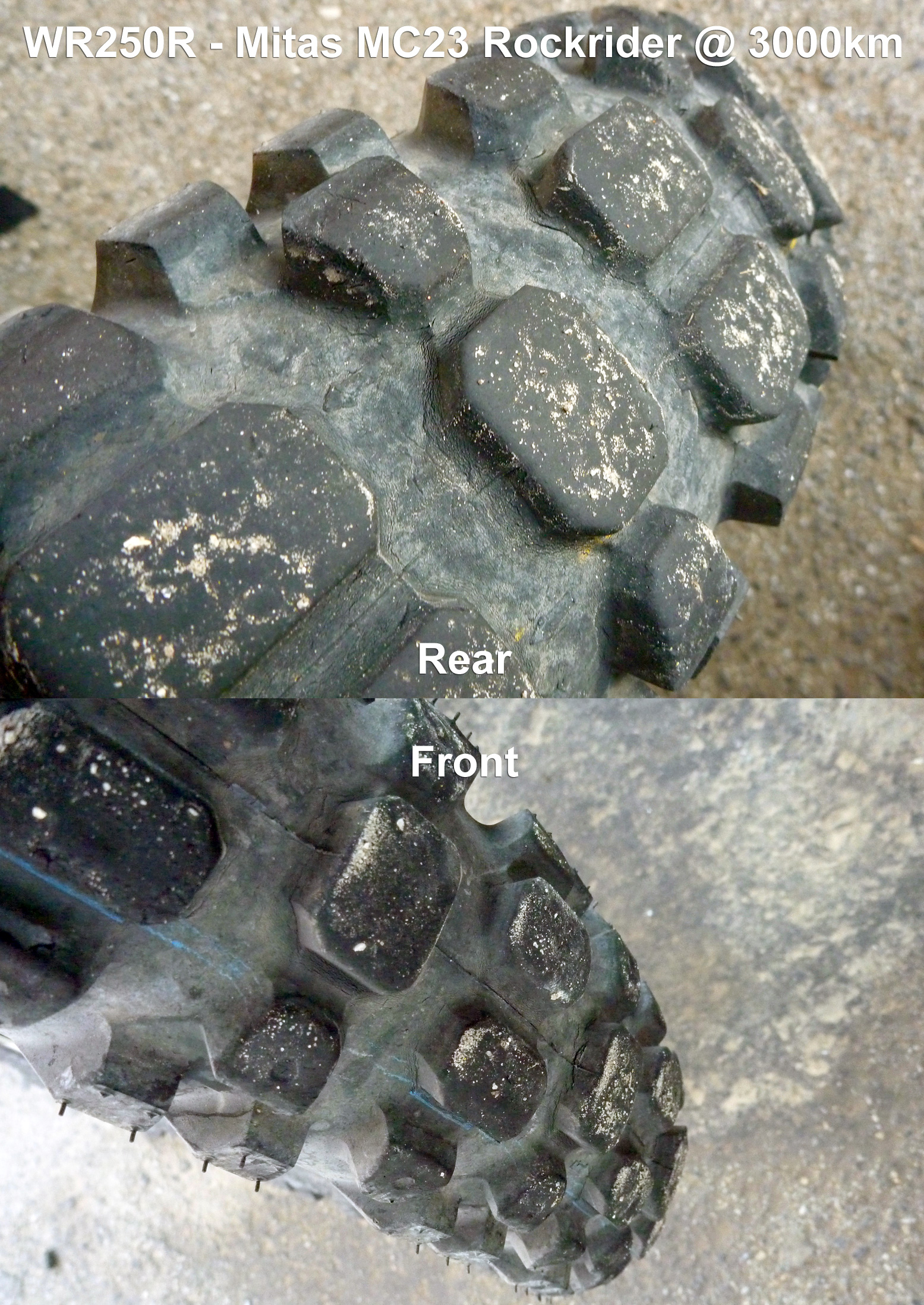
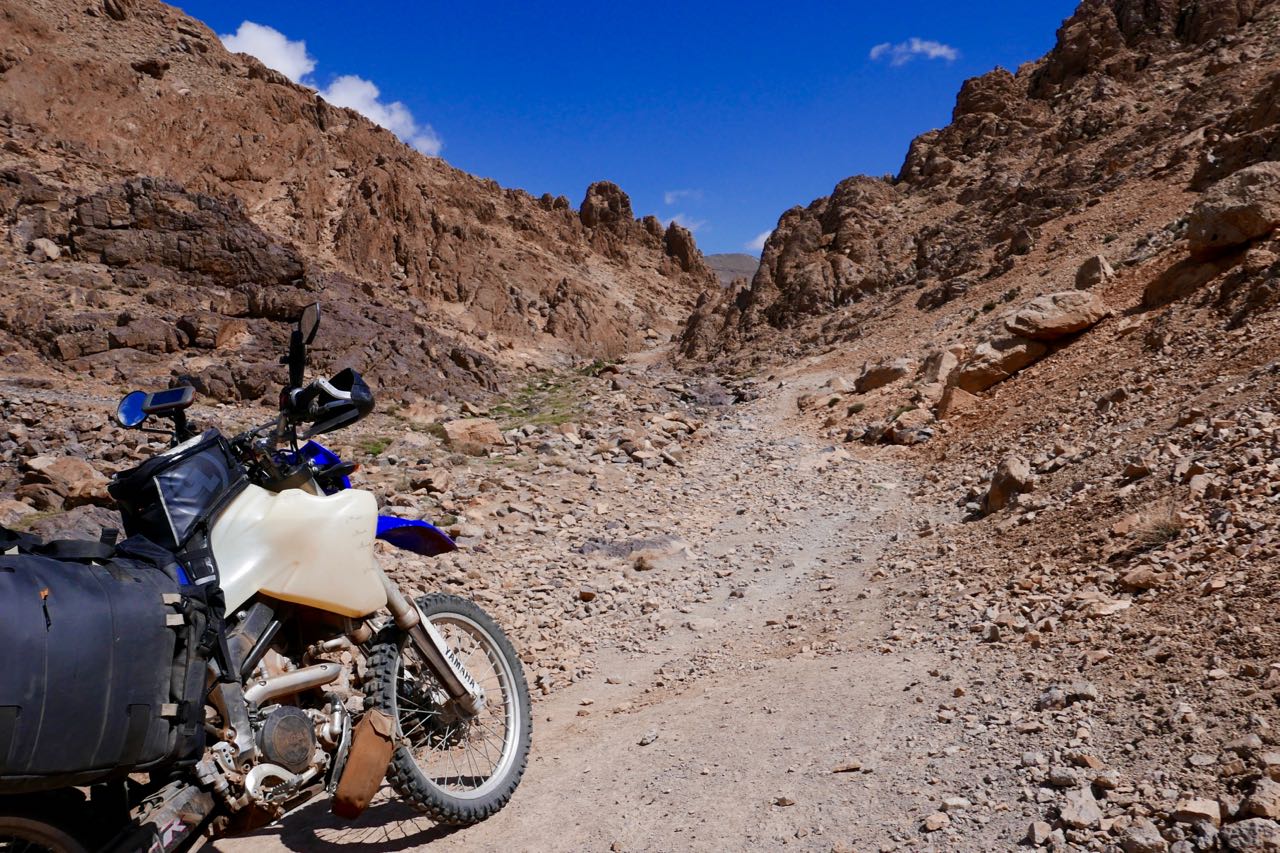
Off roading in Morocco mostly involves rocky or gravel tracks, and the Mitas Rockriders (right) did the job at full road pressures, but the back wore surprisingly fast. Fuller review here.

Loading
I don’t regret the cost or weight or mounting issues of the Tusk rack (left): it gave a very solid platform for the Kriega OS32 system and a bit more besides, and didn’t miss a beat. Full review of the Kriegas here.
The Giant Loop Fandango Pro tankbag is reviewed here. A handy little pod if you can get it for the right price.

Equipment
The WR’s dashboard is about as basic as they get – just the speed reading and a trip or odometre, plus some warning lights. I fitted a Trail Tech temp gauge (left).
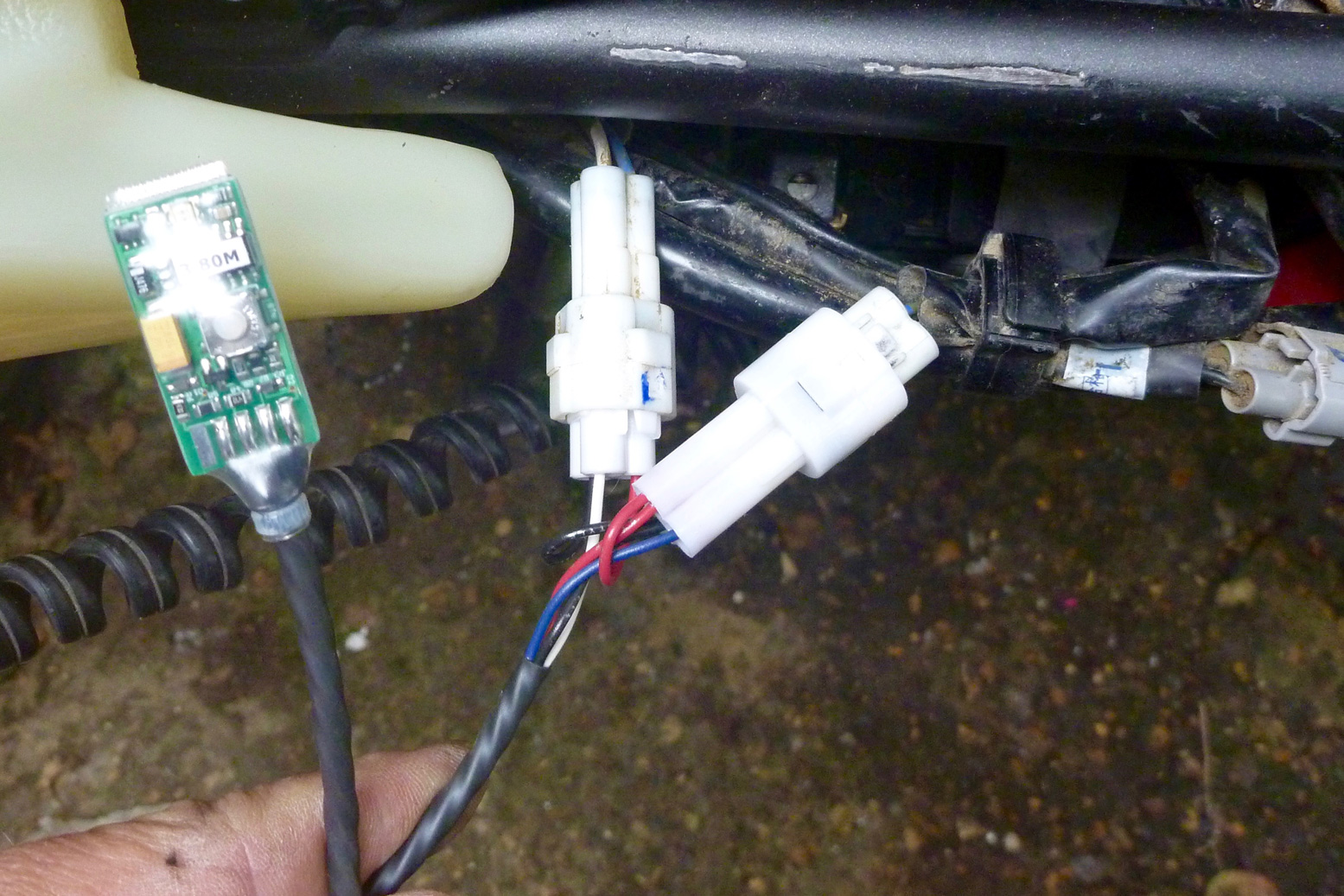
With a DRD correction chip (right) the speedo was spot on and could be changed between kph and mph with some sequential faffing. The odometer was 11% over, but readings were corrected for mpg calcs. The GPS was hard-wired in and I never needed the additional power plugs.
Durability and problems
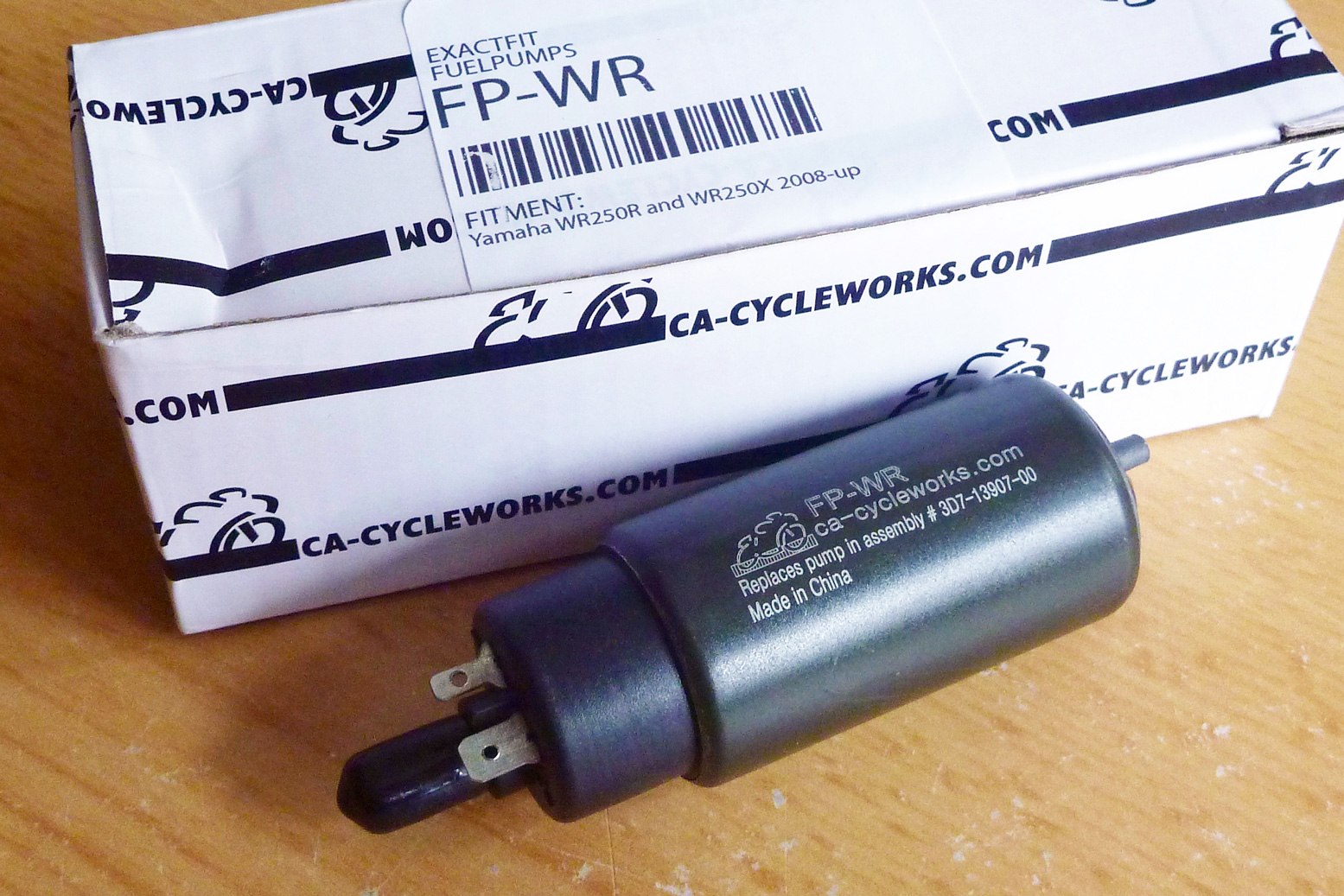
The 2008 stator recall had been done by the previous owner and I was aware of the fuel pump issues – some early OEs seize and eventually pack up when working at higher temps. I do wonder if it could be down to American fuel which can get quite ropey in my experience. I was using the original pump and didn’t bring my spare (left) which helped make life interesting. After a while, at times when the bike was warm, I heard the fuel pump priming or whirring on turning the key on, but before hitting the button. This should last a couple of seconds; if it keeps going I suspect it’s bad for the fuel pump so I always made sure I got the engine running as soon as I turned the key on with a warm bike. Cold; no such issues and at any times there was never any fuel starvation or hesitancy even when hot, just too much whirring at times.
When I got back I fitted the few aftermarket pump before selling the bike. Other than that – no issues with the WR which is why we love Yamahas for overlanding.

Conclusion
Effortless on the dirt, as expected, but me and my gear (130kg?) was too much weight for the WR on the road, so it doesn’t make it the do-it-all machine I hoped it might be. I’m pretty sure a WR450R could be that bike, but Yamaha won’t be making those before the Chinese get there first.
You know what; for normal overland travels rather than gnarly, hardcore off-road exploring (not the sort of riding I do much of) I think I’d settle for a latest CRF250L (with a couple more hp) or the newer 300 with a couple more – then add some decent suspension. This I did a few years later.

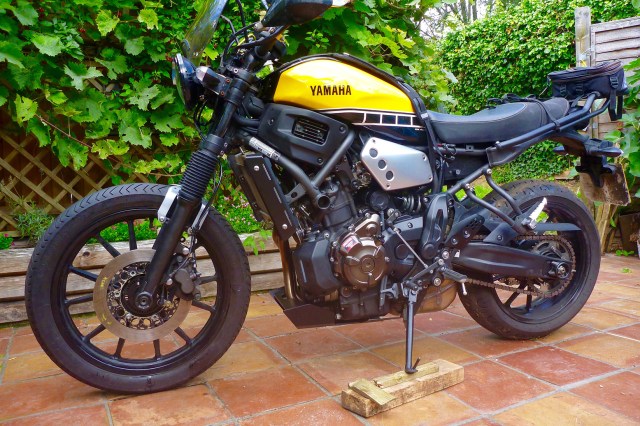
On getting back and flogging the WR I missed the grunt of a bigger engine and got myself a smashed up  XSR700 and made it into a Scrambler, an idea I had while flat-out at 57mph on the Atlantic Coast of Western Sahara. What a nice machine that was.
abr7 - 12

WR-ing about in Morocco – 7

WR250R 4000-km review
WR Introduction
WR250R Stage 1
WRing about in Wales
WR250R ready for the desert
Morocco trip report, 1–9
Fuel log

Leaving Tan Tan Plage. Up the coastal highway to Guelmim, then inland into the mountains where the skies are about to drop with a big crash.  

I Rukka up. Not in a £1000 two-piece suit, but a classic 1980s PVC onesie off ebay for 40 quid.
If you positively, absolutely do not want to get wet (other than what runs down your neck), classic Rukka PVC is the best. Just be careful what you search for – some uses of Rukka PVC onesies are unorthodox and NSFW.  

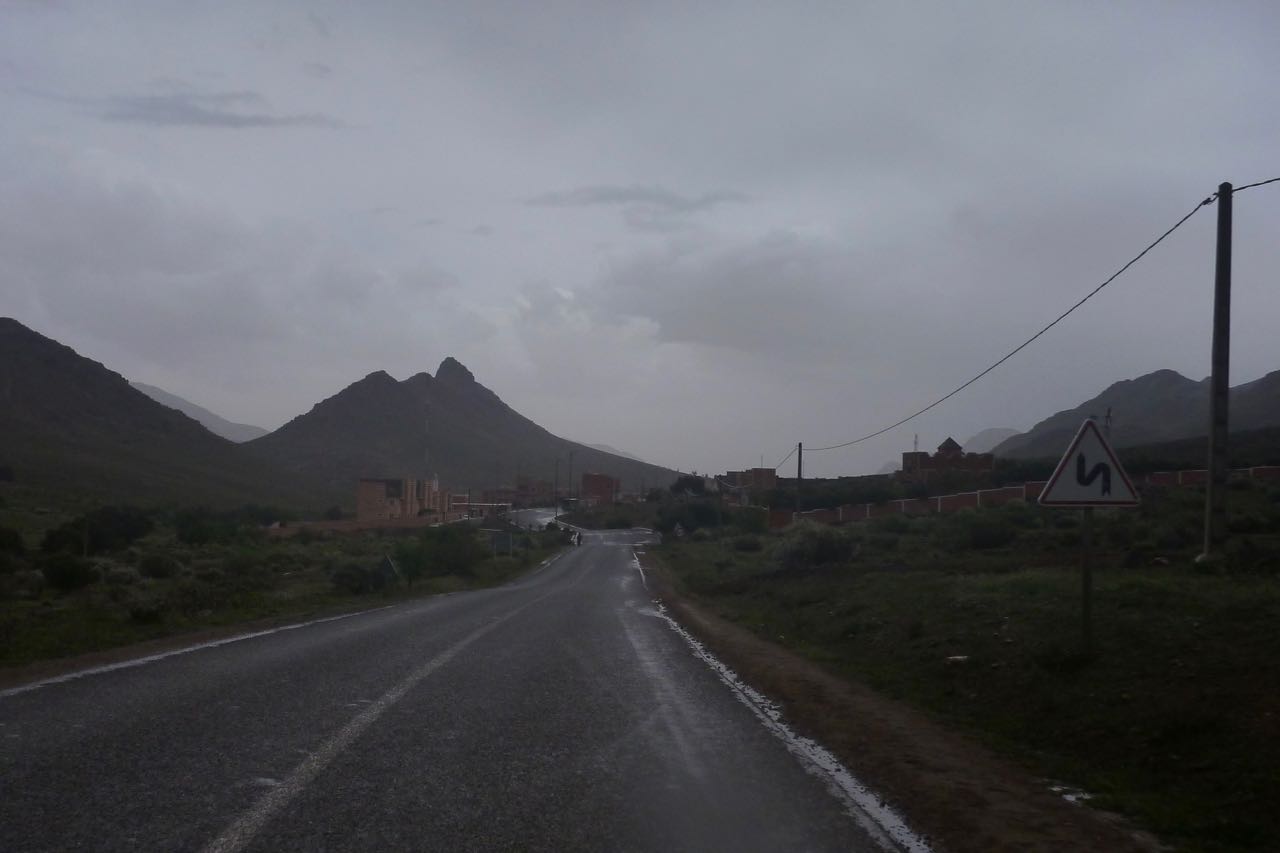
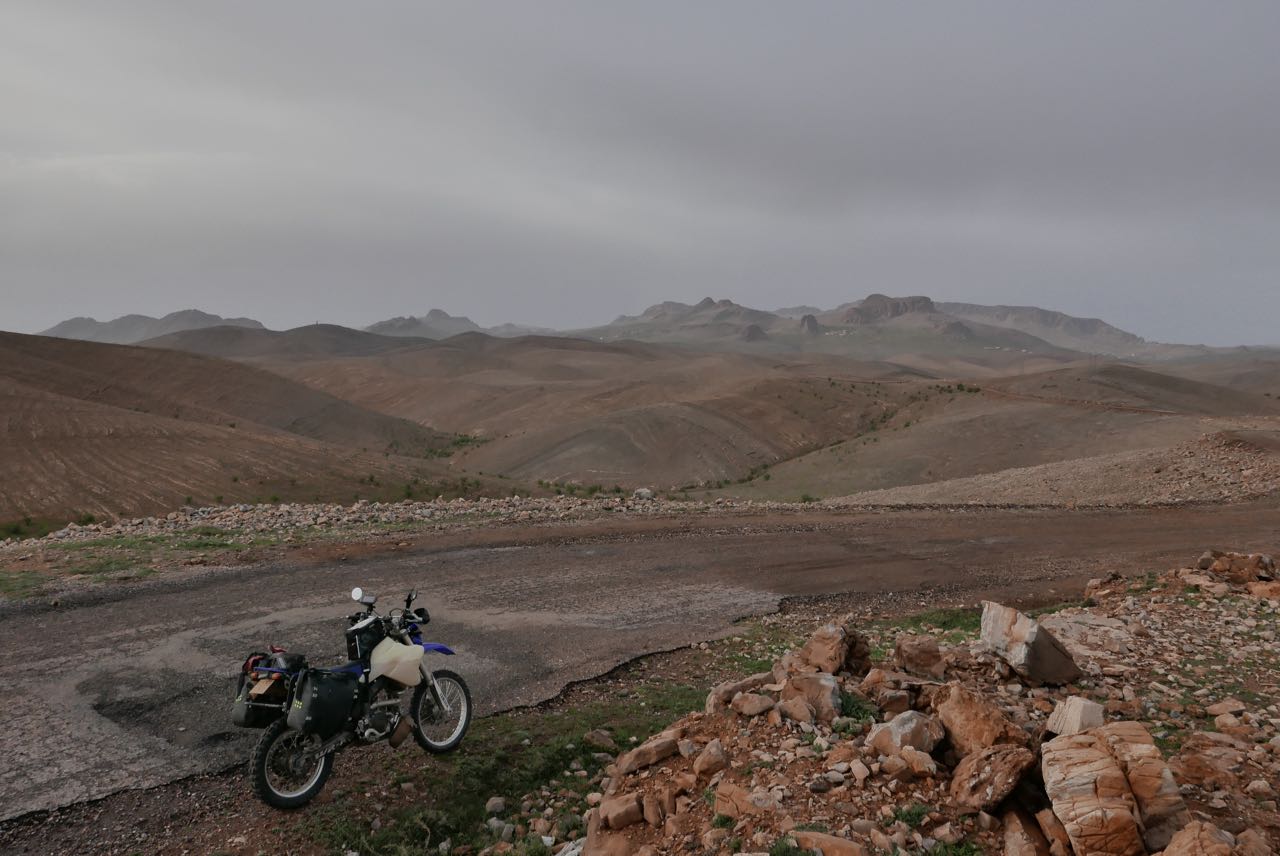
I start climbing. It looks grim up there.

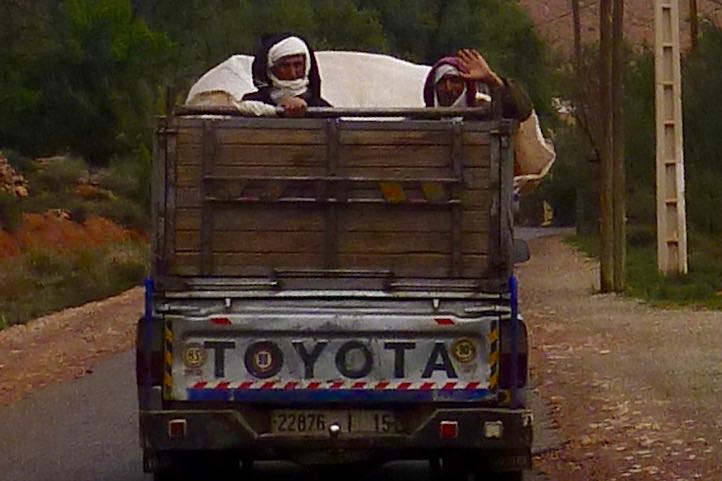
No PVC onesies for these two. Woollen jelabas rubbed with goat fat does just fine.

Between the downpours you can smell the scent of the herbs off the hillsides.
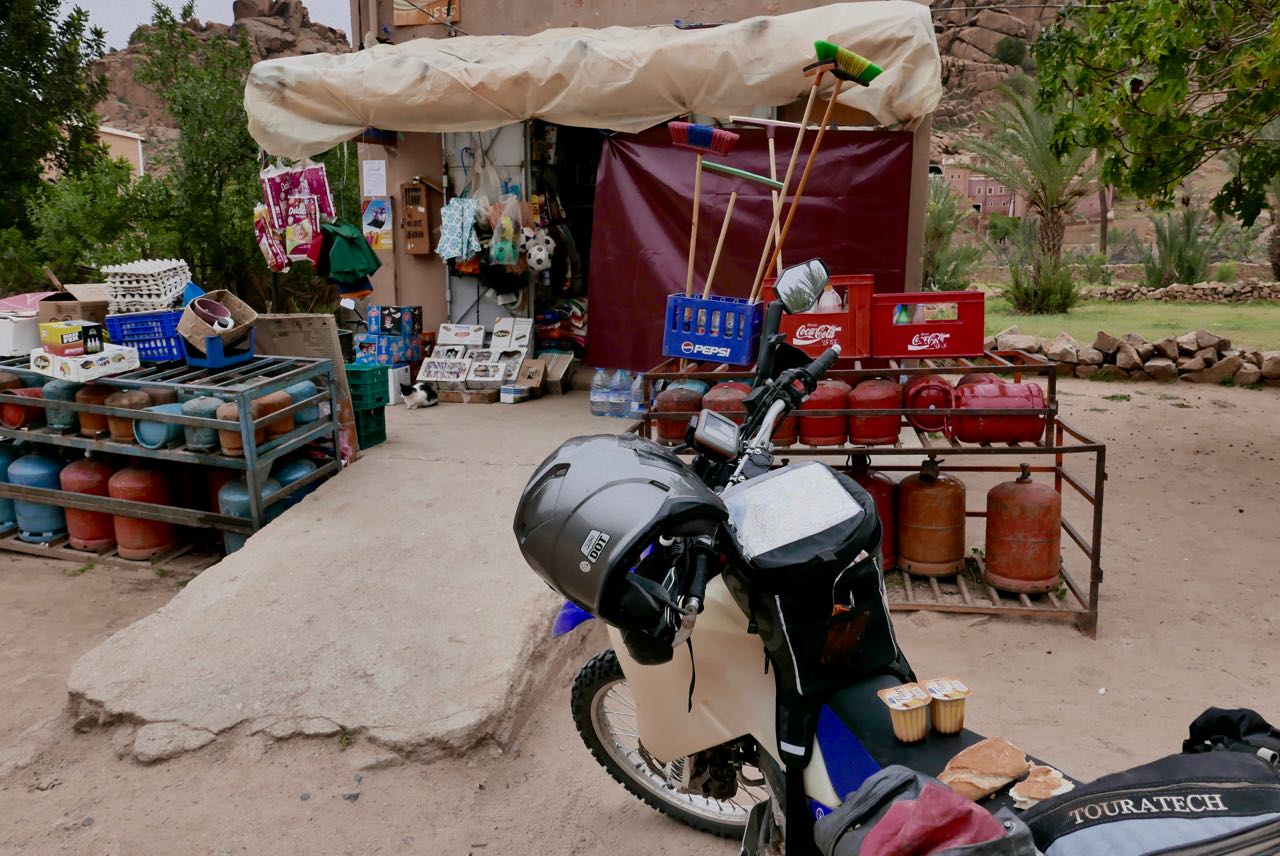
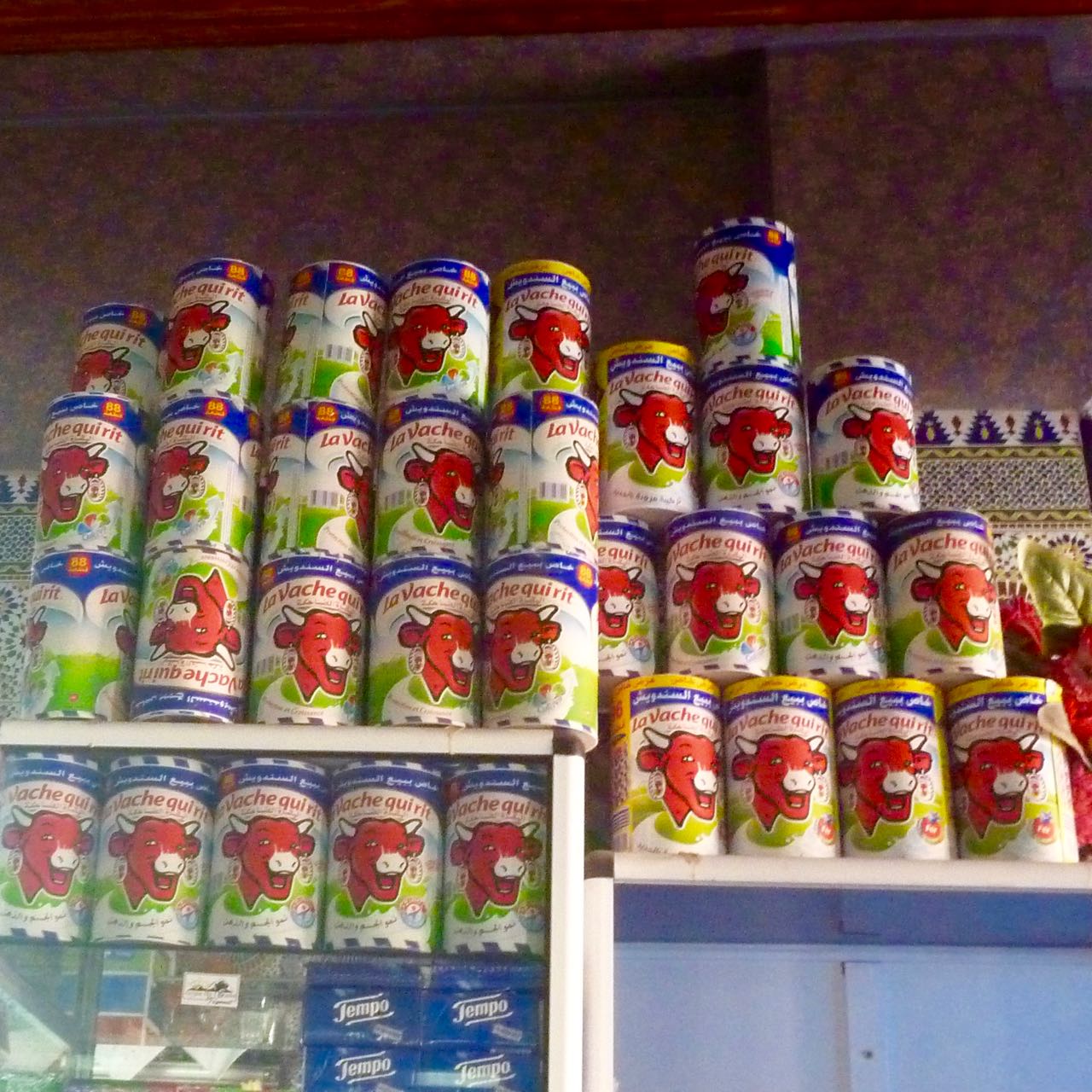
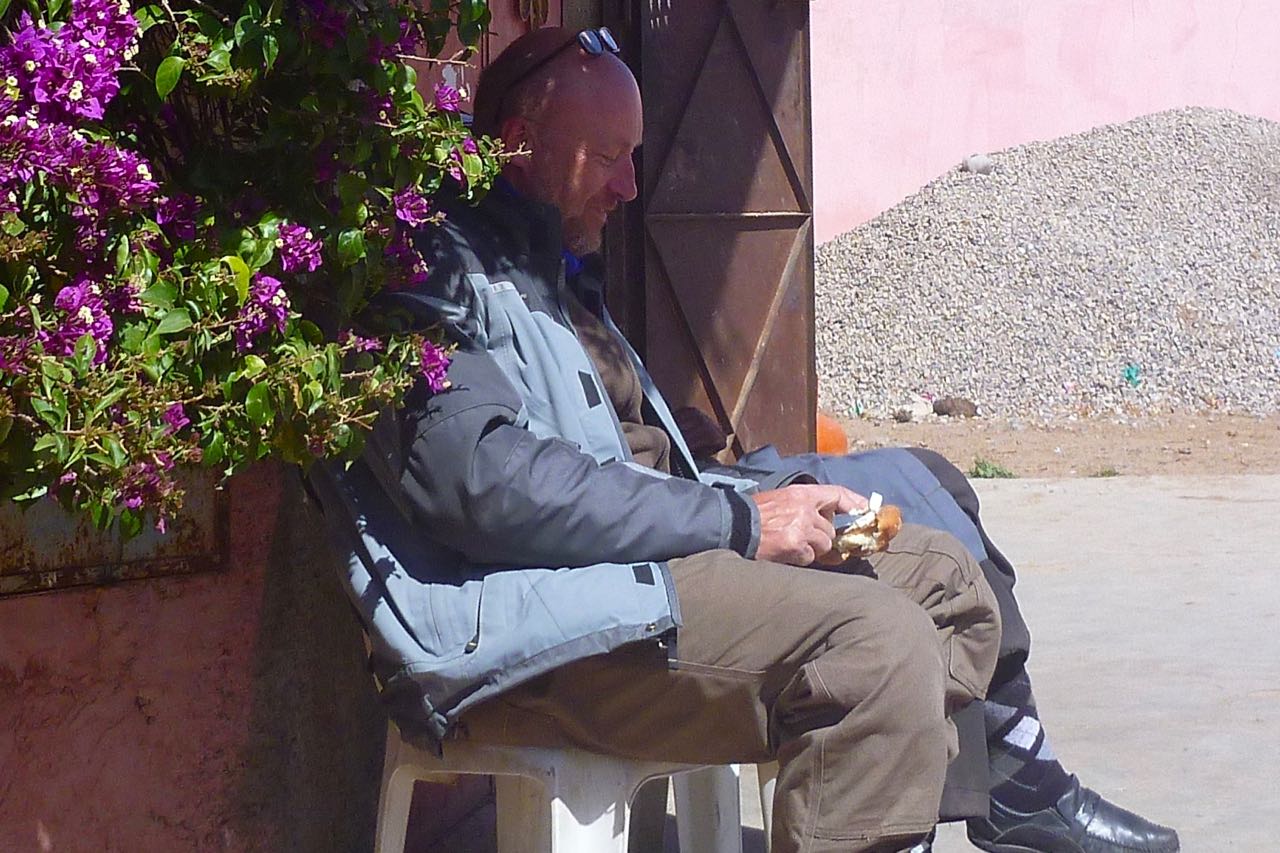
Riding a bike all day makes it easy to dodge food, but at this little village shop I pull in for some bread, cheese and yogs.

Laughing Cow – one of the great travel foods of Africa. You’ll find it all the way to the Cape and back.
Rumour has it Damien Hirst got his idea to pickle a cow in formaldehyde after finding a 15-year-old packet of Vache down the back of his sofa one night while on the munchies, and finding it tasted unnervingly fresh.

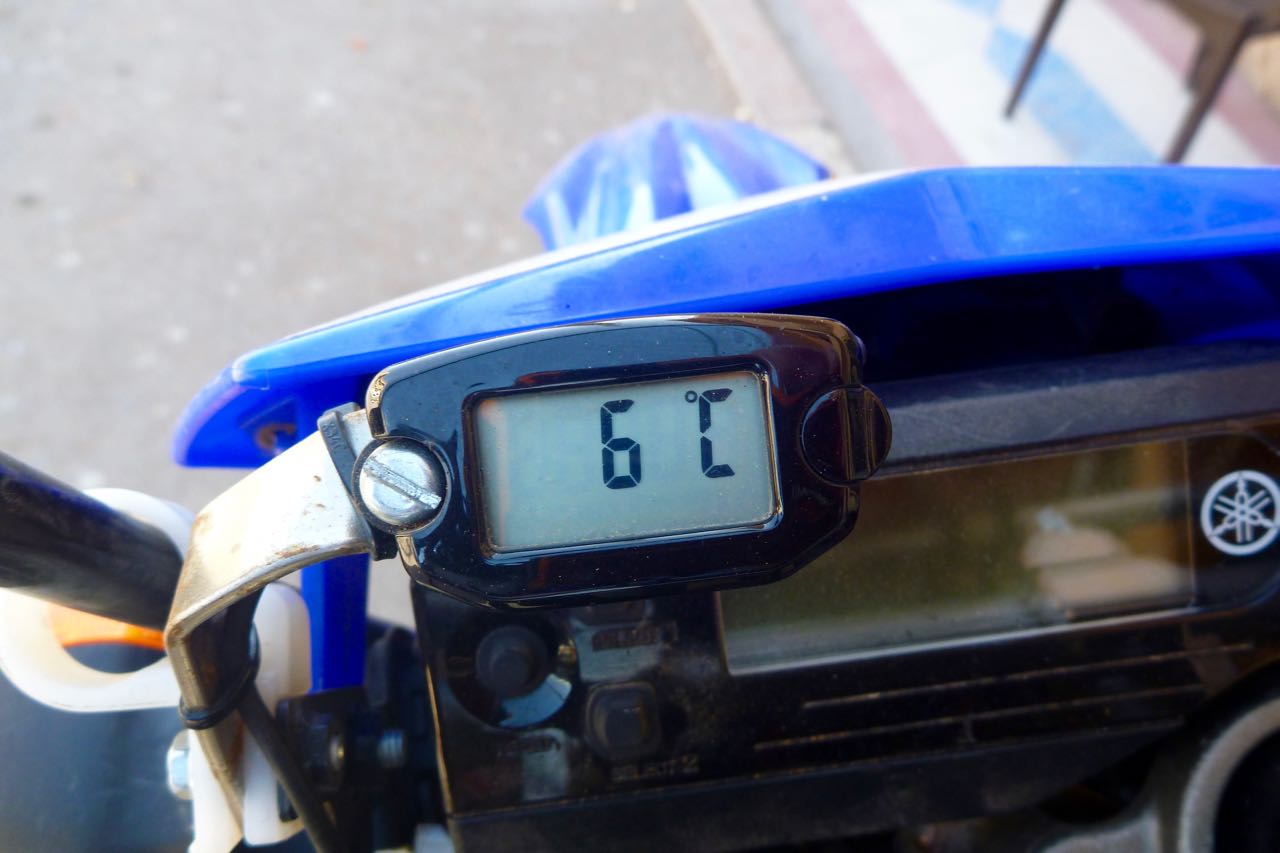
After Tafraoute the road climbs steeply onto the western Anti Atlas. It gets bleak and darn chilly.
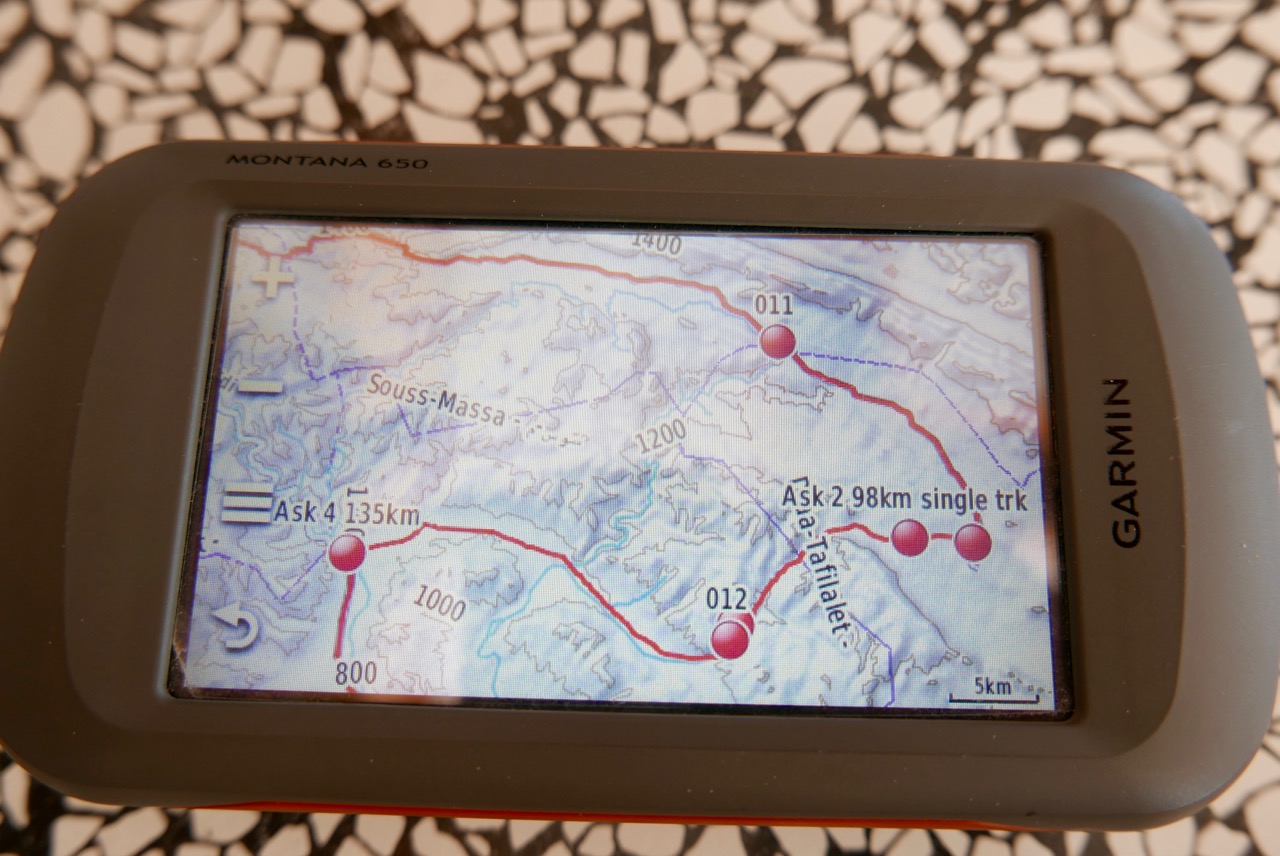
I watch the elevation rise to over 1900m or 6200’ and get colder and colder and colder.

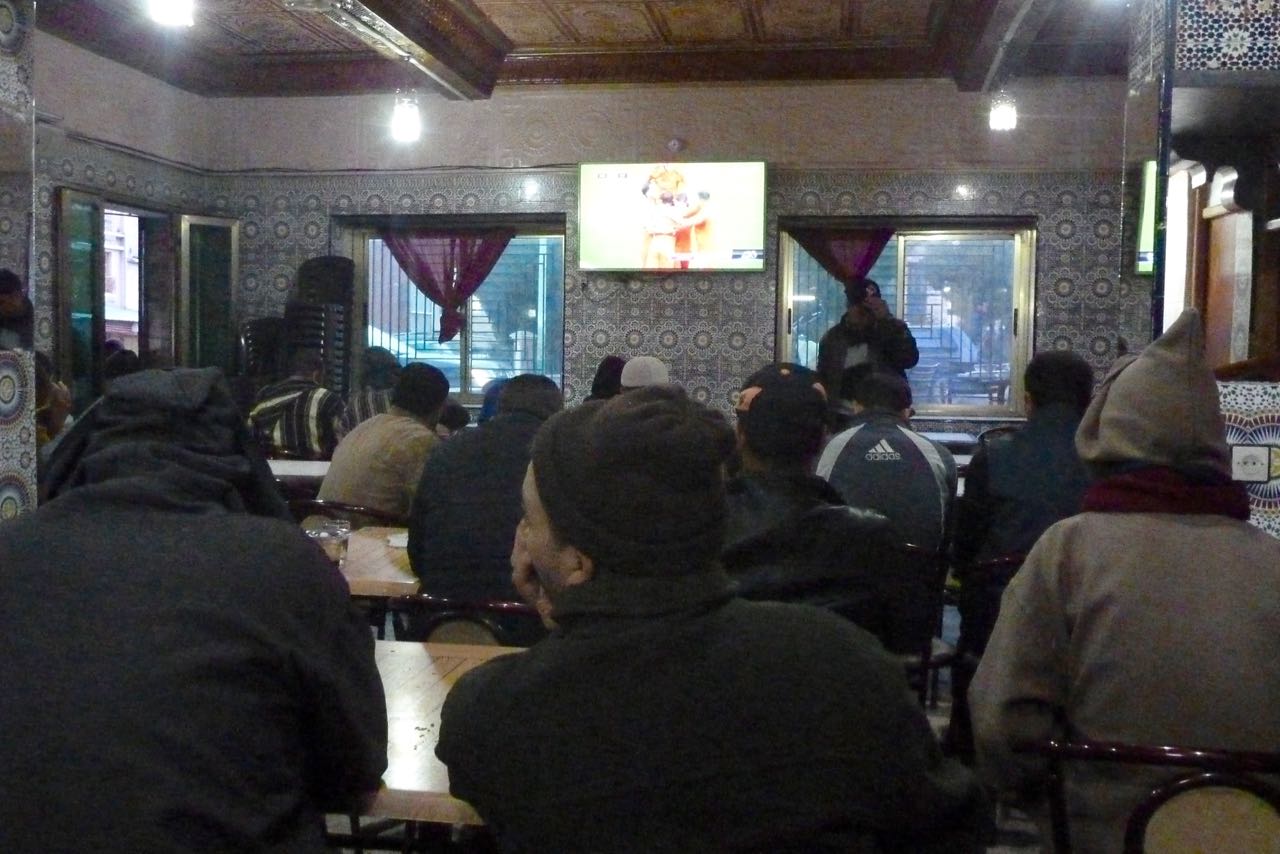
Back again at the basic Igherm hotel – 7 quid rooms. If the footie was on there’d be standing room only in the bar, but it’s just some bint reading the news.
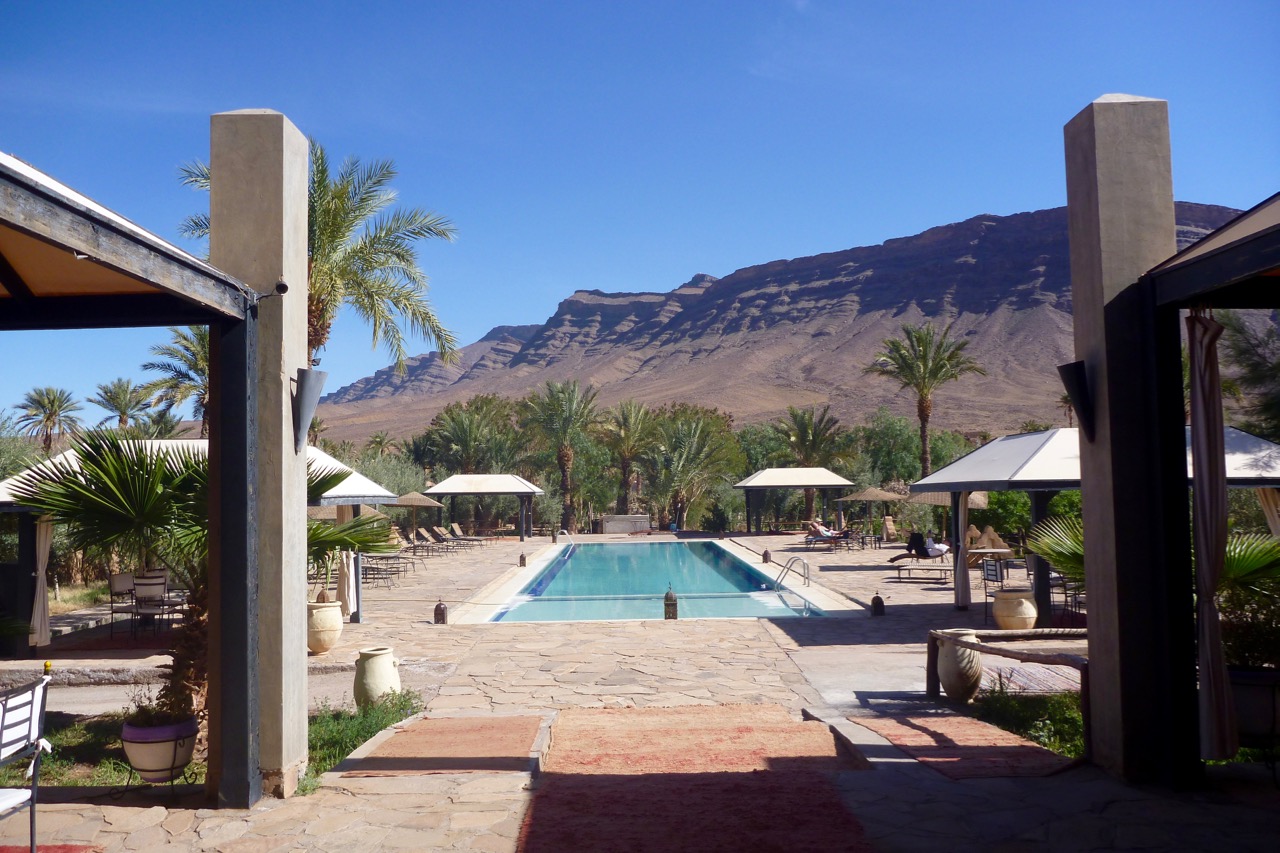
Luckily, hot chorba (soup) is on. I get two bowls worth then retire to my cell to warm up from the inside.

Next morning – chilly – but WR fires up on the button. I love that about efi.

Down the road towards the High Atlas.

In Taliouine I decide I’ll try the Jebel Sirwa transit (MH7), seeing as I’ve not done it for years.

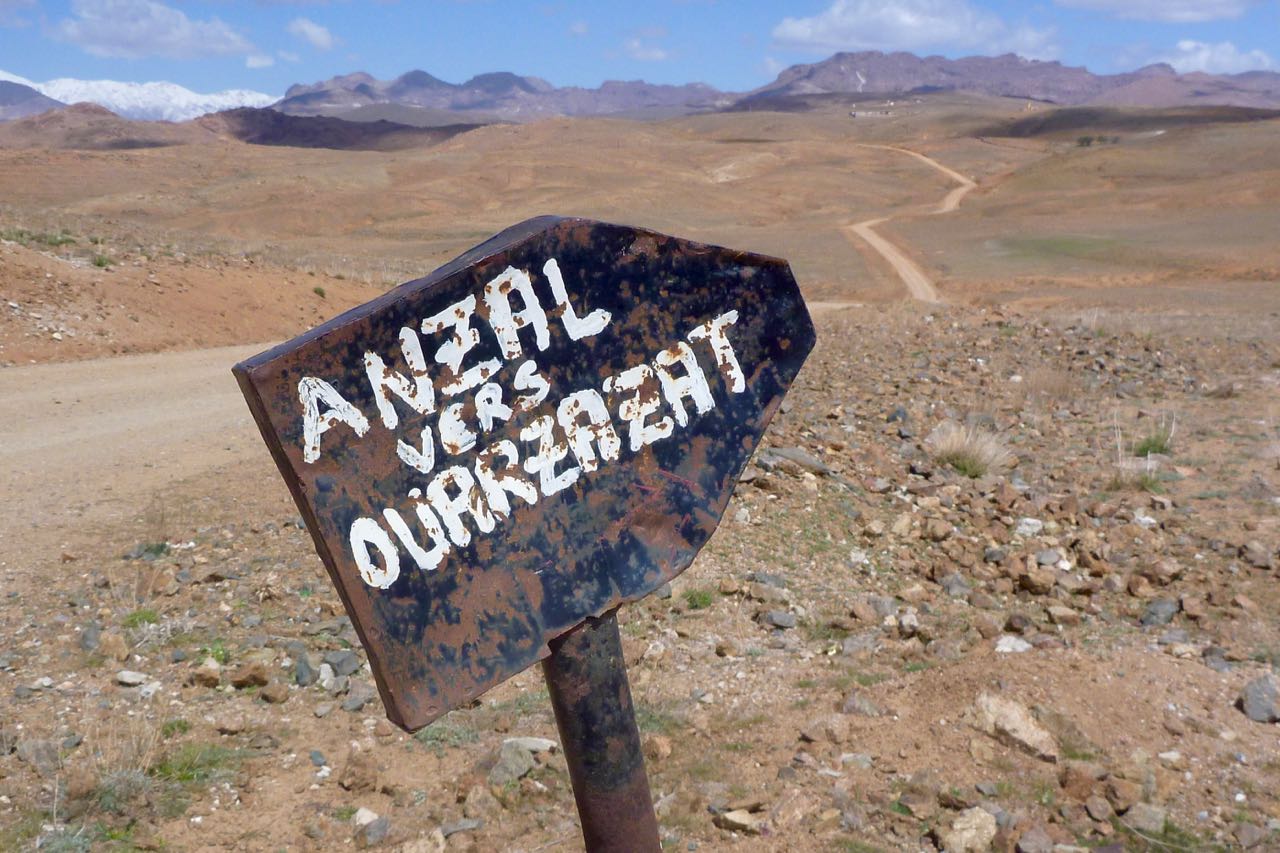
I ride the switchbacks up to Askaoun. A few kms out of town is a rough sign for Anzal.

Last time I did this route I met two locals in a VW Golf, but the track is a lot rougher than I remember – a bad sign as it means it’s no longer used by locals. Sure enough I get to the gorge and the track is now a streambed. A fourbie could crawl over this in Low 1st and so could I, but alone, I decide not to risk it. As many of us know well, it takes just one unlucky fall-over to do in a shoulder.

Instead, back at Askaoun I turn west. They’ve sealed the west half of MH7 – a lovely spring afternoon’s ride down to…

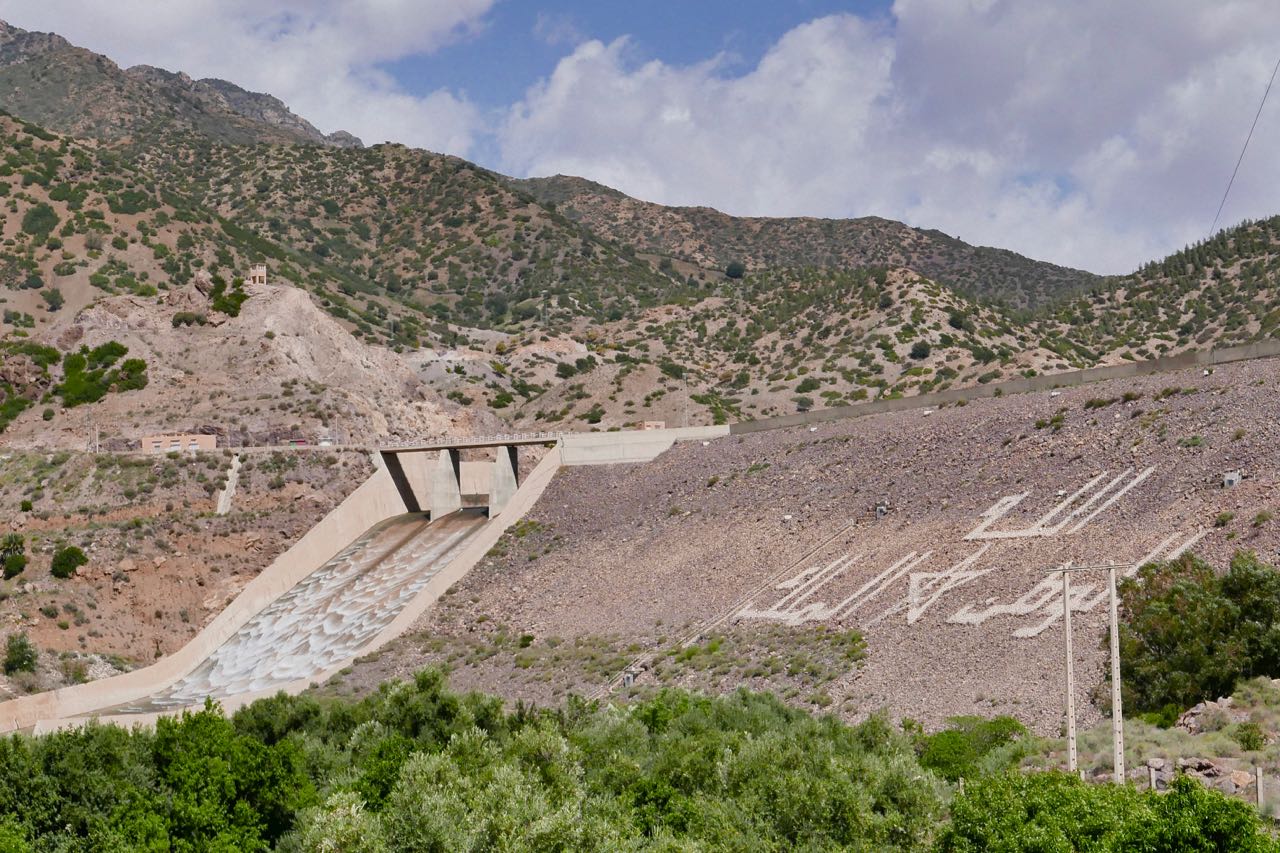
… the dam which is brimming over with a winter’s rain.

Another £1 vache stop at the village shop. A couple of KTMs and a DRZ shoot by. The first bikes I’ve seen.

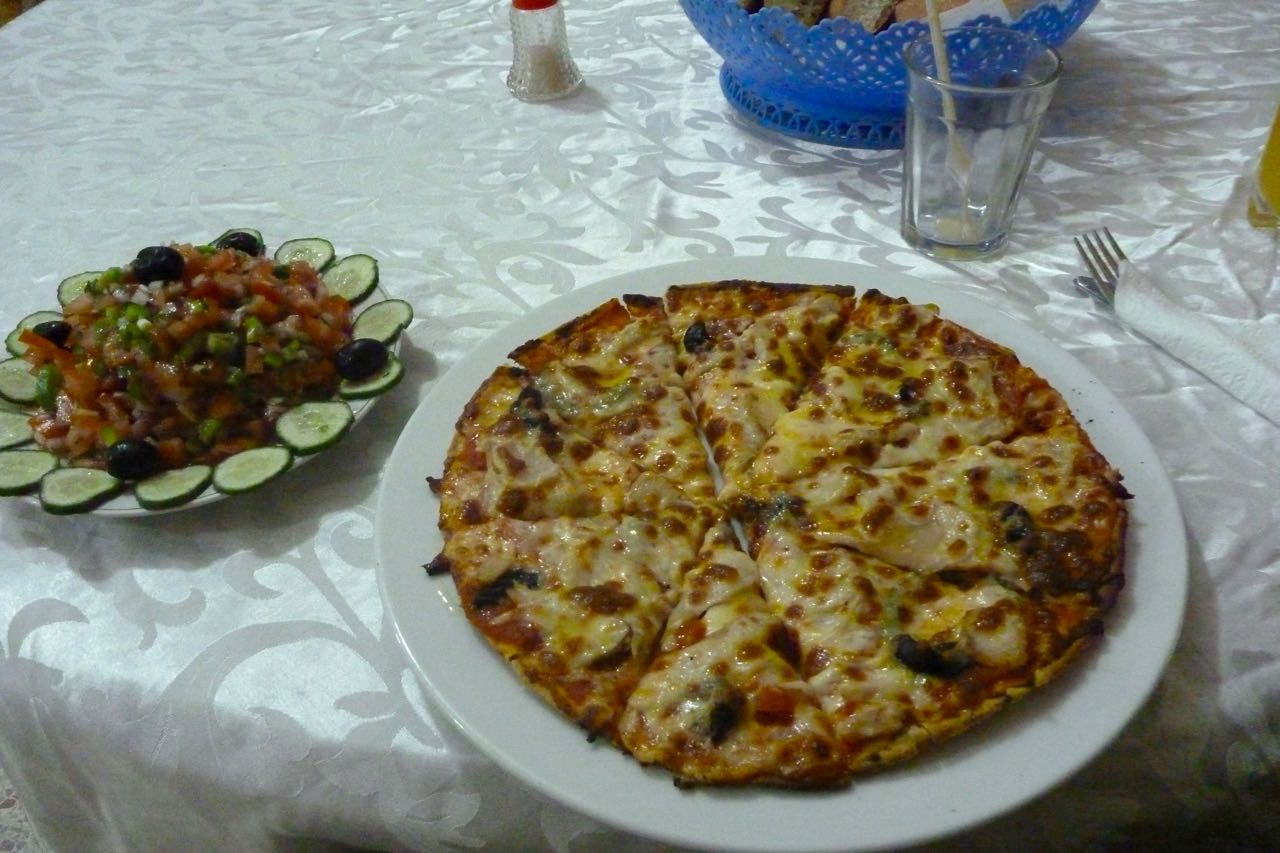
It’s pizza night at the Bab Sahara in Tazenacht! The staff dress up like pantomime gondoliers and Pavarotti booms from the speakers. “Just one Cornetto… Give it to meee”.

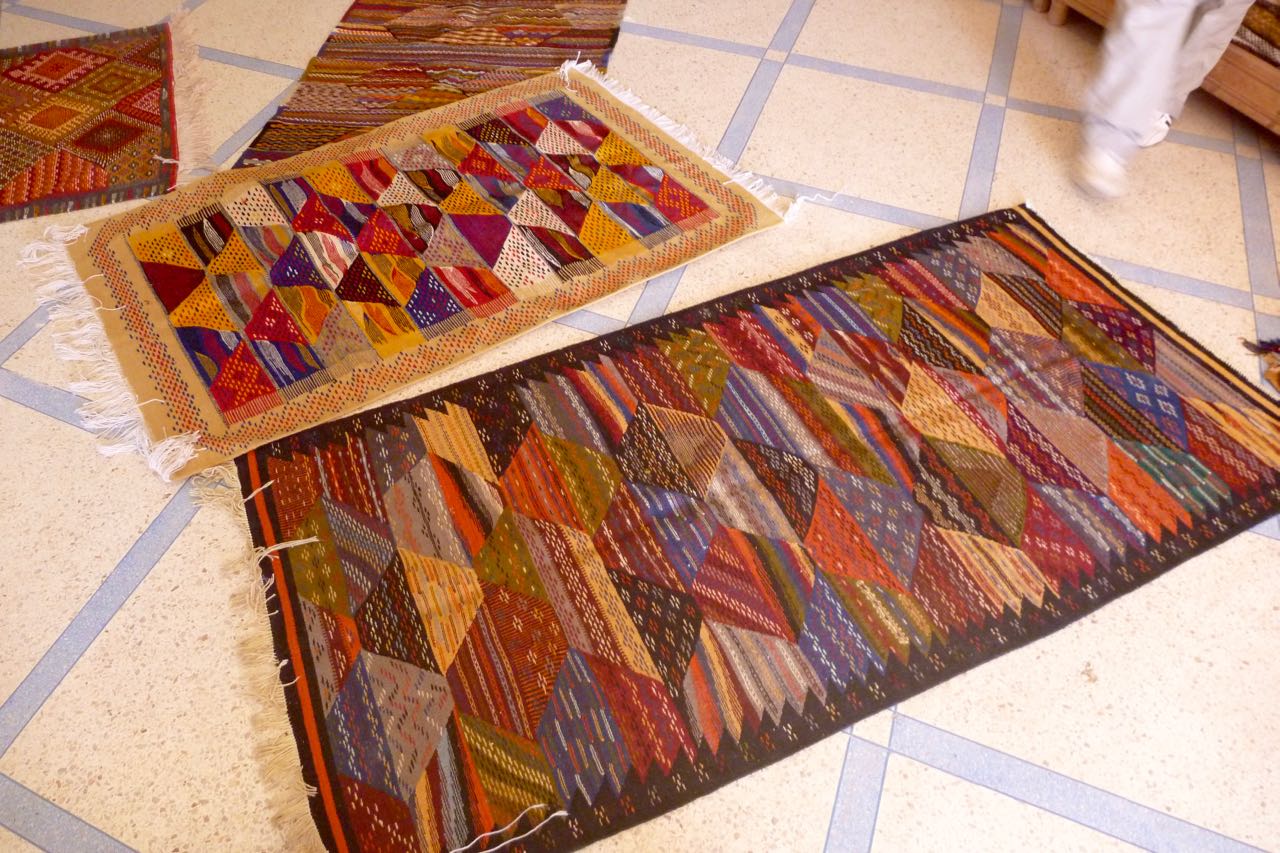
Tazenacht is a normal market town and a great place to buy Berber carpets at good prices and zero hassle. I can’t resist a couple.
That’s £120 quid’s worth – a lot of money really, but all dyed and woven by hand.
I only hope the women who weave them out in the villages on the Issil plane get their fair share, but I doubt it.

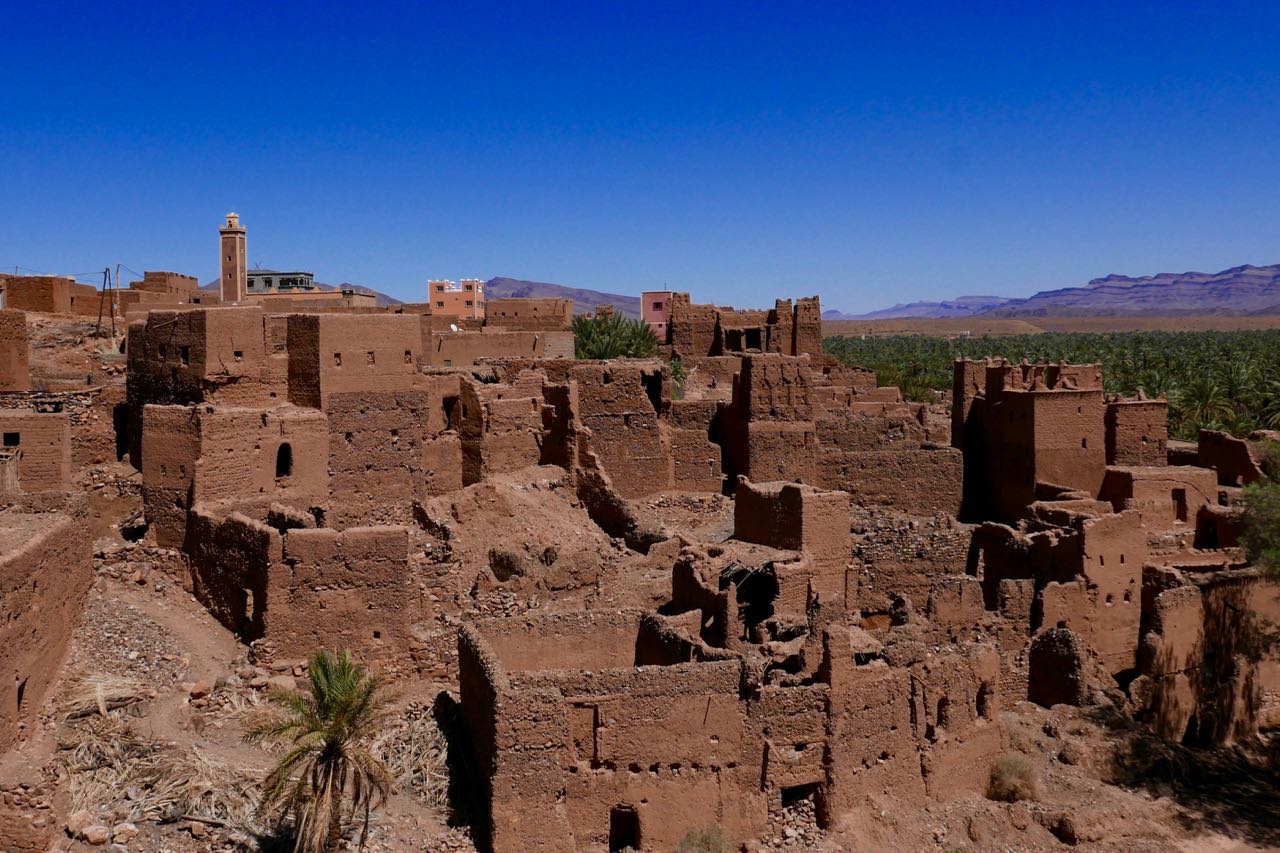
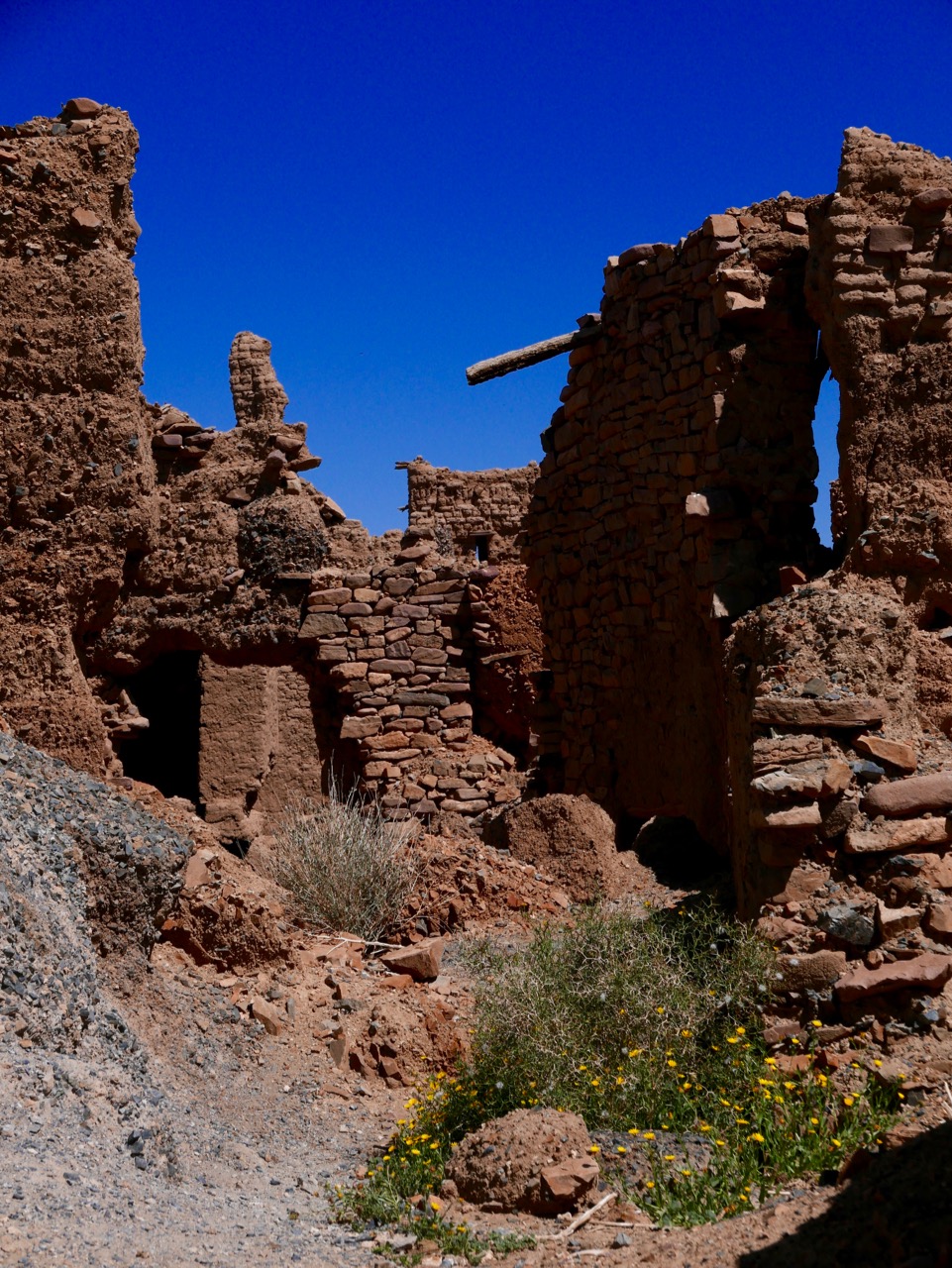
Just another photogenic ruined mudbrick kasbah off the Oued Draa valley.

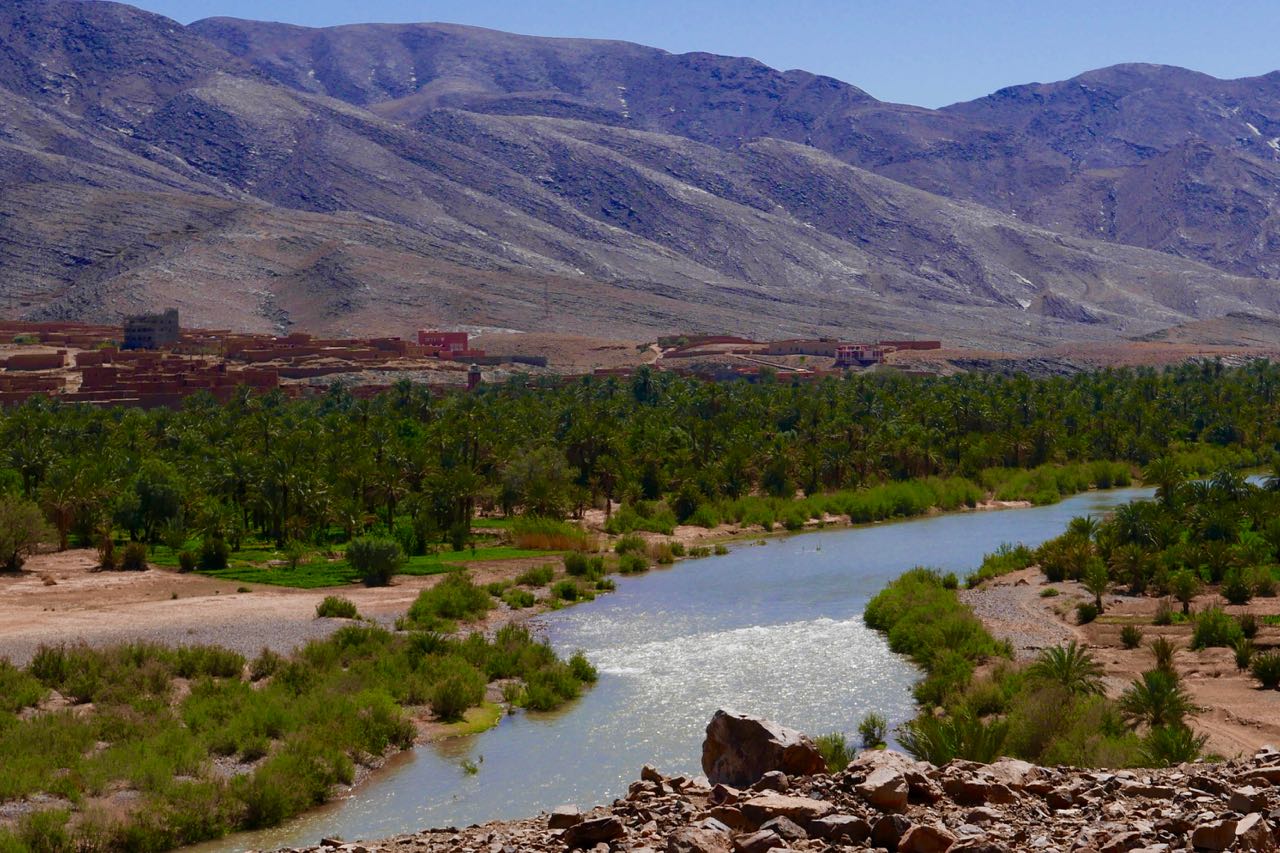
The dam up at Ouarzazate releases water daily to irrigate the gardens and palmeries all the way down to Mhamid on the Algerian border. Produce, eggs and meat as fresh as you like.

I pull in at Tamnougalte. Tomorrow I’ll try a gnarly new way over Jebel Sarhro, then over the High Atlas and home.

Part 8  > > >

WR-ing about in Morocco – 1/9

 
WR250R 4000-km review
WR Introduction
WR250R Stage 1
WRing about in Wales
WR250R ready for the desert
Morocco trip report, 1–9
Fuel log

A trip report from March 2017 while updating my Morocco Overland book.
It got very hot in the desert for a while which wore me right out, but I rested in Tan Tan where it cooled off for a few days, so I dived back in before the heat came back for good.

This time I used Fly & Ride to get the 250 to Malaga.
Didn’t fancy Spain at 57mph. Works out cheaper too when you add it all up. Done trans-Spain enough times.

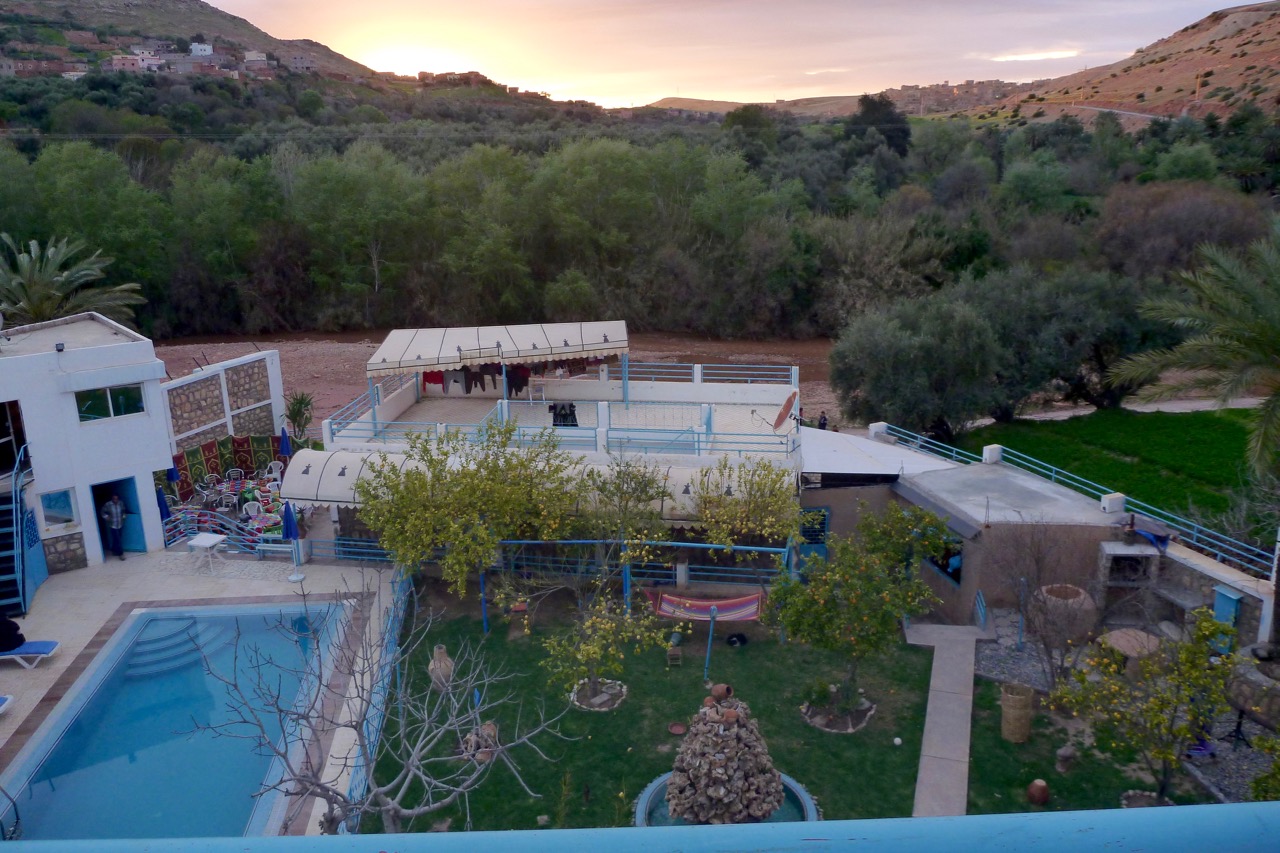
Gales meant the ferry took over an hour to dock at TanMed, and next day was miserable – down to 45 in 4th at times. But there’s no quick way to get south as nothing was going to Nador. I try Airbnb and find this lost resort up a valley near Bzou.

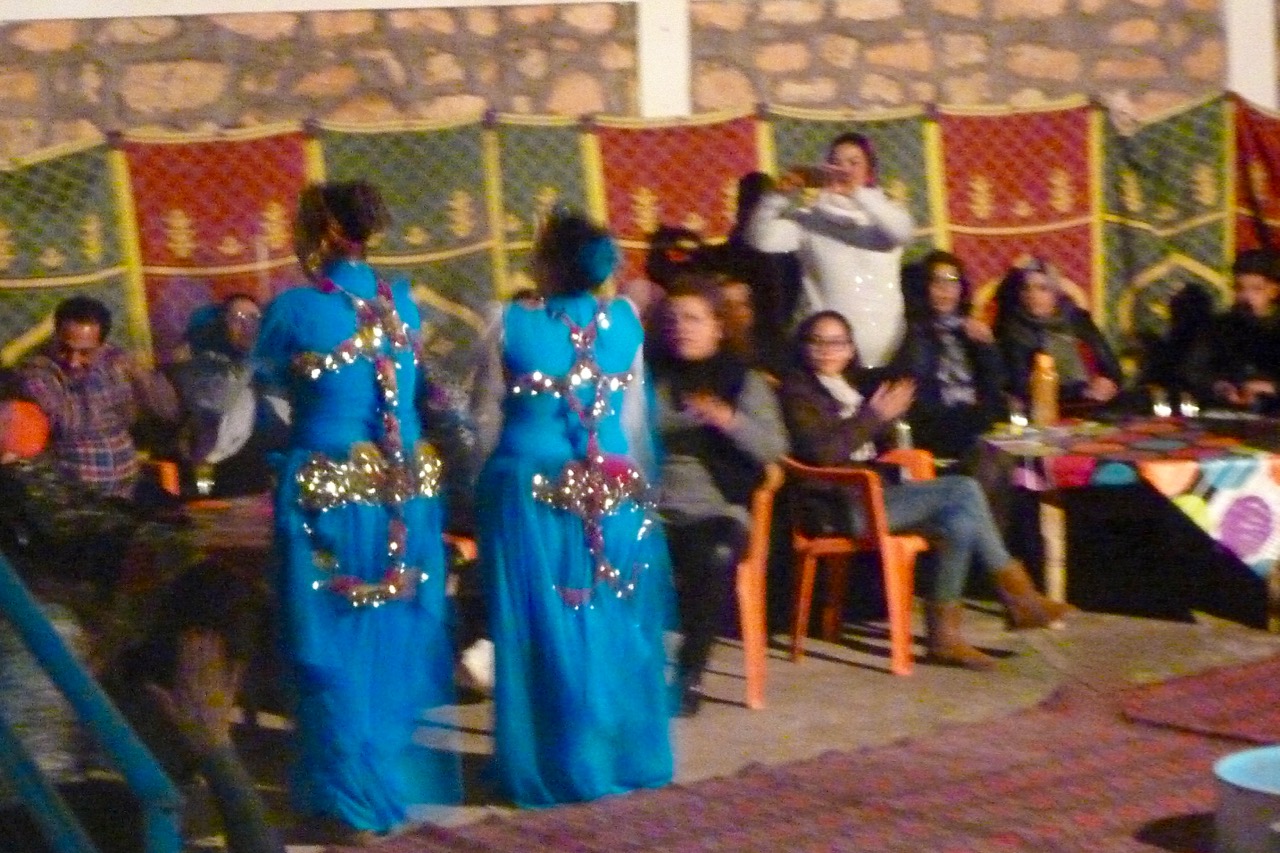
I inadvertently gatecrash a Berber soiree. No room at the inn so he feeds me and puts me up down the road.

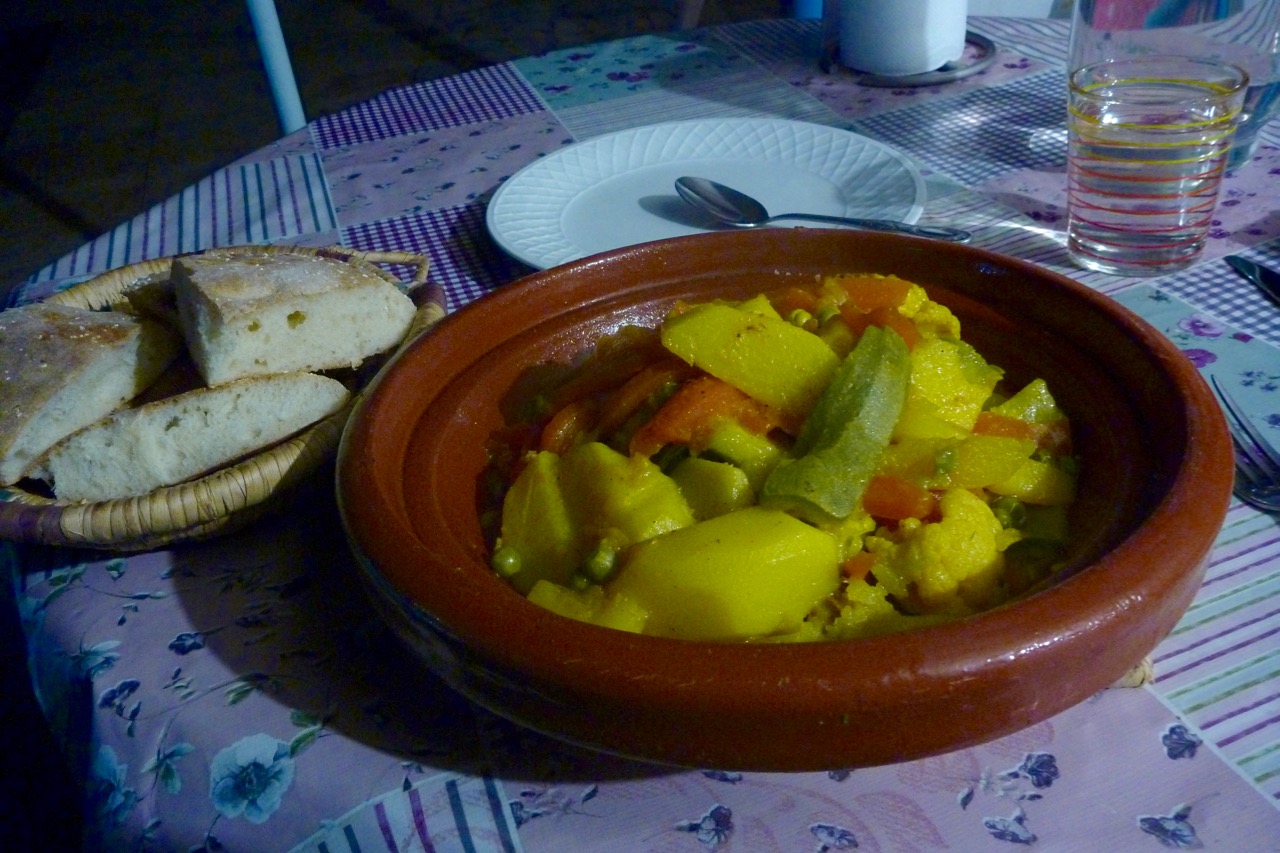
My first tajeeen of twenty-seventeeen.

Next day I got my bike back – pootling though the springtime Middle Atlas without fighting gales and showers and trucks. 95mpg thankyouverymuch.

I take the old Demnate route over the High Atlas. Last did it on the XT660Z in 2008

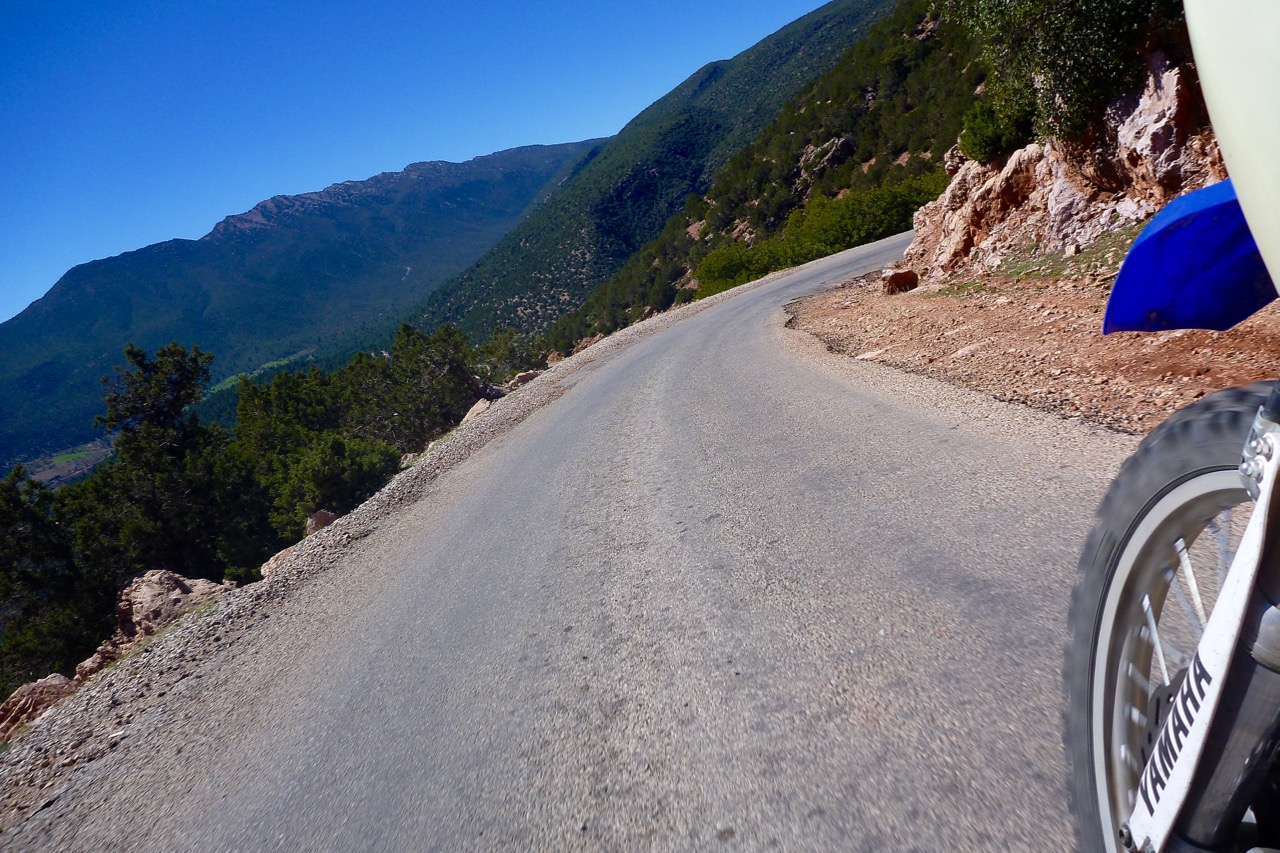
The road deteriorates in places. Lots of landslides. Near zero traffic.

I pop out on the south side overlooking the headwaters of the Oued Draa near Ouarzazate. There’s a huge new solar farm down there.

After some fumbling about, I pick up a new piste from Ouarzazate to Tazenacht.

Nice colours on the ford

Next day another new piste I’ve been wanting to unravel for ages. Olaf map is confusing, but an old man in a village puts me straight
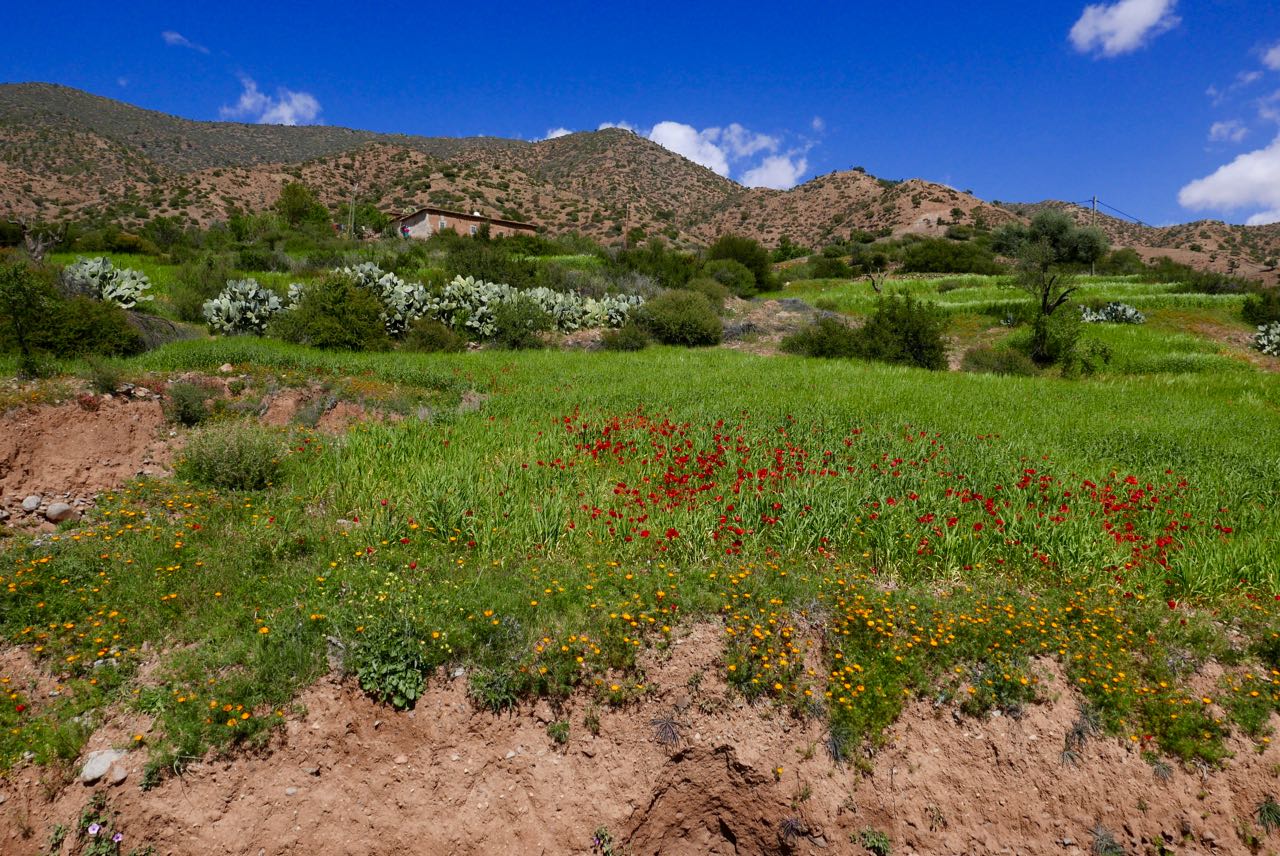
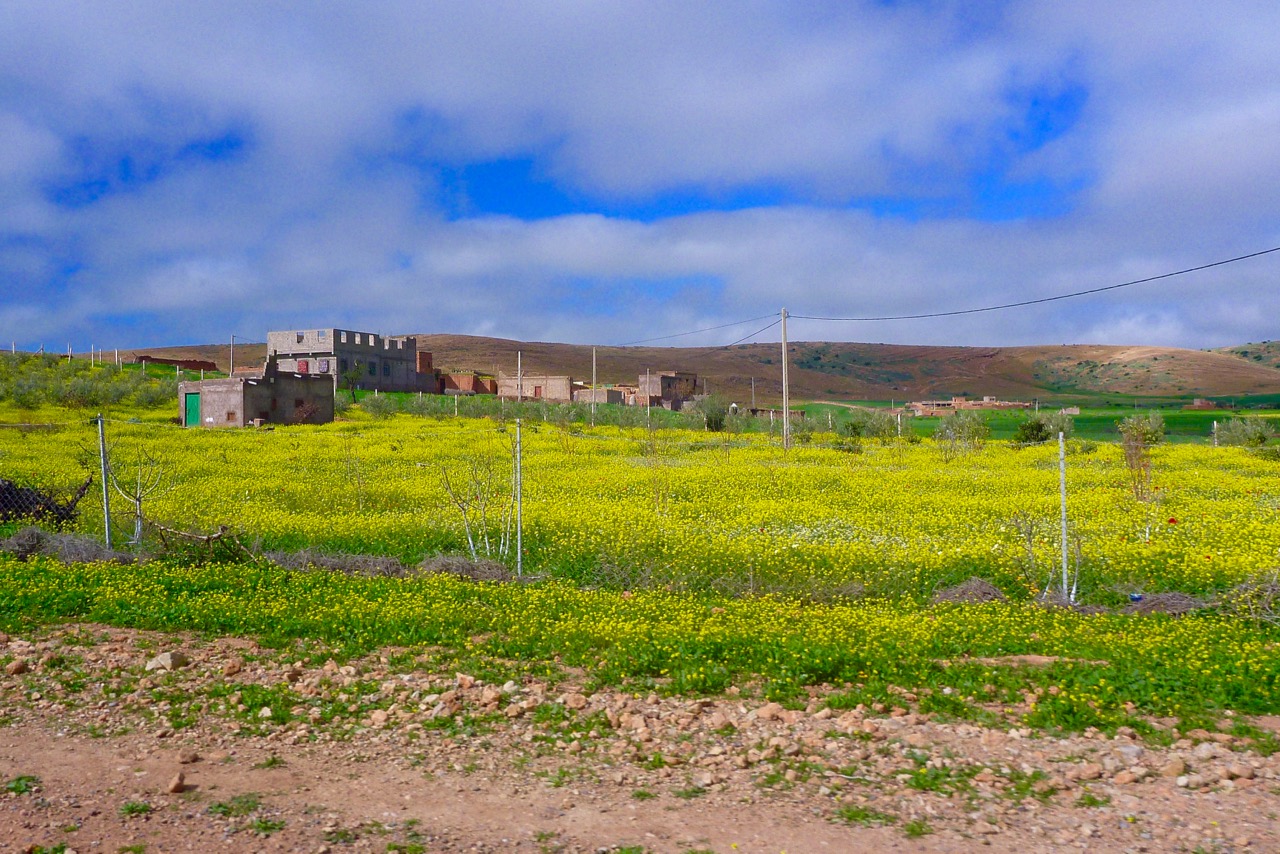
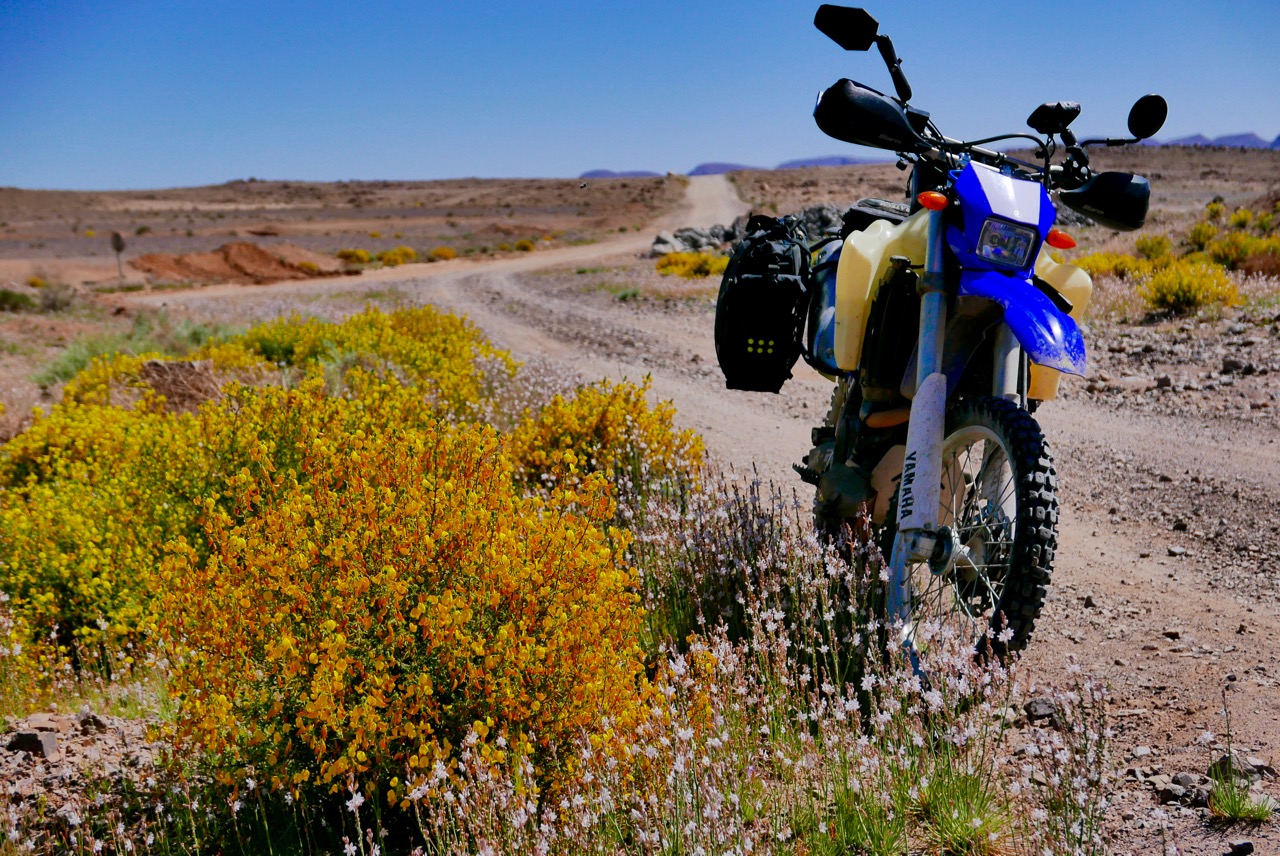
Wildflowers are out.

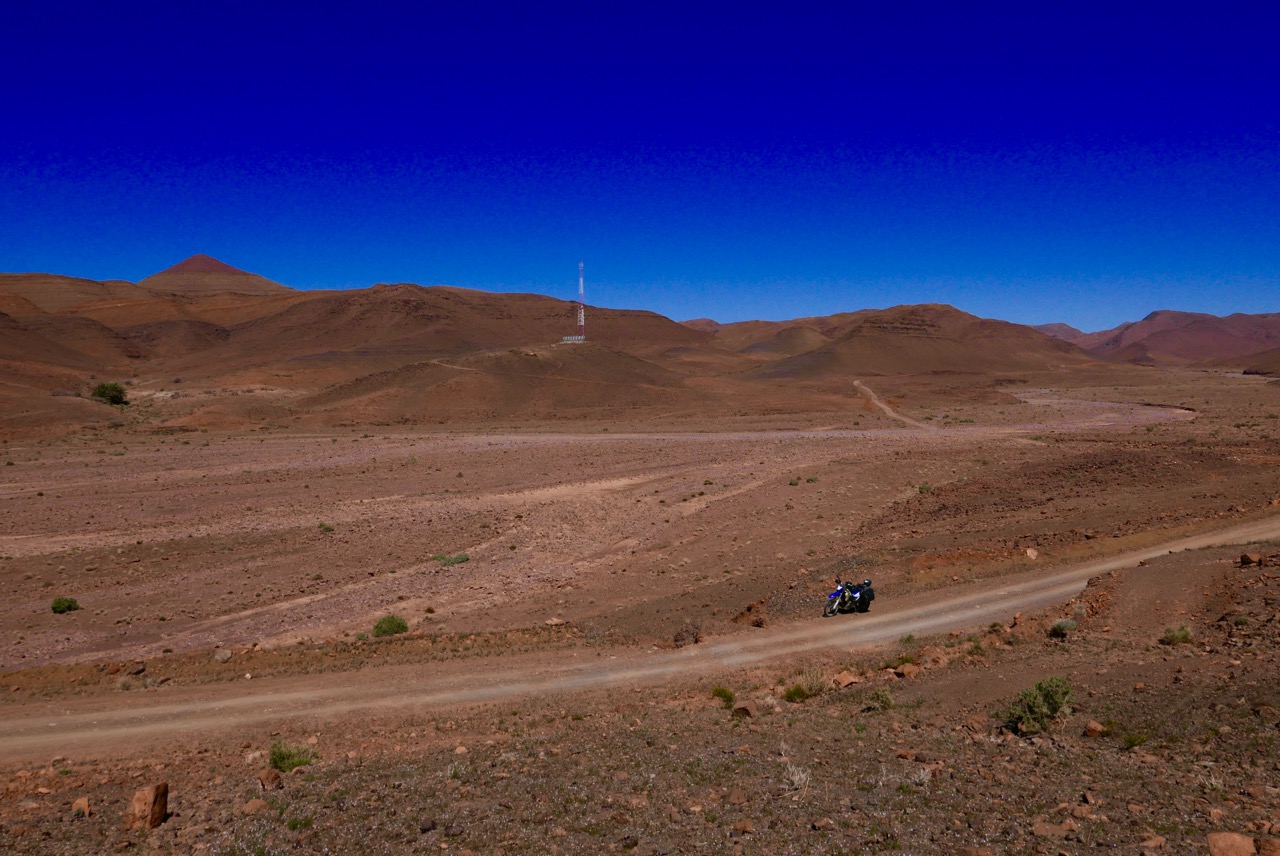
I’ll take the odd mast over photo-bombing telegraph lines any day

The ruins of Assaka ksar.

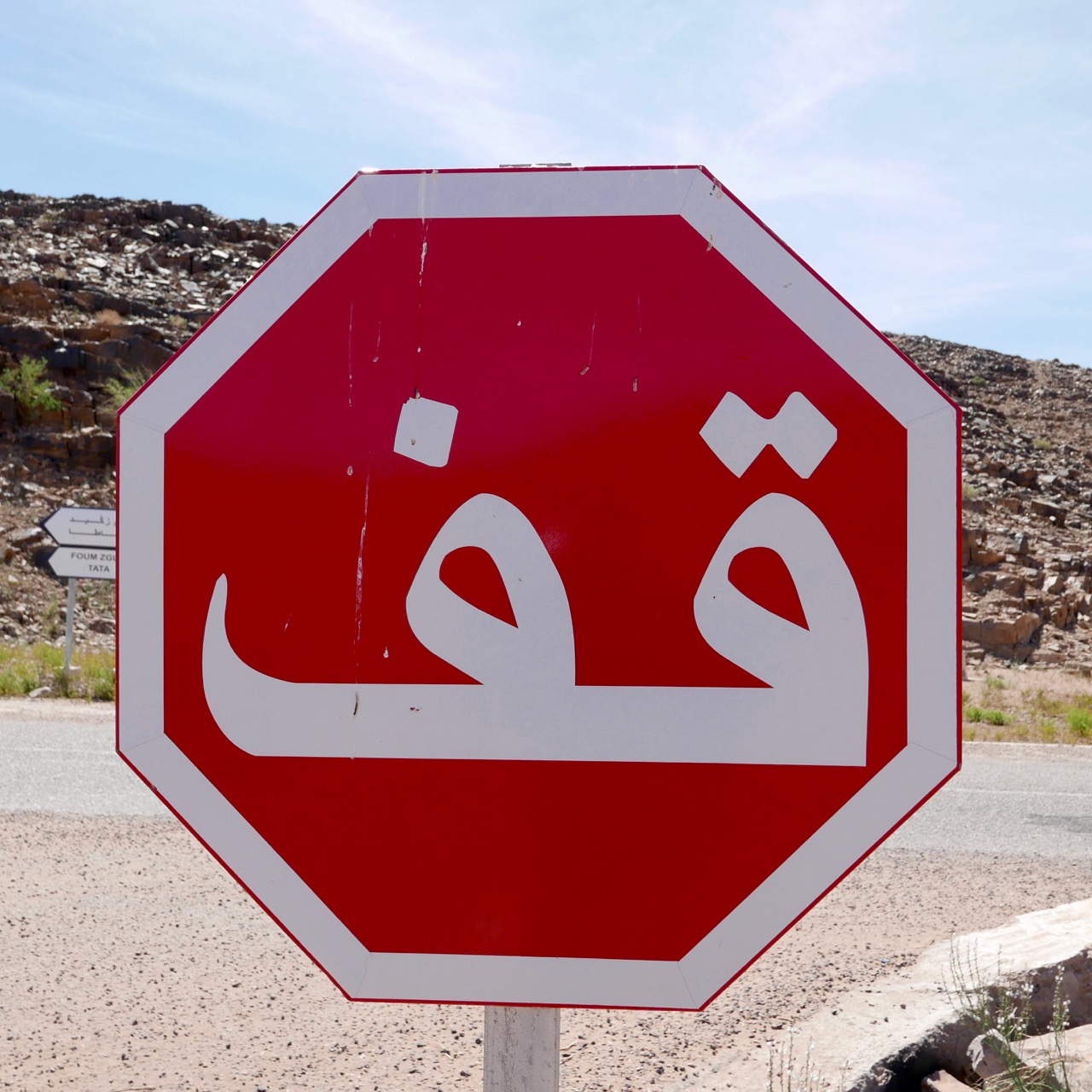
No Canoeing? Shame.

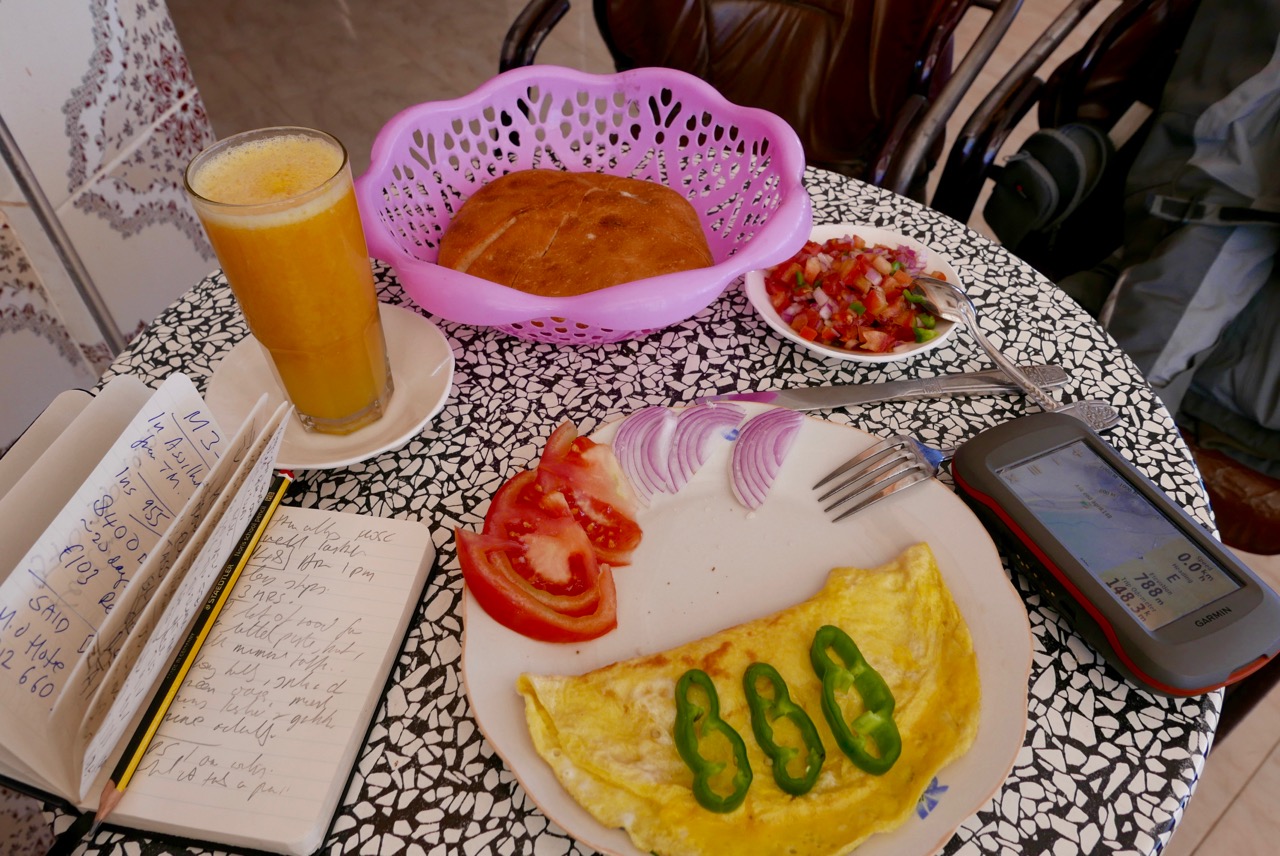
Perfect lunch at Foum Zguid roadhouse

A good morning’s work – but it is now as hot as.

I check out a flash place for a future tour, then head into FZ for my reliable cheapy: 16 quid half board √

At 14-47 my bike is over geared even on the road, and my weight and wide pans don’t help.
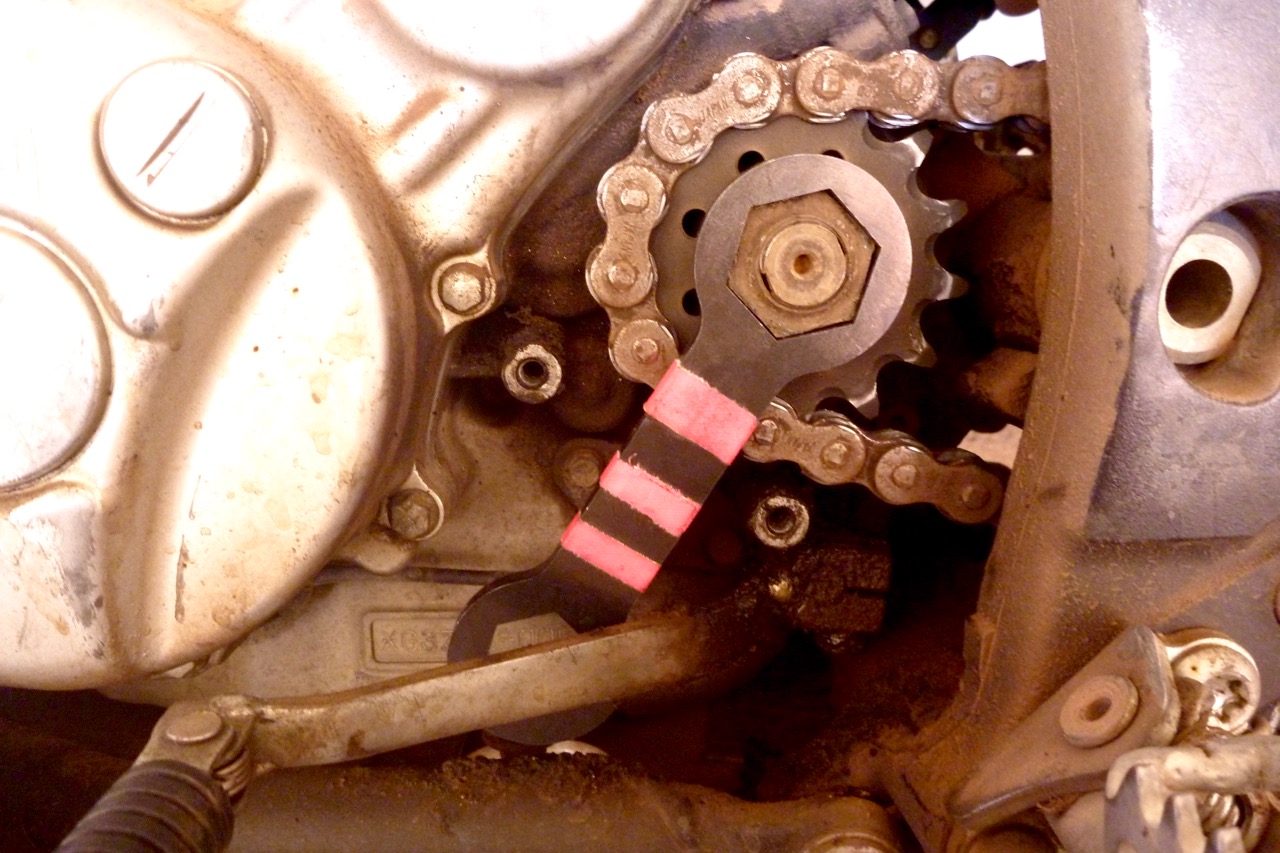
But the flat wheel wrench won’t fit – who’d have thought? – so I nip into town to blag a 27 socket as there’s gnarlier dirt to come…

Part 2  > > >

XSR 700 Scrambler – XVS 950 front wheel

XSR 700 Scrambler index page

bolt-xvs950r

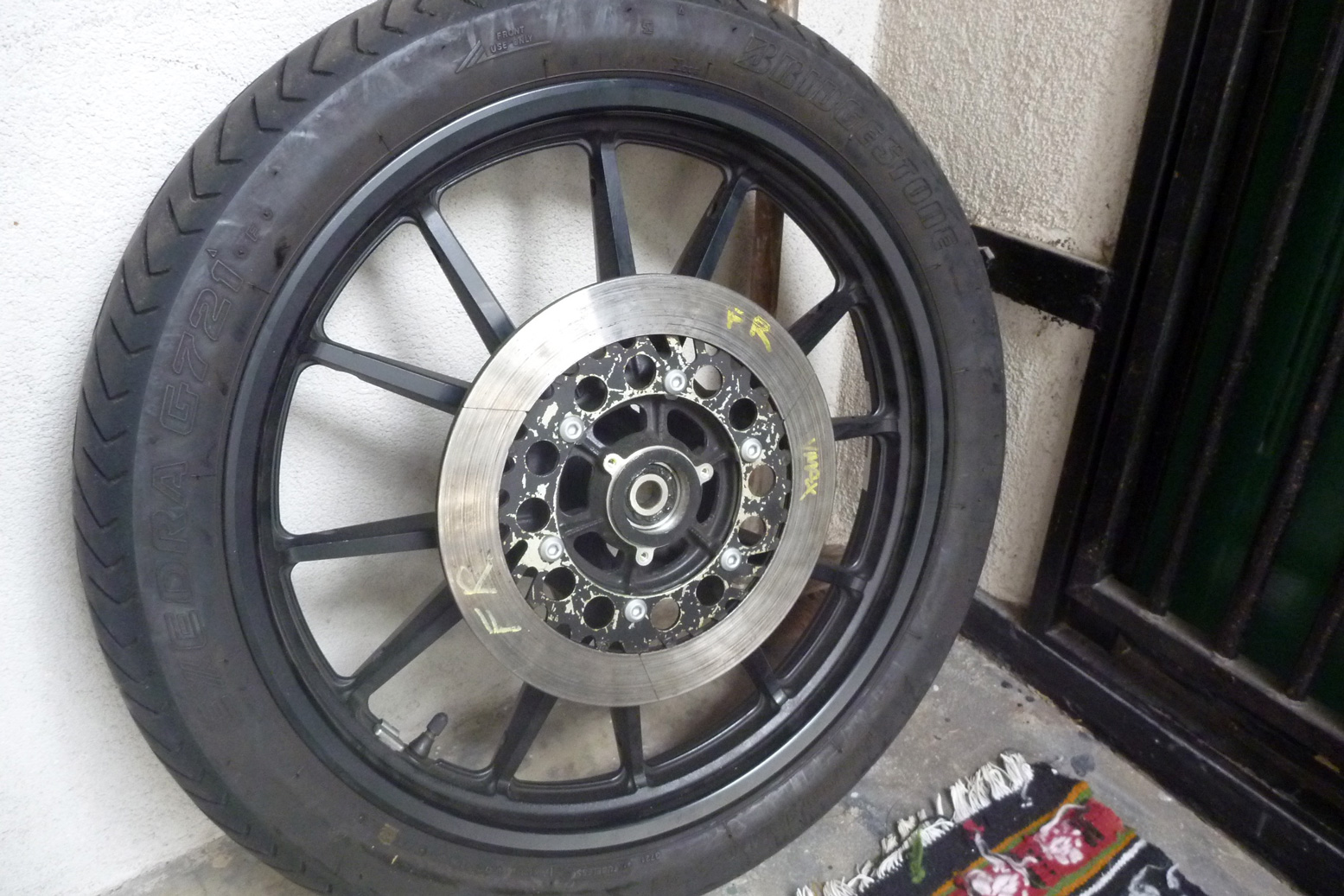
This whole project kicked off by taking a chance on the front wheel of an XV950 V-Star Bolt (left). It’s what Americans call a ‘compatability swap-out’ and the wheel had been sitting on ebay for months; £130 with tyre and one bearing.

scr950

No wonder there were no takers; a V-Bolt is a mock-Sportster – something which proper Brit bikers would probably scoff at (while secretly fancying). Being V-twins, ‘Sports Heritage’ XVs are of course very popular in the US and the recently released, 250-kilo wire-wheeled SCR 950 Scrambler (right) is virtually the same thing, but about as ‘scrambler’ as Triumph’s effort (or mine), and I suspect doomed to low UK sales. The recent Ducatis and BMWs are much cooler.

Boredom alert: I learned things the hard way doing all this so go into unusual detail to save others on similar projects from making the same mistakes.
xsr19

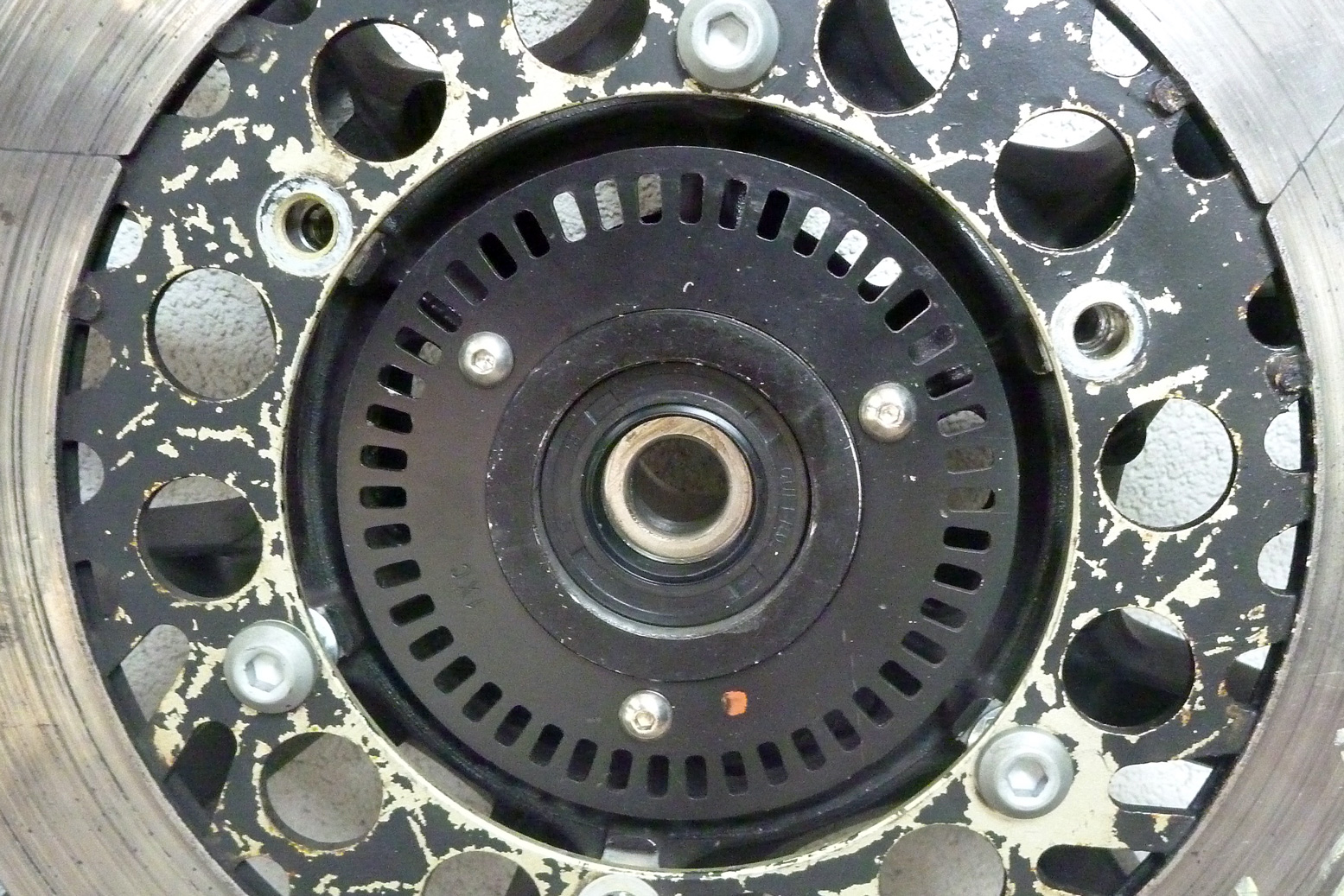
An XV runs one, 298mm disc on six bolts. I needed a 282mm-rotor if I was to try and reuse my calipers. Many internet hours passed – distant stars exploded; babies were born; a celebrity sneezed. I discovered that FJ1300 and V-Max rear rotors, and good old XT660Z fronts come in 282mm/6 bolt. Cheapest was a V-Max for 40 quid; new OE bolts were another £10.

xsrtwowheels
tracerbrake

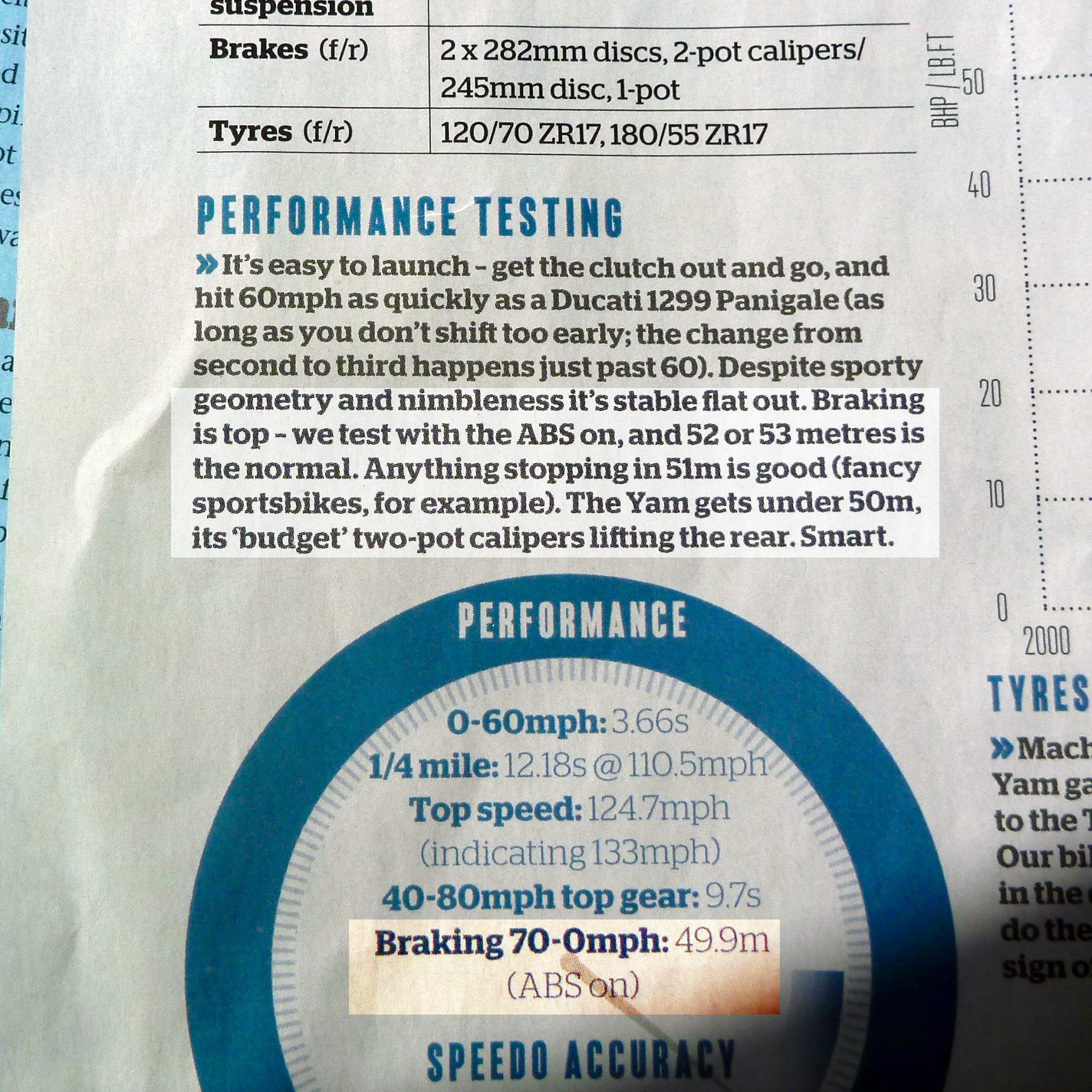
Notice I say ‘disc’ not discs. The XSR and many other bikes get unnecessarily fitted with twin discs. It must be some sort of marketing cue which goes over my head and is certainly not related to outright performance. Discontinued XT660Z: twin front rotors; forthcoming T7 with 50% more power: single front rotor; HP2 Enduro/GS12 is another example. No denying it; XSR brakes are great; Bike mag (left) recently logged a Tracer 700 pulling up just as well as high-end sports bikes. On my XSR I believe they’re overkill and add unsprung weight. With a single braided line and 3-4kg saved, the suspension will like it.
In fact (and annoyingly), the XV wheel is nearly a kilo heavier, even with one disc. Oh well, I’ll save by ditching the second caliper.

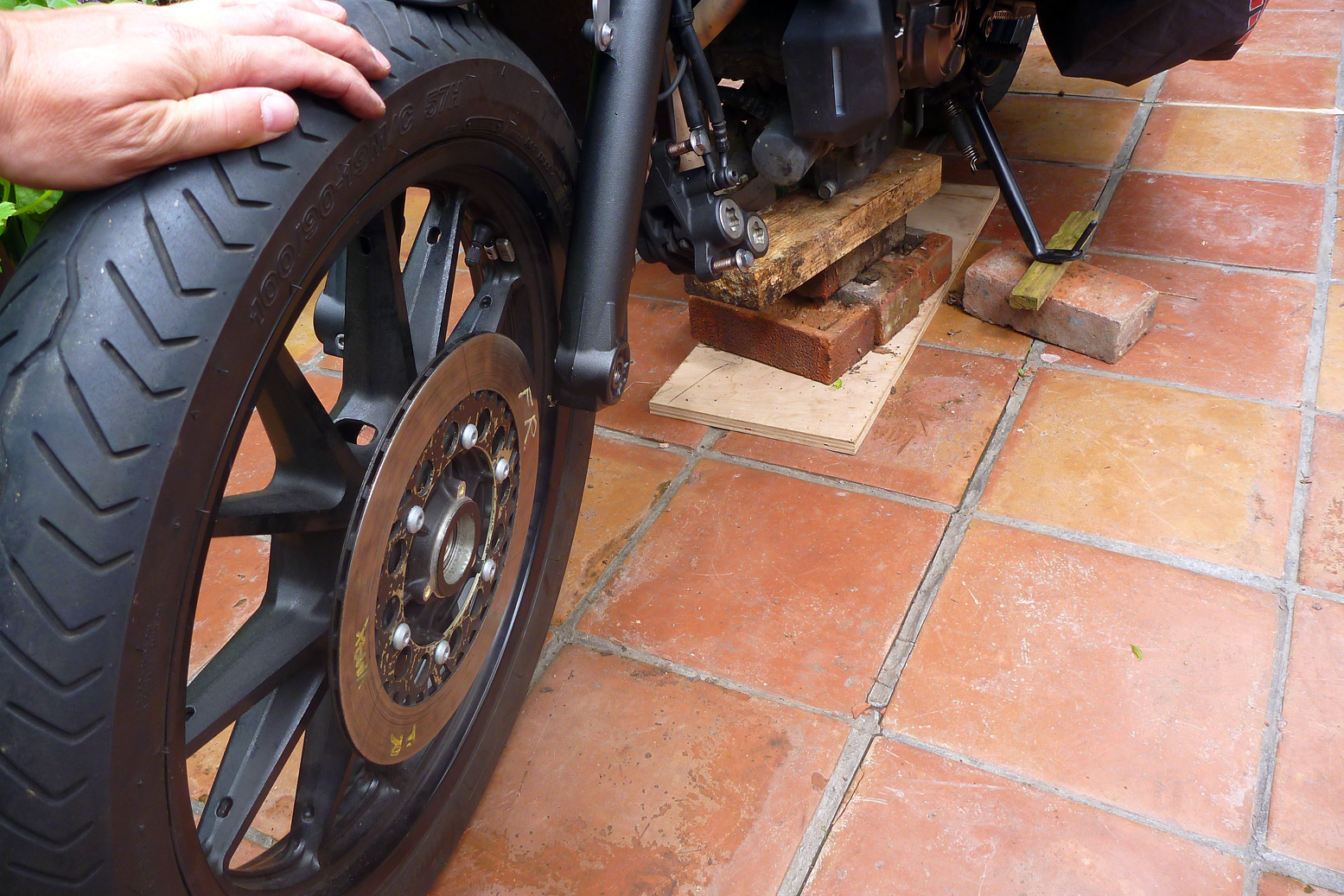
Getting to the point of removing one wheel to offer up the other had taken quite a while. I live on a hill and have nowhere to work but the street. Luckily a neighbour let me use her back garden if I didn’t mind removing and replacing the alleyway fence. A scan on Gumtree brought up an trolley jack down the road for 20 quid and at last I was in business.

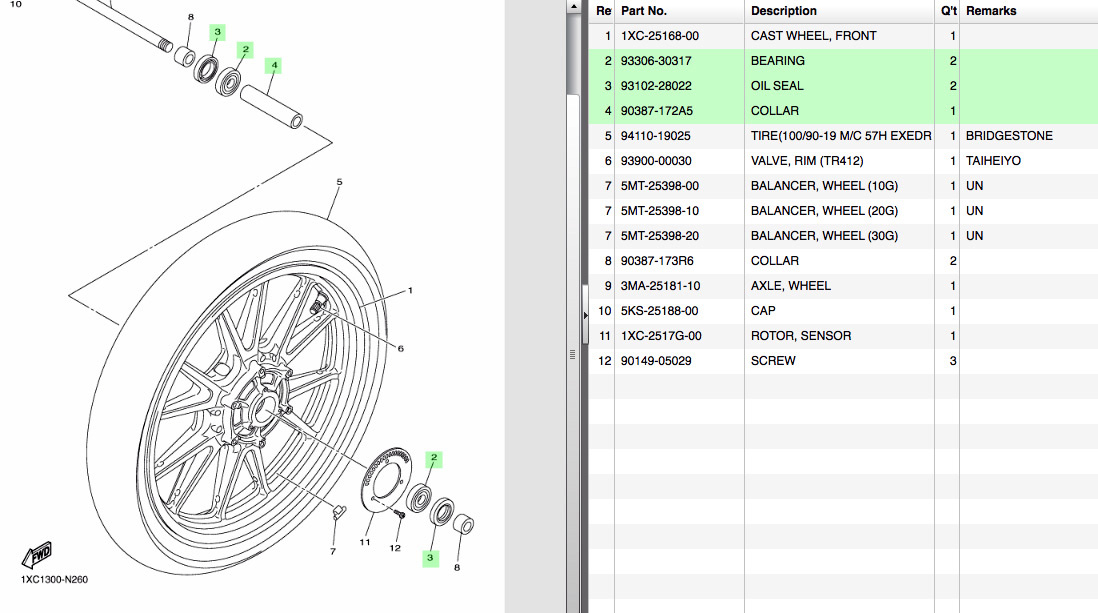
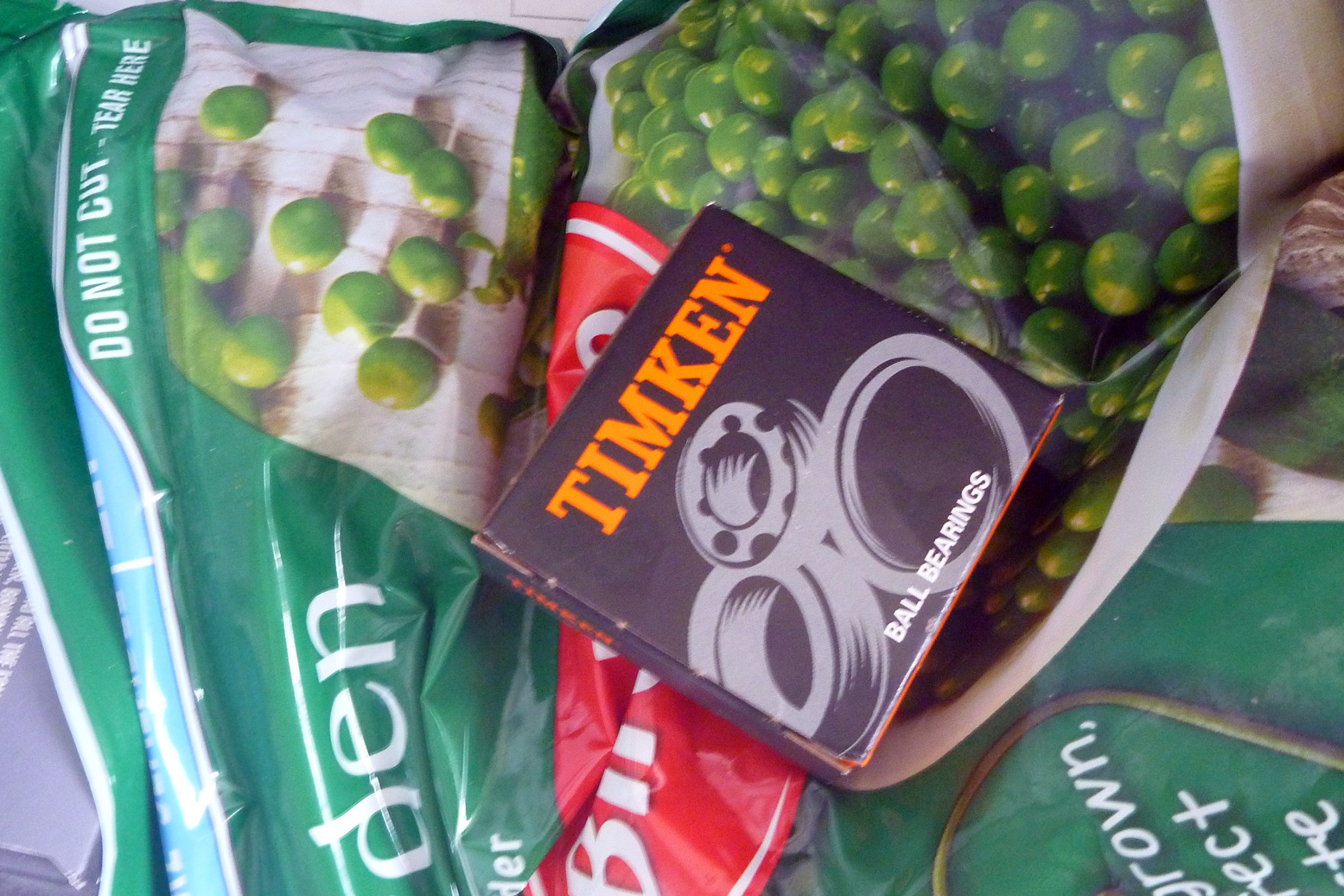
I’ve long known OE bearing prices are an easily dodged scam (see this vid). Down the Yamaha dealer that’ll be 21 quid for the missing wheel bearing, but this commonly sized bearing is classified as a 6303. Seven quid for a top-of-the-range Timken jobby (right) from a bearing shop in Croydon, or about the same posted online. These places might have done dust seals too, but I didn’t want to push my luck; they must match the wheel spacer ø, so that’s a tenner for a pair posted from Wemoto.

I also needed the in-hub collar/spacer that goes between the bearings. I tried used online but couldn’t find the exact width (fyi: 70mm x 24mm out ø x 17mm in ø) so succumbed to new for £13 posted from Fowlers – the Partzilla of the UK, but without competition-driven discounts. Another ten days pass by.

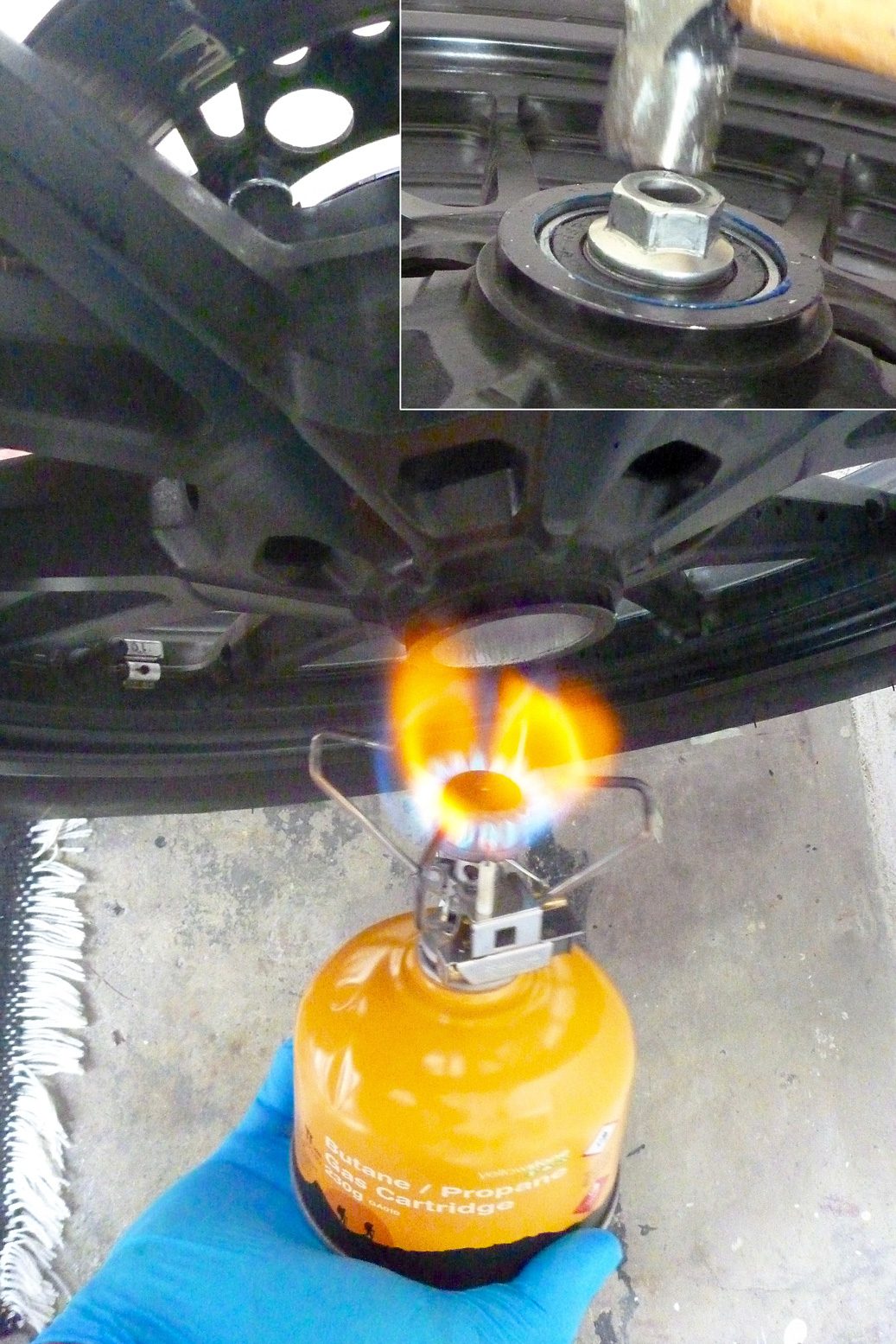
Good video below on wheel bearing removal and installation. With one bearing already installed, I was able to use the spindle as an alignment guide, gently tapping the frozen and greased bearing round the outer edges with a 22mm socket for the final push into the frame heated hub.

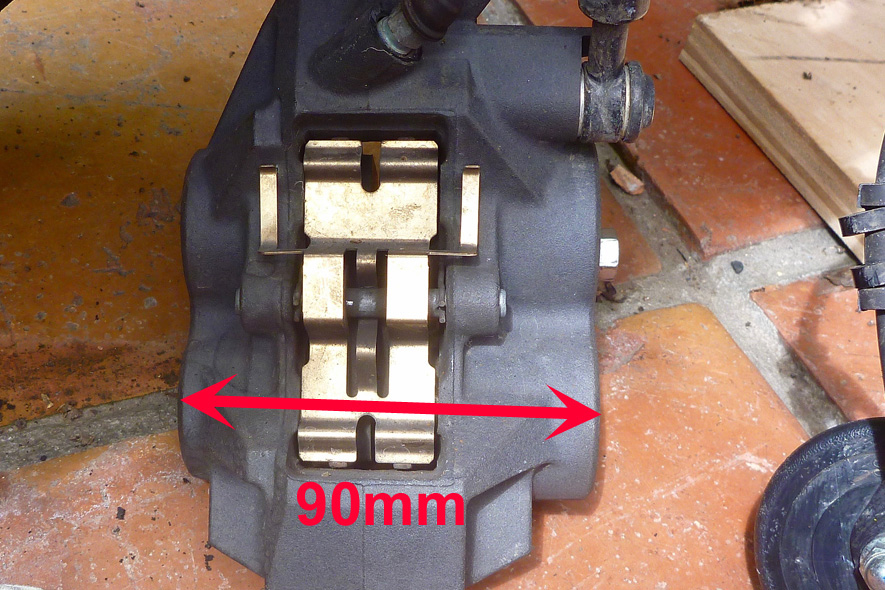
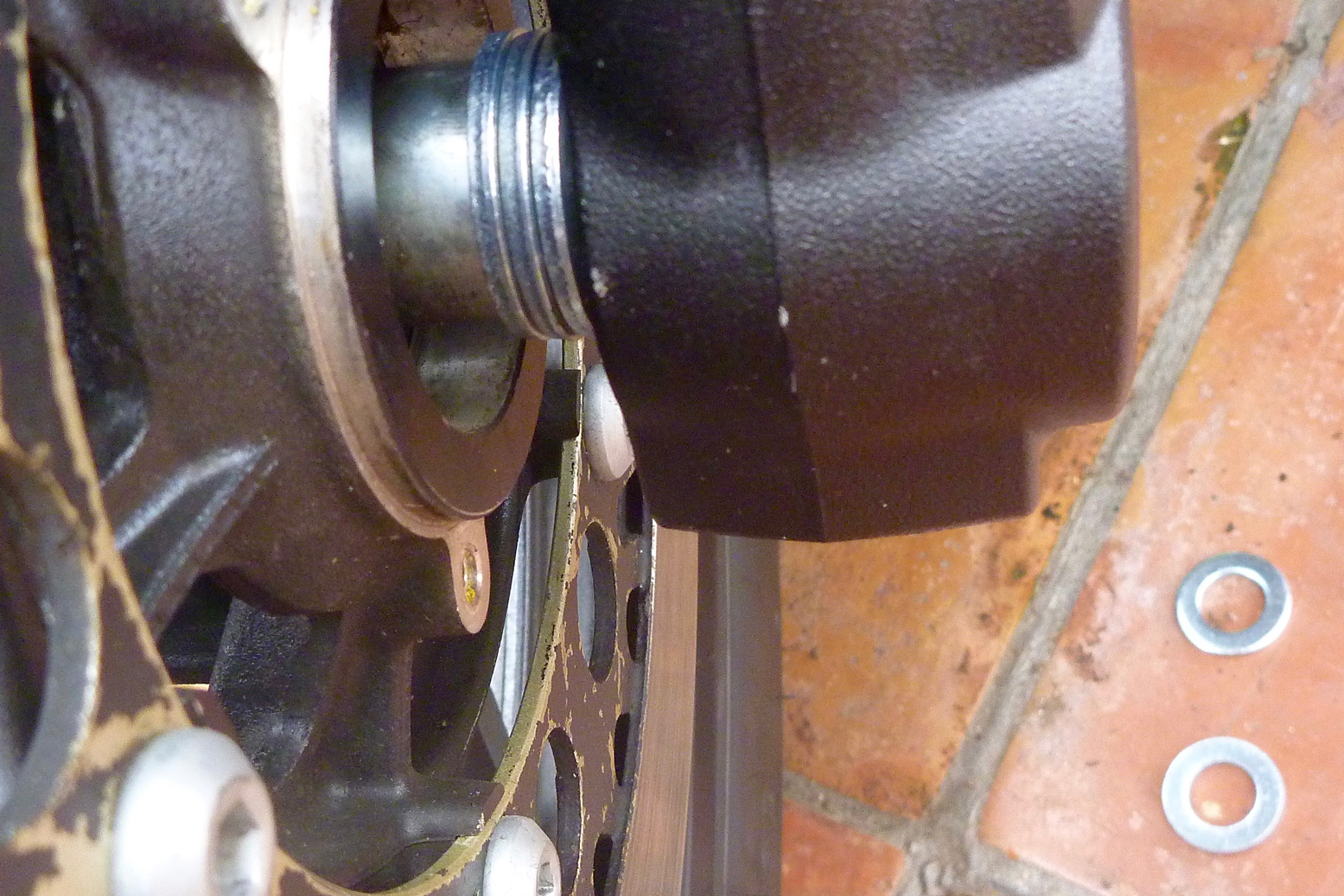
The XSR’s calipers are so fat that you have to remove both to get the fat OE wheel out – never seen that before. But offer up the XSR rotors with the new wheel loosely in place and – CLANG! – the 90-mm wide four-pot XSR caliper fouled the XV cast spokes.

Stars exploded, babies were born… and many hours and Photoshop alignment estimates later (right), I decided an XV950 caliper (below right) would probably fit my fork mounts. I tracked one down in Texas for just $25 + the same again in post and tax. Stars… babies… celebrities… Another ten days pass.

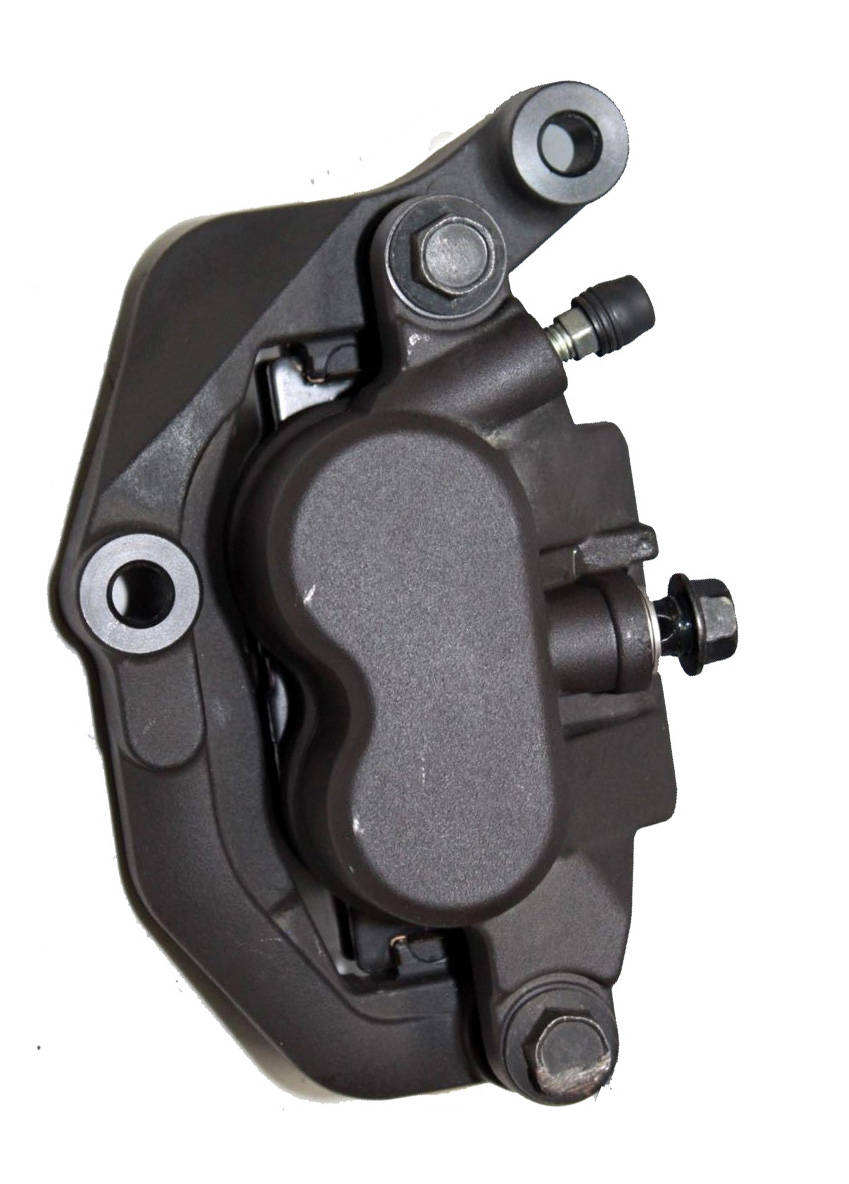
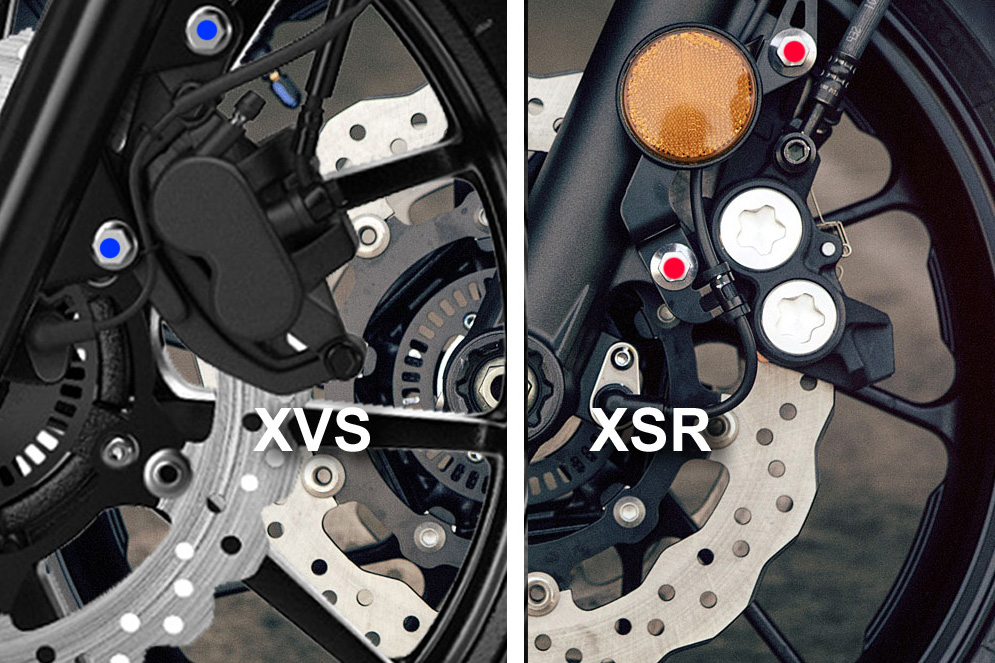
For a while I’d got hung up trying to track down a used Blue Spot caliper like my TDM900 had. R1s had them too; best brakes I ever did use. But it slowly dawned on me there are two (maybe more?) types of Yamaha disc brakes. Your cruisin’ XVs run slimmer, sliding twin-piston calipers (above left). An XSR’s opposed 4-pot unit is Blue Spot in all but name; very powerful but bulky. The less powerful sliding-caliper hydraulics are mildly compensated by the larger, 298-mm XV rotor (more retardation). My 282-mil vented V-Max (left) disc is smaller, but my bike is at least 60-kg lighter.

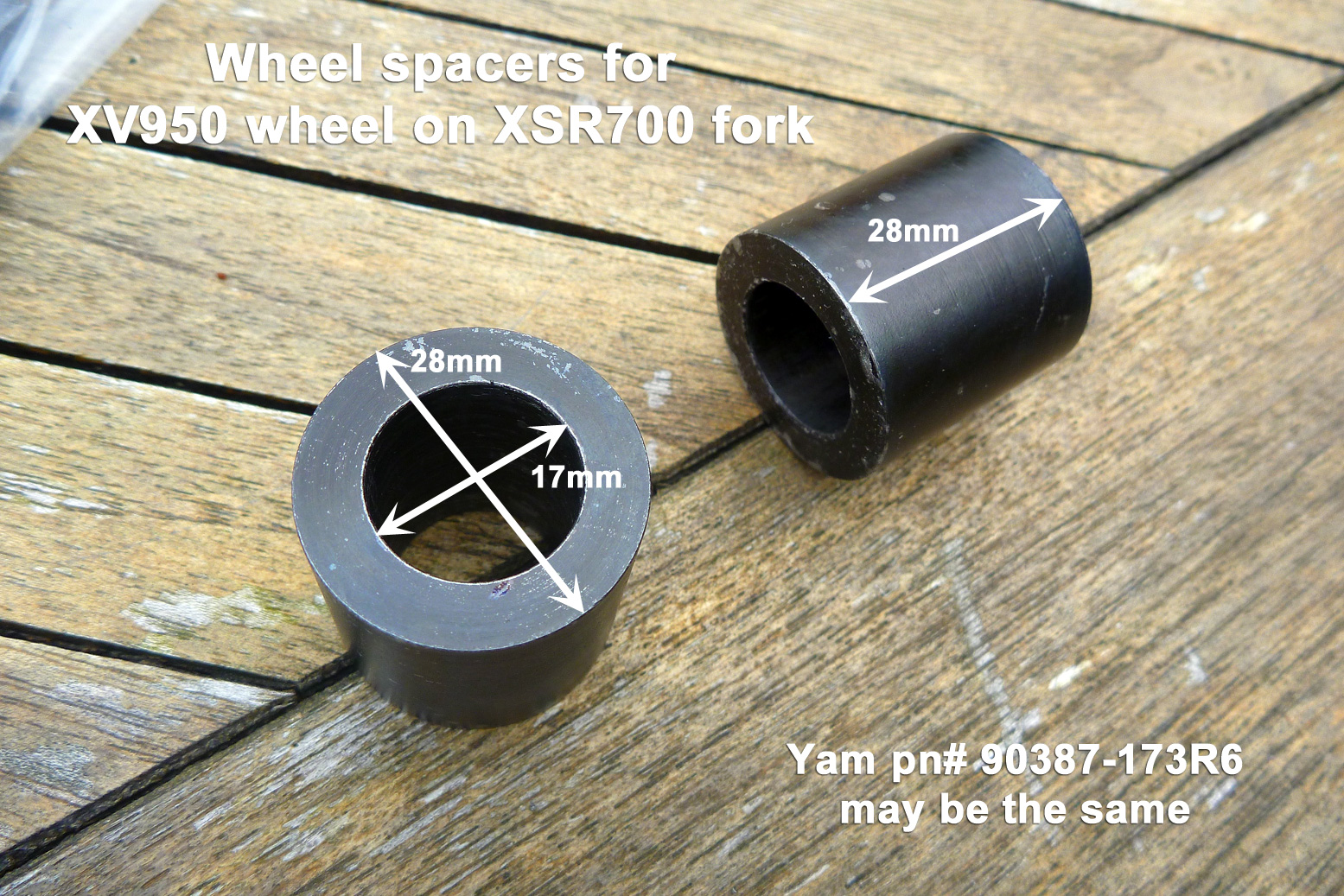
All lined up well on the same-diametre 17-mm XSR spindle by adding three and a bit 3mm washers to centre the wheel. The XSR’s spacers are 20mm ø x 17mm long (with a 17mm bore). What’s needed here is 28 x 28 on 17. Such wheel spacers are probably the same as XV items (see below left for pn) but the only way to find out was buying and waiting another ten days. Luckily, Desert Rider Jon is a mate with a lathe who likes this kind of challenge and made them almost overnight.

xsrdiscspacer

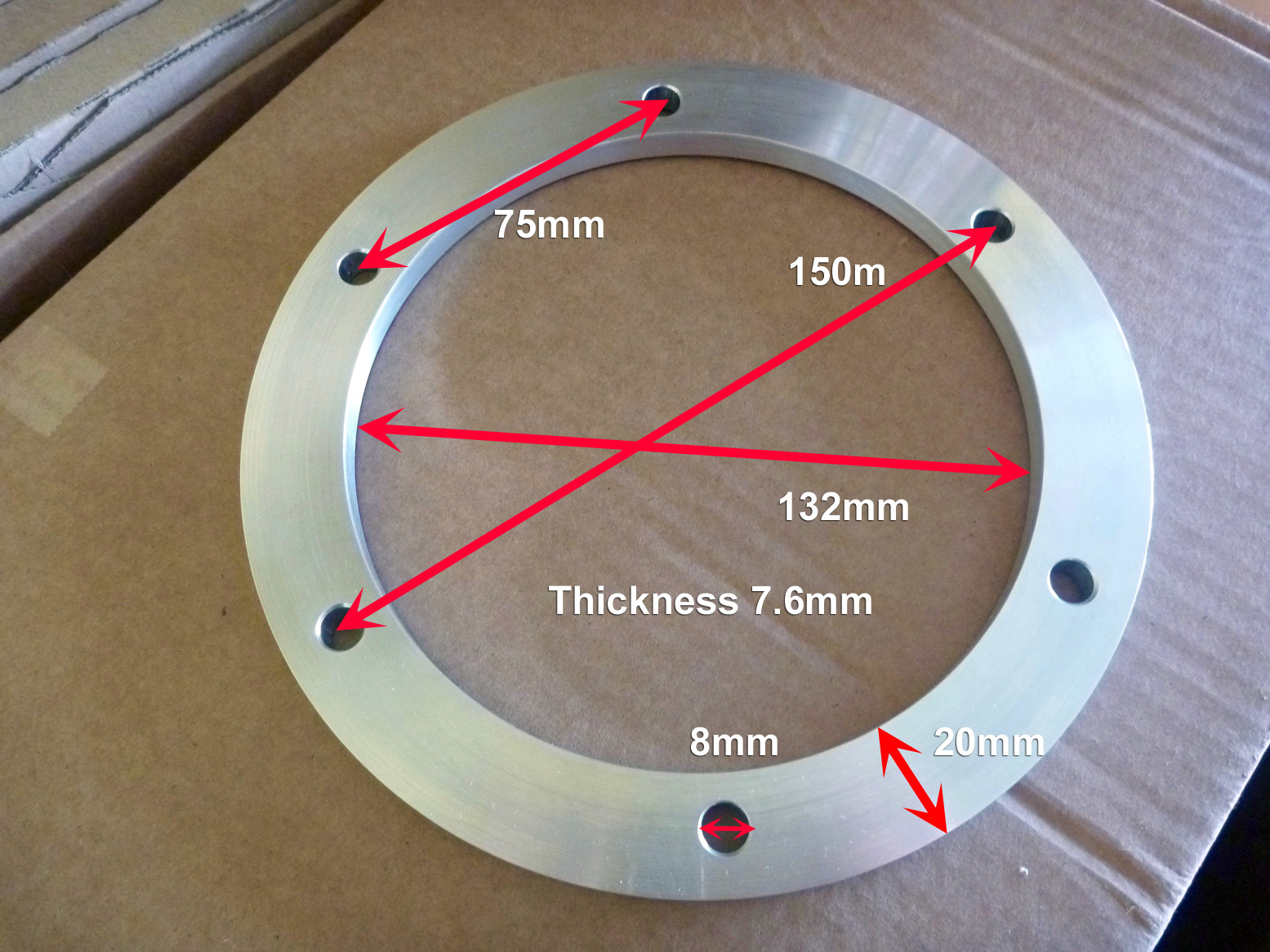
All this requires a 7.6mm rotor spacer to move the V-Max rotor out to line up with the XV950 caliper bolted to the XSR forks while avoiding caliper-spacing washers. Don’t know if the vented V-Max rotor is thicker or undished unlike an XV, but you only have a mm or two to play with for clearance in the caliper’s jaws.

Jon is milling one out in alloy for me. So this 7.6mm rotor spacer (right) is just about the only custom part needed to marry up an XVS wheel, spacers and caliper with an XSR fork and a 282mm V-Max rotor. You could use nuts as rotor spacers but I figured a fully surfaced spacer would be better at transferring the heat.

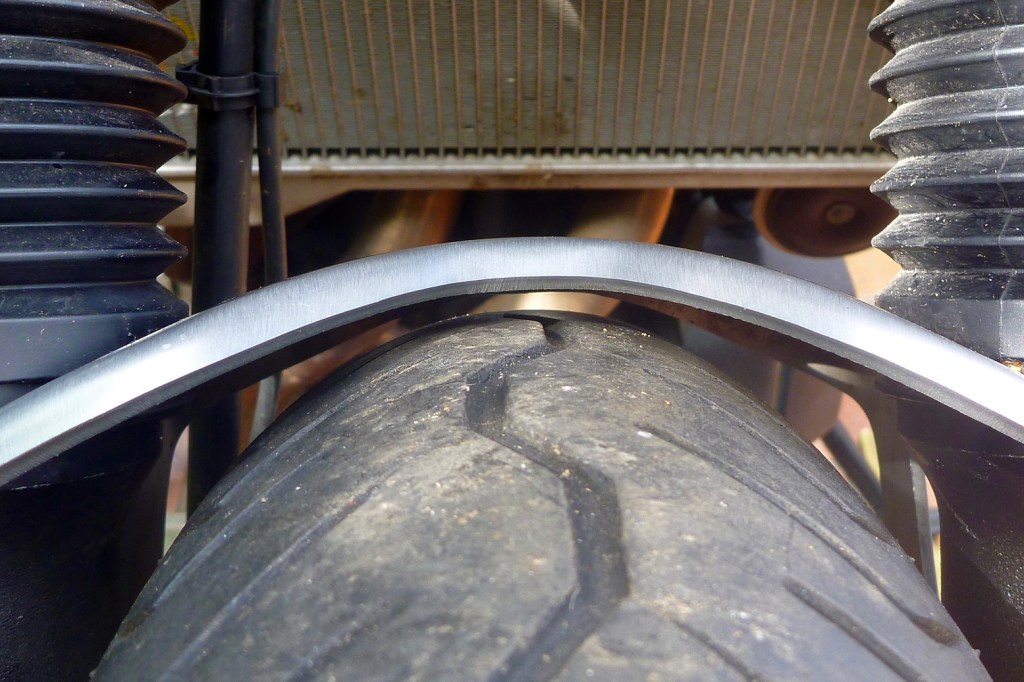
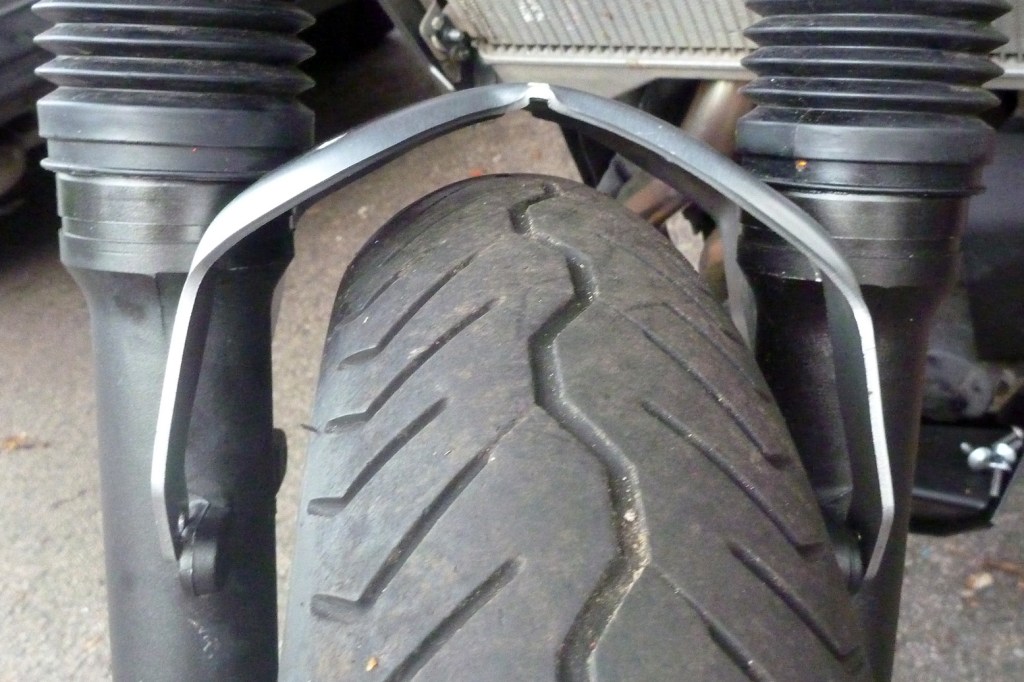
Sorting the caliper and spacing was the main challenge in this 19er swap-out. The brace now has only 5mm tyre clearance (above left). Mounting the trials guard on top will be easy, but I may get the brace re-done too – also an easy job.

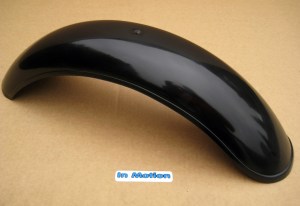
Or, with a bit of a nick, I may just bend it in to give it more lift and more curvature (above right) to take the rear fender; a plastic universal trials rear for £28 from In Motion.
I estimated the tyre to radiator lower edge clearance was 180mm; the forks are said to have 150mm of travel which leaves 30mm; just enough for the slim, plastic  mudguard. This trials guard will be way wider than the new tyre so won’t look that great but will sure keep the muck off. Skimpy front fenders are for the beard & tatts brigade.

I was now ready to unbolt the XSR brake lines and calipers, feed in and bolt up a single 850-mm braided Venhill brake hose (£30), top up with DOT 4 (£2.99) and bleed.

xsr-abslhs

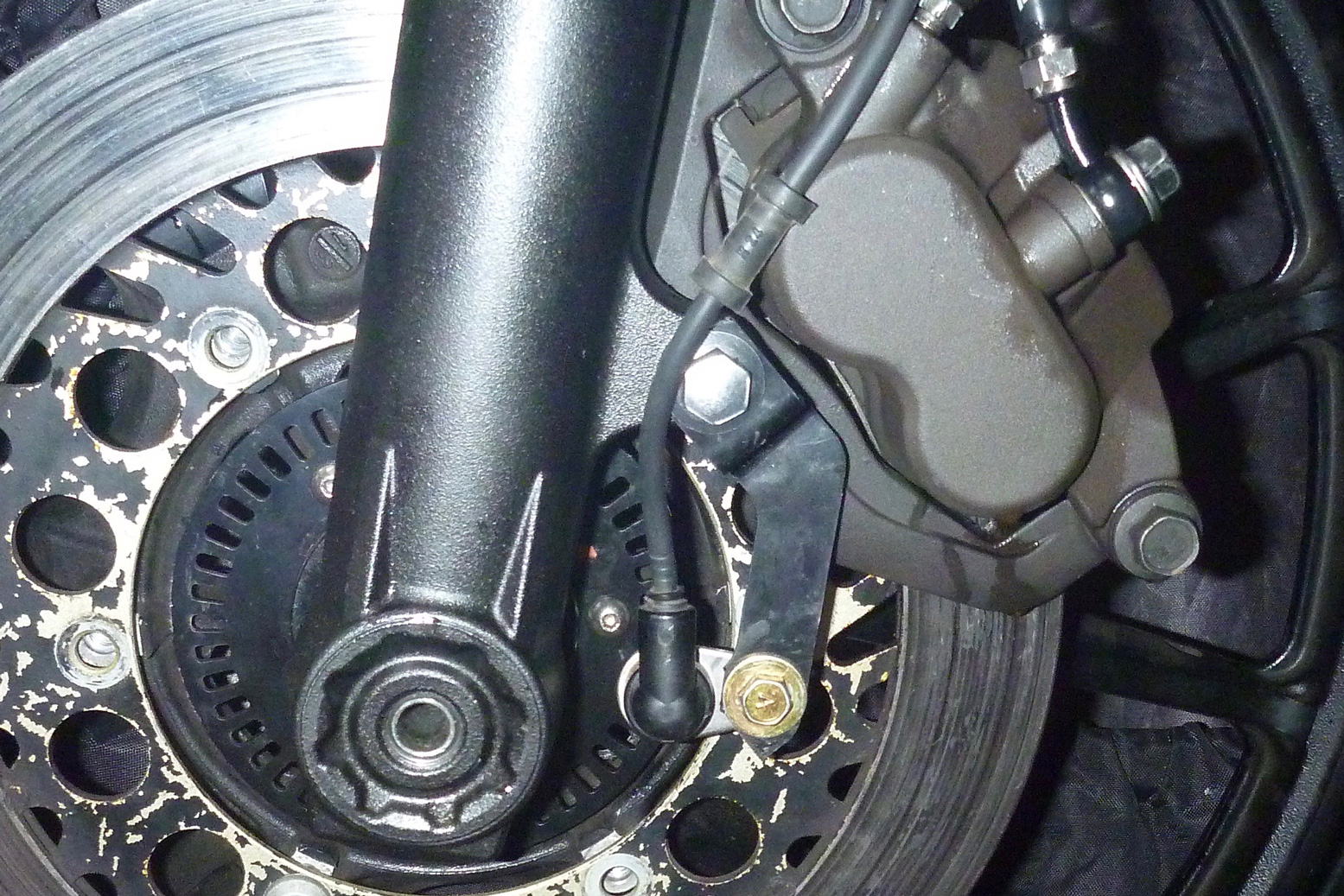
By chance the ABS sensor fitted by reusing a sawn-down reflector bracket (left). Only one washer and no bending required. The XV’s ABS ring (£40 new; £20 used from Germany) is on the disc side and a bit larger than the XSRs (originally on the other side) and in the 400-m ride back to my place it seems the XSR’s ABS computer didn’t like it and the light stayed on. That may take some sorting, but at least I have brakes.

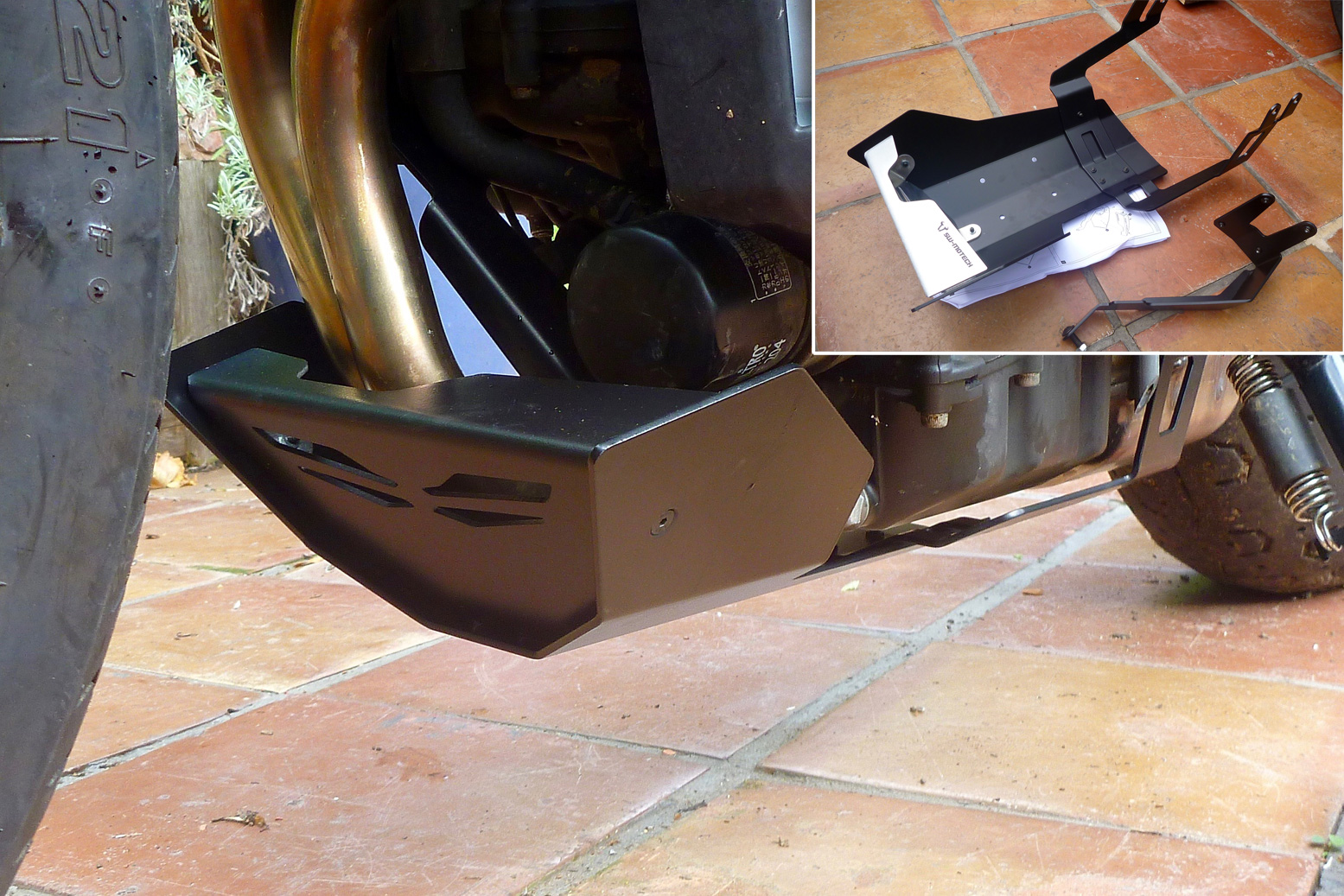
Other stuff. I bought a SW Motech ‘spoiler’ (£120) to double up as a sump guard. It’s pretty flimsy in 3mm alloy, and I think after Morocco will be wrecked, but that’s all there is and better a bashed bashplate than an unguarded sump. I may rivet on some more plate. As you can see, I sprayed the front unpainted bit with a few coats of plastic paint (and did the radiator covers while I was it it).

xsrtnj

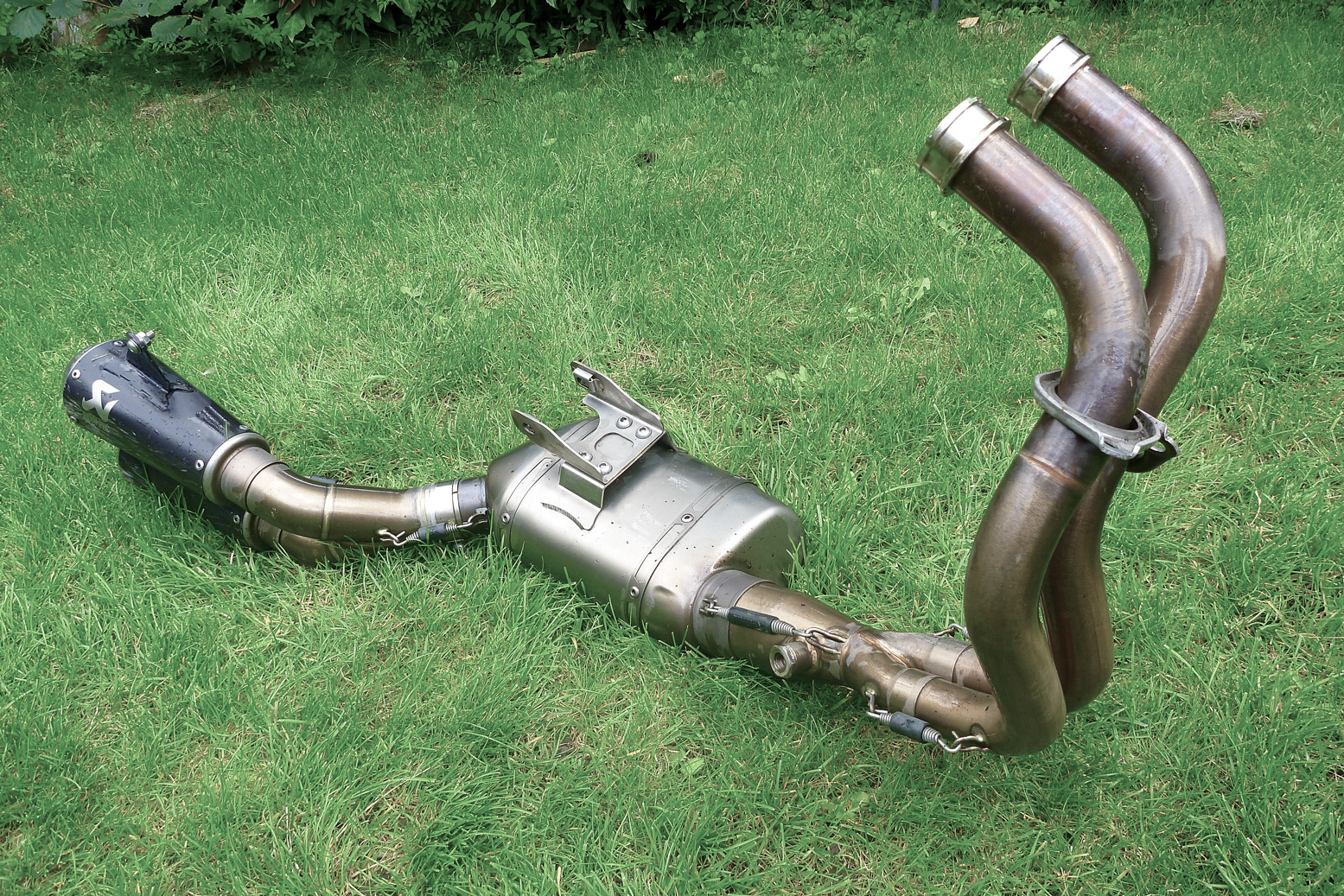
As expected, the Motech spoiler didn’t fit around my Akra pipe, but months ago in anticipation I’d bought a ‘sacrificial’ OE pipe off a new bike for £100. There are heaps on ebay right now (as with shocks) and the under-motor mass makes a good sump guard. Better a bashed cat than an unguarded sump. Interestingly, the OE pipe is the same weight (7kg) as the £1100 Akra which is now on ebay. My neighbour’s got her garden back now.

Final jobs: fit the rotor spacer and mudguard (maybe a taller fork brace?); try and sort the ABS light, if needed. Then take the brakes for a test run and consider a rear shock with a bit of lift, and extend the sidestand to suit. If it all goes or feels wrong it’s all easily reversible.

XSR 700 Scrambler – tail rack and fork preload caps

]XSR 700 Scrambler front page

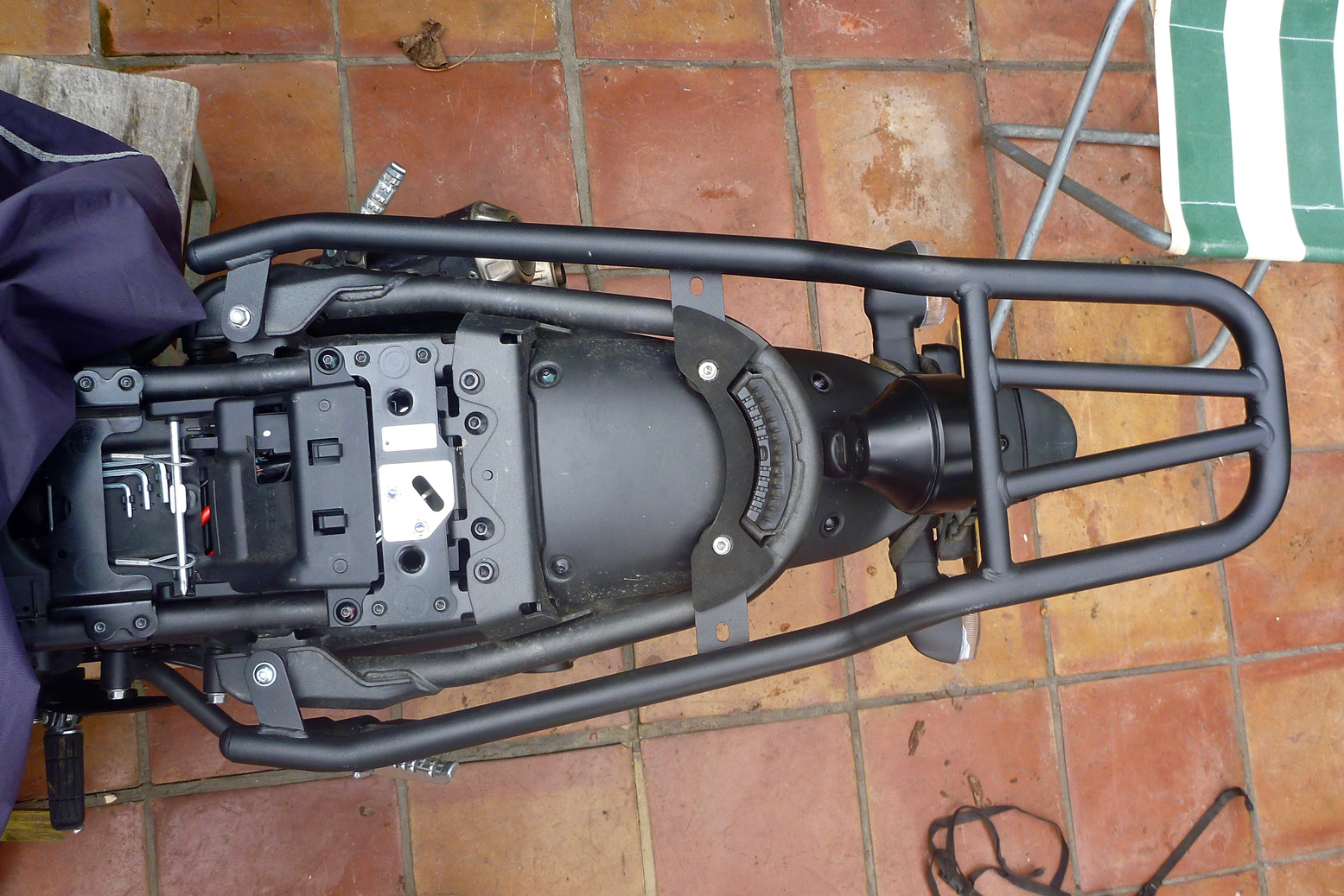
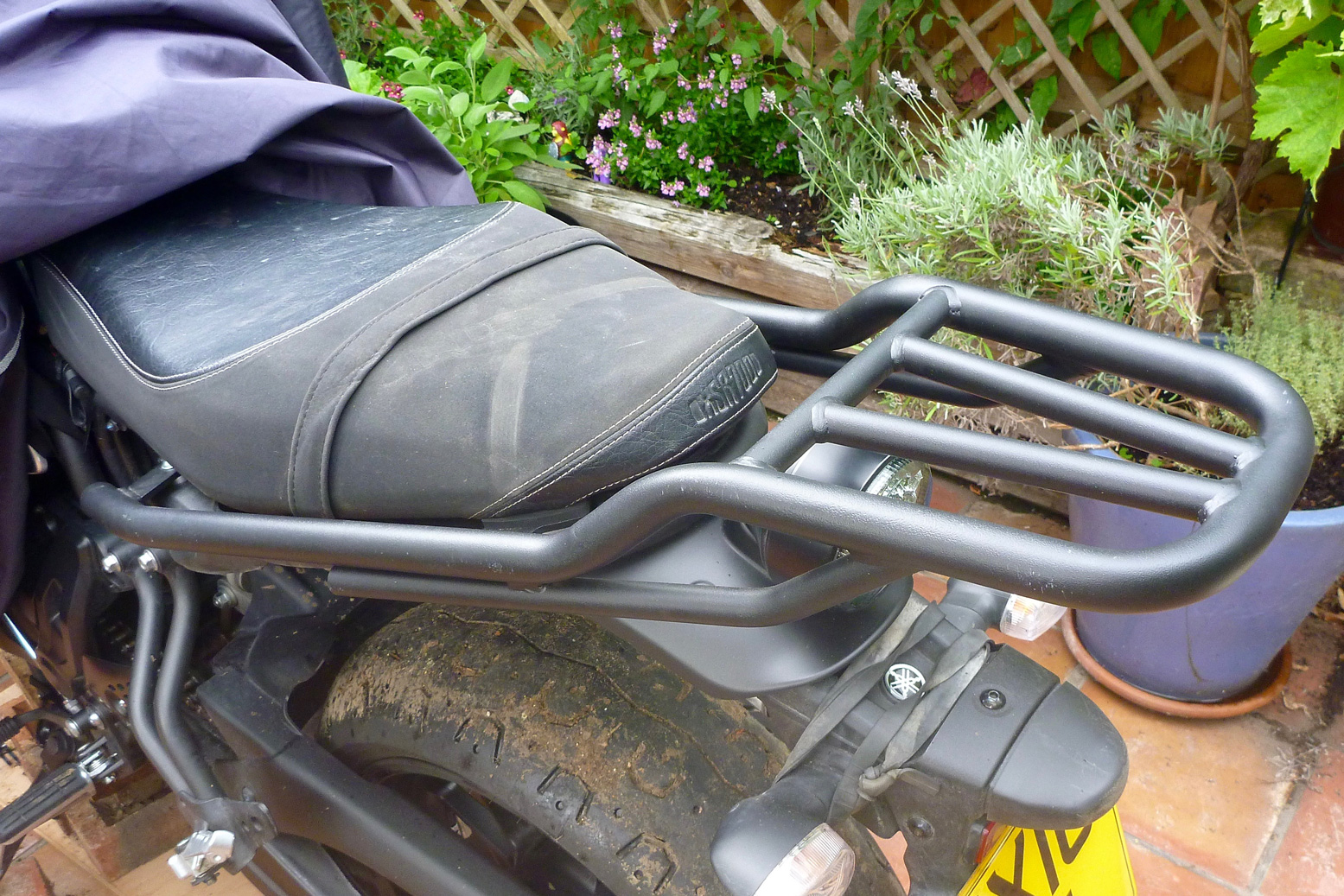
Two quick jobs while I’m waiting on wheel parts. Got a used Givi tail rack off ebay (£50 posted). At 3.2kg, it’s a heavy steel thing and a bit over-built, but mounts easily and solidly and, best of all, offers solid grab handles on the side. I find these useful for moving a stationary bike around, lashing it down, or lashing things to it.The actual rack is tiny, but would easily be widened if need be. A simple bar from this rack to the pillion footrests ought to hopefully be enough to keep some throwovers out of the wheels
Fitting  took 10-15 mins.

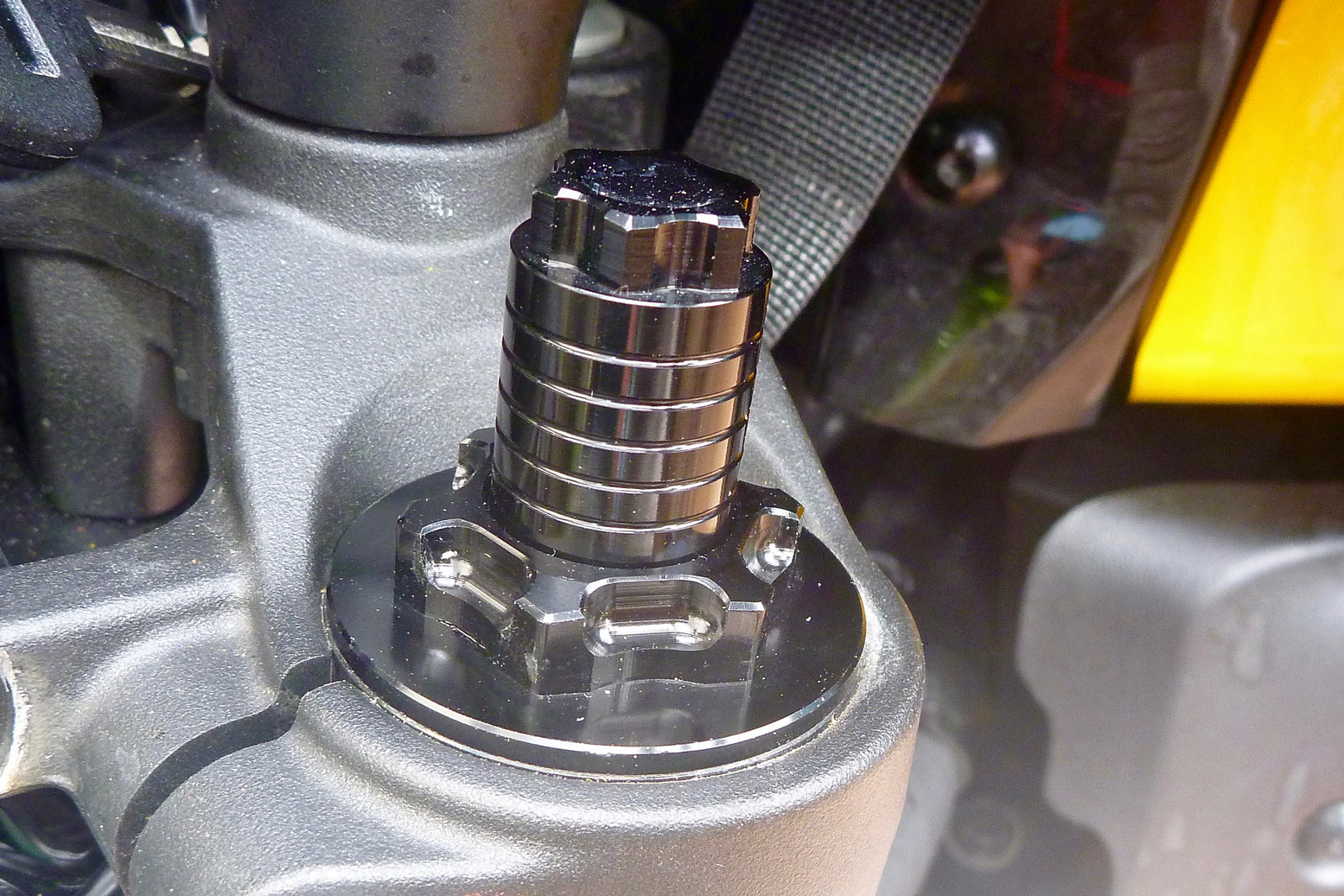
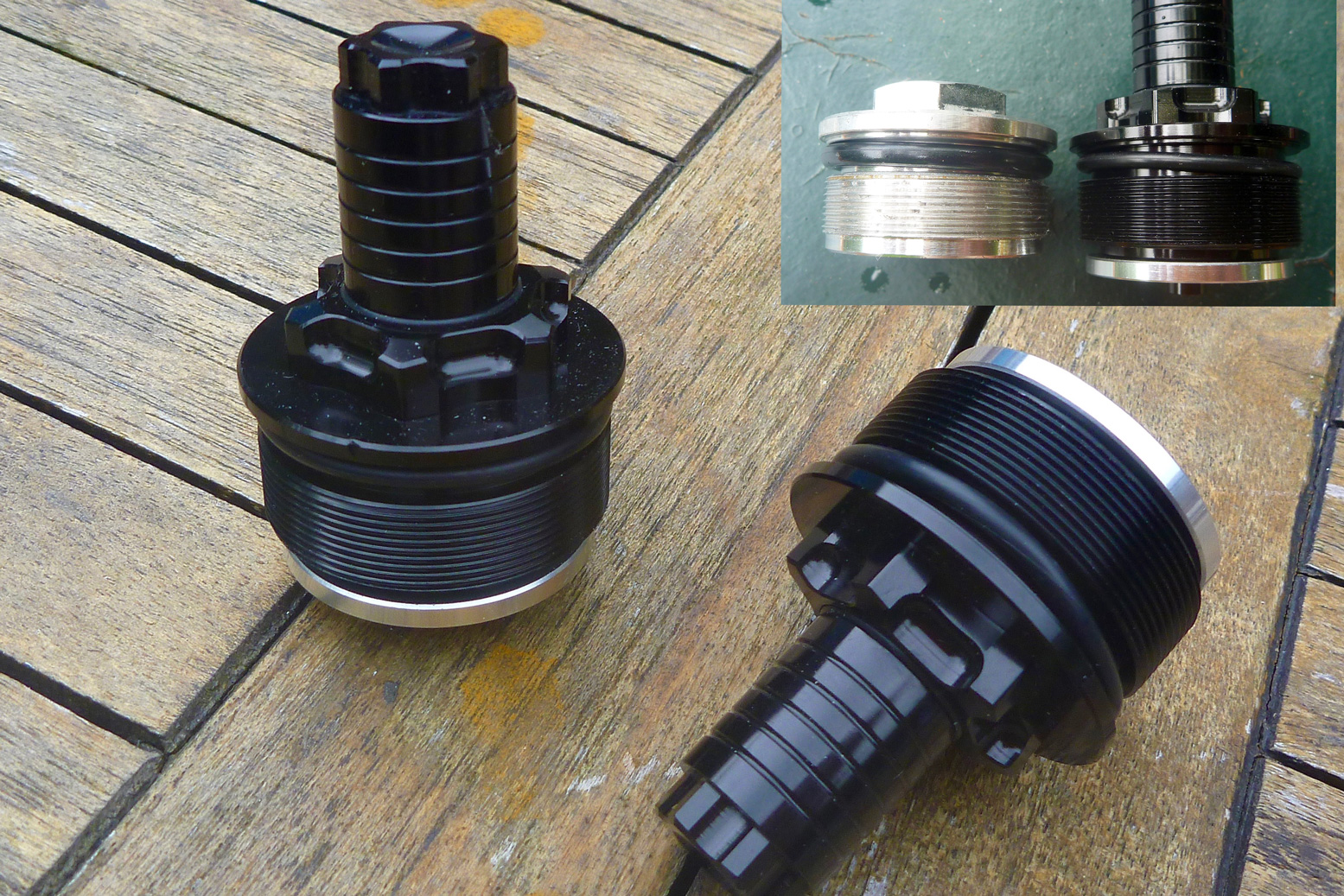
My fork pre-loaders turned up from Hong Kong. Basically, a pair of fork caps with an external screw pushing a plate down on the spring. In the old days we used to stick coin stacks under the fork caps to do the same thing, but with these you can do that plus easily tune in about an inch of preload. They look as well made as the OE caps, with o-rings and a good finish, but weigh at least twice as much. Better skip lunch then.

I’m not expecting any improvement in the fork action, just the option to firm up the front on the dirt. Front or rear, preloading does not make the spring stiffer (even if it feels like it), it raises the ride height. Fitting 5 mins per side. Cost £25.

ktechSprings

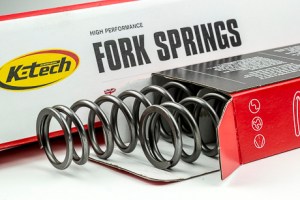
Next step would be spending ~£100 on an aftermarket springs (right) – I did that and fitted some 95NM K-Techs when I got back from Morocco and reset the pre-loaders to zero. Feels the same if not better; a much better front fork.