You probably know that feeling at the end of a long day’s ride in the UK. You’re tired and butt-sore but the bike is warmed right through and after hours in the saddle you’re in the zone and fully at one with the machine, darting through roundabouts with a flick of the hips and tuned in to the hazards around you.


I left Dorset for the 130-mile ride to the ABR bike show armed for discomfort and a low average speed. The two-lane A350 covers half the ride and there was less than ten miles of dual carriageway on the whole run. Instead it was old-time motoring with frequent roundabouts, occasional traffic lights and small town bypasses, plus the odd individual who thought it best to keep under 40 just in case. Fine by me on a slow bike. With the 300L’s limited ability for decisive overtakes, I sat back and watched the mid-summer verdure inch by and the mpg creep up to over 100.
Nearly four hours later I rolled into Ragley Hall much less crippled than I thought I’d be considering my diverse musculoskeletal ailments – aka: getting old. These were the benefits of an enforced slow place. Narrow saddled ‘two fifty’ trail bikes are notoriously uncomfortable over long distances but my one-hour presentation and subsequent chatting proved much more draining, not being used to that either.
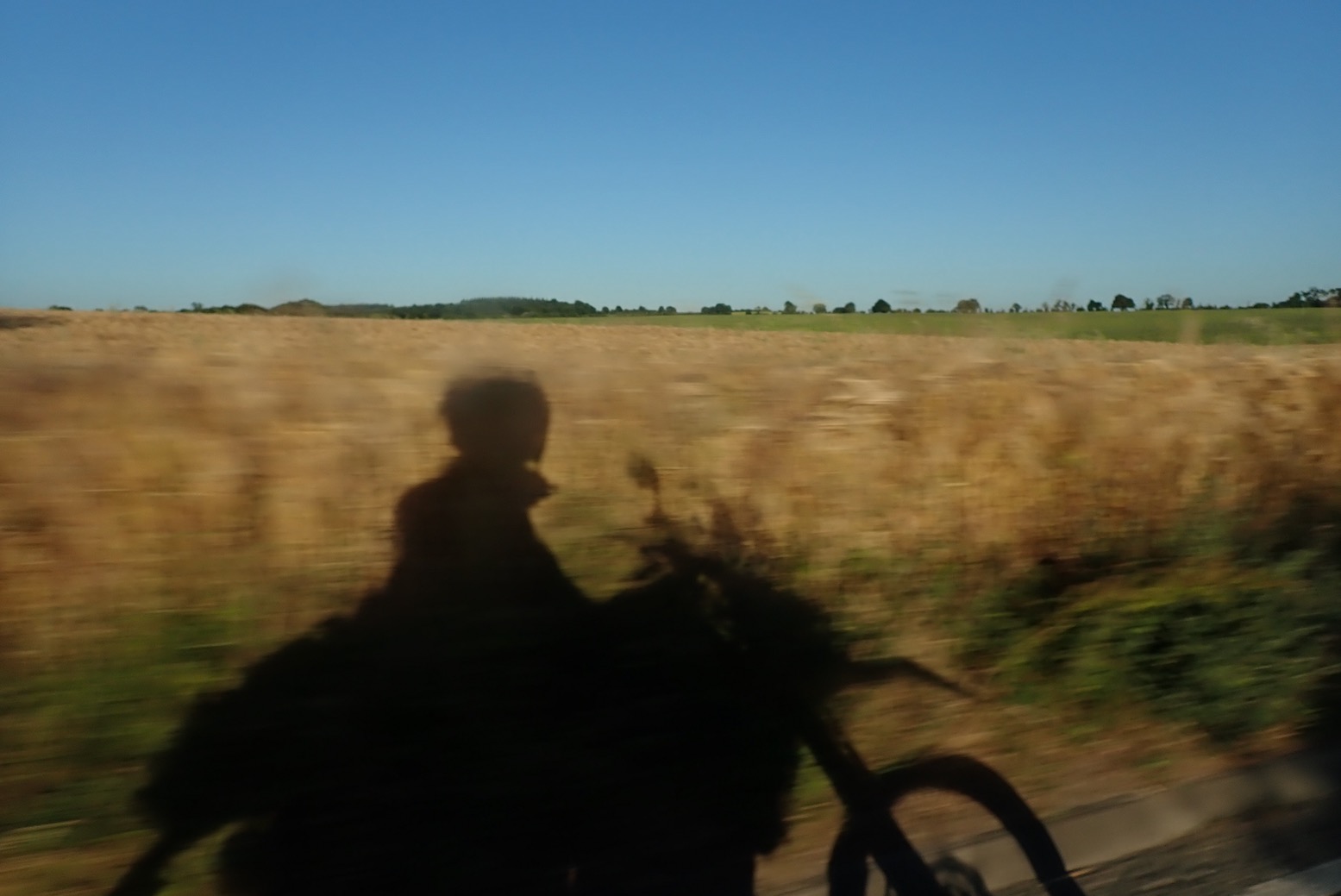
I spent the night in a garden in nearby Upton and next day headed off towards mid-Wales to rediscover some of the backroads I’d walked and cycled on the Glyndwr’s Way last summer. At some point I’d need to head back for another ABR talk at 4pm. After yesterday’s ~200 miles, this time the thinned-down seat soon gave rise to that familiar discomfort, a feeling as old as all my biking years. But also one that’s fixable.
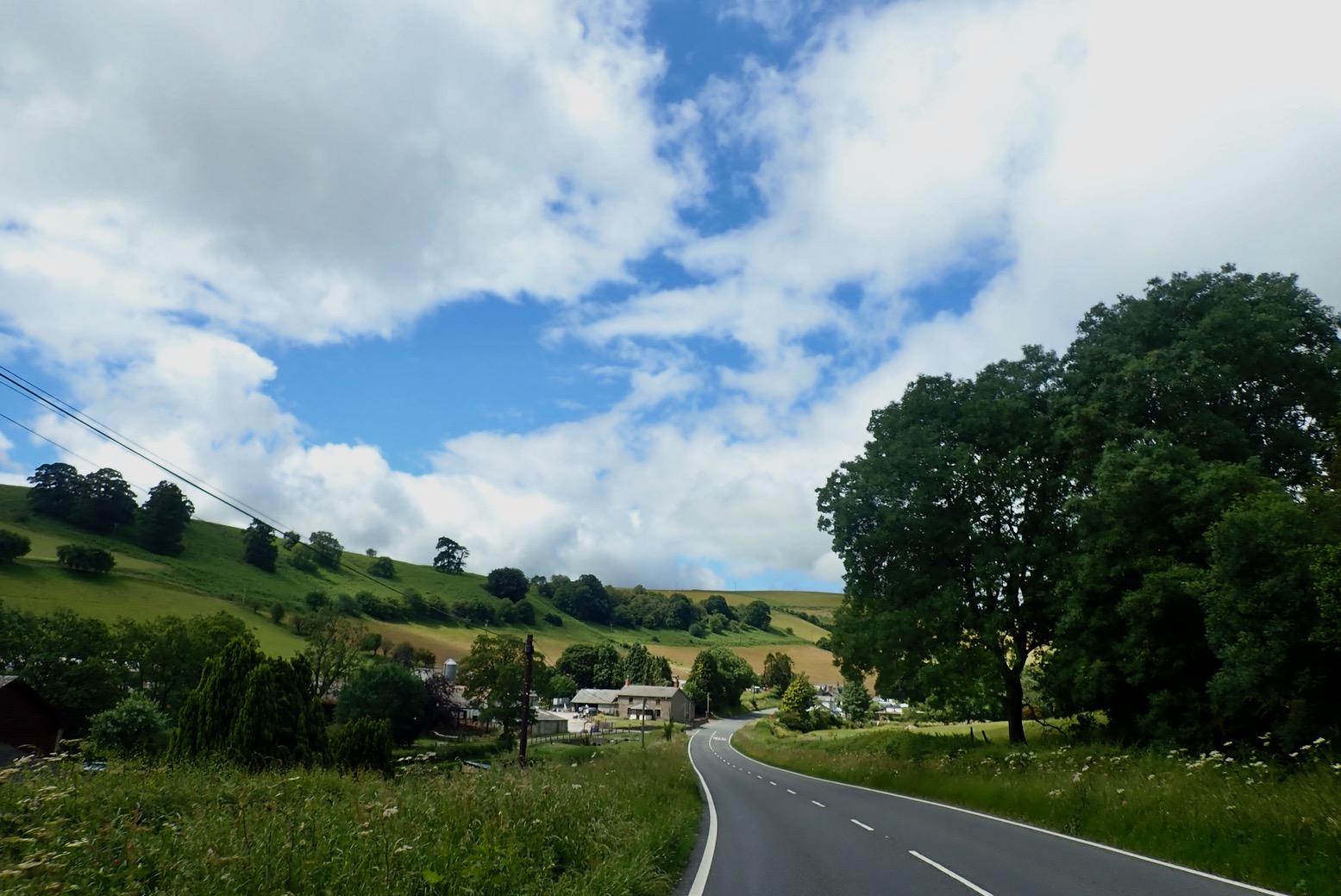
Rhayader – Wales’ trail-biking Mecca, such as it is – proved to be that turn-around point, but rolling through the town, no cafe jumped out at me invitingly. So I followed a single track road out towards Abbeycwmhir on the GW and where a back way wound its way on to Llanbadarn Fynydd (GW) which I knew had a cafe.
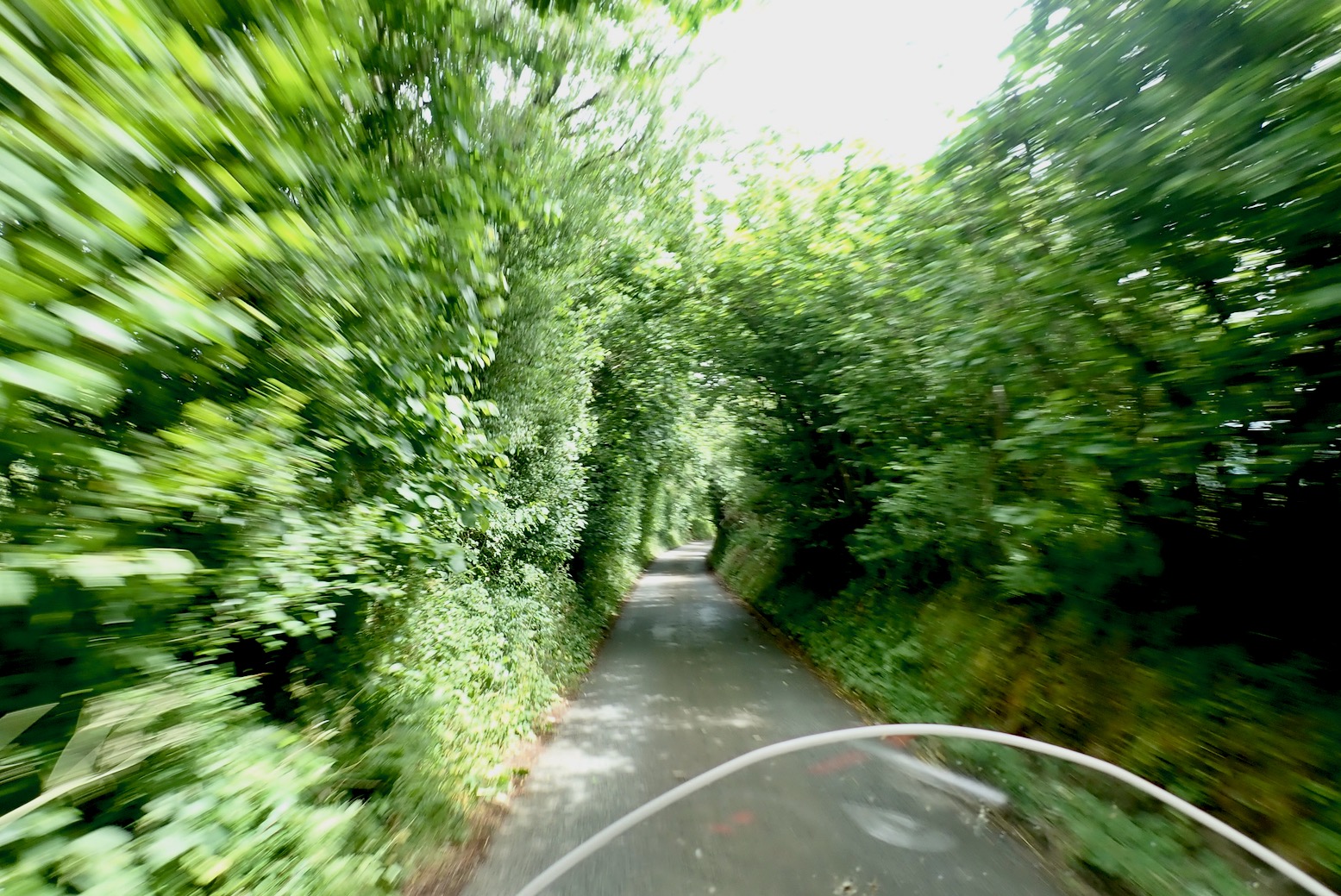
Walled in by lush summer hedgerows, a narrow country lane turned to gravel which led into a forest. Is this a rideable trail I wondered? Why no prohibition signs or locked gates?
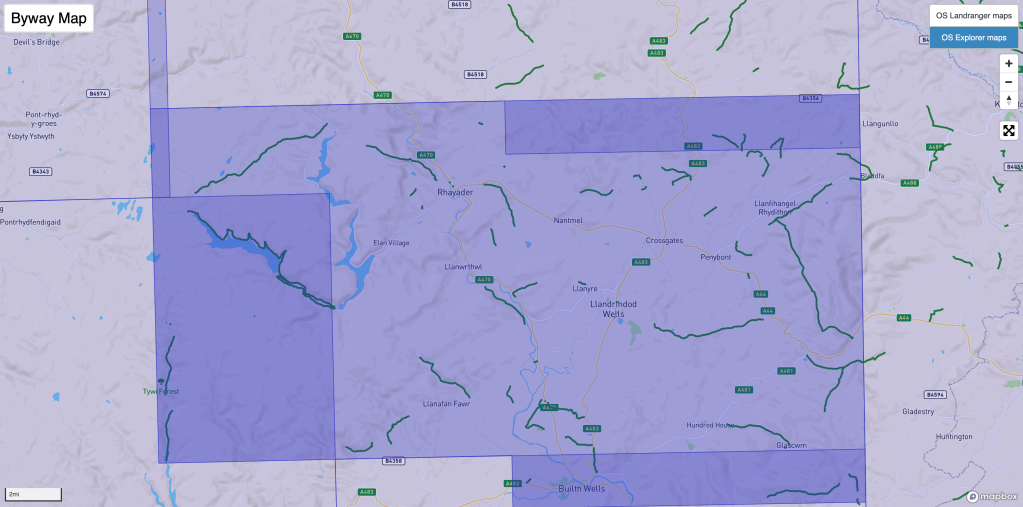
My Garmin is loaded with OS mapping which showed this was not* a green lane (‘BOAT’, etc). But it led less than two miles to Bwlch y Sarnau on the Glyn’ Way, a deserted hamlet at over 1000 feet whose name evoked pre-Christian Wales and where there was a self-service ‘porch cafe’. It also saved a long diversion, so unexpectedly I found myself outlaw off-roading in mid-Wales. How thrilling! There were a few MTB tyre imprints in the earth but nothing from a moto. Doing this is bad form and not something I’d knowingly do again, but in just a few minutes I reached Bwlch via a couple of gates. There was no one around, same as last year walking and pushbiking in this area.
* Turns out it was a green lane after all – a UCR or ORPA. Explained here.

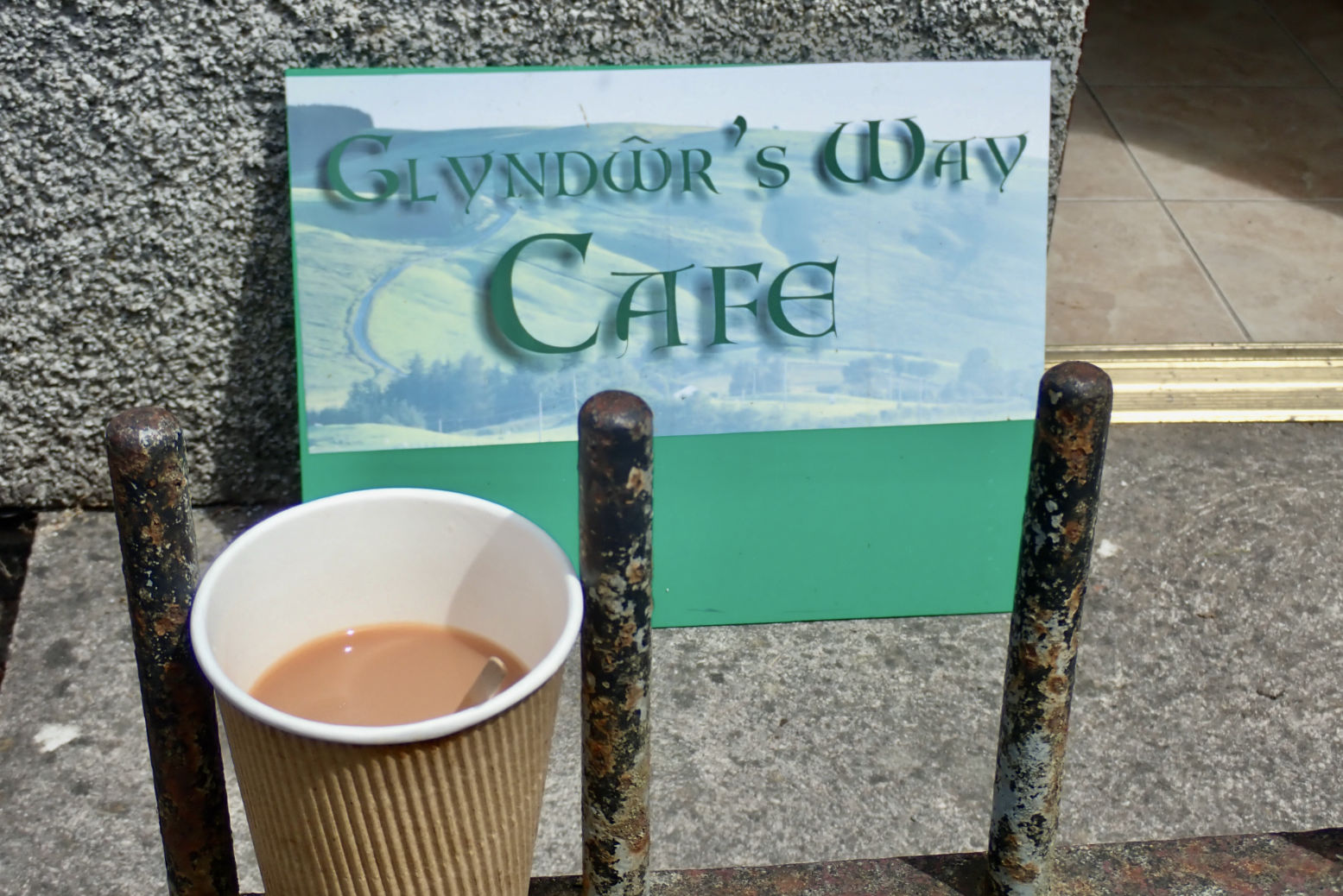
At Bwlch cafe I chatted with some bikepackers having a brew during a three-day tour. This is such a great region for that as I found last year. But for legit trail biking, a quick glance at the OS map on my Garmin didn’t reveal many permitted green lanes much longer than what I’d just illegally ridden, In search of uninterrupted off-road adventures, that’s why I went to the Sahara in the first place way back in 1982.
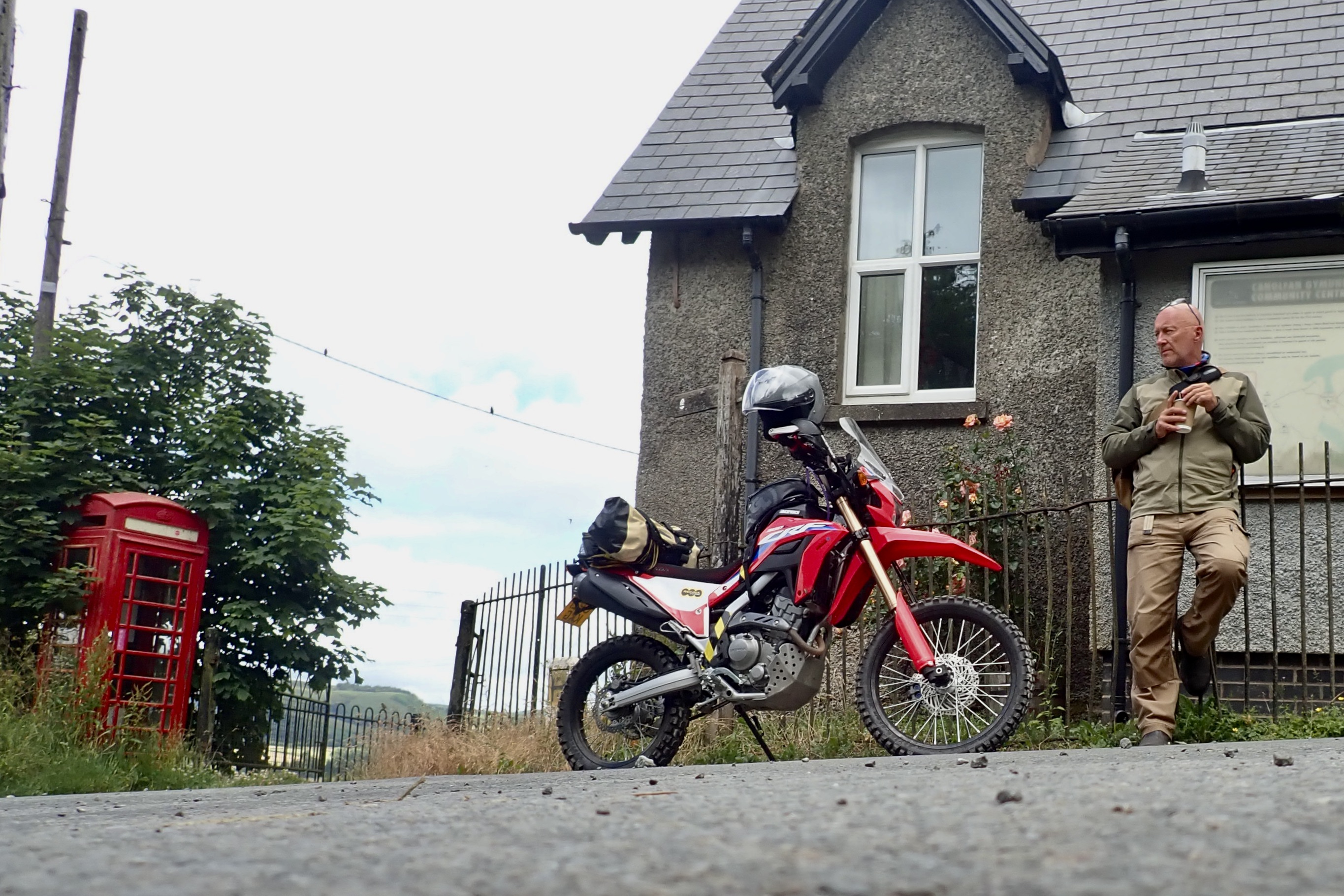
By the time I’d selfied myself and finished my cuppa, the Garmin’s ETA back to the ABR show was cutting it a bit fine. Sod the mpg – I’d have to crack on!
Mamils & Saddle Sores
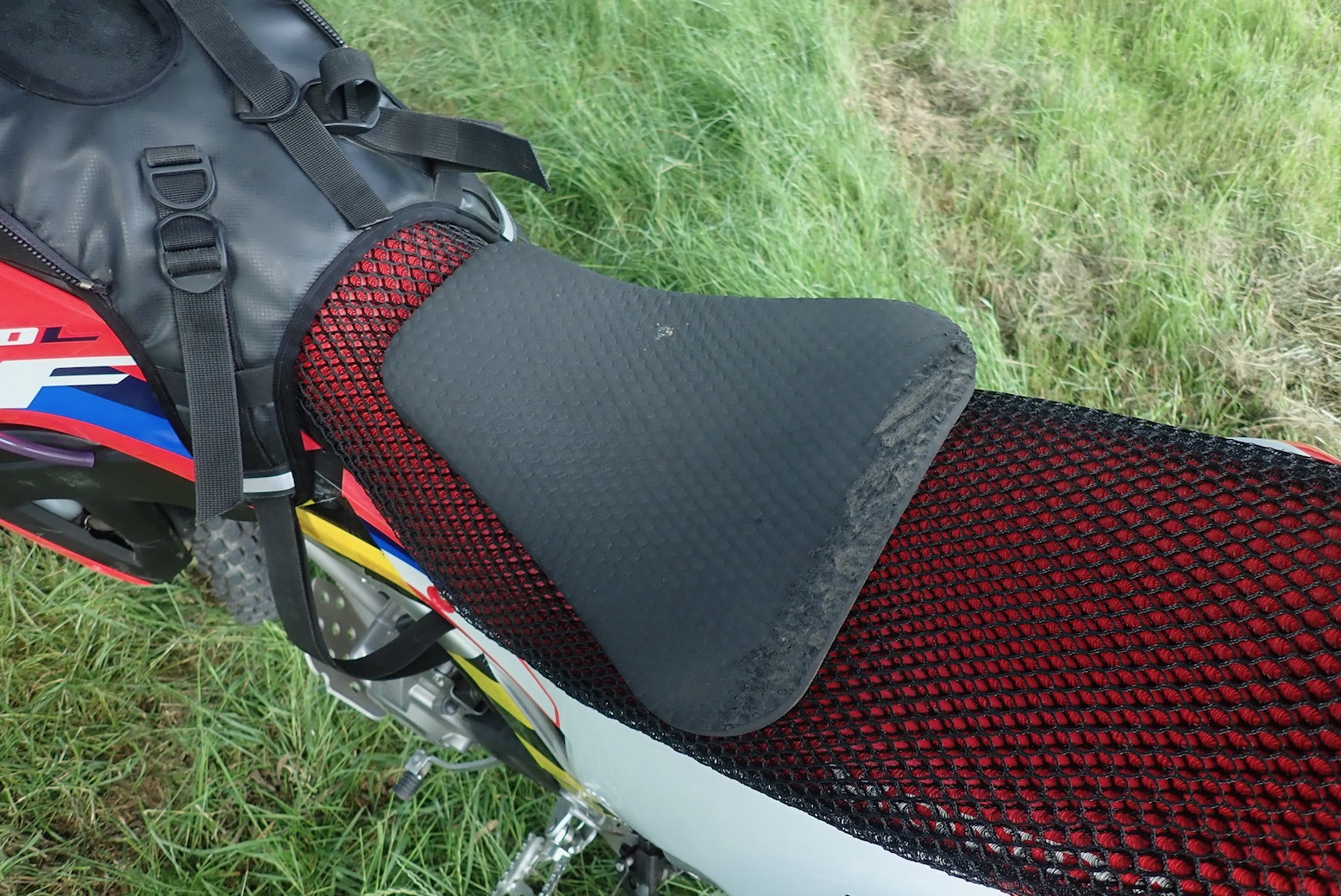
In getting lowered, my seat has lost some padding, and the slippery Cool Cover saw me slide forward on a downslope; a common annoyance with some bike saddles.
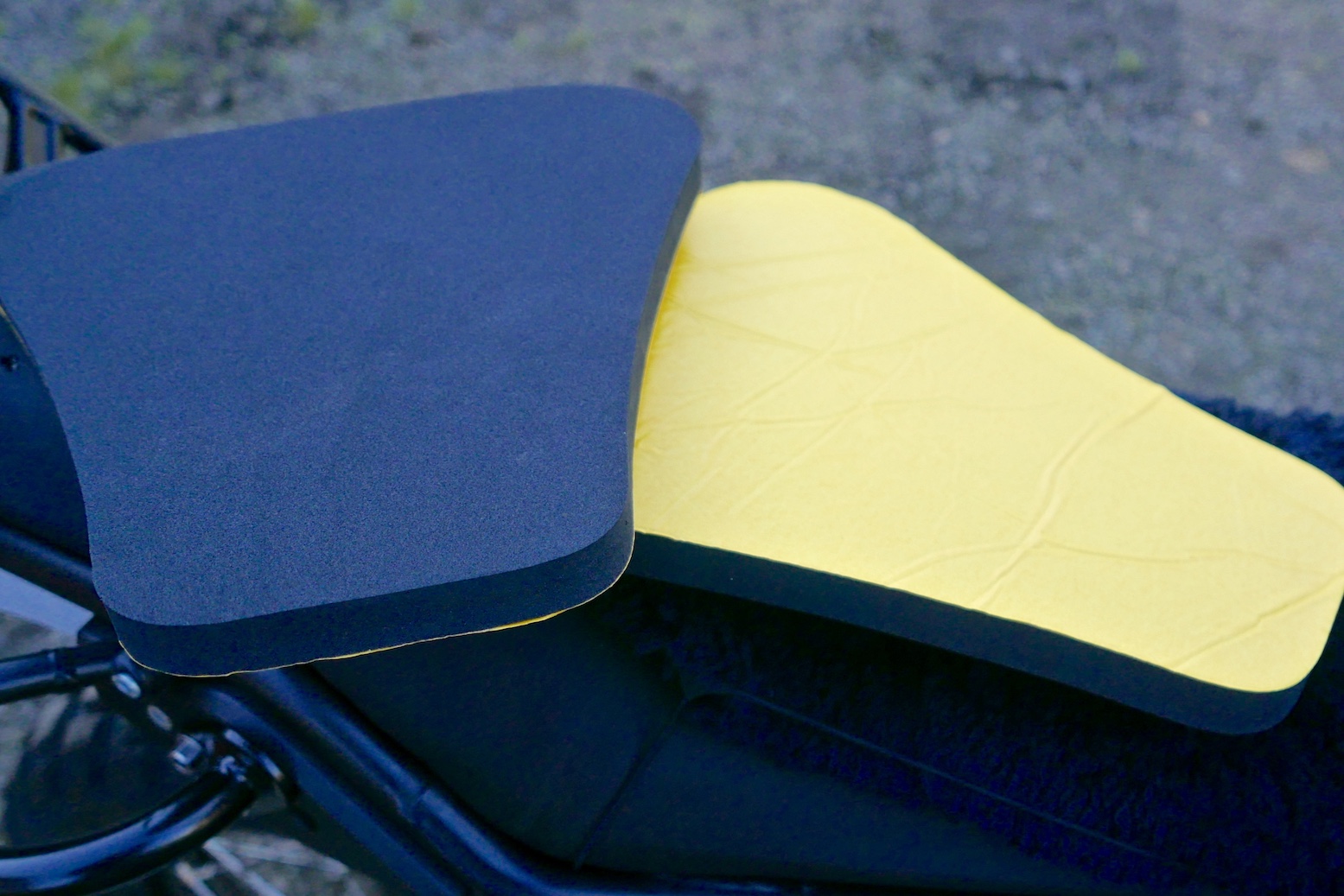
As a back up I’d packed my padded lycra cycling shorts which they say can improve moto saddle comfort, but first I pulled out one of two slabs of 20mm rubber foam (neoprene) last used on my Himalayan, and sat on it for the two-hour ride back to Ragley Hall. The anterior agony slowly subsided but the bare rubber was too grippy so I slid around inside my loose trousers which wasn’t so comfy either. Plus I couldn’t up stand to aire mon derriere as the pad would’ve blown away.

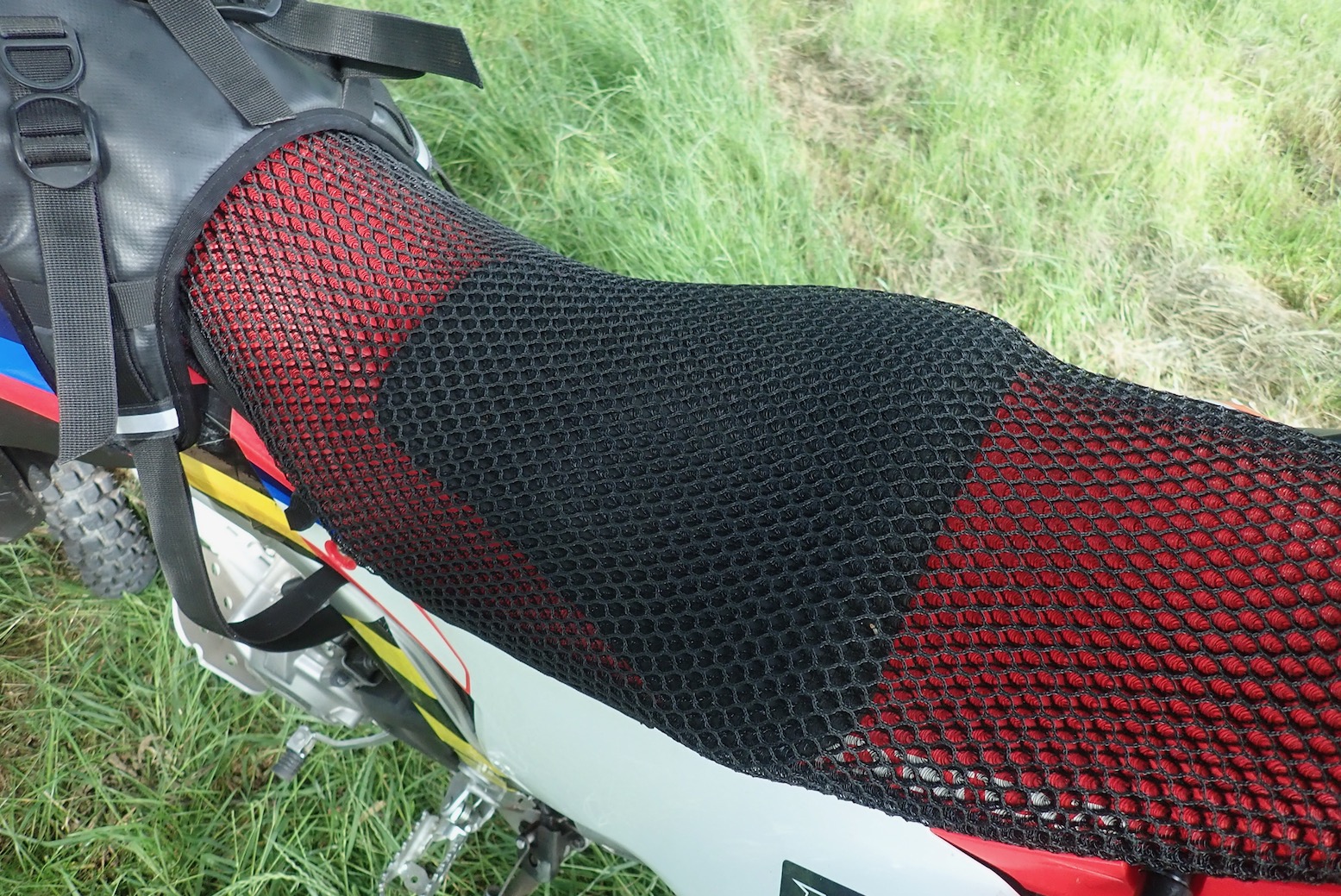
I rolled up to the Bridgestone tent with 10 minutes to spare and did my chat with Simon & Lisa (left), but apart from the fact that it was another lovely mid-summer’s evening, I wasn’t looking forward to the four-hour ride back home. So I decided to do something about it and set about shoving the foam pad underneath the Cool Cover. If it worked well I’d trim it all properly later.
It made me wonder do you want a grippy seat surface or not? I do notice grippy seat covers for trail bikes on ebay. It must be related to riding – active off-roading or low-energy road touring plus what you’re wearing too; how close a fit and the fabric’s own grippiness. With my baggy cotton cargo pants, the Cool Cover is slippery which can cause friction, but sat directly on the neoprene pad back from Wales, the grip was massive and I slide around inside my trousers which was as bad. I do seem to recall leather trousers which I wore for years helped prolong comfort, whether down to good grip on seat vinyl or the close fit.
Heading home with the neoprene underneath the Cover, the saddle was levelled off and I slid about less on deceleration. It was all round a big improved on the sore morning’s ride and a few days after I got home I trimmed the two pieces of foam to fit the 300L’s seat, glued them together and fitted them under the Cool Cover. The seat is now about 35″ (890mm), 14mm more than before (half being the airy Cool Cover mesh) but a whole lot more comfortable. See more bottom of the page.

Other comfort matters
Leaving Morocco in March, I retired my old X-Lite X551 after ten years. The vent never worked well (wrong angles for upright trail bikes), the sun-visor lever fell off years ago and after multiple removal and washing, the lining was coming adrift.
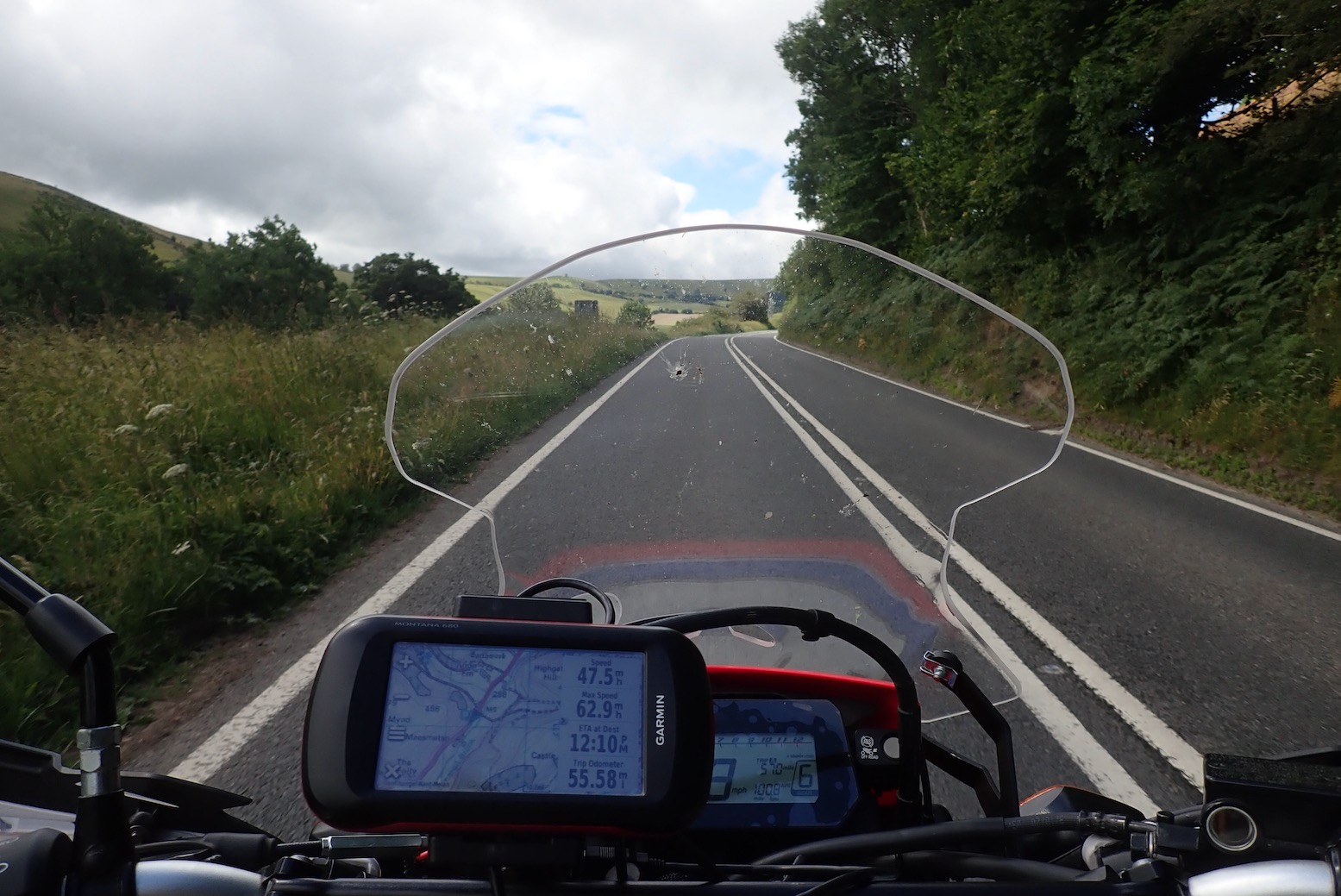
But I’m a longtime big fan of this type of lid so got myself an HJC i30 for about £110. Grey comes shiney not matt as implied online but so far so good. It fits snugly with quick-clip chinstrap, the sun visor lever is much easier to operate and the top air vent is more effective. It remains to be seen how long the lining fittings will last after regular washing. But the HJC not quiet or, to be precise, I’m a bit too tall for the 300L’s unadjustable screen and the buffeting makes a racket, even with earplugs. Crouching down puts me out of the turbulence but is unsustainable.
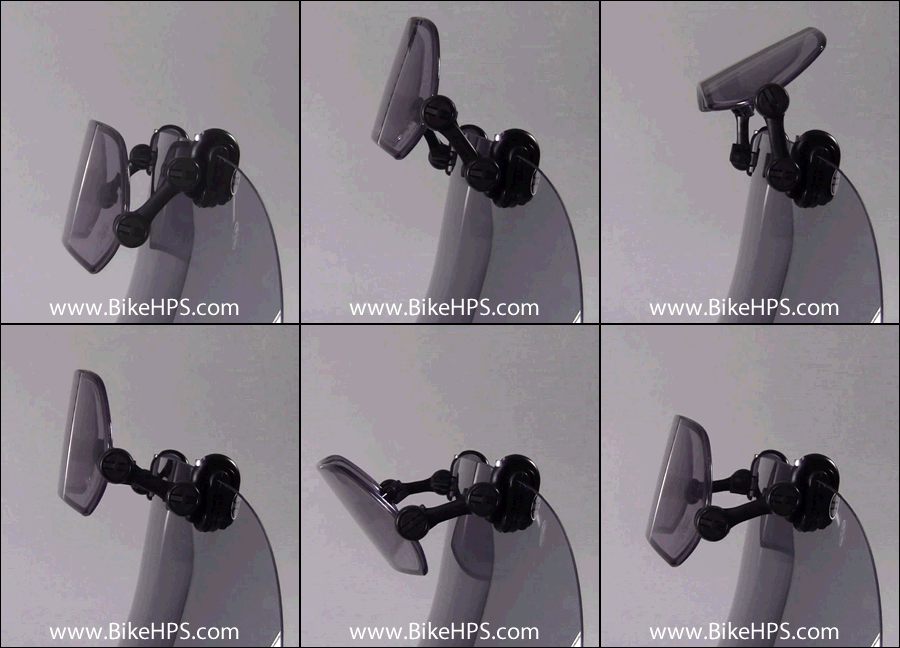
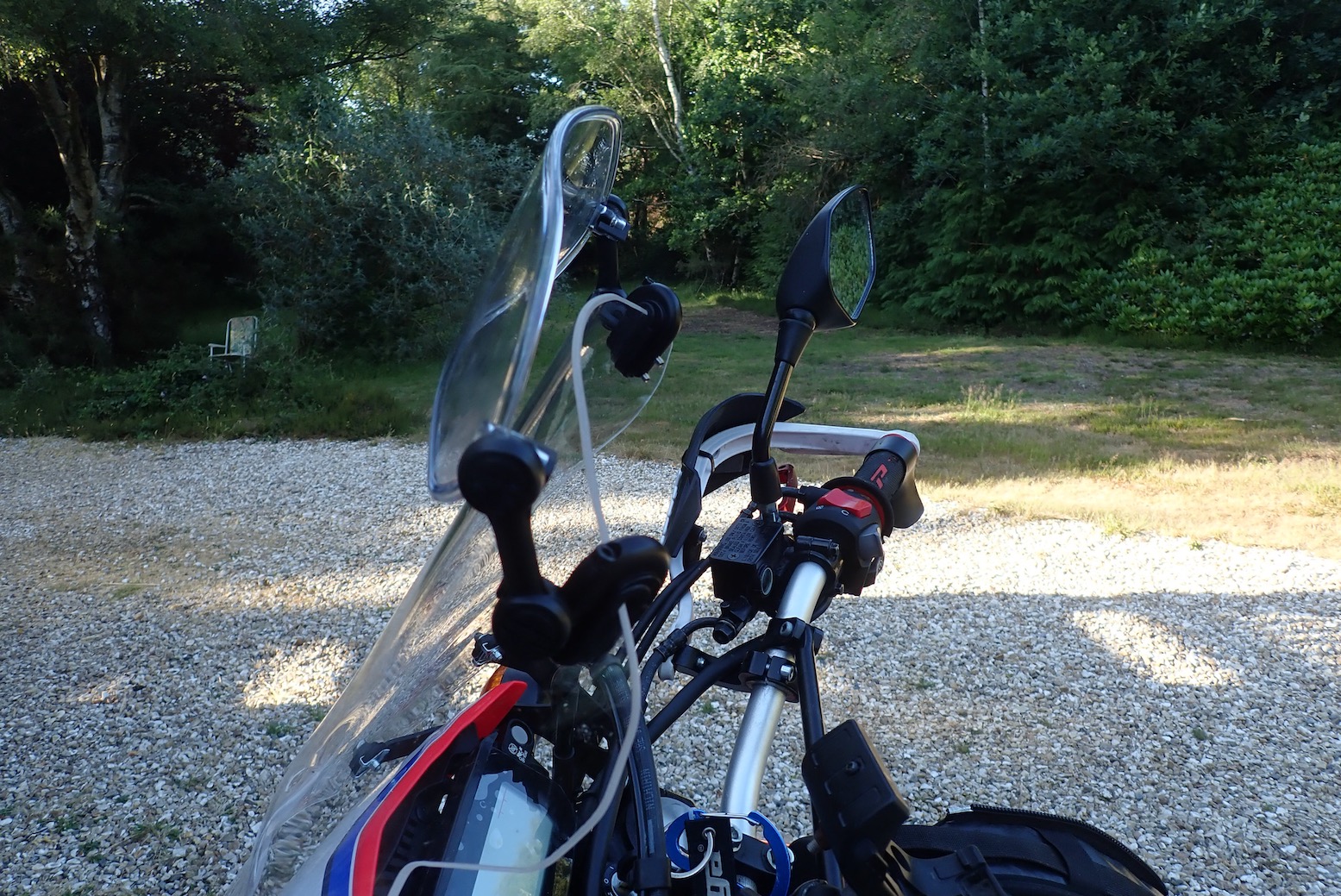
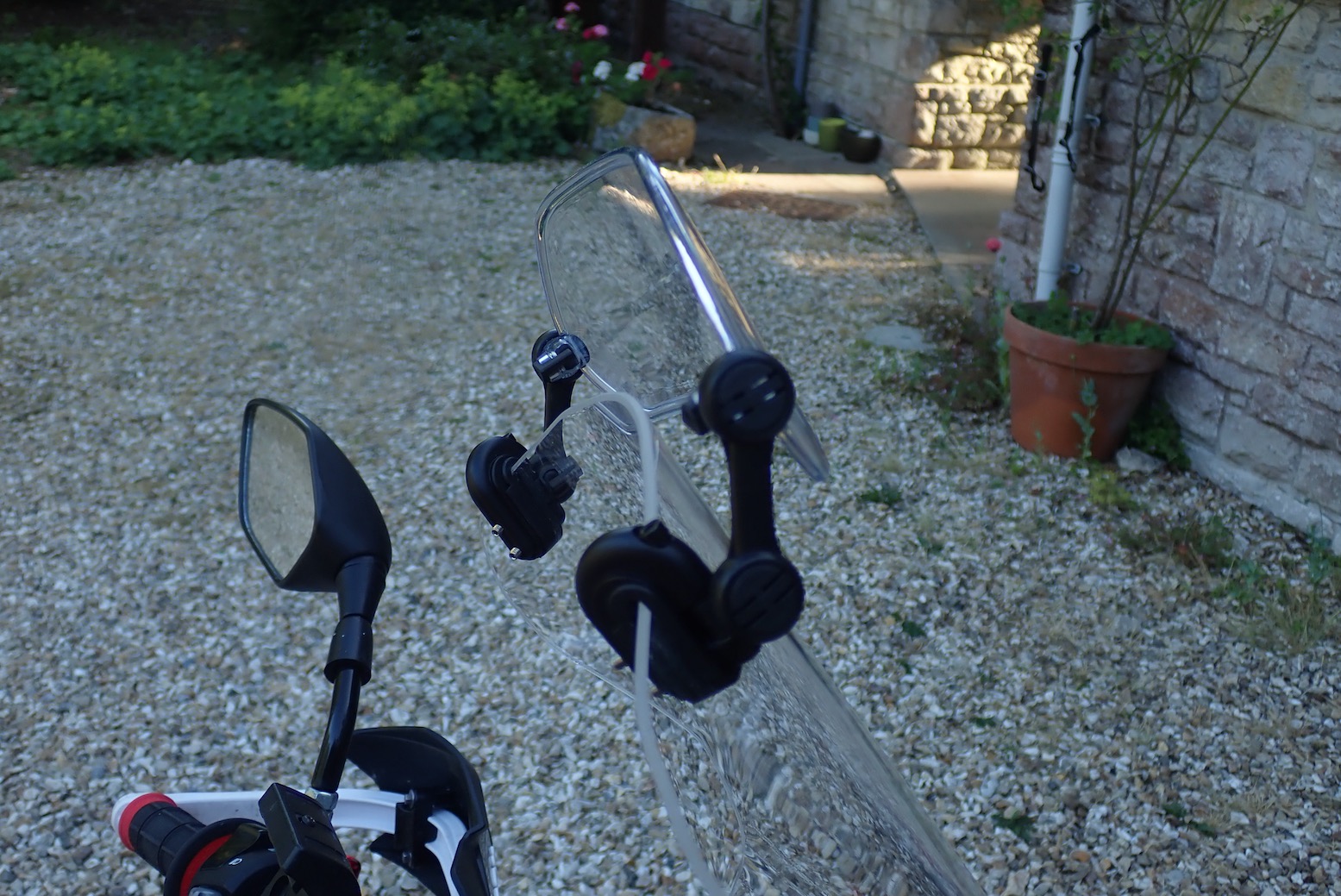
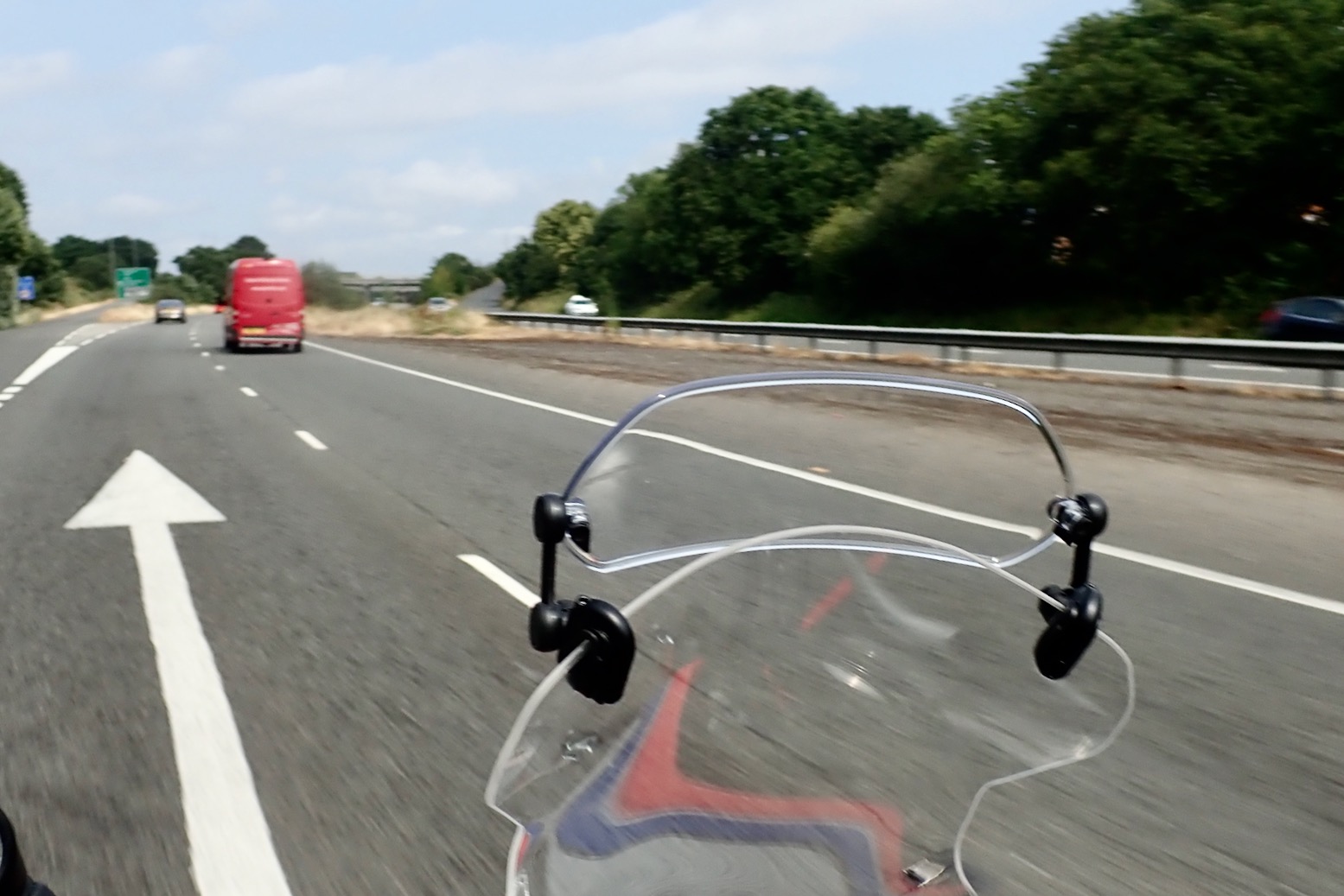
Back home I remembered I bought myself an MRA XCreen adjustable draught deflector (left) for the Him but ended up not needing it.
I dug it out, made sense of the instructions and decided to clamp it to the screen with a view to drilling and bolting it on if it proved effective or necessary (you get both options in the mounting kit). Articulated arms on adjustable splines lock it in position so you can set the optimal angle at a standstill. It looks like it ought to work funneling air up and over my head and looks better than the simple spoiler Touratech still sell and which I tried on my XT660Z 15 years ago. You can view my meticulously annoted Mileage Diaries here.
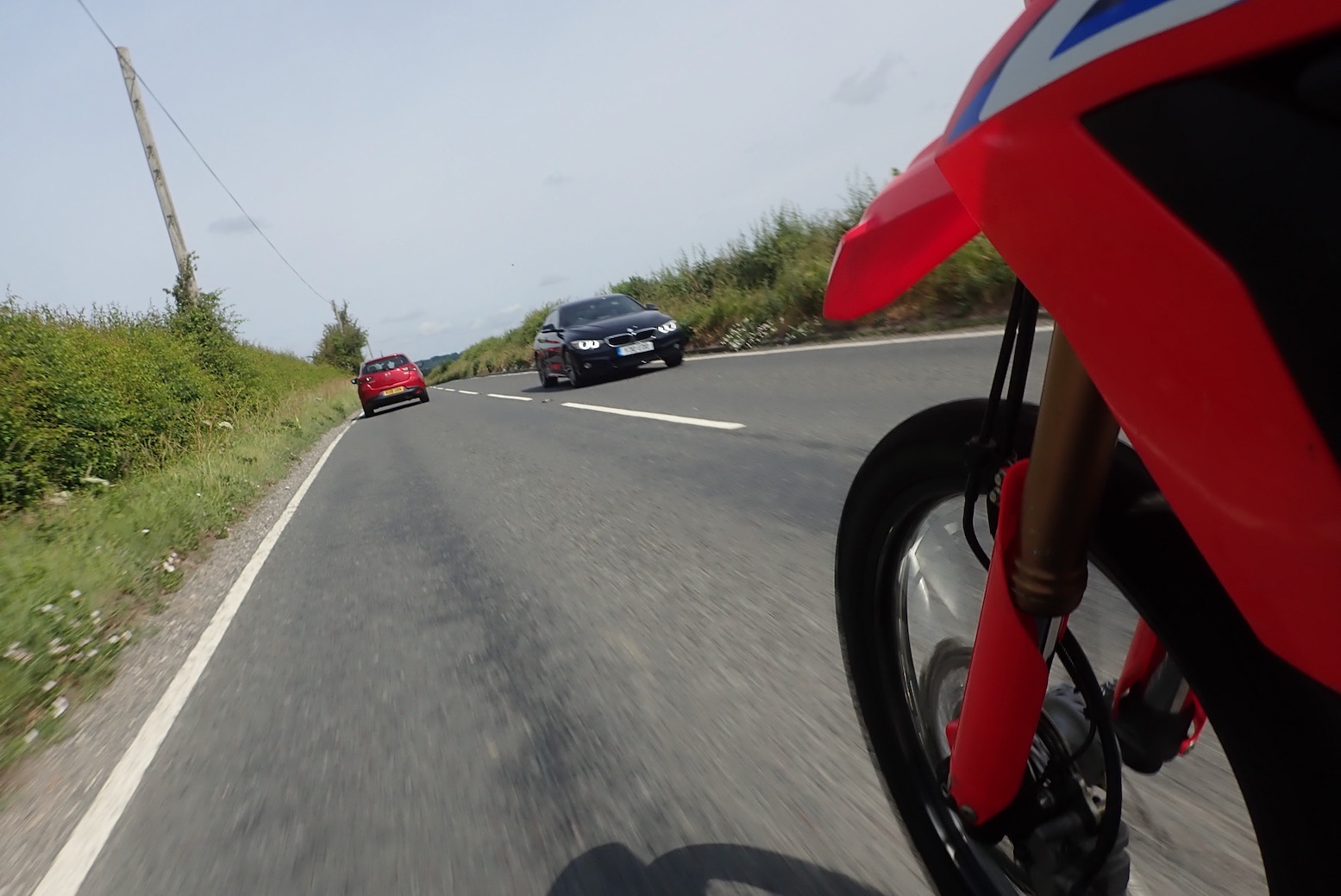
Other than that the ride back with just a refuel break was great. The pad under the Cool Cover soothed the posterior on what ended up being 500 miles of two-lane blacktop over two days. On a bigger bike I don’t think I’d have been that much quicker on these types of roads without lots of speeding and other risks.
I never rode my 300L stock but the Rally Raid suspension definitely keeps the bike in shape darting around roundabouts. I got in about 9pm, visor and screen thick with bug splatter but still with energy to pre-wash the bike with Muck-Off and lube the chain while it was warm. It all bodes well for the long ride to Morocco later in the year.
True mpg
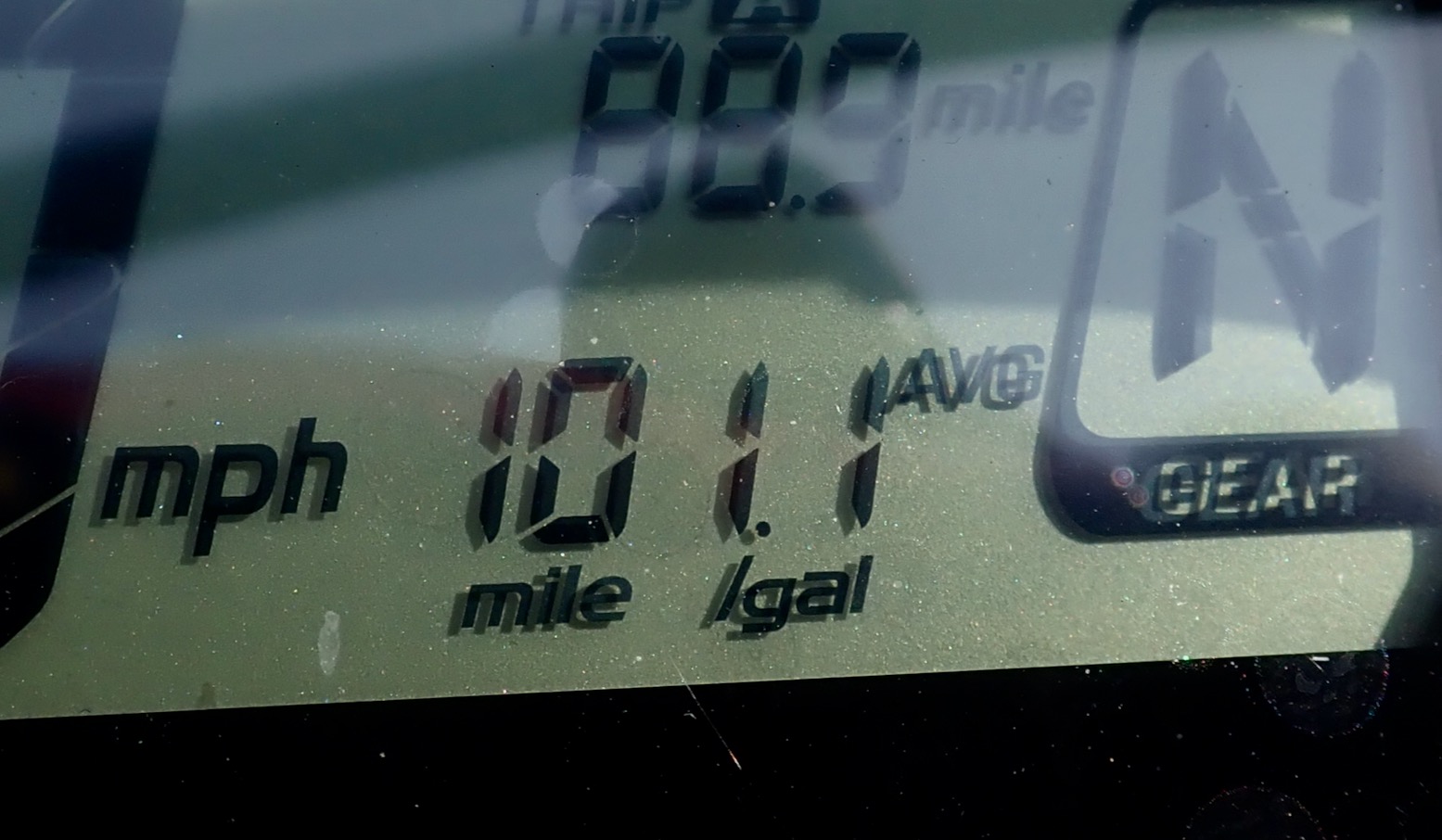
The 300L has one of those handy average fuel consumption displays and my ride up to ABR saw it settle at 102mpg as I rode through the gate. Pretty good but this is an estimate. For the true mpg I evaluated the bike’s odometer error off the GPS over 200 miles. Result: the bike indicated 205.6 miles over a GPS recorded distance of 200 miles. Not bad but 2.5% over.
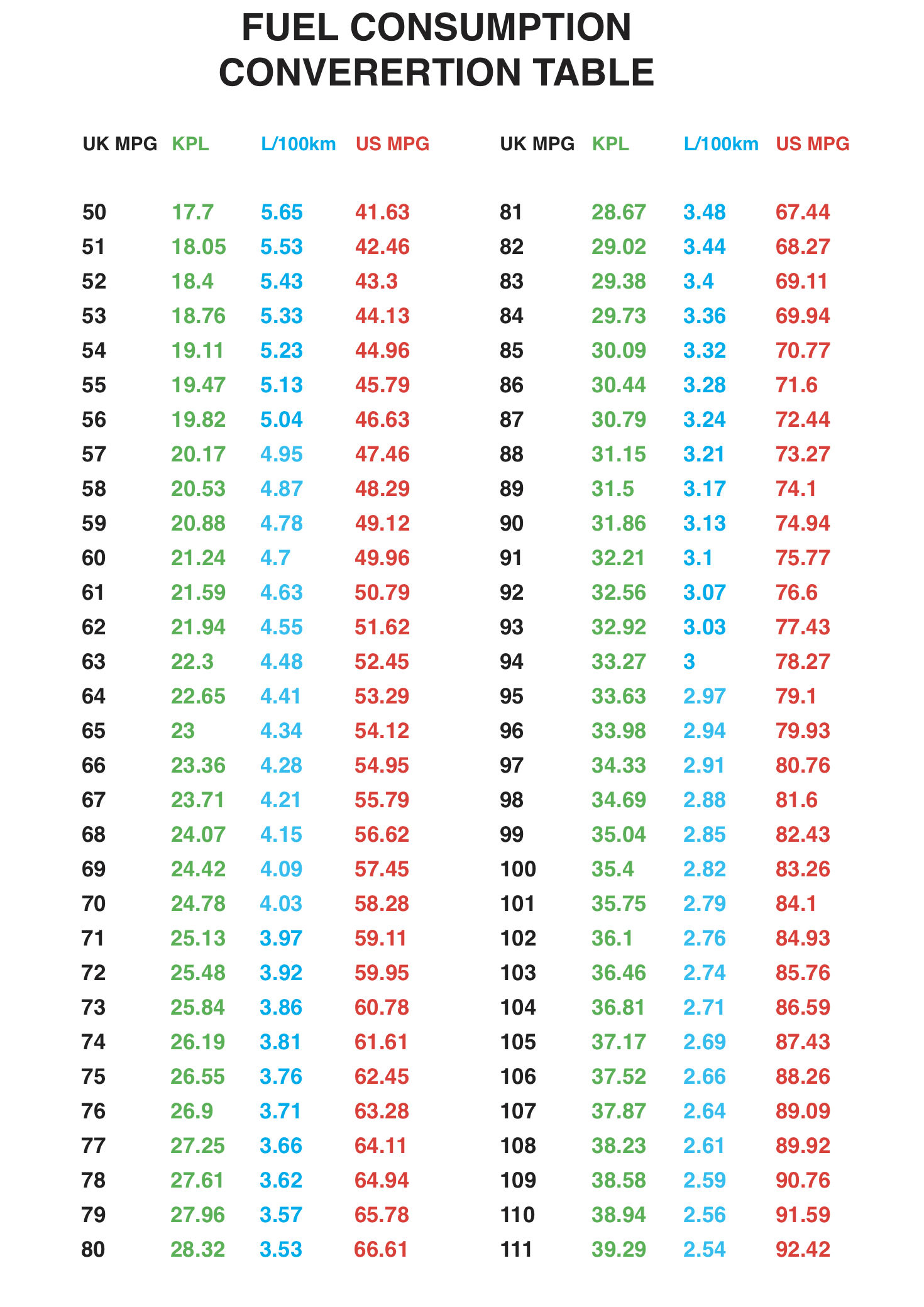
Somewhere on the ride up I topped up with 11.8 litres over a corrected (true) 221 miles. That’s 355km which divided by 11.8 = 30.1 kpl or only 85.5mpg (see table on the left) – over 15% out. On the bright side the two litres left in the 13.8-L Acerbis tank meant another potential 60km which gives a possible range of well over 400km. That will do nicely, whatever the mpg is. It sure is great not having to think about fuel twice a day.
The next fill up on the way home included the rushed ride back from Wales with the display now indicating ’91mpg’. I put in 11 litres over a true 217 miles, which is 350km. That was 31.8kpl or 90mpg. A lot more accurate and oddly, a big improvement on the slow ride up, despite the faster pace. I suppose a full tank’s worth at steady pace may have helped, or could the bike’s computer be ‘learning’, as I’ve read they can do? We shall see but I am still hoping to get a true 100mpg one day.
Update:
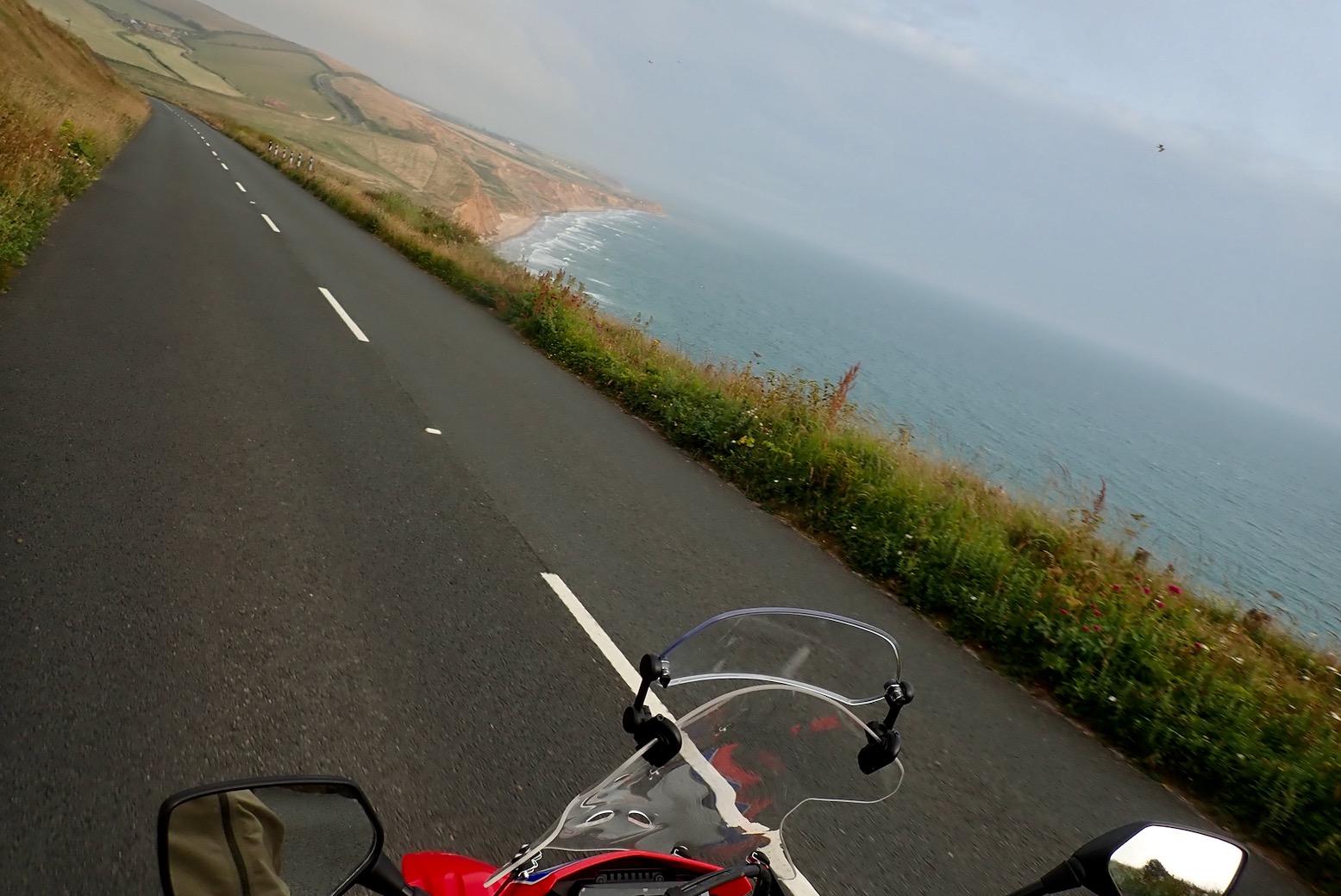
I set off to the Isle of Wight a few days later with the seat padded to full length and the MRA fitted. I soon noticed I was not dropping my helmet visor as soon as possible. With a guesstimated angle set at my eye level the MRA was working just right, shoving the windrush over my head, not into my face. Now all I heard was muted tyre and engine noise instead of wind and a steady 60 was much more tolerable.
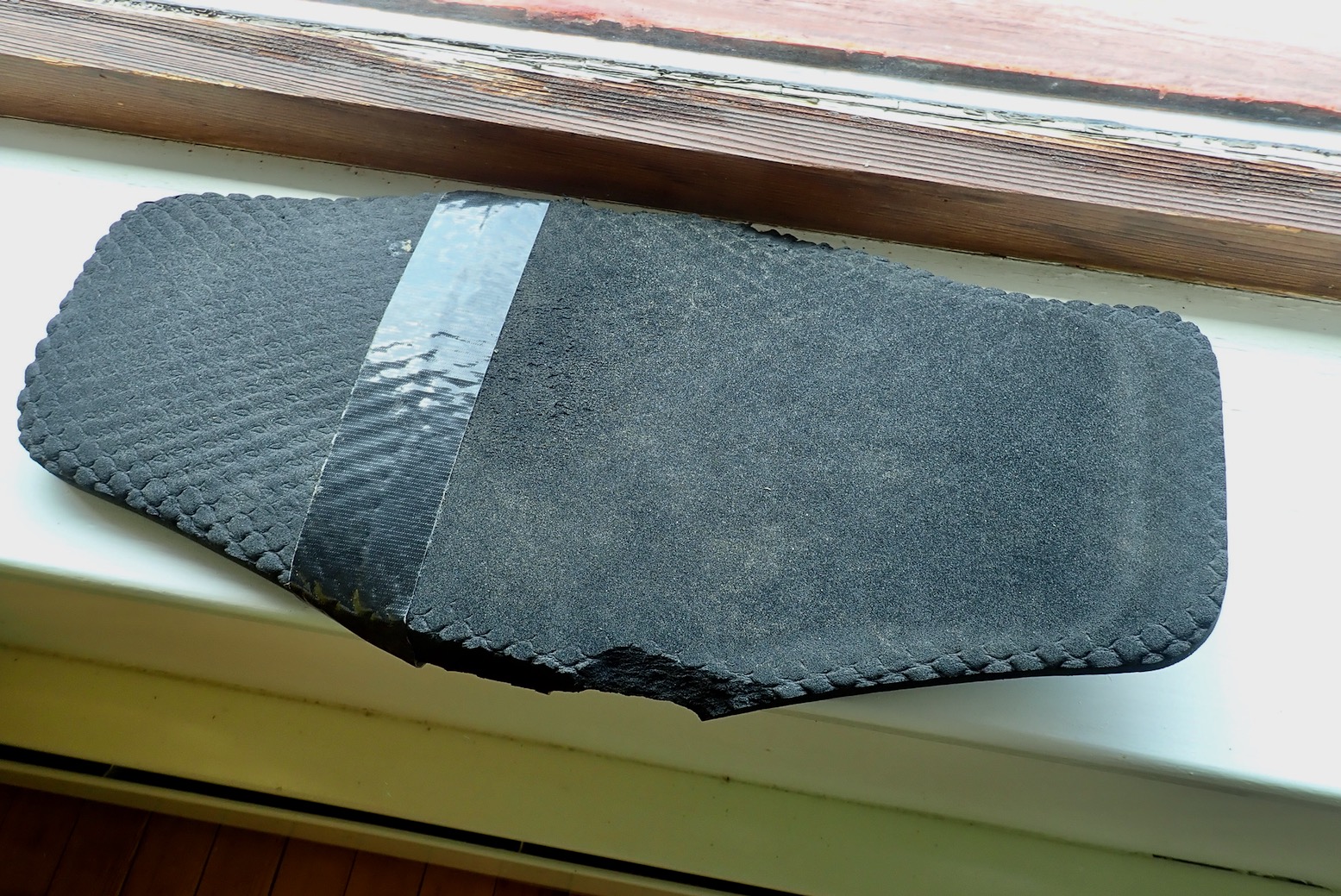
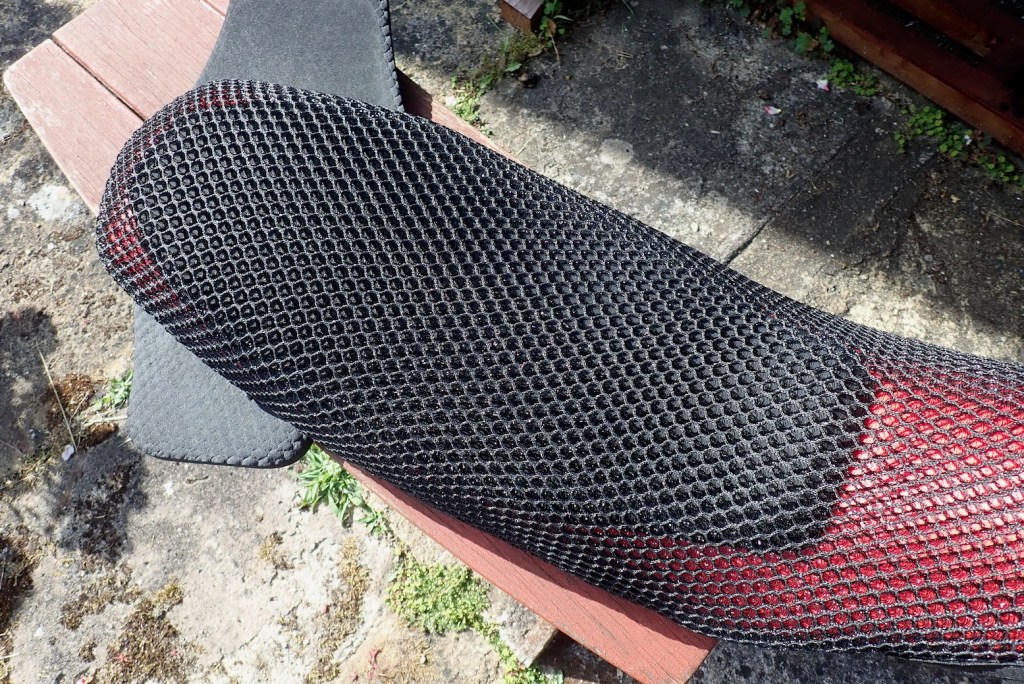
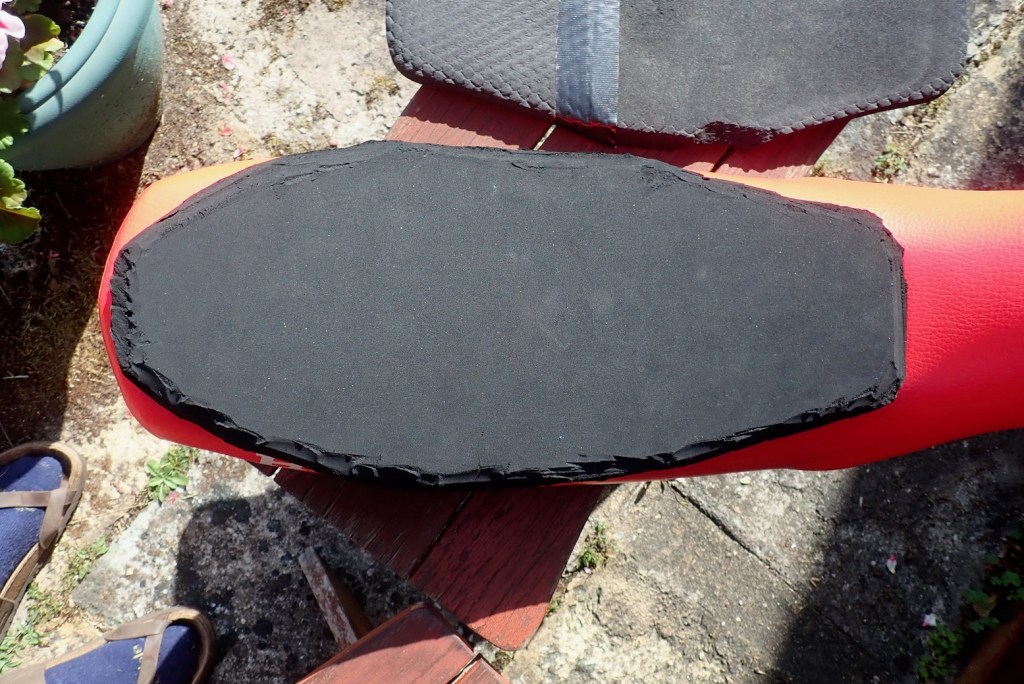
But fix one thing and another flaw becomes more apparent. My glued up join between the two bits of old neoprene was noticeable. Can’t be having that. I have time so may as well spend it trying to get it right.
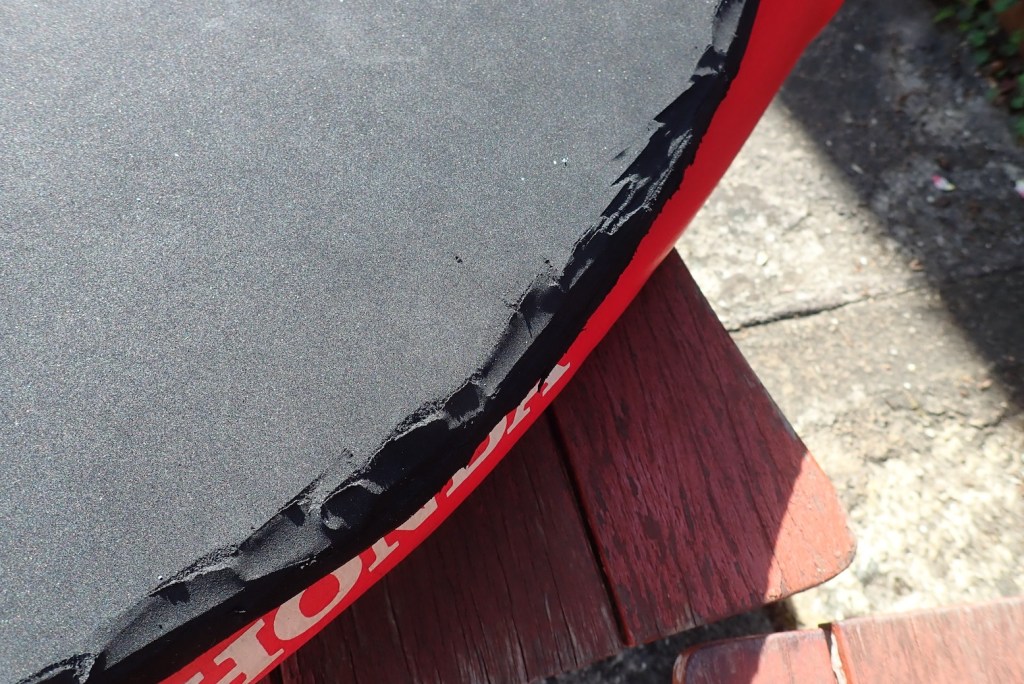
I replaced it with a single piece of 20mm neoprene: a 250mm x 500 slab was 20 quid. Note, even with a sharp knife or scalpel it’s hard to get a smooth cut. Scissors are better, but anyway the grubby edges are hidden under the Cool Cover.
 Adventure Motorcycling Handbook
I’ve always found that high-quality (e.g. Gore) padded cycle shorts under your enduro jeans make the biggest difference to seat comfort. We have just completed a 5000-mile trip to Greece and back on the 701s without seat issues.
LikeLiked by 1 person
I’m gonna buy some RIGHT NOW!
LikeLike
Hi,
Interesting read, as usual, many thanks Chris.
10 metres should be easy these days and normally within 3m with a descent multi sat device like Garmin. The stationary wander shouldn’t effect en route to much, as so many data points and an algorithm should sort it. It’s all much better these days as US military so kindly allow us plebs to have the info without the old selective availability error they used to add in.
Enjoying the updates,
Will
LikeLike
Thanks Will. I just checked my w/end tracklog recorded inadvertently and the stopovers like Bwlch cafe showed no signal hunting, so using ‘distance’ and not ‘time’ intervals is the way round it.
LikeLike
I wouldn’t be surprised with a 2.5% error due to fluctuations in GPS signal and/or drift. Leave your Garmin ticking away on the garden table for 4 hours and you’ll probably record a couple of miles without moving an inch …
LikeLike
Hi Mark. I noticed that annoying ‘hunting’ tendency on my Montana years ago ago while logging Coast to Coast and decided the way round it was to change the tracklog interval to distance (currently 10m), not time. Never actually verified whether that was the solution but seemed to make sense. It amazes me they can engineer the ‘industry’ 8% faster error into the bike’s speedo reading but something different for the odo, presumably measured off the same source (gearbox, ABS?). Of course you can never be certain how accurate GPS distances are. Had I gone along a motorway I could have used the blue driver location signs (metric). I wonder if tyre ø and wear might change the odo accuracy over time.
LikeLike