See also
Soft Baggage 2026
Serow Index page


In a line
Mounted separately and semi-permanently to a light rack and without rear duffle – not as Mosko intended – but was exactly what I wanted.
Price and verified weights
Bags £476.
Right side 1350g; left 1530g; hardware 130g, Duffle 650g. Total: 3.7kg/8.1lbs
Gnoblin q/d mount (optional; £39) 182g.
As mounted (no duffle or Gnoblin): 2.5kg

- Mounts low and forward, ideal shape for optimal load distribution
- Well put together and clever design elements
- Light: my adapted set-up just 2.5kg
- Looks more than 22 litres per side
- The outward flex of the CURV board (not used) limits pressure on sidepanels

- With CURV board sits high on some bikes
- If you want the q/d element make sure the CURV board suits your bike
- OTT strap hard to cinch down with changing bag volumes
Alpine R60s supplied free by Mosko for testing and review

What they say
The Alpine 60L Rackless is Mosko Moto’s lightest weight dual sport and ADV luggage setup with the capacity for multi-day trips. Designed for riders who seek minimalist, lightweight luggage, it provides the three-bag organization and packing system of a traditional pannier setup (two side panniers and a rear duffle) in a lightweight, waterproof, abrasion-resistant ripstop nylon rackless bag. Featuring our super durable CURV® chassis, the universally-mounting A60 can be easily swapped between multiple bikes, and can be packed and checked for fly-to-ride adventures.
Alpine Style
For this autumn’s recce of the High Atlas Traverse I wanted to try something different. Though never a fan of the one-piece Giant Loop Coyotes and the like, I’ve been interested in separate throwover side-bags which can manage without a full racktangle™ (right). I also like the idea of tough drybags sleeved in a holster, as on Mosko’s Rackless 40 and 80, although these look a bit heavy and over-designed for my little Yam 250 on this trip.
‘You should make something in between the 40 and 80, and simpler‘, I suggested to Roel as Mosko EU.
‘Give it a month or two and I’ll have our new Alpine 60L to show you‘, he replied.
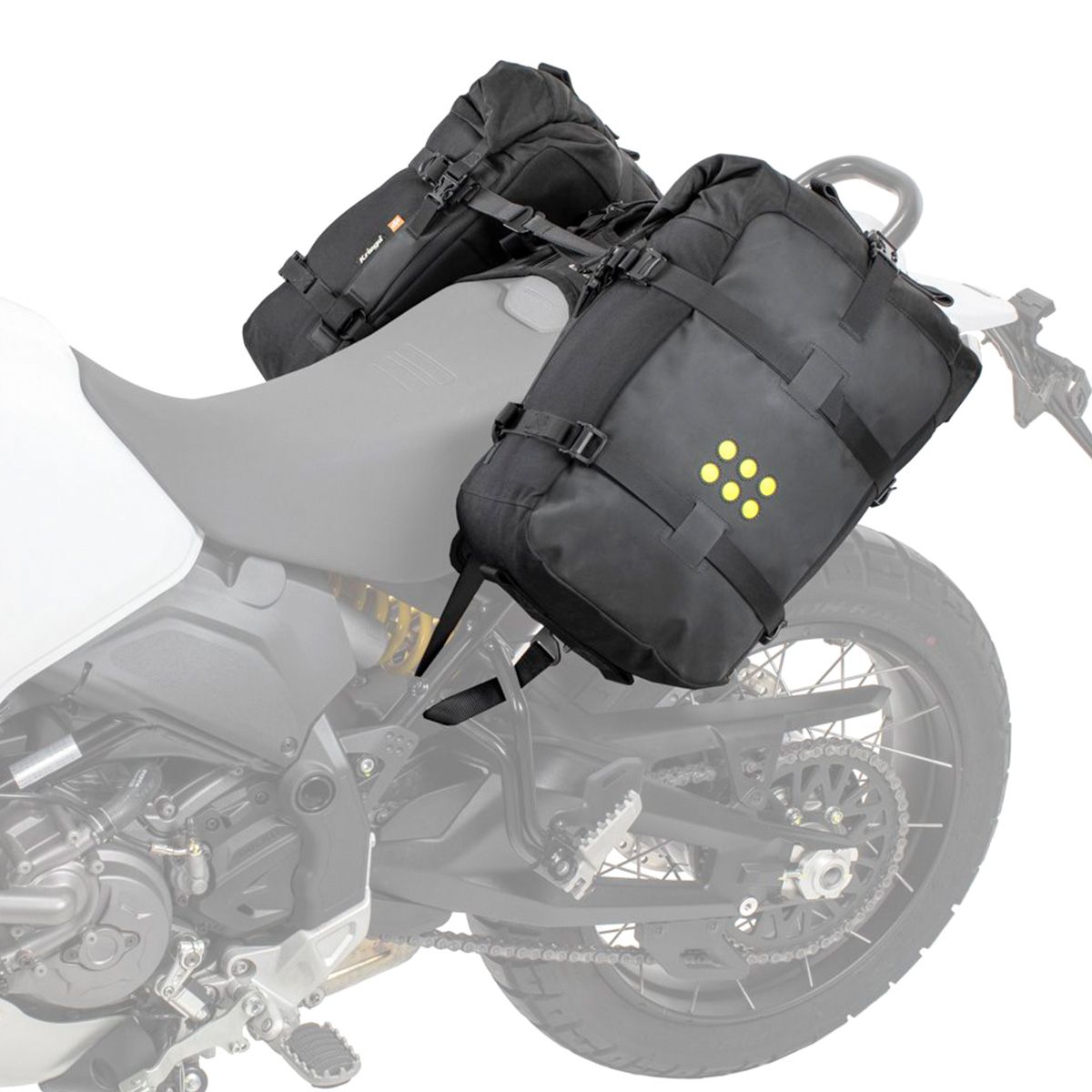
A week before wheels-up and Mosko’s Alpine R60 arrive in Woodland Green and Black. Two sidebags of 22 litres (but look bigger), plus a 15-litre top duffle which I didn’t plan to use. Each bag comes mounted on a bendy, two-piece U-shaped composite CURV® backplate which you bolt together with supplied hardware. That straps to the bike at the pillion pegs or rear downtube, to be tensioned from the tail rack, either with an optional and neat peg called a Gnoblin (below), or just a strap or two. Result: a quickly detachable 3-point fitting using the backplate to part-stabilise the load. Mosko are pitching the Alpine 60s at the harder-riding, ‘light-is-right’, crowd, but anyone who appreciates a minimalist, light throwover that’s easily removable will like the R60.
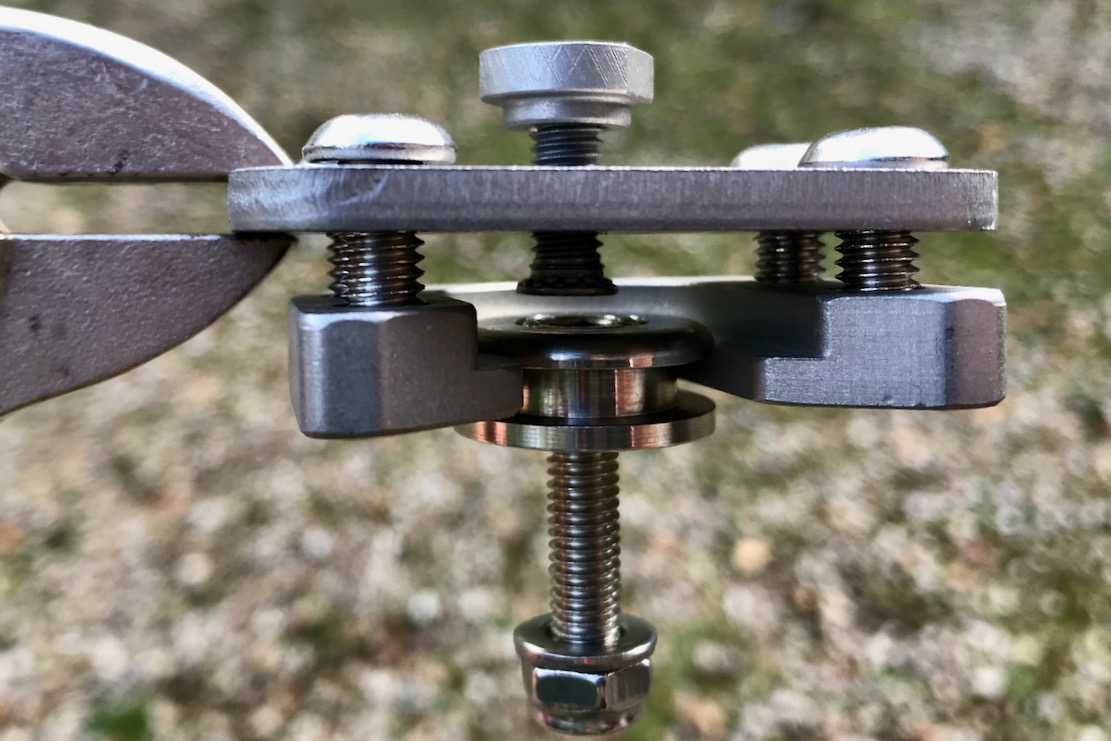
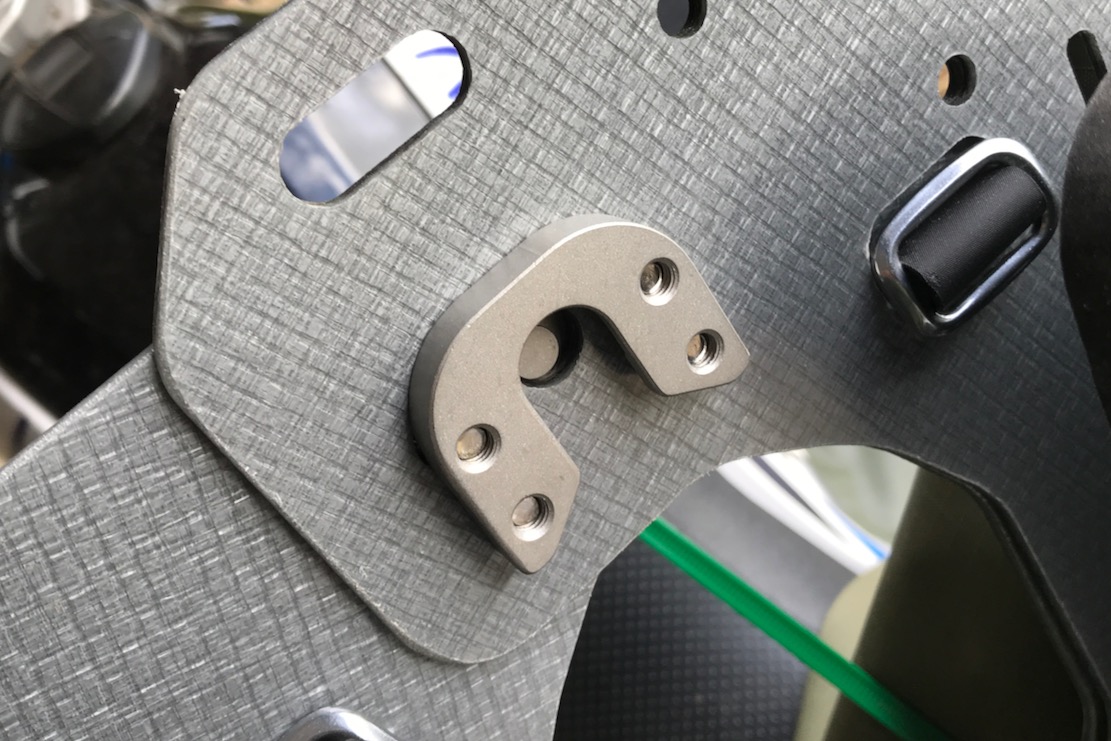
The clever thing about the composite CURV® plate to which each bag is semi-permanently buckled, is that the flexible board naturally bows outwards to resist pressing on the sides of the bike causing rubbing; a quasi-rack. A replaceable, full-length, 8-mil EVA foam pad is velcro’d to the plate. The bags come securely anchor-buckled to the plate which is velcro’d to the EVA pad. To avoid pipeburn use the Mosko heatshield, at only £22 it’s cheaper and neater than a C-channel off-cut and clips.
Set up this way, removing the whole rig is a 10-second job (discounting the duffle), while secure mounting in the morning might take as long as 30 seconds, so make sure to set the alarm. I’ll take q/d soft bags if they have a bombproof and foolproof attachment system which can be used daily without thinking too much. Otherwise, most nights in Morocco I leave partly loaded bags on the securely parked bike and bring what I need into the room.
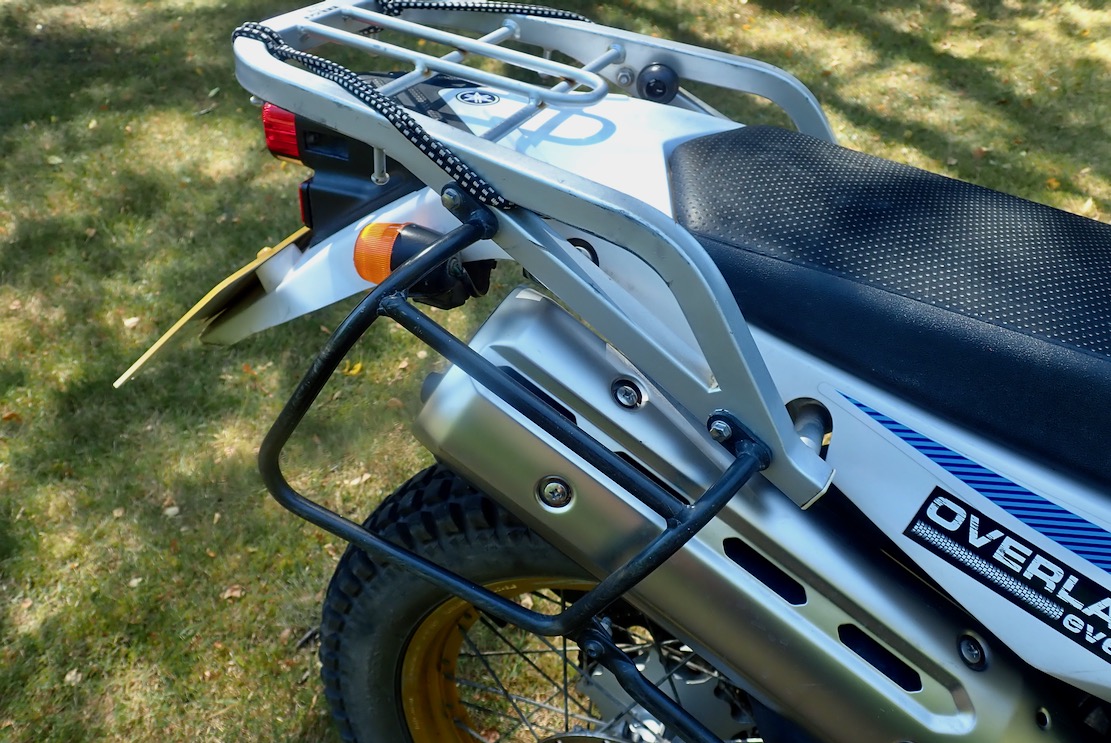
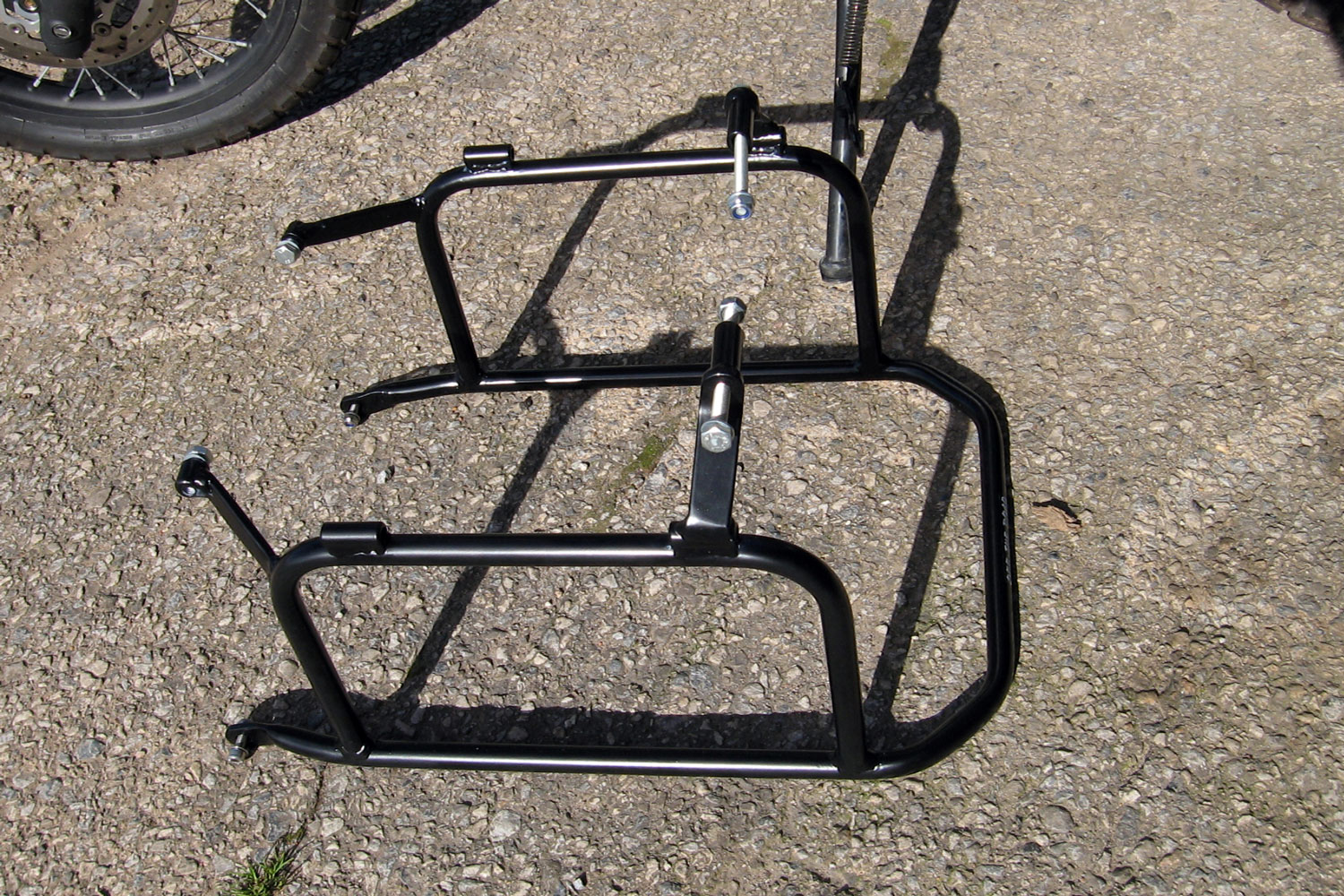
My Serow Touring came stock with an old-school alloy tube tailrack and light-gauge steel side frames (left) which are way too far back as usual, but otherwise ideal for stabilising the low weights I typically carry in Morocco, lodging each night, as I do. Out of the box I could see issues fitting the Alpine 60s onto my racking, but could also see a solution.
Looking at the vid above. Either those bags are full to overflowing, or the stiffness of the flexible backplate means they sit high on that Kove, even without the duffle which might be hidden from view.
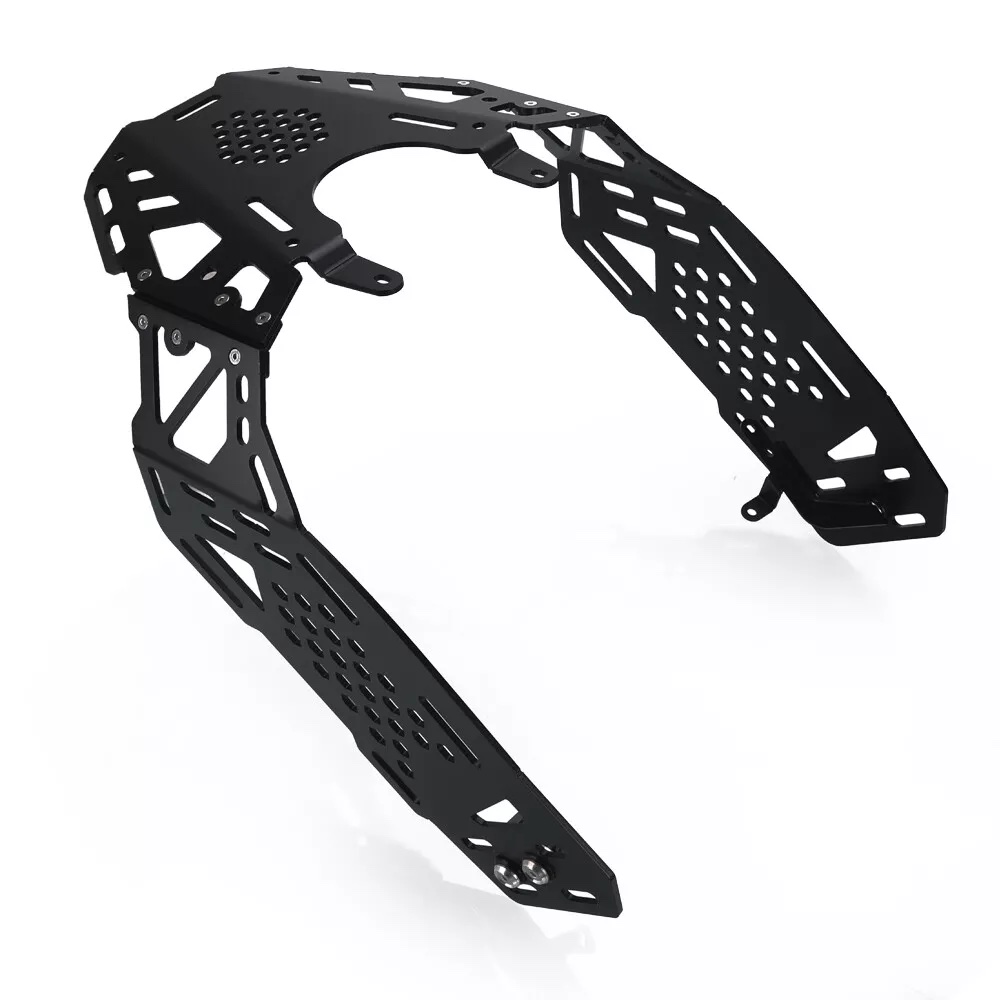
“The A60 is a rackless system” says our man Coleman at 0:52, but at that point you can see the Kove has been fitted with a CNC FishRacing integrated full rack system (right), or the 25-quid Ali-X knock-off. It’s much wider than my Serow set up which may explain why the bags sit so high. I’m not a fan of this current, easily cut (aka: cheap) CNC trend, when hand-formed and braised tubing uses less metal for half the weight (rant ends ;-).
As said the R60 baggage appears to sit high on the racked Kove, but it also does in the Mosko video (below), fitted to a Moroccan T7 rental with only a tail rack. I think it’s a seat-width thing. As we know modern pipes are huge.
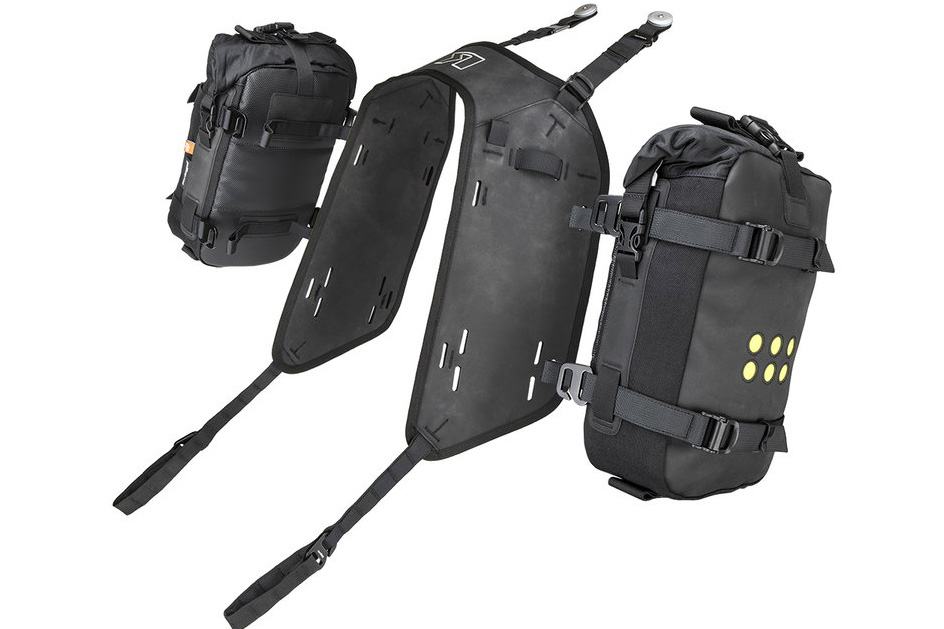
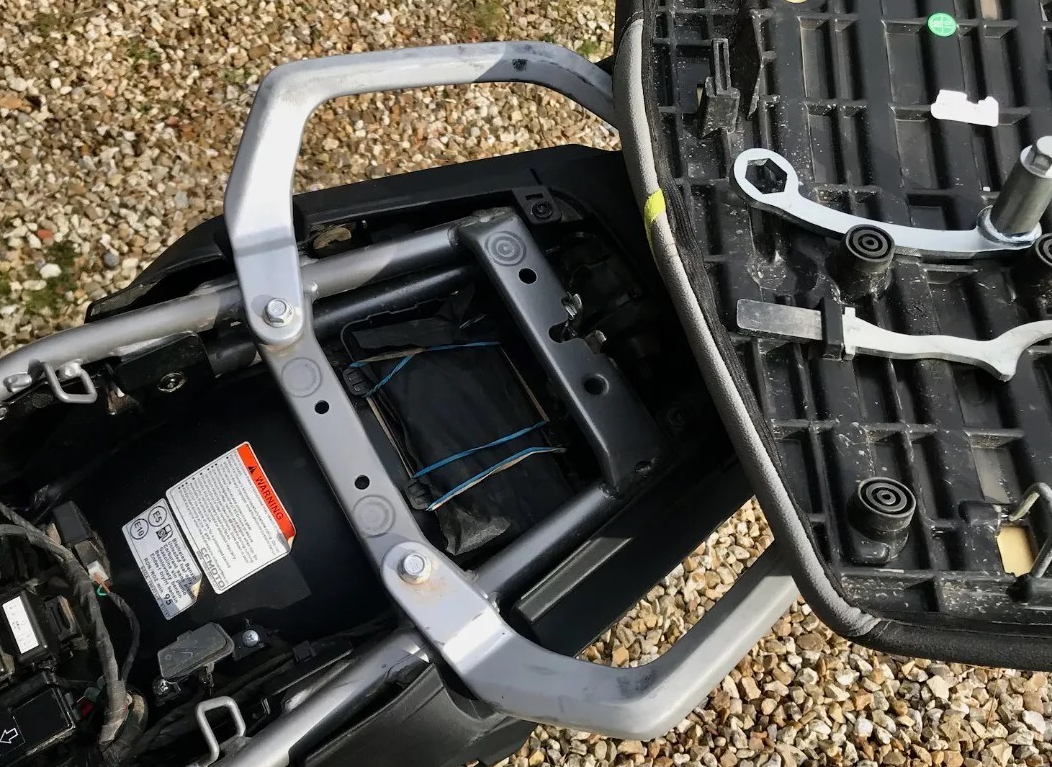
Last year I tried to fit the Kriega OS-Base Universal harness (below left) for my 450MT but the one-piece grab handles/tail rack got in the way. I could have swapped in an aftermarket CNC tail rack (and lost the handy handles), or cut a hole in the harness for the alloy handle to pass through, before rebolting.
I liked the idea of being able to lash anything to the harness, not just Kriega’s OS bags, but again, their fitted bags seem to sit high, effectively resting on the side of the seat (below right) to limit swinging about in the rack-free void below. This is the weak spot of the rackless idea on monoshockers: the side panels become a necessary but over-high support point.
For me the ethos has long been as low and forward as possible – or ‘AL&FAP if you’re in a hurry. These set ups may save rack weight, but are higher and further back than ideal. With minimal loads it’s not critical, but it’s not great for CoG and bike control, especially weaving around off road, picking up or when getting out of shape.

I returned the Kriega harness and went with the usual tailpack-sat-on-a-tailpack, plus my novel and as yet unrecognised 3P idea, as well as small tankside bags on radiator crash bars (left). Baggage ends up all over the bike which is handy for daytime access and organisation, but a bit of a faff to bring it all in overnight (if necessary), plus a messy look.
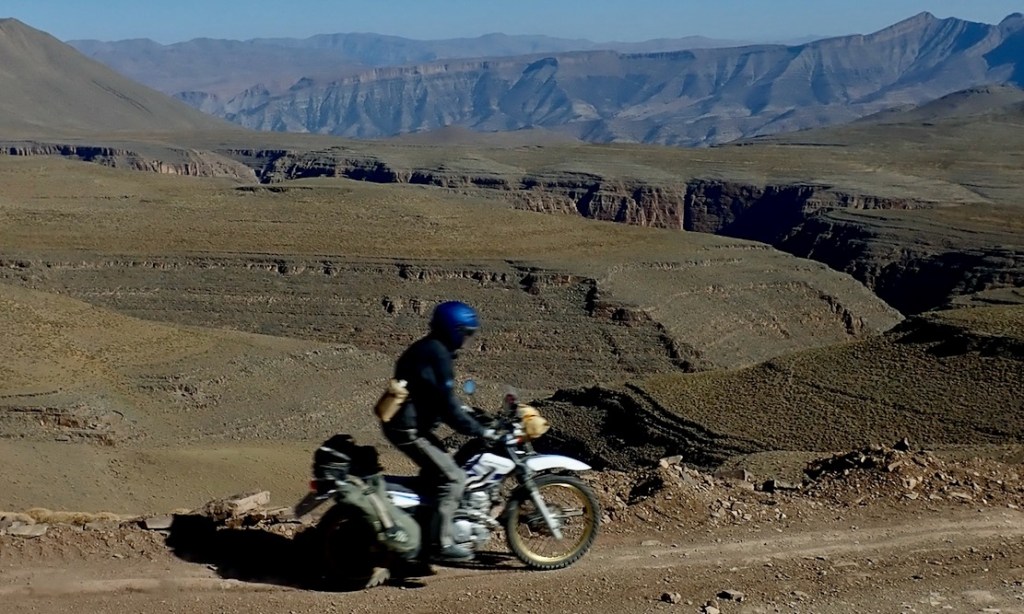
This time I wanted to try everything in one place. I could see the R60s might not sit well on my bike but I liked the bag shape more than the q/d feature. The R60’s ‘short sock’ shape potentially puts loads in the right place. Heavy or rarely used Items like tools and tubes can go it the bag’s ‘toe’; light stuff up top with all the rest in between.
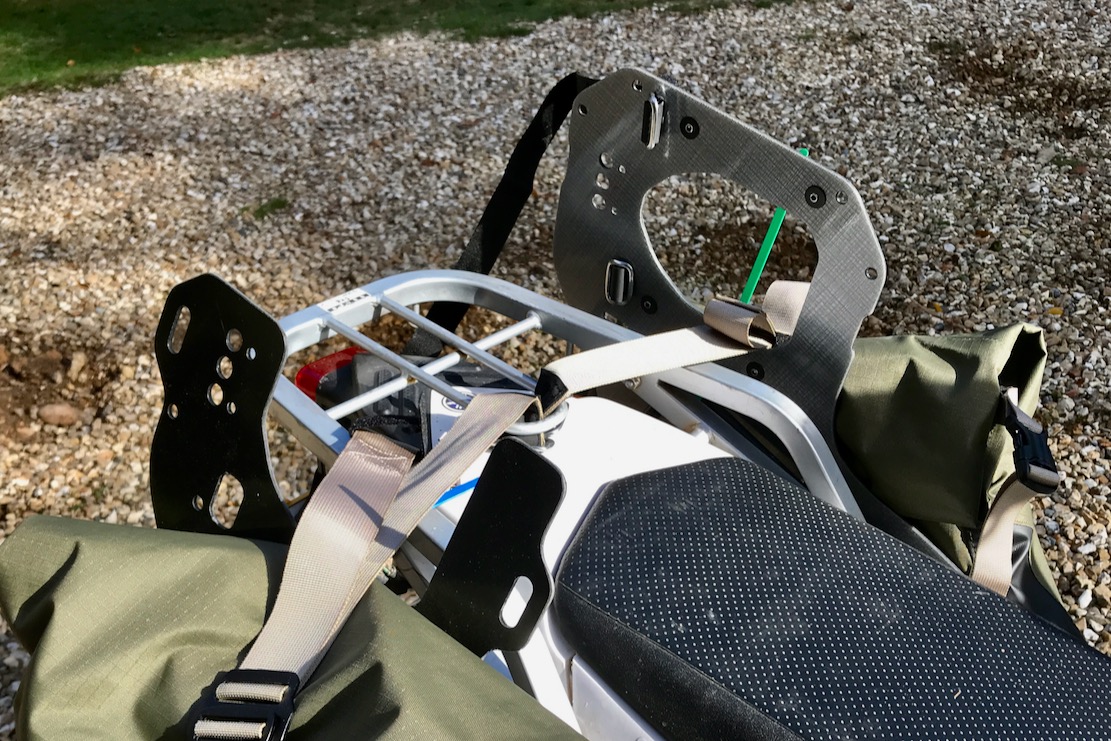
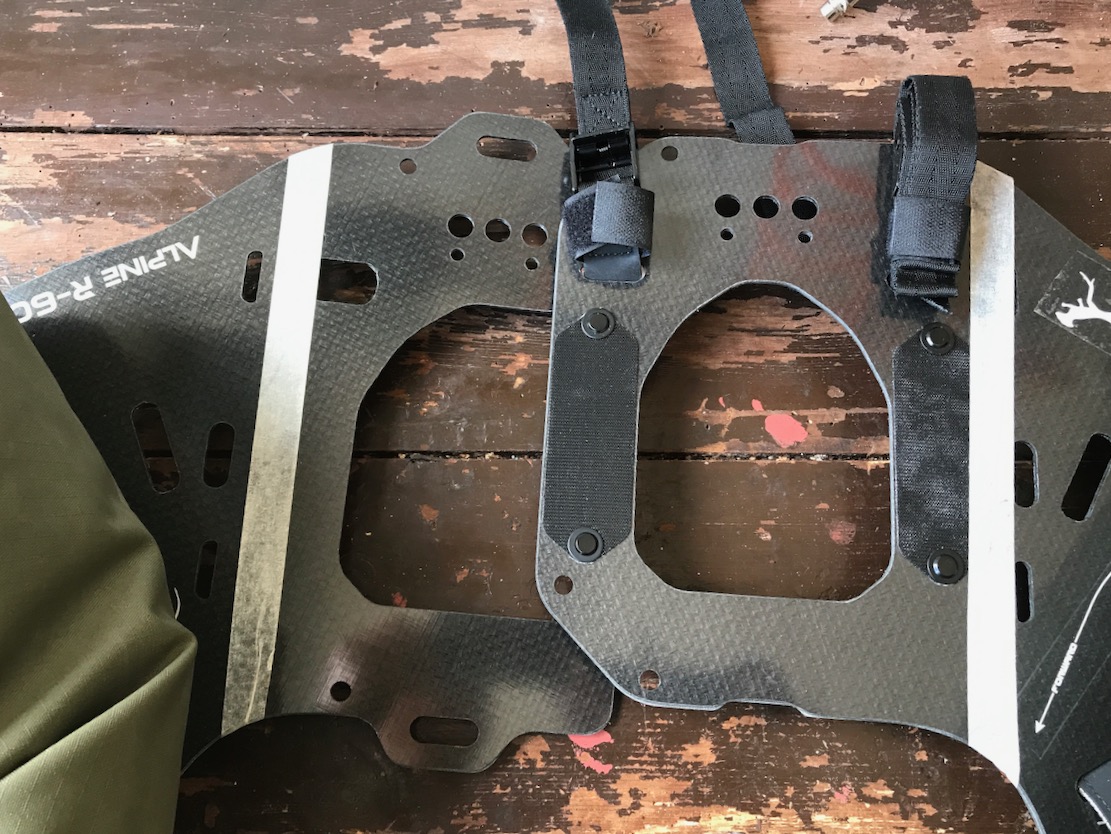
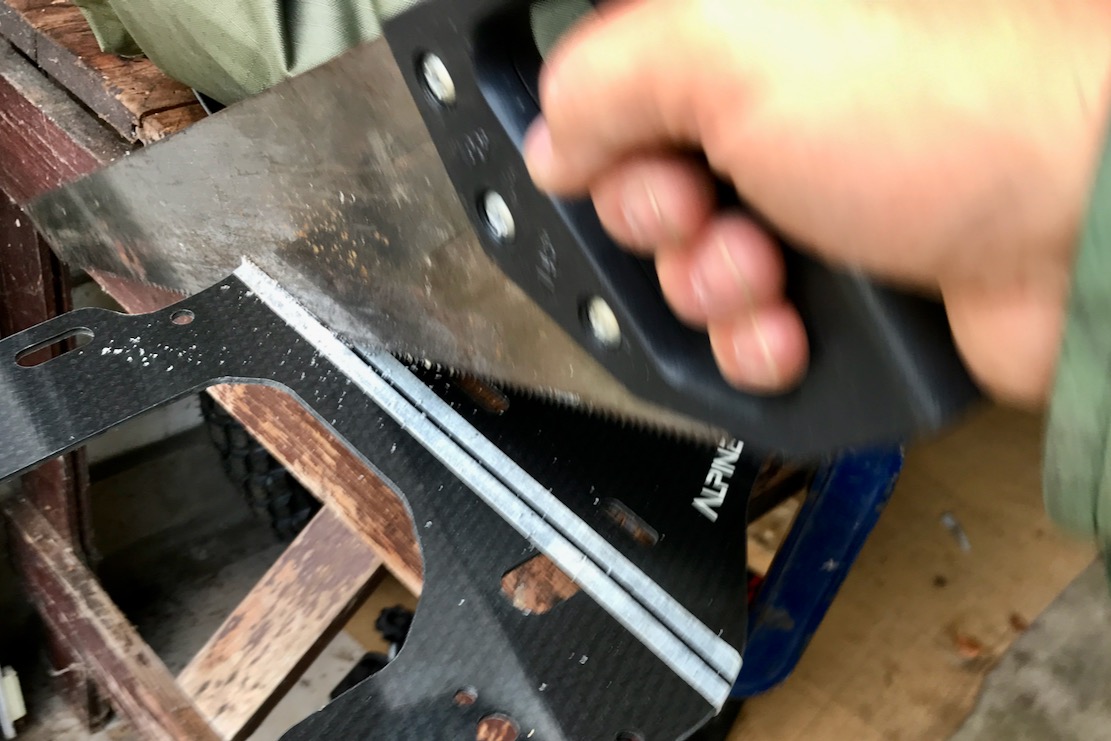
I test mounted the unjoined Alpines with zip ties; holes pre-cut into the CURV-plate make this easy. After seeing that it could all fit very well, I removed the bags and sawed off the rear parts of the plate and EVA pad, making two separate panniers. I then taped and zip-tied the trimmed board and foam (below left) and re-attached each 1.25-kilo bag using the much shortened strap to the front of the pillion peg hanger and at three more points along the upper edge of the board with reusable TPU RovaFlex SoftTies (below right) which adorn just about all of my outdoor gear.
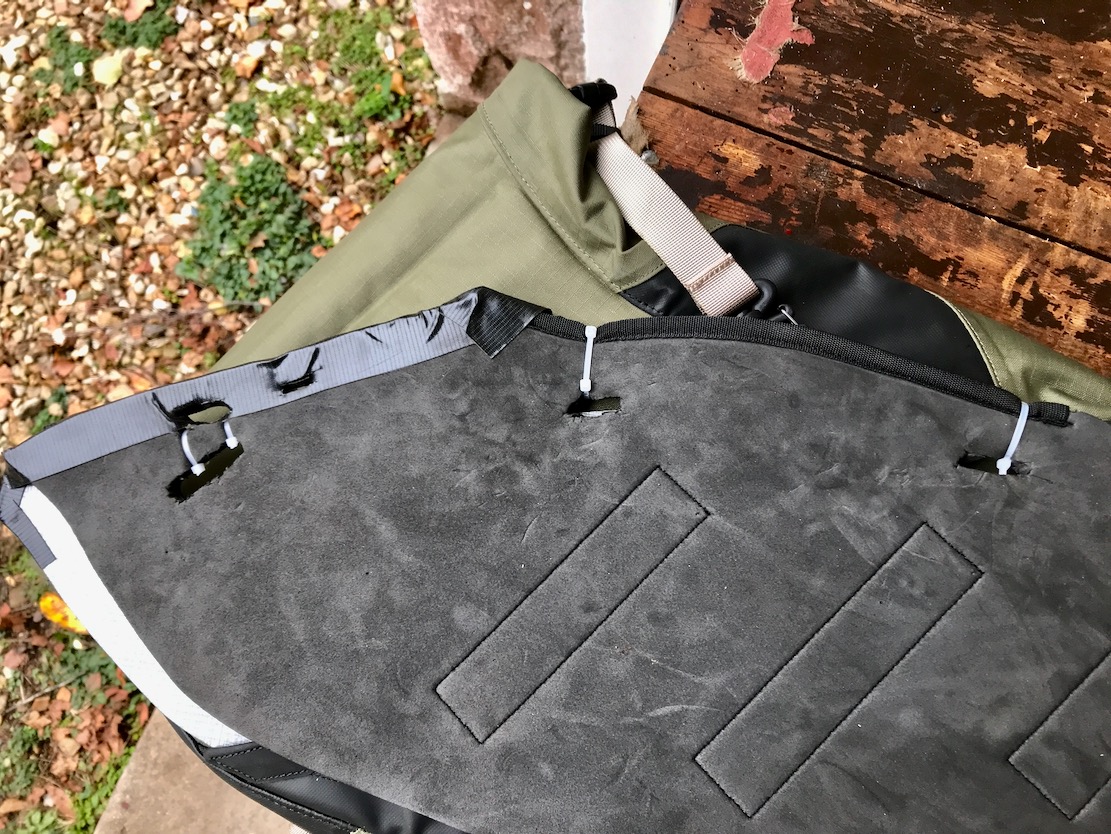
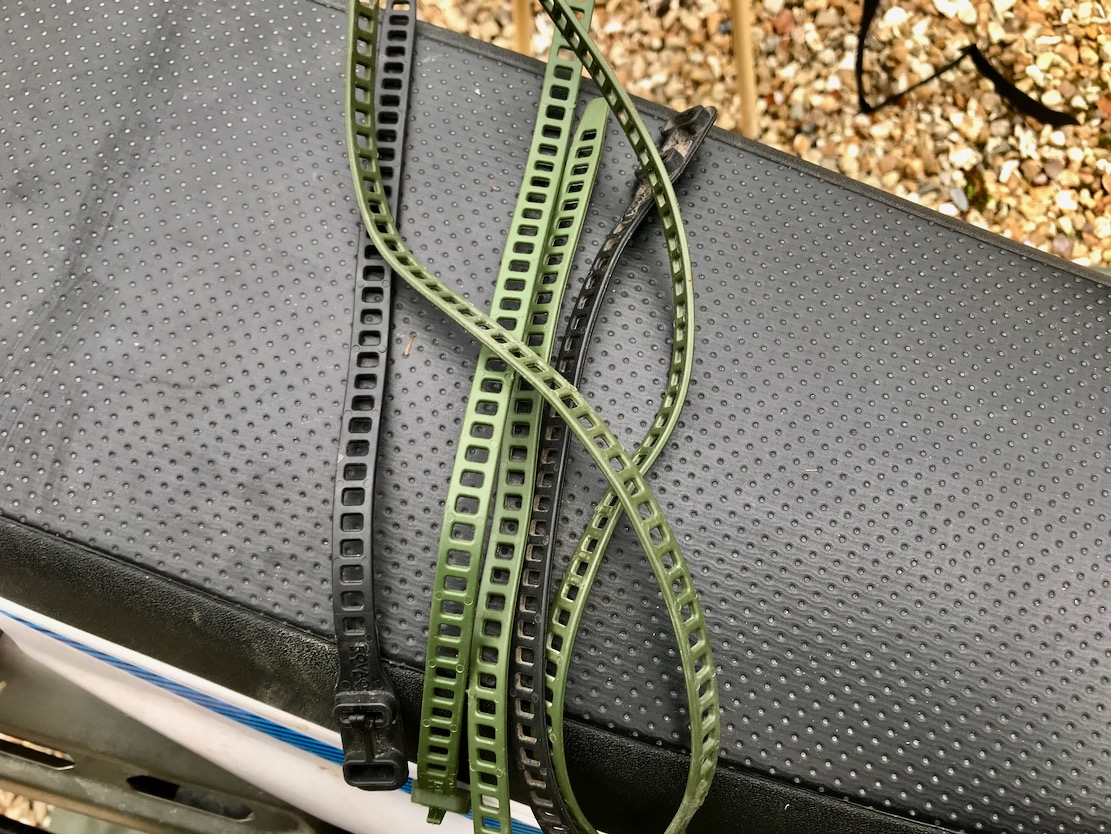
By chance, the bag’s lowest point also rested on the Serow’s unfolded pillion peg, additionally supporting heavy weights positioned in that area, reviving my unsung 3P idea mentioned above and effectively giving up to five contact points per side.
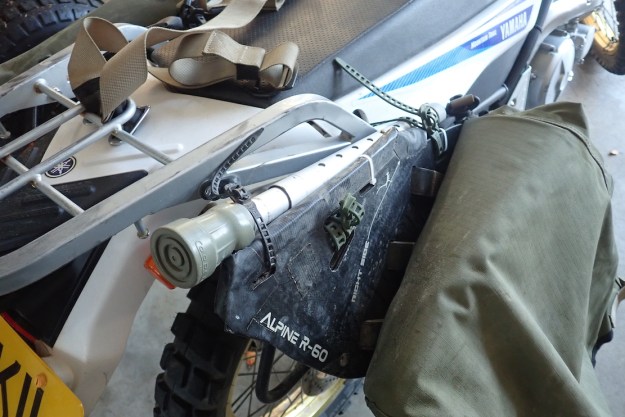
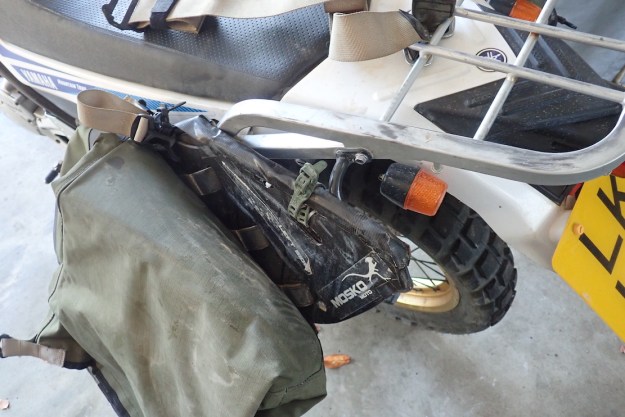

The 50-mil OTT-straps anchored themselves through a gap in my tail rack (left) to pull the bags close in against the rack. There was no need to run an additional strap around the whole bag and rack to hold it in, as Adv Spec suggest with their Magadans.
As it’s set up now, the seat can be removed as normal, the side panel can be accessed by undoing the pillion strap and lifting each bag. For insecure overnight parkings, I just fill a light 70-litre sack with what I need for the night.

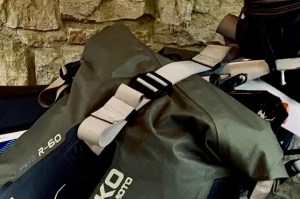
All in all, the trimmed R60s could not have fitted better: secure, low, forward and as light as you’ll get for the volume and durability.
In Morocco a couple of tumbles didn’t affect the bags, though we didn’t have any pelting rain to test the waterproofing. On the road load volumes vary from day to day depending on what you’re wearing an so on. So the only complaint I have was that it was hard to cinch down the 50-mm male metal anchor buckle to pull the top down tightly. The strap was jammed too tight. It was more easily done on the upper part of the strap which is less intuitive for a good yank. Other than that, the OTT strap and two clips per side made things easily to access during the day. You soon learn to pack a day-access bag on one side so the other can be left till the evening. Everything in several pouches or bags shoved down inside easily, using all the space.
Once I get the Serow sorted, I’m looking forward to taking out the R60 for another run.
 Adventure Motorcycling Handbook