See also:
Klim Outrider
Aerostitch AD1
Klim ITB
IN A LINE
Durable, close-fitting stretchy and with removable armour, but some annoying features and better suited to temperate riding conditions.
WHERE TESTED
A month in Morocco including riding home across Spain. Sunshine, rain and snow; temps from 35°C to 3.5°C.
COST & WEIGHT
£299 from Adventure Spec. Weight with supplied Forcefield armour 1700g (hips: 200g pair; knees: 250g). Trousers alone: 1250g.

- Stretchy but reassuringly stout
- Forcefield hip and knee armour included
- Zip leg ends
- CE AA certified
- Long cut reaches right down past the ankles
- Floating knee armour pockets tuck into tall boots
- They’re not black!

- £300? I think I’m too stuck in the past
- Heavy with full armour
- Too clammy for southern Morocco in March
- Unnecessary and flappy ankle hem straps
- Annoying waist belt
- Blue colour is a bit boring
- Close-fitting, coarse woven, somewhat rubbery fabric not particularly pleasant against the skin and can snag
Loaned by Adventure Spec for review
What They Say
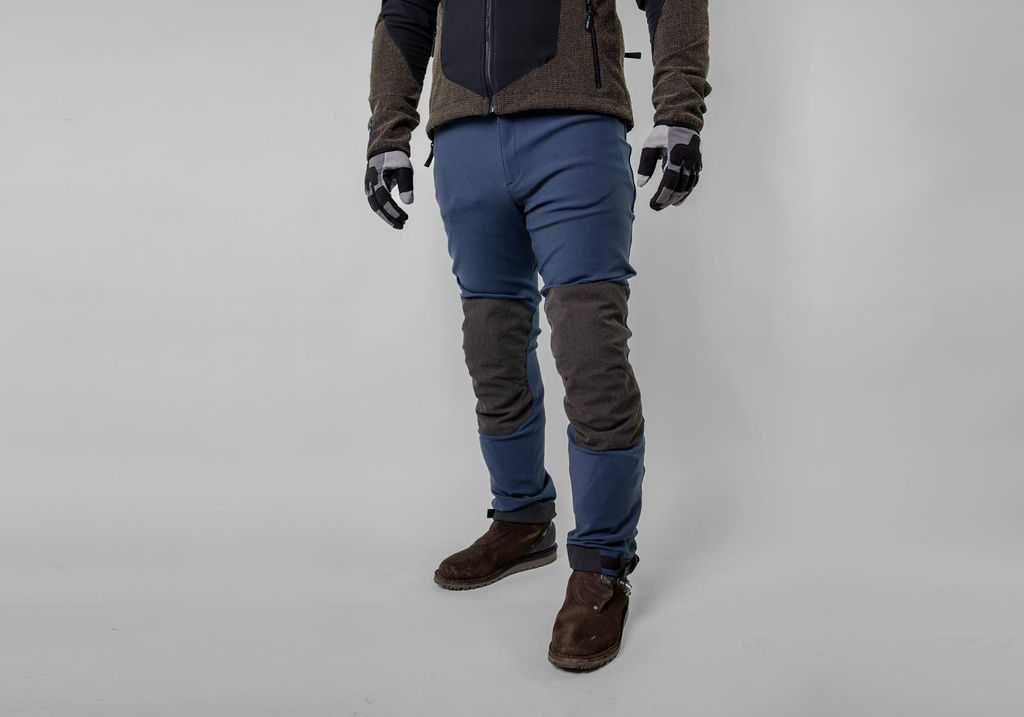
The Linesman Pant is a lightweight CE AA certified over the boot adventure motorcycle pant / trouser designed for trail, adventure and dualsport riding. It features Bi-Stretch Panama fabric that combines extreme comfort with high abrasion resistance. Toned down styling makes the Linesman Pant a perfect choice for those looking for a more subtle adventure rider look. Designed to work with the Linesman Jacket. Removable Forcefield Level 2 hip and knee armour included. Weight (size 38 Reg) 1700g / 59 oz.
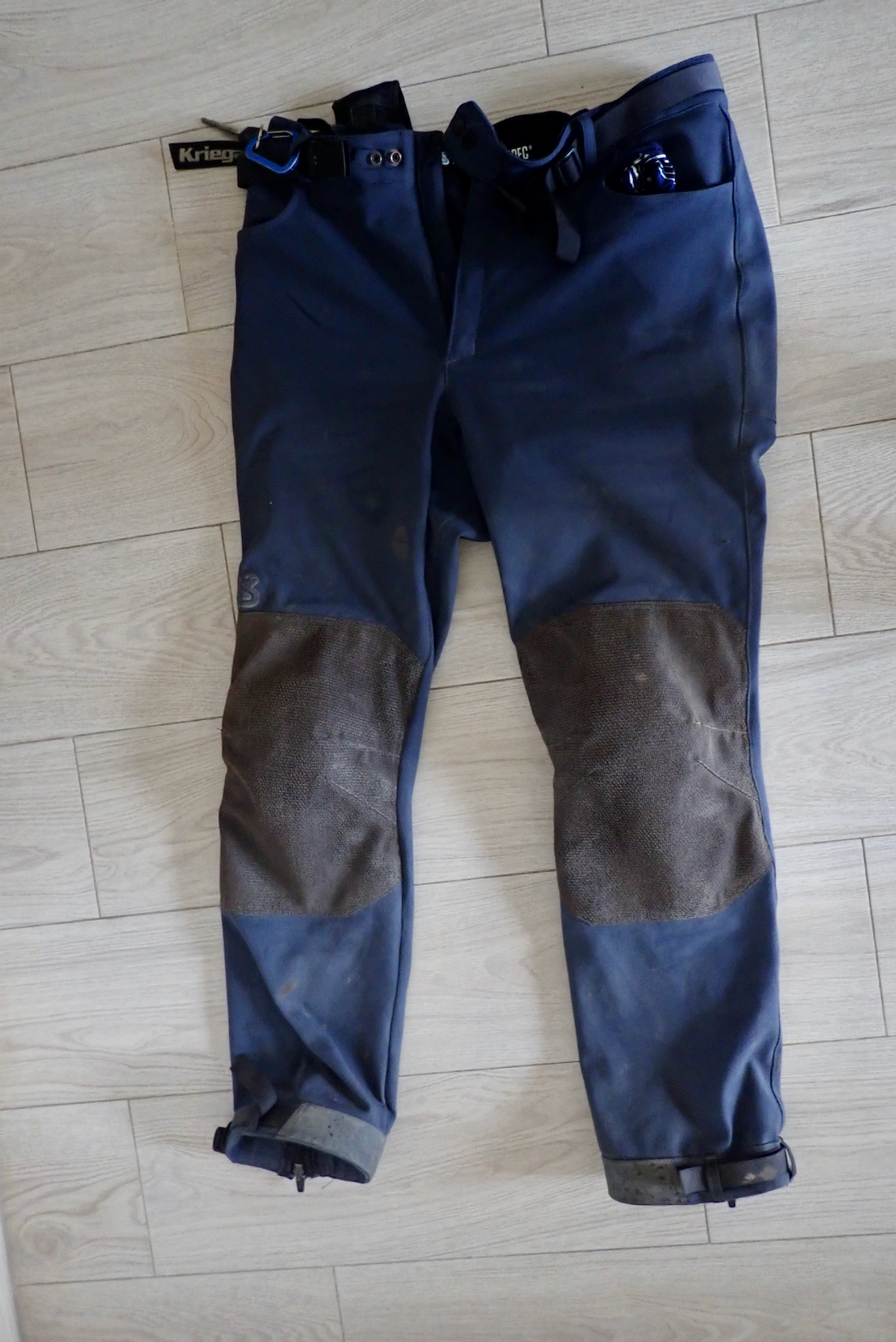
REVIEW
Preferring a plainer look, for seven years I wore loose-fitting Klim Outrider heavy-duty jeans without the armour (and with modifications), until they literally started to feel a drag to wear. It’s more me and my age than the 1090-g Klims when worn OTB (Over the Boot). But I wondered: might a stretchy pair of riding trousers drag less on the knees when standing/sitting or more particularly, swinging the leg over a tall saddle when getting on and off?
Buying a pair of very light and stretchy Mammut hiking pants for walks and an MTB ride got me thinking this way. A more practical alternative to Ron Hills, they roll up to next to nothing and now are my off-bike trousers for moto travelling.
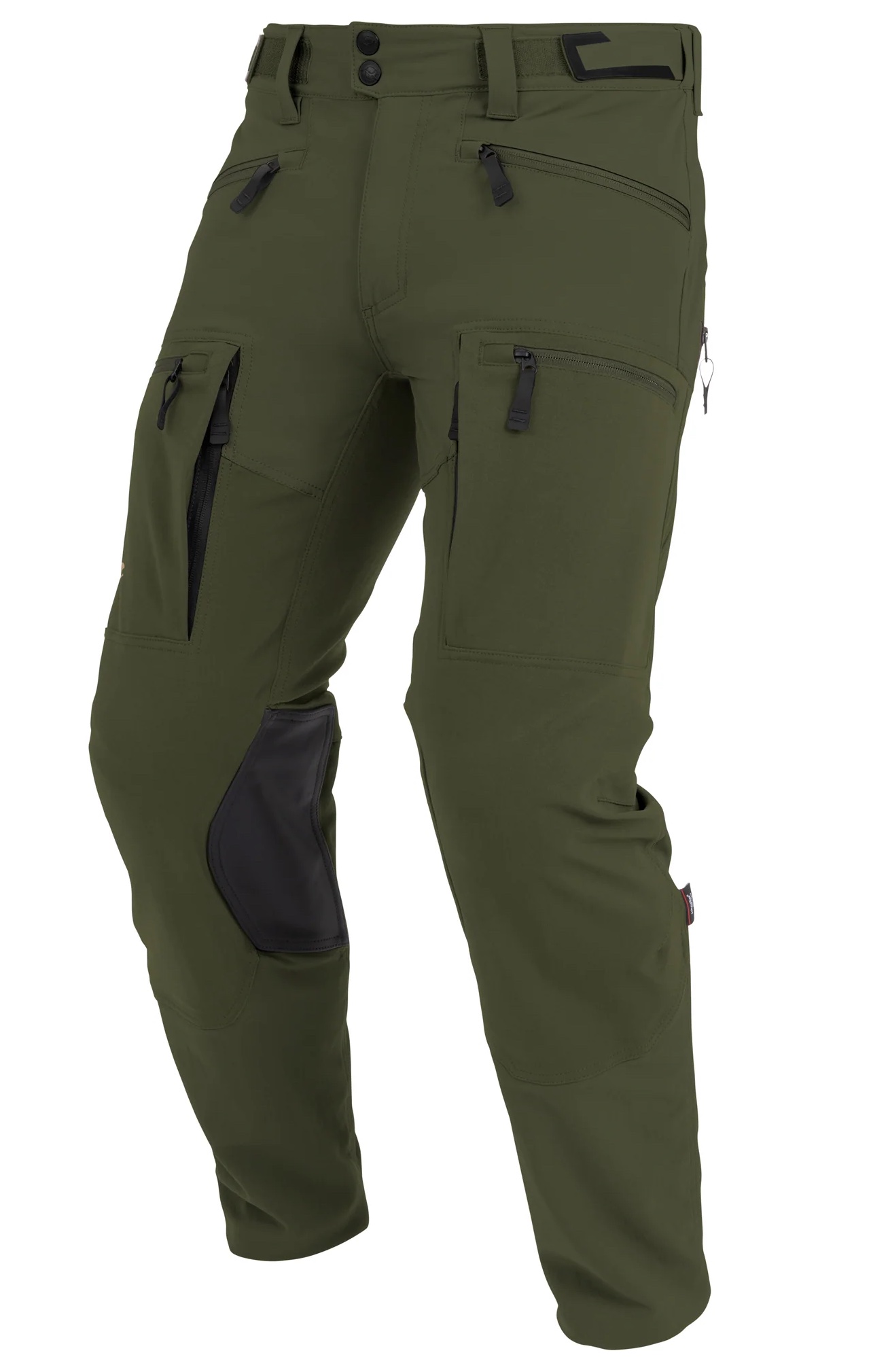
I considered Mosko’s Woodsman (right) with my kind of pockets and earthy colours. But I’m not convinced by the idea of partial waterproof knee and seat panels. Either do it or don’t, as with their less pocket-optimised Surveyor pants. I also assumed the sort of stretchy, softshell fabric, presumably as used on my Mosko Moto Surveyor jacket, wouldn’t be suited for off-road riding protection unless armour is fixed to the body (Mosko’s recommendation), not integrated in the clothing – as others do.
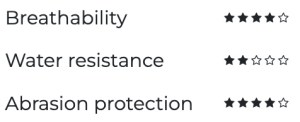
Adventure Spec recently brought out a thick, basket weave Panama fabric for their Linesman range: ‘a hiking pant built for adventure riders, that’s CE AA certified‘. (Fyi, I was prepared to buy these, but ASpec supplied a pair for review, as they’ve done previously). I am a big fan of the original green Linesman jacket they brought out years ago and wish I’d kept it. (Imo, the jacket’s current colours don’t look as good.)
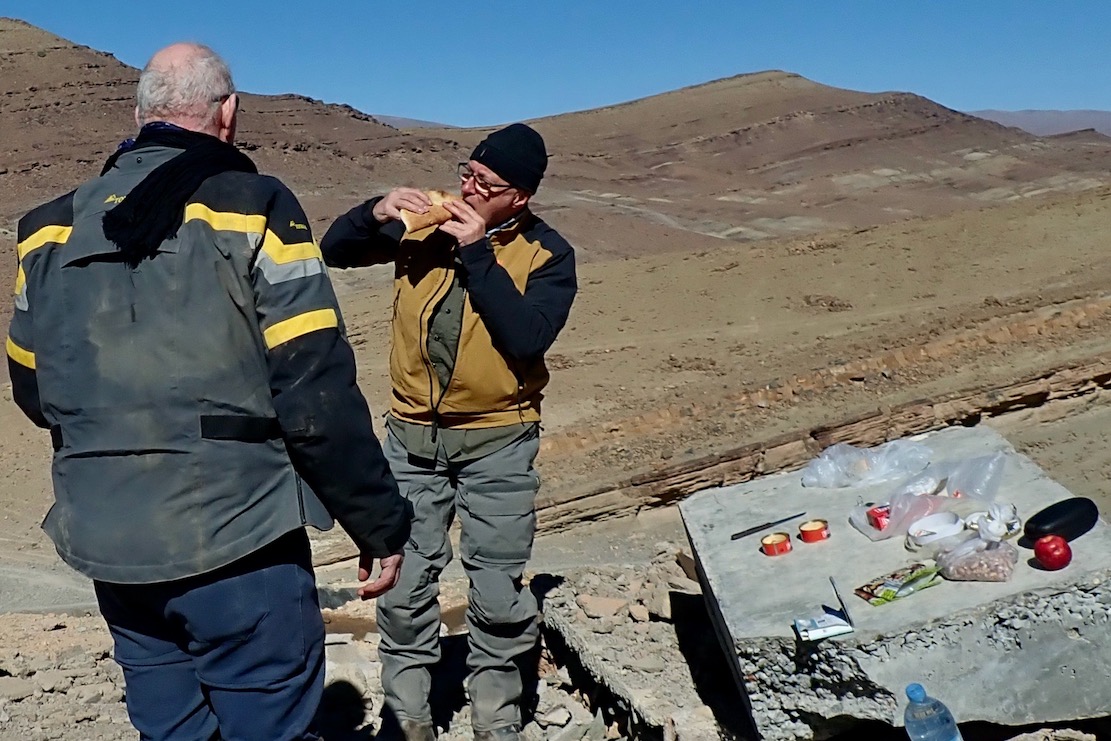
Just before my Linesmans got sent out, I spent a fortnight in Morocco with James in his own pair. (See his Second Opinion, below.) They did the job, as trousers do, and he was never cold for long in the mornings or up at 10,000′ – a sign of things to come. Expecting it to be much colder, I was wearing my underused, grey Aerostitch AD1 Gore-Tex overtrousers (above left) which also proved surprisingly comfortable in what was globally recorded as the warmest February ever.
Out of the box
The coarse-woven Linesmans feel heavy but pliable, like a damp towel. Without the armour they weigh 1250g. The supplied Forcefield armour adds another 450g. Pockets are like regular jeans – two at the front, two at the back, with no zip closures. The ‘hiking trousers built for adventure riding‘ idea is a bit… stretched. Walking and MTB-ing are much more kinetic than even moto off-roading where protection is more of an issue and which the Linesmans address well. It’s hard to see where the weight is; lifted to the light, you can see through the fabric which ought to mean good breathability.
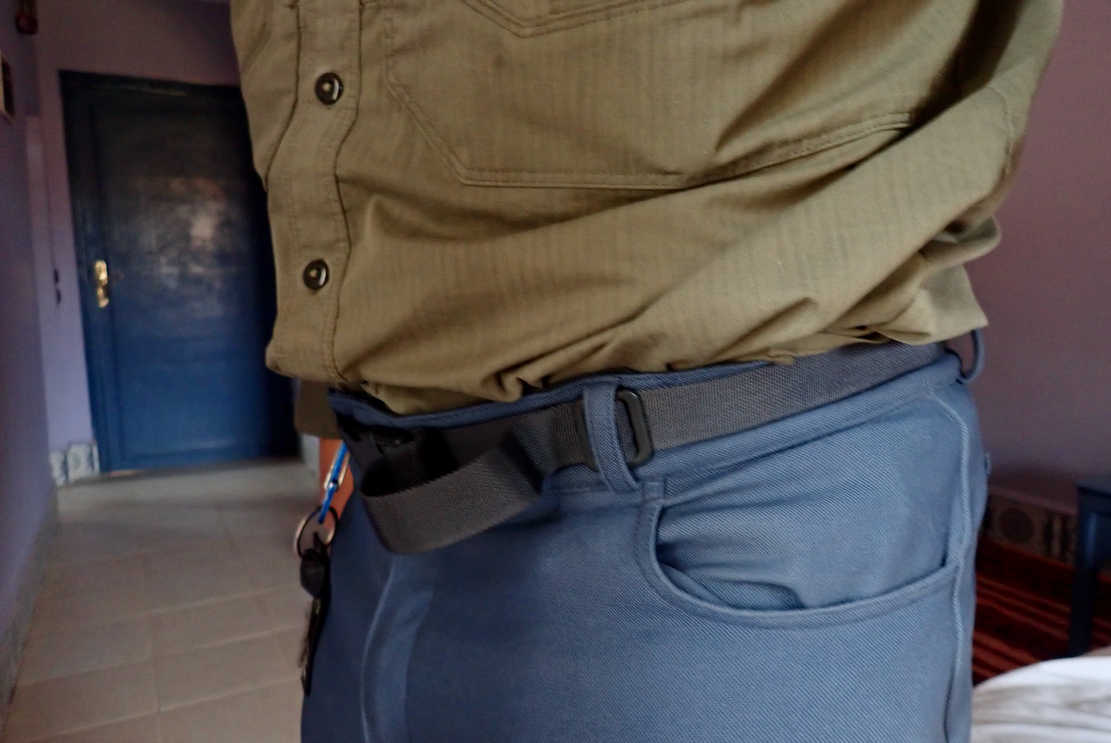
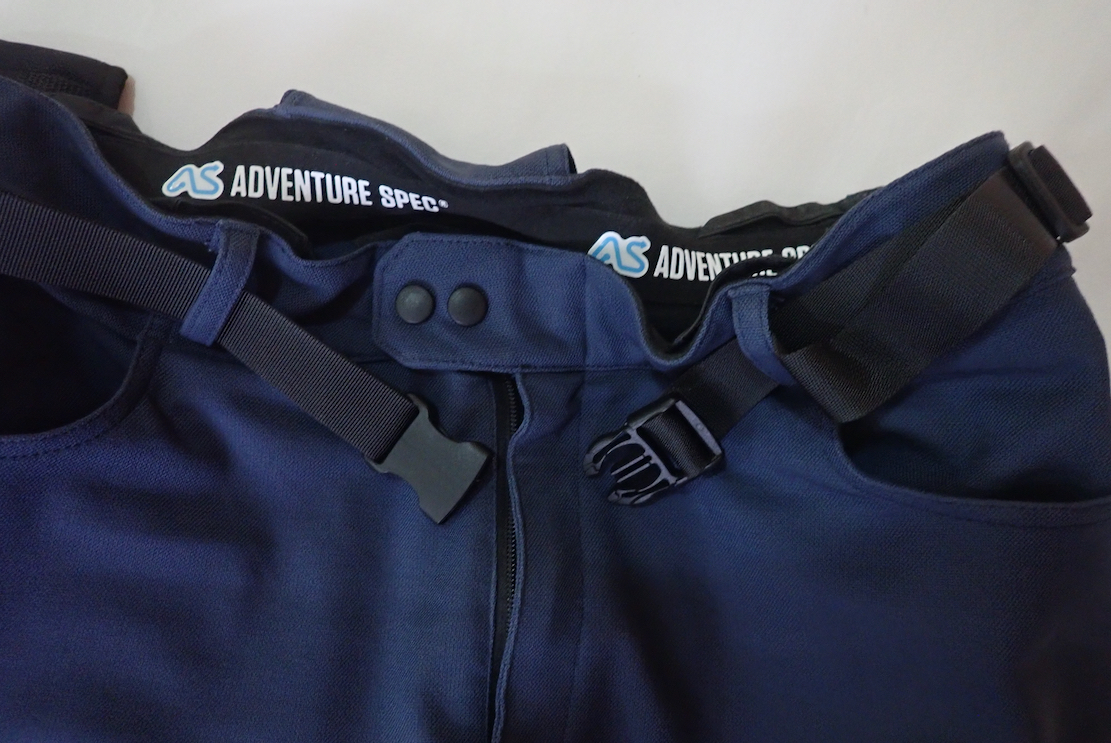
“Integrated [waist] buckle allows for an easy cinching tight if you lose weight on long RTW trips…”
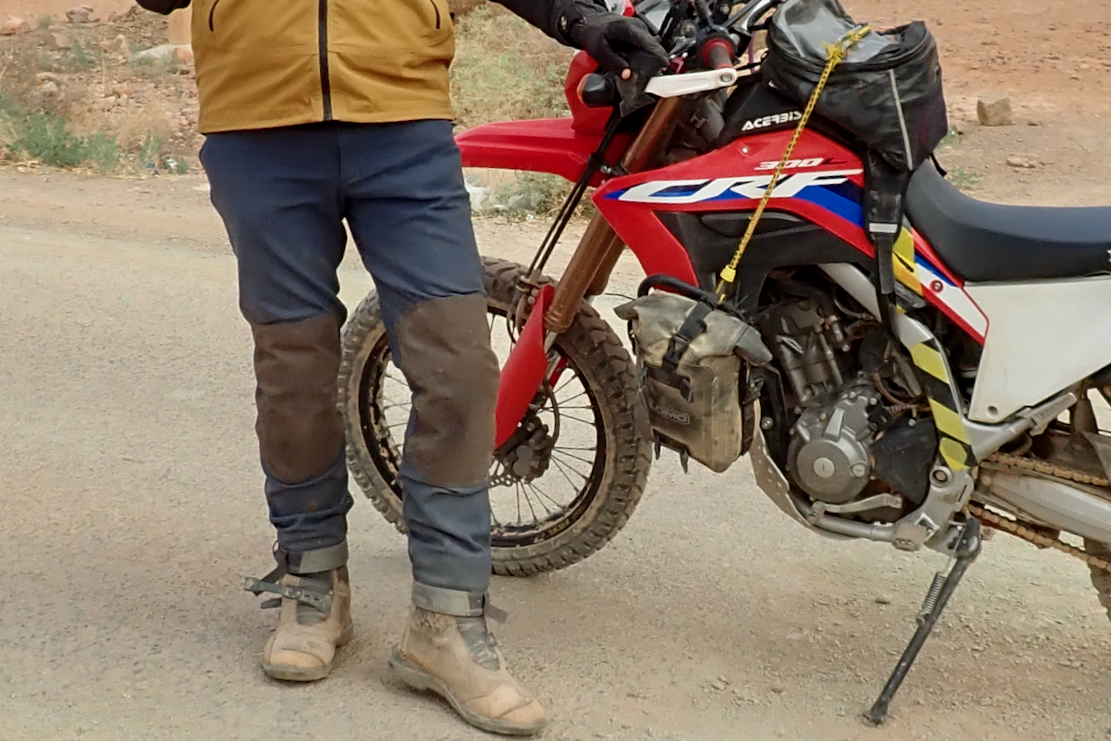
Not what I found. The waist belt has two ends, each sewn to the waistband with unnecessarily complicated buckles to take up slack. This was the first annoyance. Adjusting the belt at the closure to accommodate the ebb and flow of my generous abdominal span would have required two actions to remove slack. In the end I just left the loop slack (above left), despite being an entrapment hazard, to borrow a kayaking term. The left side excess could be cut, unneeded buckle removed and then be adjusted normally at the cinch clip, but the right side buckle catches in the belt loop when doing up. I may have missed the point here, but no need to over-complicate things or reinvent the belt; just focus on day-to-day function.
Inside the waistband are bonded strips of grippy, ASpec-branded silicone – nice touch to hold up the weight, although the slightly rubbery texture of the relatively coarse body fabric is a little grippy too.
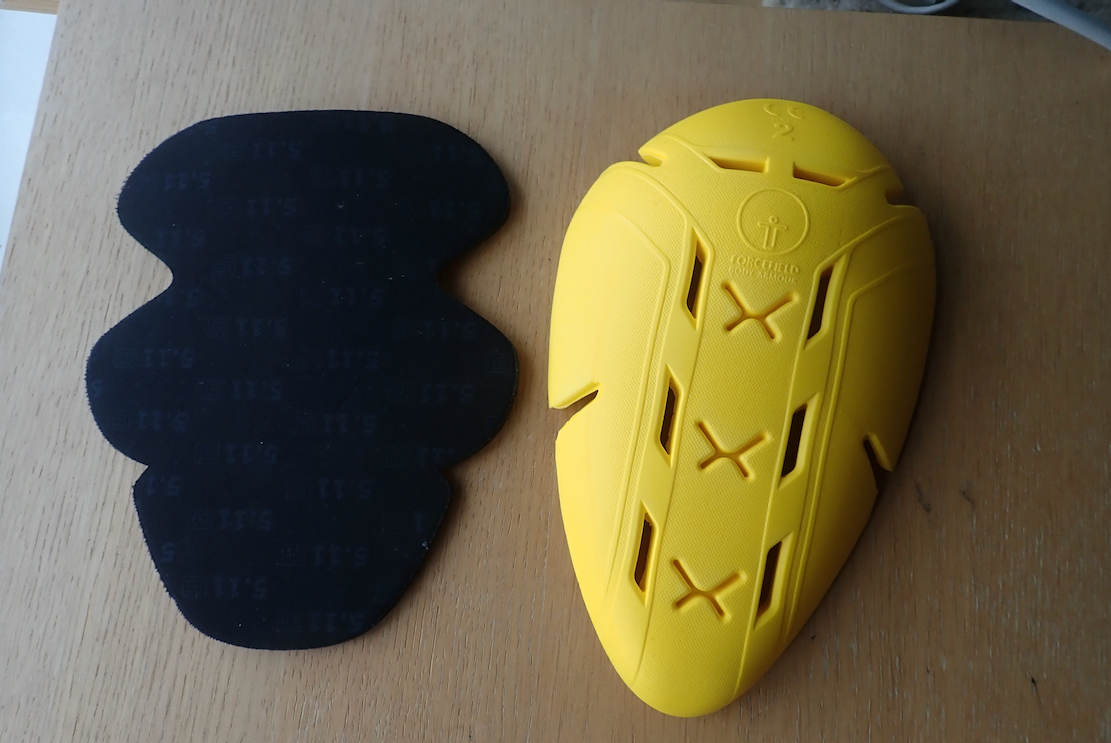
There are armour pockets on the hips and of course the knees. Here the lower edge hangs loose so you can slip them into full-height boots to stay in place. Another nice touch. I wear short boots and removed the Forcefields before fitting some 5mm neoprene pads (left) I had going spare.
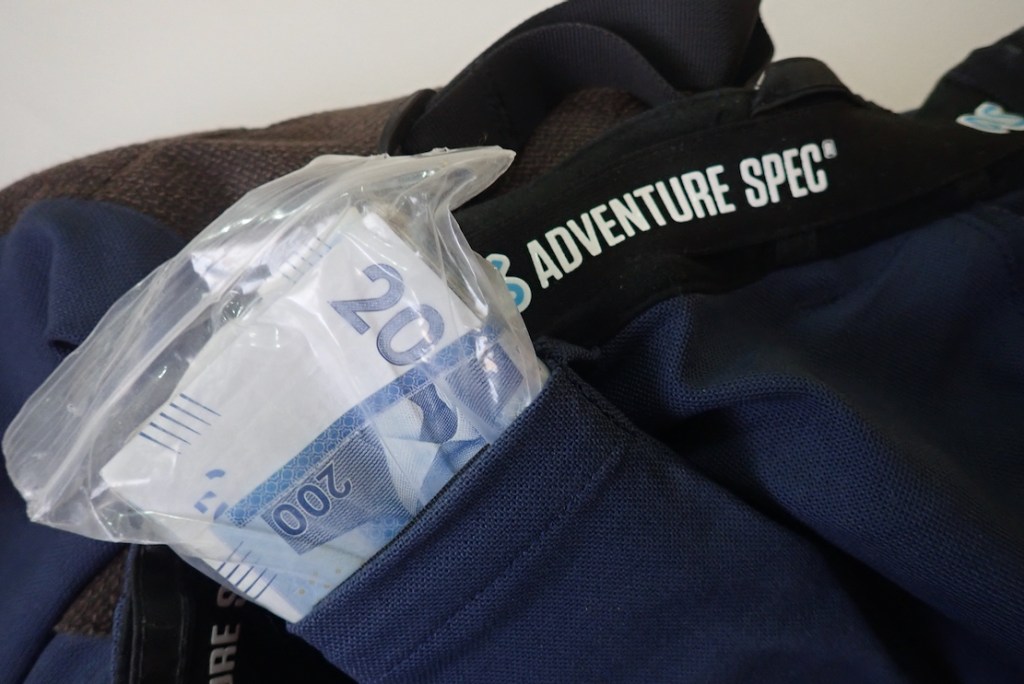
I never wore the Linesmans with the supplied armour. Instead, I used the armour sleeves for stashing cash and can confirm you can stuff 30,000 Moroccan dirhams into a hip armour pocket, and at least another couple of grand of £ and € in the knees. Providing you’re wearing your trousers, you never need worry where your bulky stash is. If you’ve lost your trousers, the missing cash will be the least of your worries.

As I’ve said before, knee, hip or elbow, armour pads won’t stop broken bones, though these joints often take the impact of minor prangs. Unless you ride hard, armour has more real-world value for racers or on the road where crashes are faster and abrasive. But of course it’s a personal choice which depends how you ride or feel about ATGATT – or ‘clobber’ as I call it. I avoid riding too technical stuff, plod along like a lonesome donkey and fall off once in a blue moon.
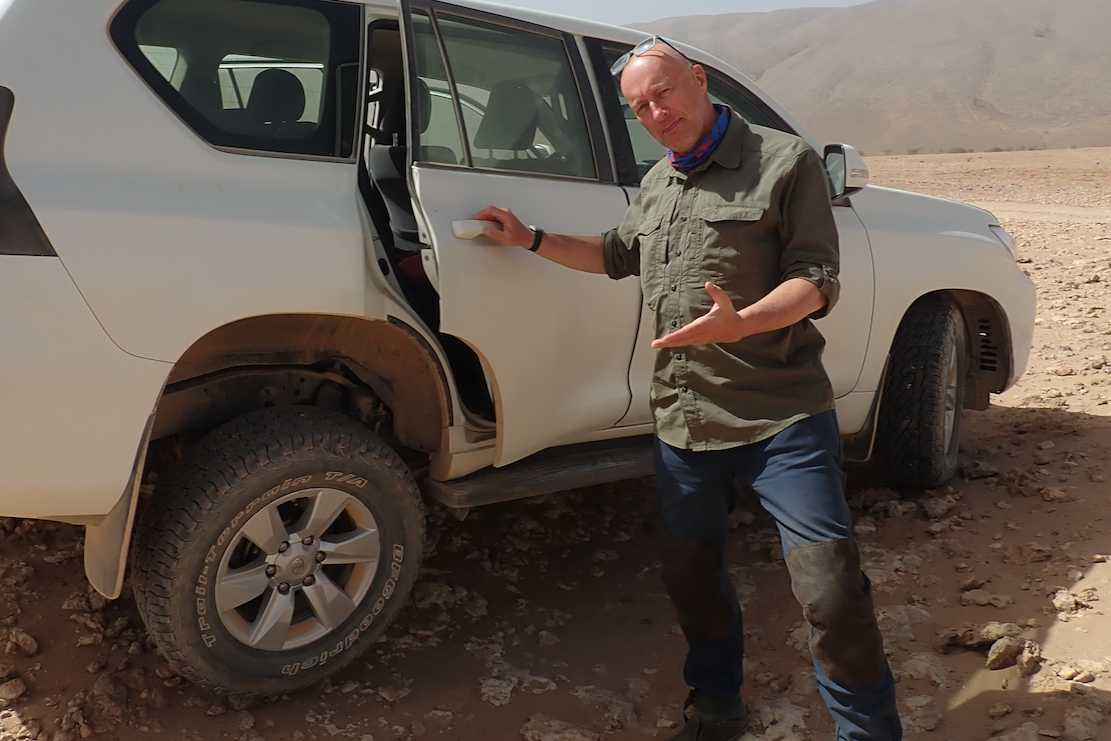
… In my Pants!
Out the box I spent a day wearing the Linesmans at the desk where they felt a bit clammy which did not bode well. I then forced myself to wear them for a week in the desert in an a/c 4×4, and then another month on the bike through Morocco, across freezing Spain and back to the UK. All up, about 4000km riding from mid-30s to 3°C rain and sleet over the Tichka pass and in northern Spain.

First thing I noticed on James’ Linesmans in February was the untidy strap at the ankle. Linesmans are designed as close-fitting OTB trousers, with a zip down the calf covered by a small velcro tab at the ankle. Is a strap also needed and, if yes, could not a way be found to reliably tuck away the loose end like Kriega manage on their packs? I tried wrapping the loose strand around the belt loop (above) but of course it worked its way loose.
I thought these straps might be redundant before I got mine and, having now worn them, I think they are. Again, I might have missed some ingenious application, but remain unsure of their purpose. To stop the pants riding up? To add tension to keep knee armour in place? To hold the weight of the trouser and armour off the knee? To stop the wind or fording water going up your leg? To cover the forward-facing velcro tab from otherwise getting snagged open? To reinvent the zipped trouser leg closure where just velcro might seem a bit cheap?
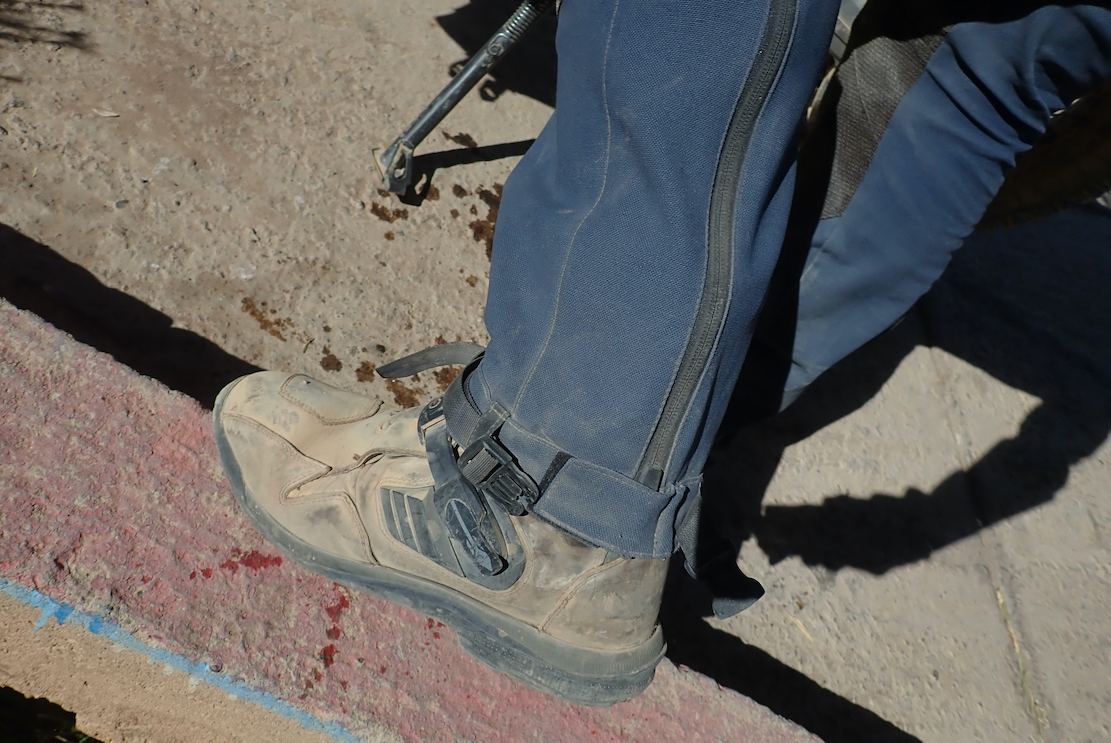
Who knows. I tried some days clipped and some unclipped. No tangible difference; just another flapping thing to do up and undo at each end of the day. The velcro does the job – and if not, use a larger, ‘contourable’ patch of velcro, like my AD1s.
But most annoyingly, these ankle straps can’t be removed if you also take against them. Like the waist belt, each end is sewn to the hem. A one-piece strap could have easily ran through the hem’s fold like a normal belt, to be pulled out and perhaps reinstalled if you changed your mind on its usefulness. A simple solution to please everyone without resorting to Occam’s Razor. ASpec say you can ‘remove’ it, especially to wear the Linesmans ITB. But you don’t pay 300 quid from riding pants to chop bits off, when a non-destructive option could be easily offered. And I know I’m not one to talk design elegance, but aesthetically, these flapping buckles also spoil the slimline Linesman’s line.
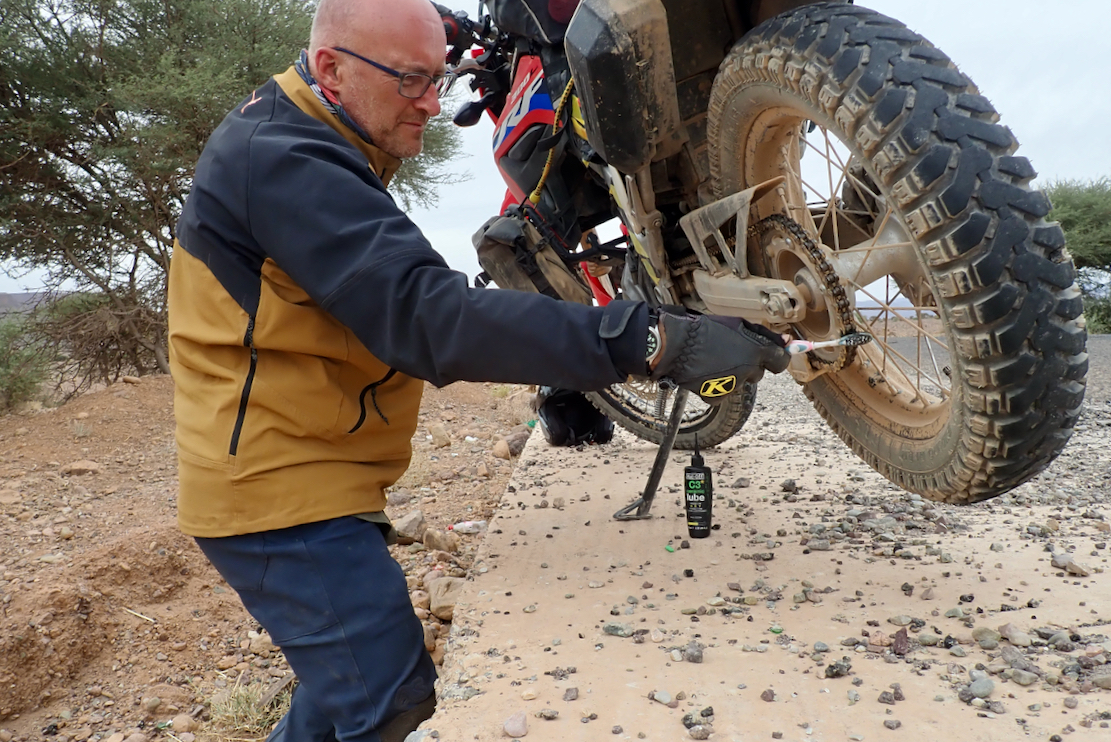
I also found the coarse-woven but close-fitting fabric didn’t lay against the skin that comfortably at times, and annoyingly, one evening the leg caught a protruding nailhead in a cheap chair and pulled out a loop of thread. You’d think this will also happen in brambles and so on, and soon make them look like a grotty old jumper (as James may have found, below).
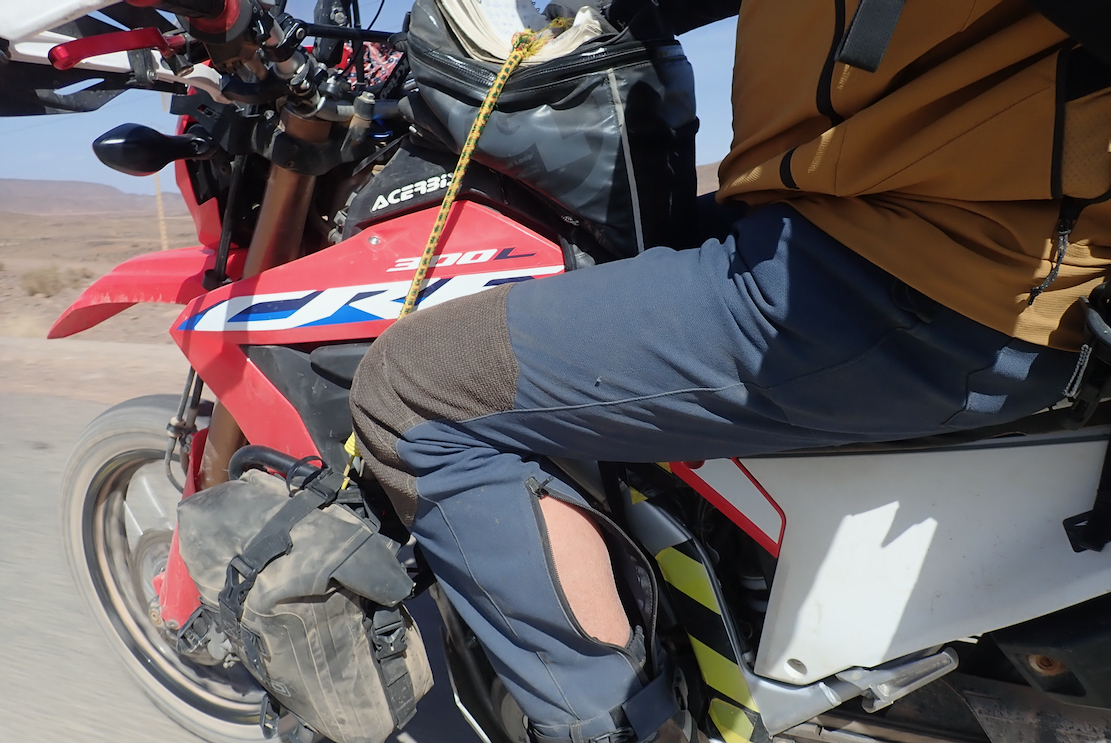
‘These pants will feel comfortable in relatively dry temperatures between 10 C and 21 C / 50 F and 70 F.’ They said it right there. That is actually a narrow temperature range but in practice sounds about right, so can’t say I wasn’t warned. Legs don’t really feel the cold like the body core, and riding in light rain and some settled snow over the 2200-m Tichka Pass, I was ruddy freezing in my wholly inadequate clothing. But I knew it would warm up once over the other side. On that day the Linesmans never got sodden or uncomfortable and quickly dried off.
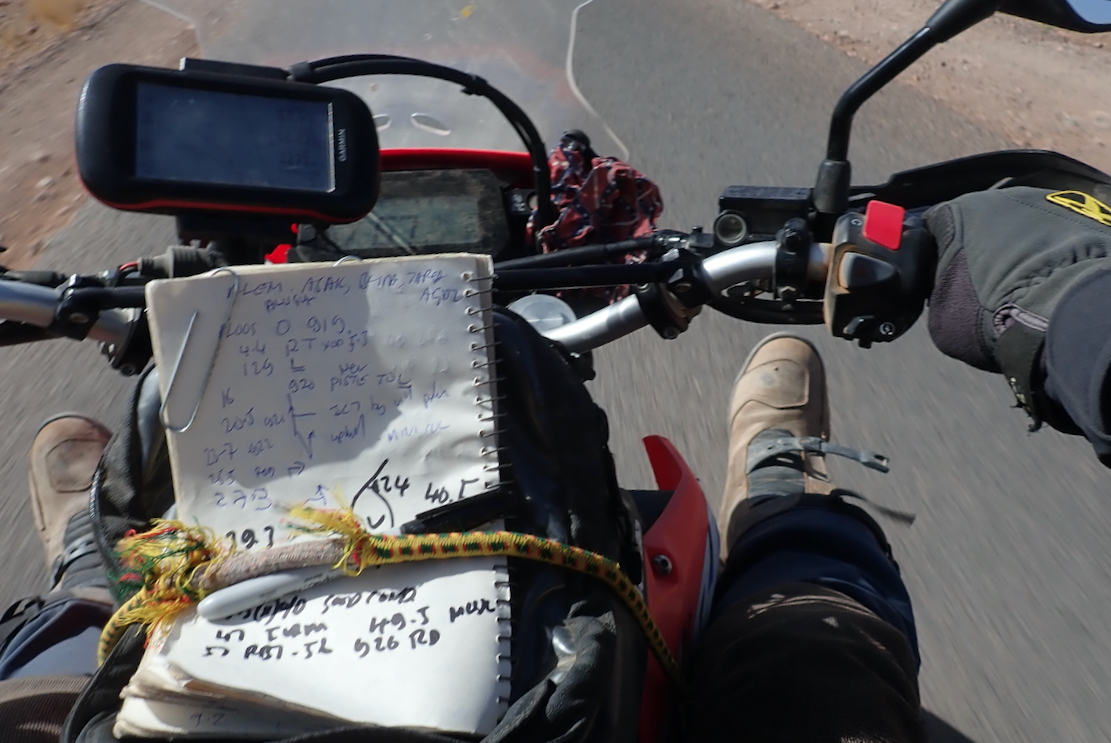
Morocco’s desert-sea-mountain location with its radical elevation and temperature changes make bike clothing choices especially tricky, but in March temperatures rise steeply and by the time it got to the mid-30s°C down south, the Linesmans were just too hot, even on the move, same with the Klim ITBs I tried a few years ago. Meanwhile the baggier, part natural fibre Klim Outriders have proved tolerable in similar heat. I tried undoing the calf zip with little effect. I then tried resting my legs on my Lomo bags (above) to get some wind up them, but that only works on road and is probably not what they teach at CBT school. At least when you stop for a break you can pull them up to air off a bit (below).
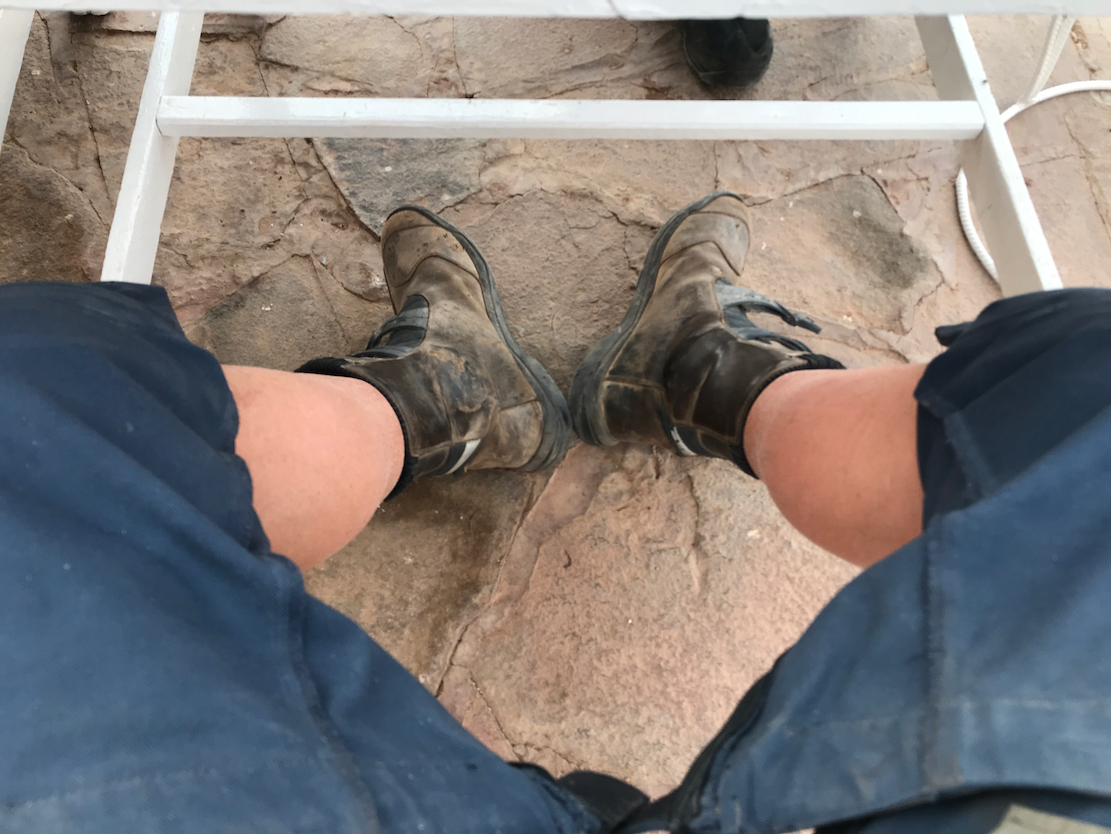
In the heat the tight fitting fabric clung to the skin, minimising any stretching benefits and, come the end of the day, I couldn’t wait to peel them off. I wondered how my AD1s would have managed? Their bulky cut may not be so flattering, but would have kept the fabric off the legs, creating an air gap. And with the ankles velcroed down snuggly, I could have unzipped the sides from either end to got some venting on, or air-off fully at a stop. This looseness won’t help keep integrated armour in place, but I do believe if you’re serious about armour, it’s better attached to the body, not in external clothing.
After a month with a lot of dust and mucky, tuna lunches, the Linesmans didn’t look too grubby – I do notice that non-black shows the dust less. I hand-washed them once in my Ortlieb tailpack in a hotel shower and they dried off overnight in the room. Back home after a proper machine wash they came out as good as new, bar some snagging.
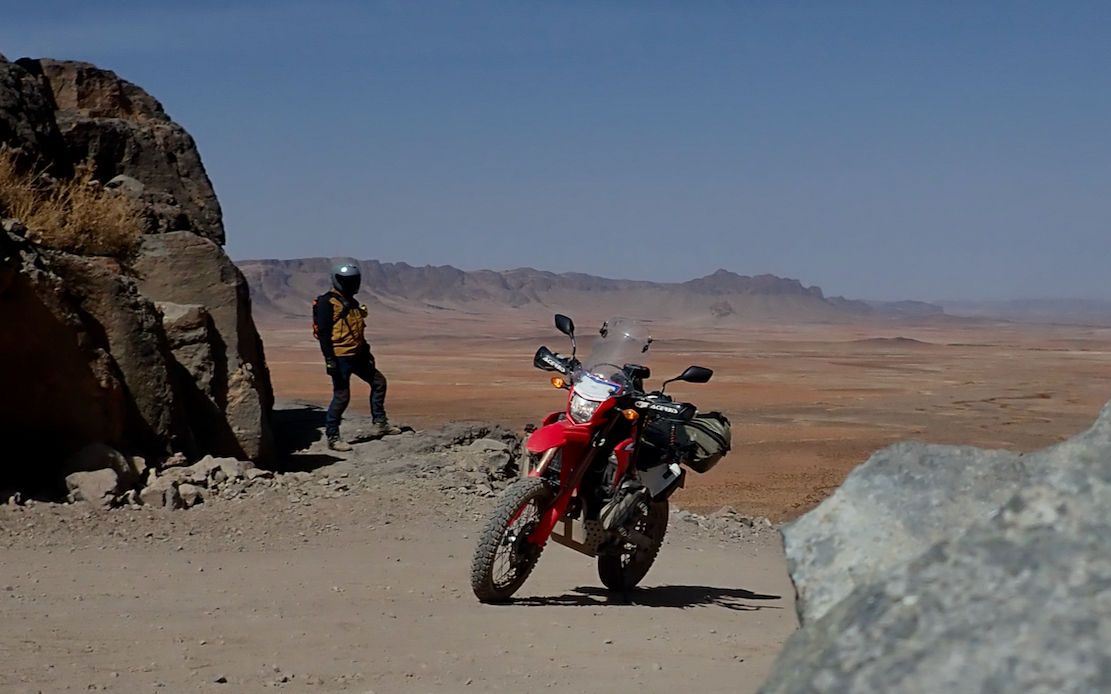

As you can tell, I didn’t gel on with the Linesmans for my sort of riding. But not for the first time my PoV is out on a limb; on the ASpec website comments are broadly positive. Sure, the ankle straps could be snipped off for good, but as expected, once I saw them I suspected the pants would be too hot for Morocco. This is why the lairier designed off-road pants like ITBs, have venting zips and mesh panels.
It’s also just occurred to me that any trousers – particularly heavy ones laden with armour – worn OTB will hang unsupported and drag on the knees, including these Linesman’s and even with the ankle closures. ITB trousers support some of the weight when they’re tucked in. Therefore, Linesman’s worn ITB (ankle buckle cut off) may be more comfortable. And while it’s nice not to be black (now available, above left), I have to say, the bland blue colour with brown/grey knee patches didn’t do it for me. I hate to admit it, but the new black version looks loads better. Bring us some tan or olive shades, or even dark grey.
For UK TETery they’d be fine; shrugging off the odd puddle or shower, but flattering though the skinny-jean look might be, my clothing prefs are more ‘boxer’ than ‘Y-front’. The Linesmans became too much like putting on a wetsuit each morning, rather than slipping into something all-day comfortable. I presume ASpec sell mostly in the UK, but perhaps they should consider a lighter, airier Desert Linesman for the US market. I’m sure I’d have something to say about that that, too! Queueing up for passport control at Portsmouth, a bloke on a Gas Gas 700 recognised my Adventure Spec pants. ‘Any good?’ he asked. ‘No for me’ I said.
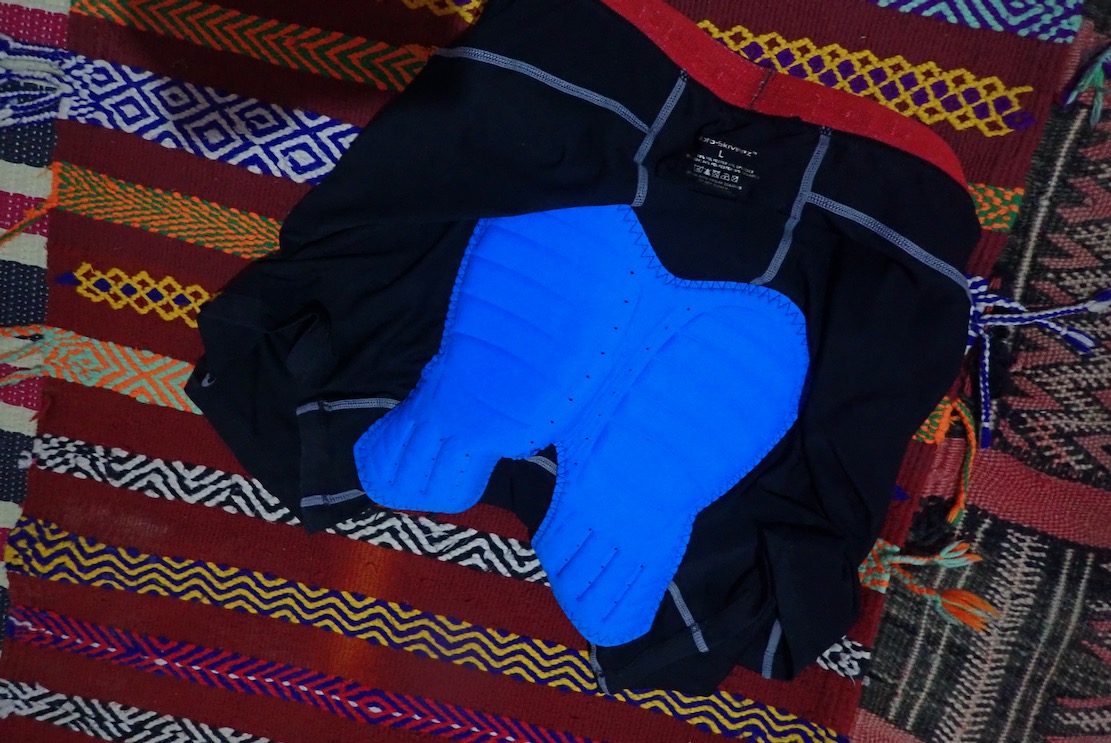
That reminds me: I rode every day with Moto Skiveez because the CRF would have been agony without them, and despite close fitting ‘cycling shorts’ not being to my taste either. But getting dressed, many mornings I’d forget to pull on my irksome but essential padded nappies. The thought of then having to de-boot and remove the trousers to put on the Skiveez became… annoying.

Brainwave: integrating Skivee-like pads into riding pants
I can’t be the only one who feels like this about uncomfortably narrow saddles on light trail bikes which are otherwise well suited to all-terrain travels – ‘adventure bikes’ if you will. So I think integrating Skivee-like pads into riding trousers would be a practical idea. Ideally, they’d slip into armour-like pockets, maybe even with varying densities of foam for heavier riders/harder saddles? I mentioned this to ASpec and Mosko, but I’m not sure either felt the same way. Me, I’m already booked in to pitch my Butt-R-Kupz™ on the next season of Dragon’s Den. I’ve more to say about saddles here.
For what I do I’ve never been a fan of synthetic fabrics, not least with membranes, but next trip out there, I’ll try my AD1s again and see if their day-to-day comfort, utility and easily modified temperature span are as good as I think they might be.
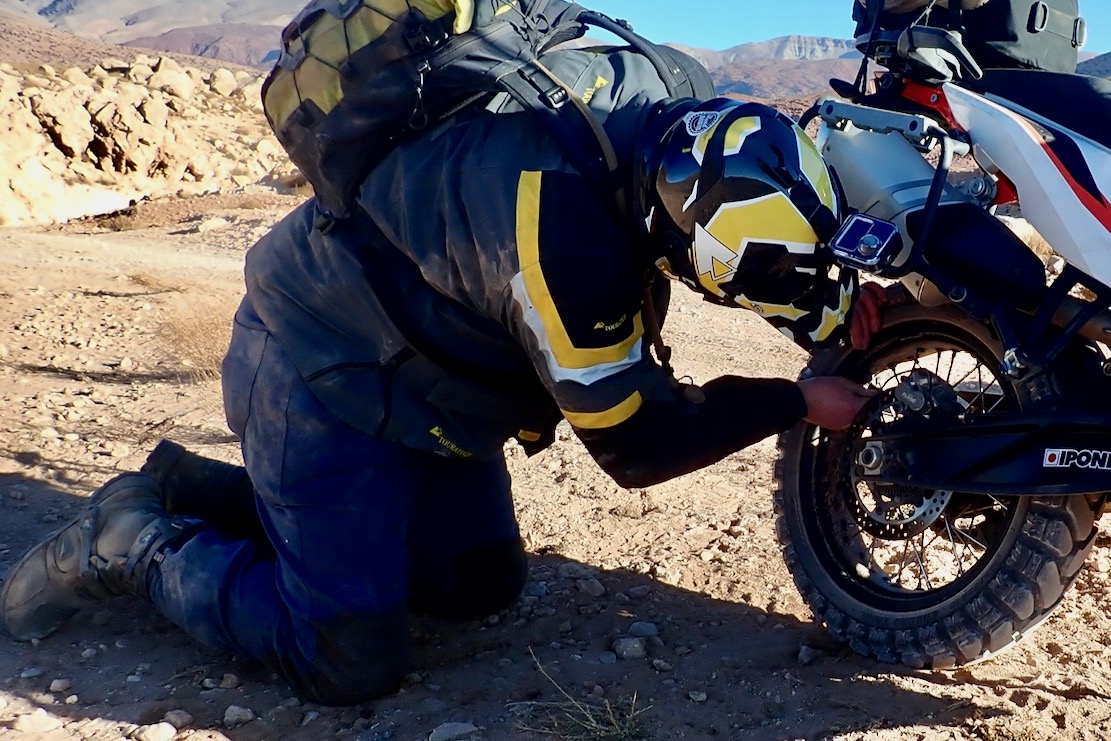
Second Opinion: James S
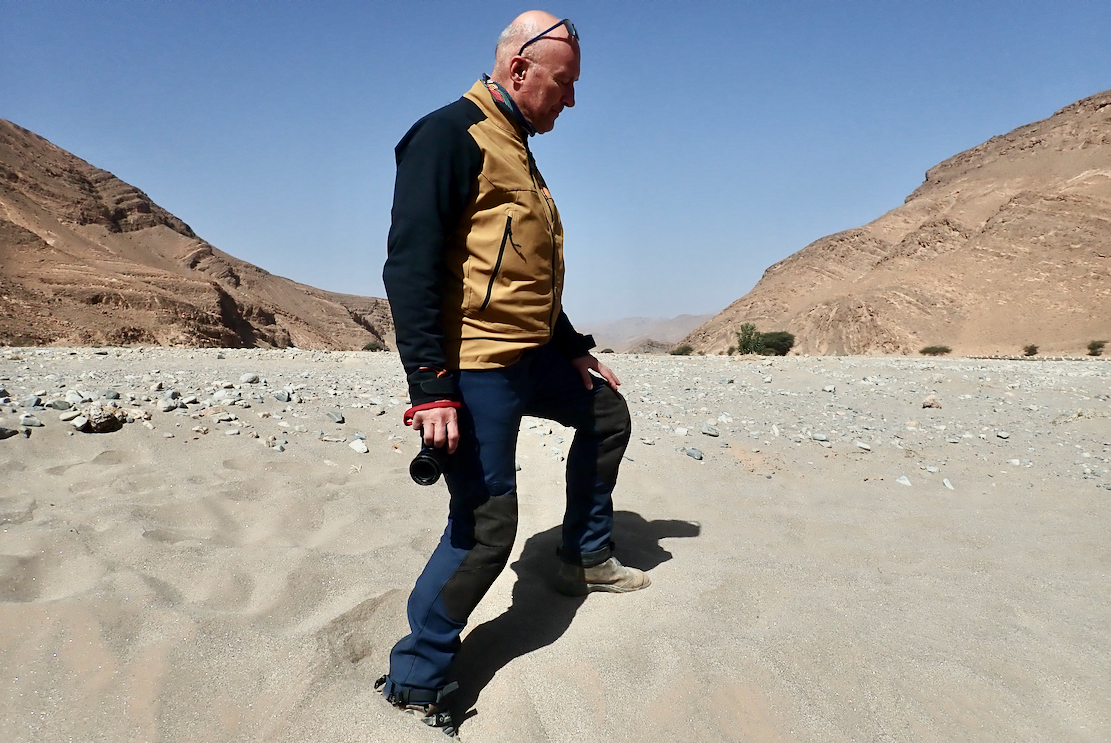
Over a year I’ve worn my Linesman Pants whilst off-road training in Scotland, riding the Kielder 500 rally and around the High Atlas and desert of Morocco in January. And by the time you read this I’ll be out in Morocco riding the Sandraiders rally on my 3AJ. I even wore them with the armour on the Ryanair flight. I surprised UK airport security whilst they frisked me down, but the Moroccan Security agent had obviously come across knee armour before. The blue/black pattern help them look like regular hiking pants.
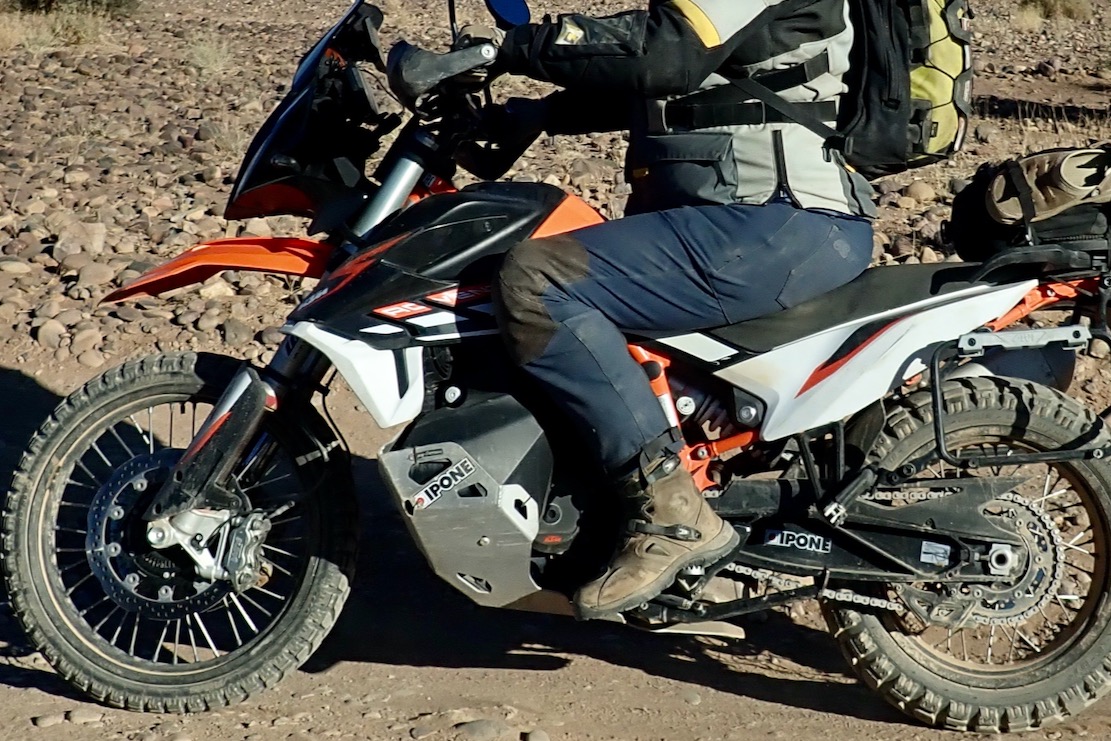

I found them quite comfortable on the plane and evening time, was in no hurry to take them off, apres-piste. I replaced the supplied Forcefield armour with my Acerbis kneepads but copped an injury on the unprotected side of my knee when I crashed my T7 at 30mph. But the knee and hip protection served their purpose as I rolled down the track.
I wear mine outside my MX boots as I’ve not brought myself to cut the straps off, but the fabric along the inner calf has started to snag, so I will. AS should extend the hypalon or add some knee fabric to this area.
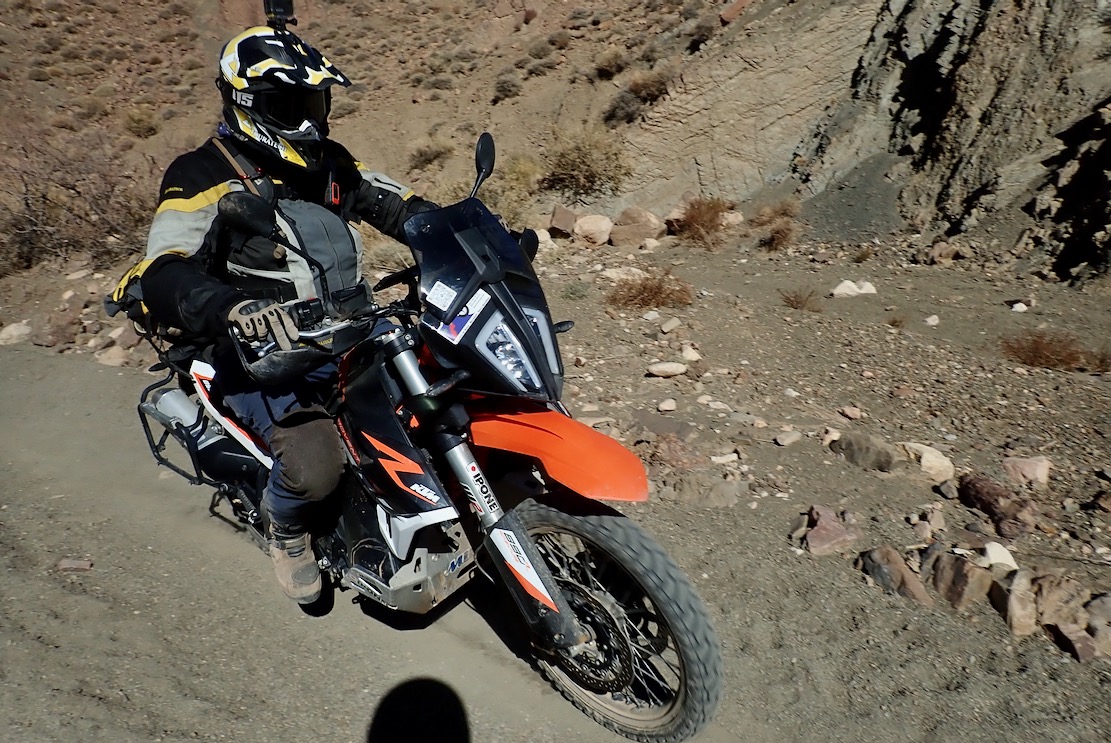
Coming out of Anergui in the High Atlas, I wore the Linesmans at 2°C one morning, but my legs didn’t get any colder than my upper body. I’ve not experienced prolonged rain, as I wear waterproof over-trousers, but the occasional shower is no problem. They dry off fast.
I also wear Bull-it jeans which have abrasion resistant Covec for when riding on the road, but prefer the stretch flexibility of the Linesman Pant for off-road. Buying them was a significant expense, but other than the inside snags, I’ve not disappointed.
For a bit of fun, I also asked Chat GPT4 for their opinion. See below.
Chat GPT4 Review [for amusement purposes only]
The Adventure Spec Linesman Pant is designed for trail, adventure, and dual-sport riding, incorporating several features that aim to enhance the rider’s experience in different terrains and conditions. Here’s a comprehensive review of its pros and cons based on information from various sources:
Pros:
Lightweight and Comfortable: The Linesman Pant is lightweight and made from Bi-Stretch Panama fabric, which offers extreme comfort and high abrasion resistance, making it ideal for long rides【5†source】
Protection: It includes removable Forcefield Level 2 hip and knee armor, providing good protection from abrasion and impact injuries without feeling like typical bulky motorcycle safety pants【5†source】.
Versatile Design: Designed to fit comfortably over adventure boots, the pant features a large lower leg zip for easy on/off and a tough buckle to secure the pants. It also has floating pockets for knee armor, allowing for adjustability and compatibility with knee braces【5†source】.
Temperature Range: According to users on Adventure Rider, the Linesman Pant feels comfortable in relatively dry temperatures between 10°C and 21°C (50°F and 70°F), making it suitable for mild to warm weather conditions【7†source】.
Durability and Design: Users have praised the construction and fit of the Linesman Pant, mentioning that it feels substantial yet roomy. The design allows for easy layering underneath or on top as needed【6†source】.
Cons:
Temperature Limitations: While the pants are comfortable within a specified temperature range, they might not be the best choice for extremely hot or cold climates without additional layering【7†source】.
Price: With a price point of $355.00, the Linesman Pant is an investment, which might be a consideration for some riders looking for budget-friendly options【5†source】.
Splash Resistance vs. Waterproofing: The pants are splash resistant and fast-drying but not waterproof. Riders will need a waterproof shell for continuous wet conditions, which could be a downside for those looking for an all-in-one solution【5†source】.
In summary, the Adventure Spec Linesman Pant offers a blend of comfort, protection, and versatility for adventure riders, with a particular emphasis on a more subtle, toned-down style. However, considerations regarding temperature suitability and the need for additional waterproofing should be taken into account, especially given the higher price point. For riders who prioritize lightweight, protective gear that can handle a range of conditions with the right layering, the Linesman Pant could be a worthy addition to their riding wardrobe.
 Adventure Motorcycling Handbook