Category Archives: Project: Yamaha WR250R

WR-ing about in Morocco – 6

WR250R 4000-km review
WR Introduction
WR250R Stage 1
WRing about in Wales
WR250R ready for the desert
Morocco 4000-km trip report, 1–9
Fuel log

So where were we? Leaving Smarai.
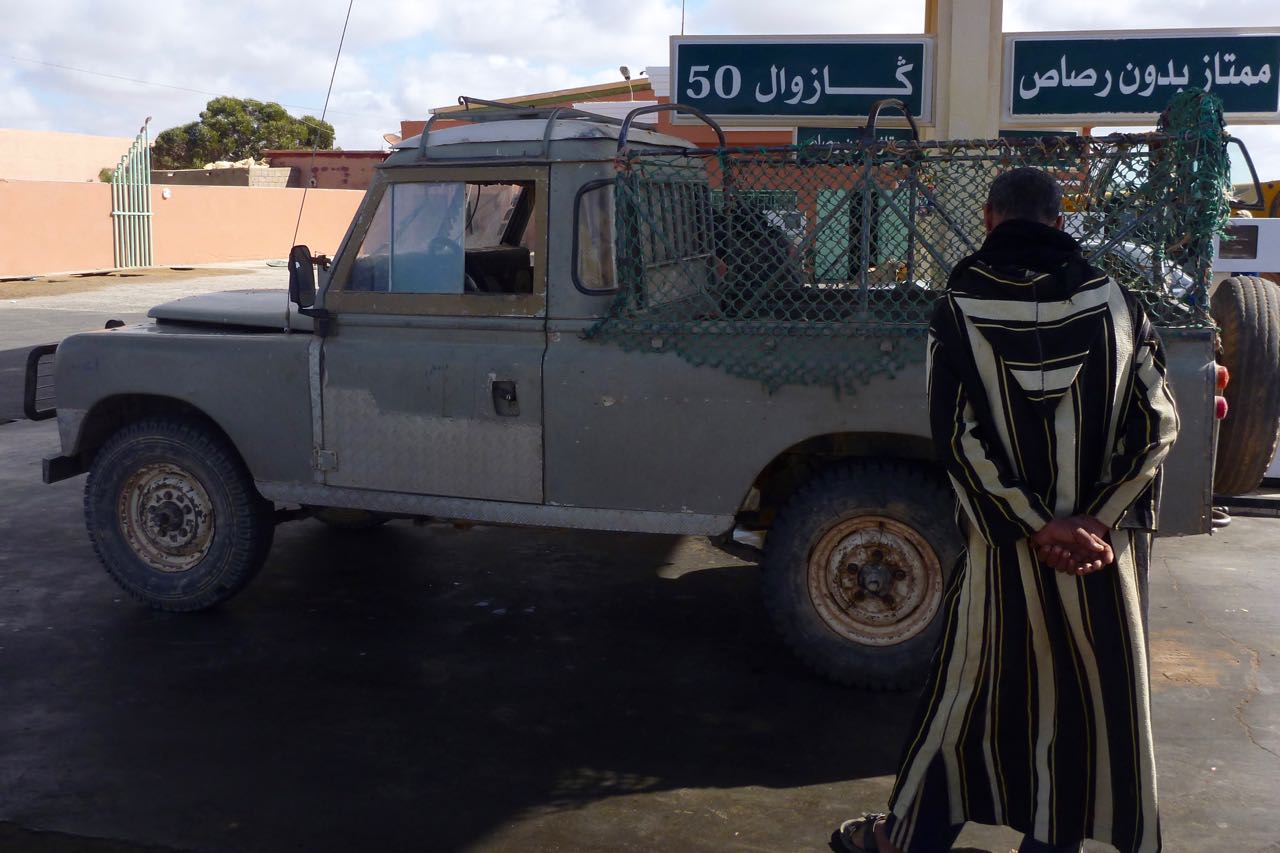
I pull in for cheap fuel. In Western Sahara they subsidise it by 30% (as well as cooking oil, sugar and flour) to encourage northerners (like the bloke in the cafe last night) to relocate among the indigenous Saharawi in the middle of nowhere and help consolidate Morocco’s stake on its part of the former Spanish territory it occupied in the 1970s.
Matey here by his ancient Landrover told me he was an extra in Harry Potter III. There are loads of these old Series IIIs in WS, used by nomads to move from camp to camp, wherever the pasture is.
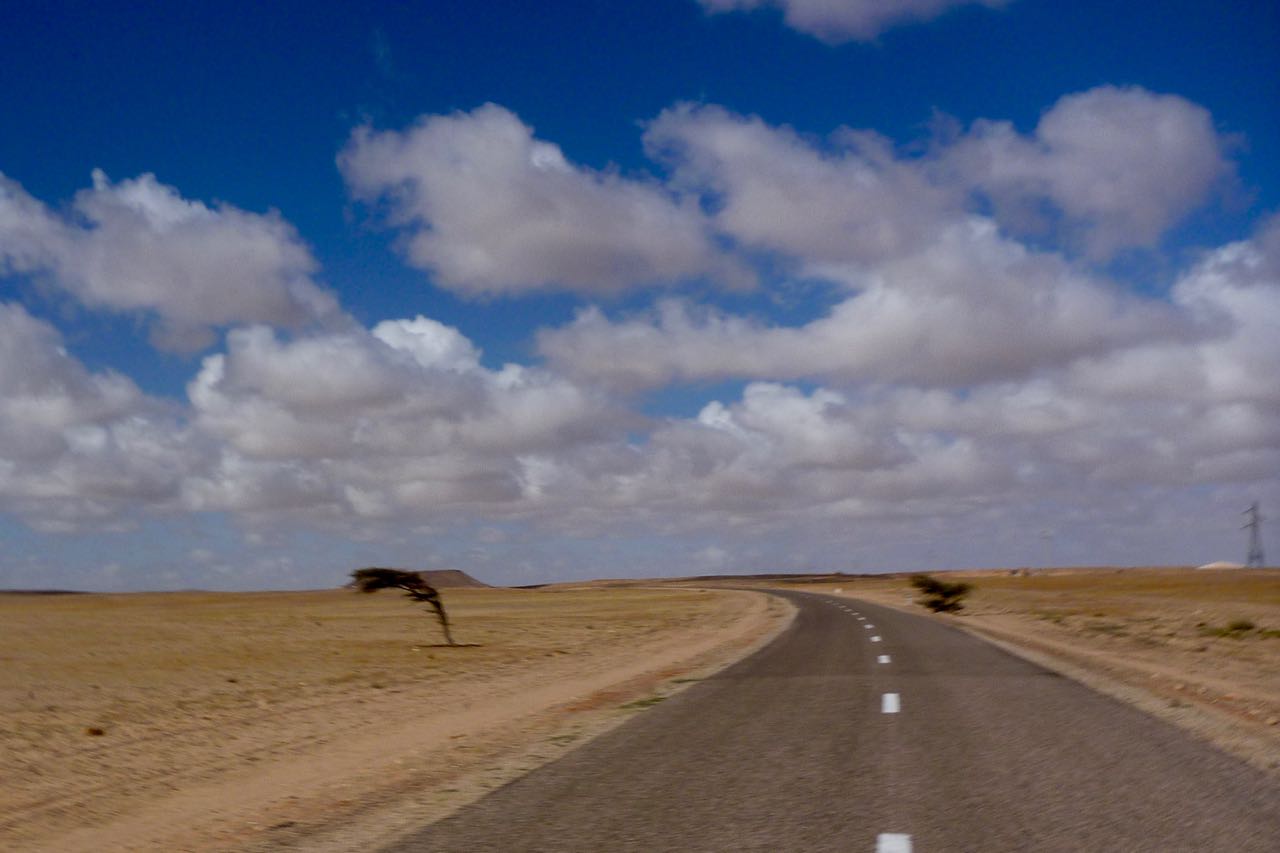
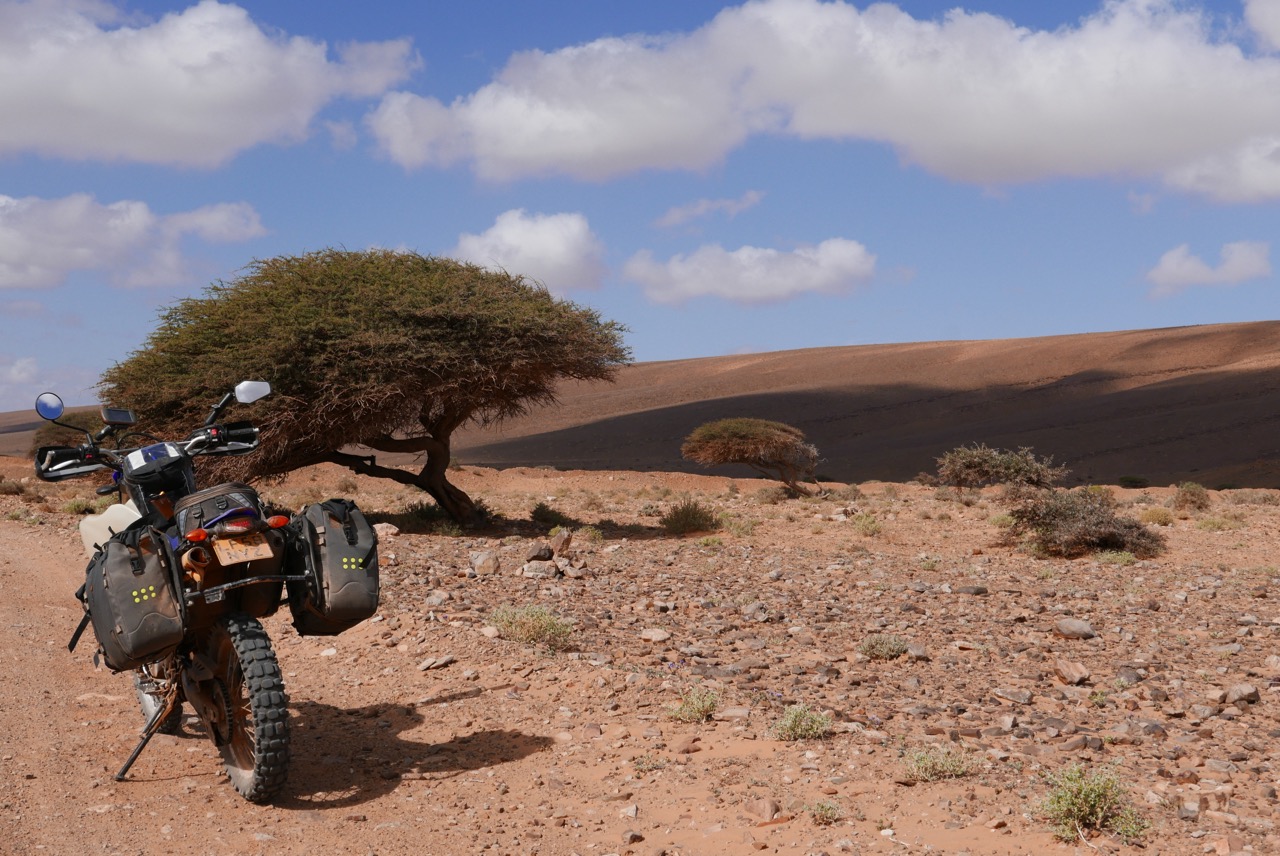
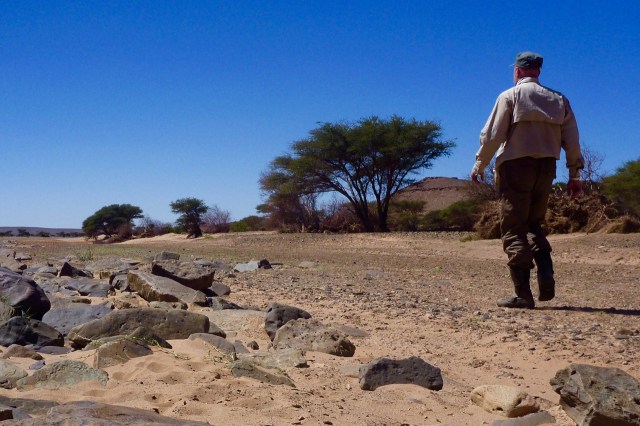
More wind-trees. Handy for nav: they always point south.
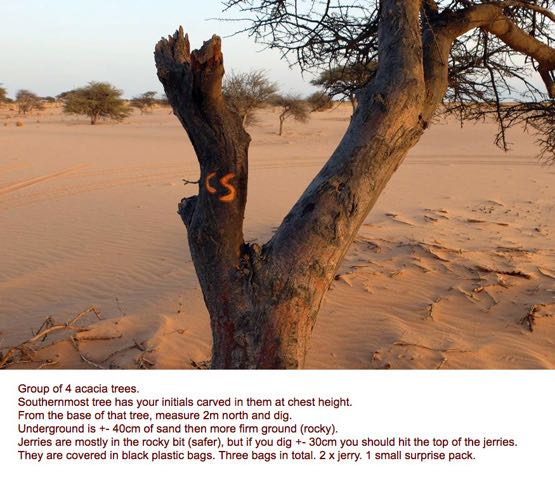
Talking of south, in 2015 I had some fuel buried in the WS – a place I call the Dig Tree. One of my aims on this trip had been to take an ambitious ride right through inland WS to Dakhla. This would have been 600km with very little likelihood of seeing anyone or anything; not even sure where the wells are. A fuel cache halfway made this less risky. Until things get desperate, fuel is always more important than water.
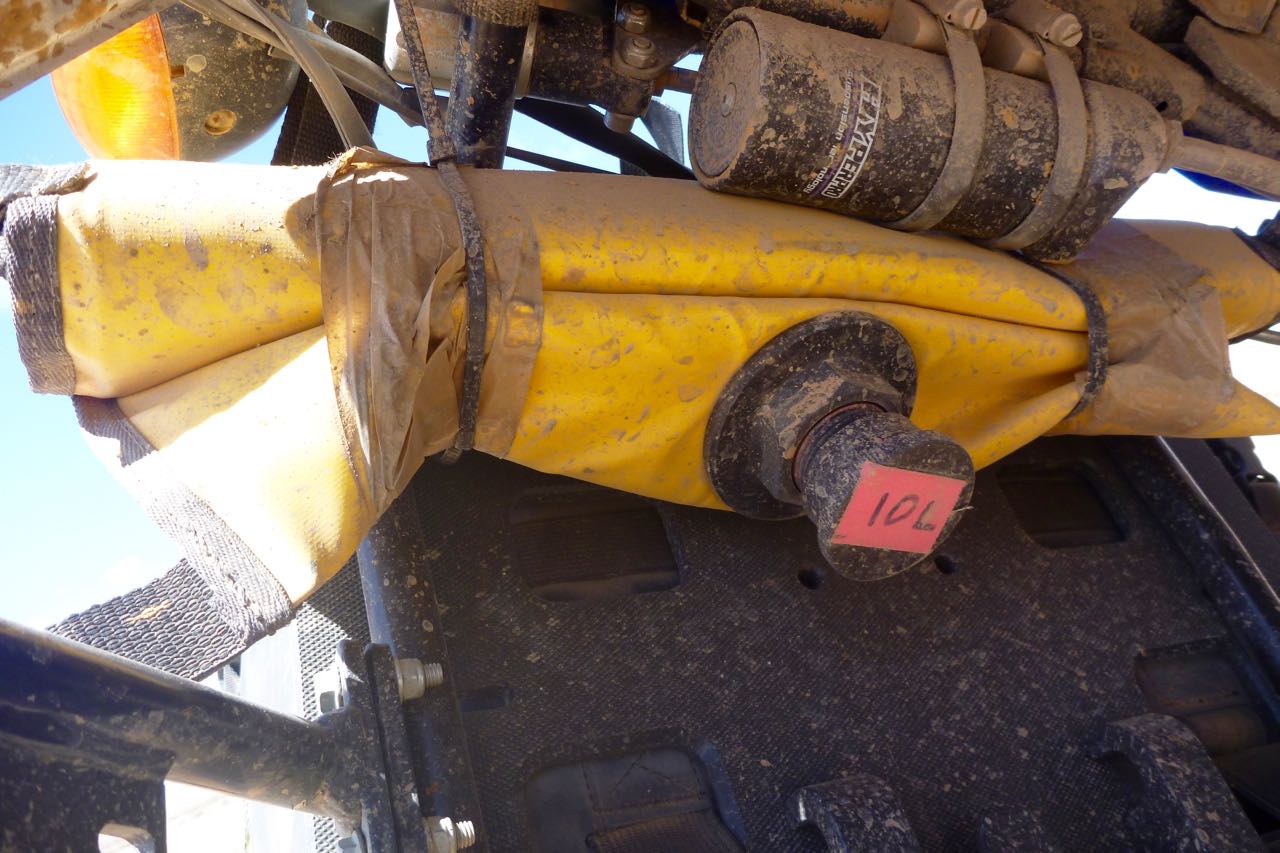
I even brought my 10L fuel bag. The WR has proved reliable and easy to ride so far. Even with my worst recorded consumption of 71 mpg (25kpl; usually high 80s mpg) I could just make Dakhla on tank + 10 litres carried, without digging up the cache.
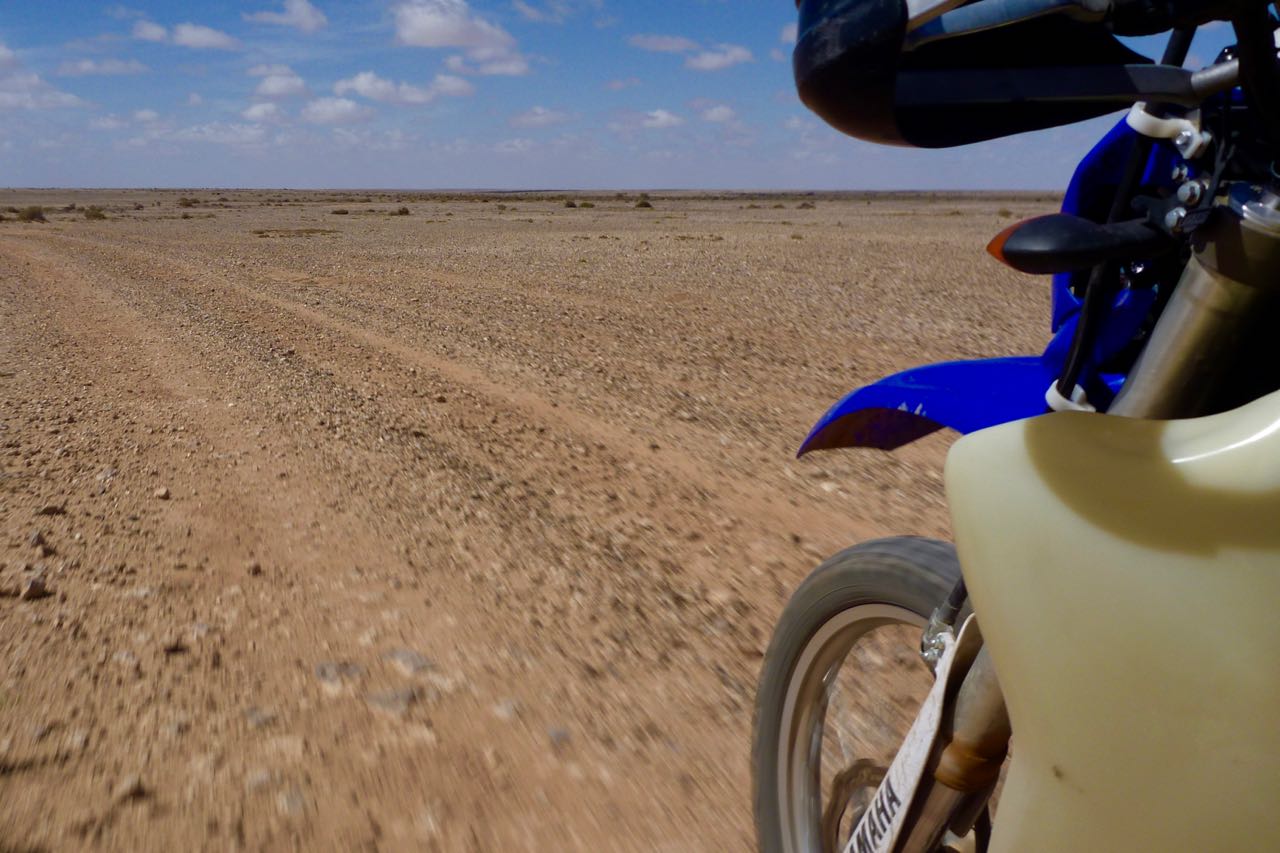
I reach my marker on the Smara road and follow the track south for a few kms. But even though the weather is 10° cooler (= reduced water consumption), it’s clear that heading to the Dig Tree alone across unfamiliar terrain would be nuts. As I now know well, all it takes is one sandy oued to spanner things up. And the tension of keeping it together for two days or more would not make it at all enjoyable. I have been there and I have done that.
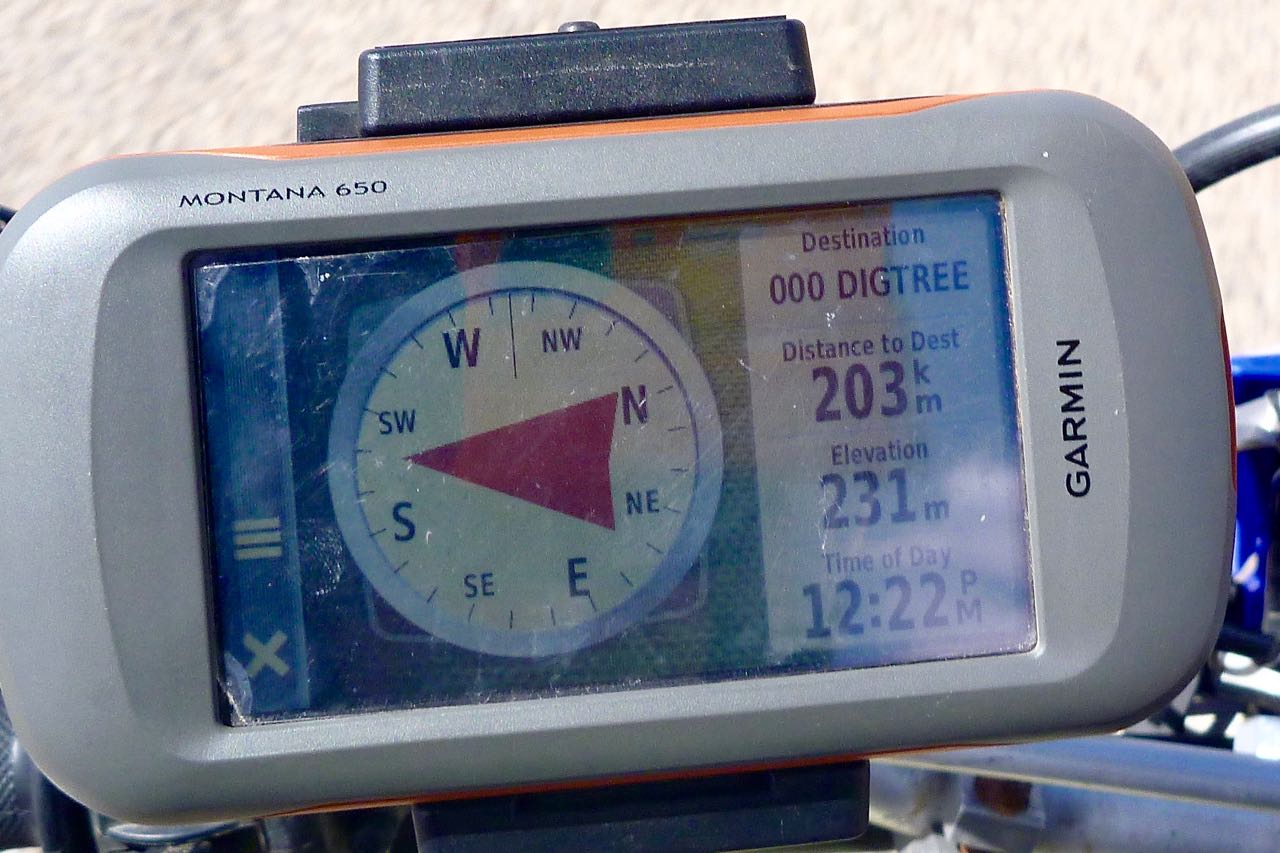
Out of curiosity I call up the Dig Tree waypoint. Only 200 clicks, south by southwest.
I’ll head for the Dig Tree, another time. But not alone on a moto. I came back in 2019 on a Himalayan and with a fourbie,but that didn’t work out either.
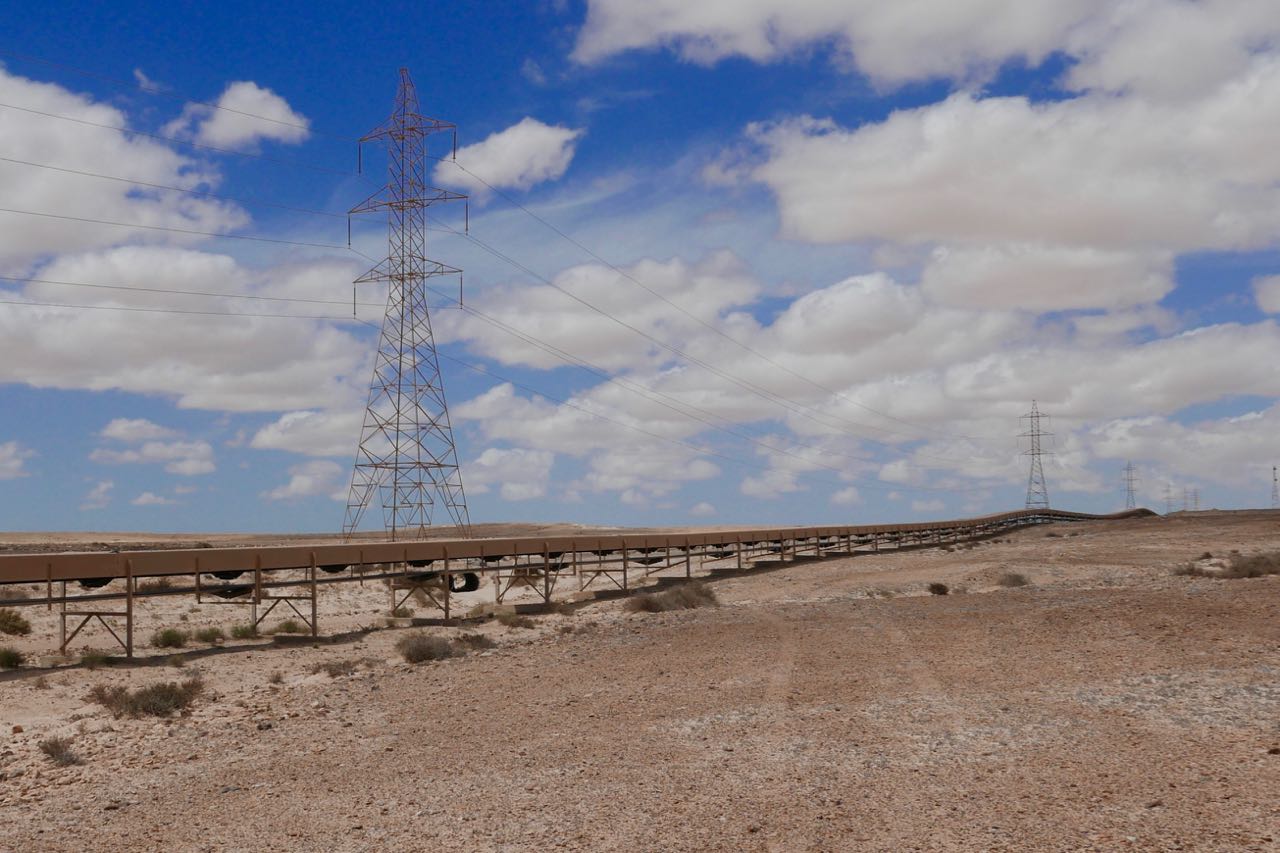
Further on down the road, tucked in against the usual headwind, I spot the famous Bou Craa phosphate belt. Part of Morocco’s motive to grab WS was to get its hands on the largest reserve of phosphate in the world (or so I read in the internet).
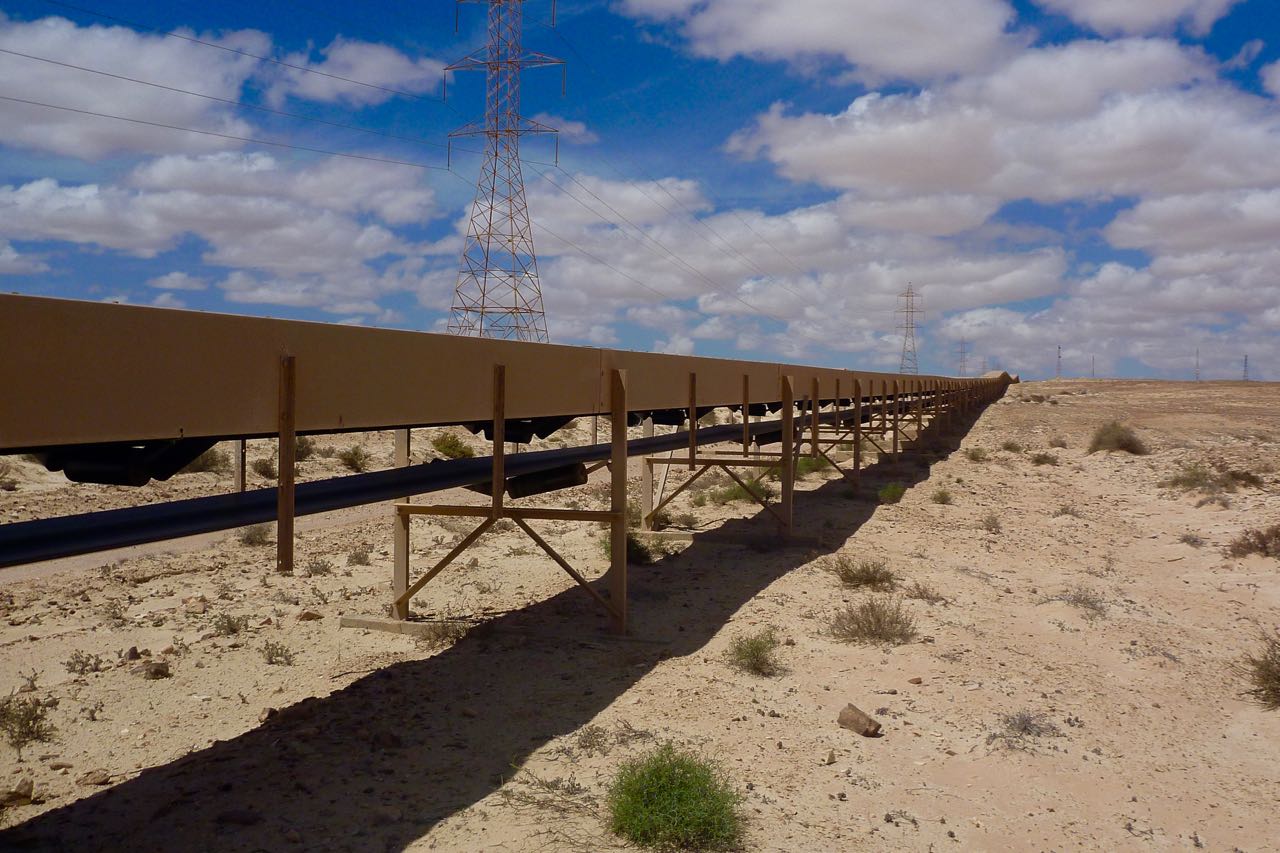
The belt (or series of belts) runs some 100km towards the coast, bridges the N1 highway and dumps the rubble at a deepwater jetty south of Layounne.
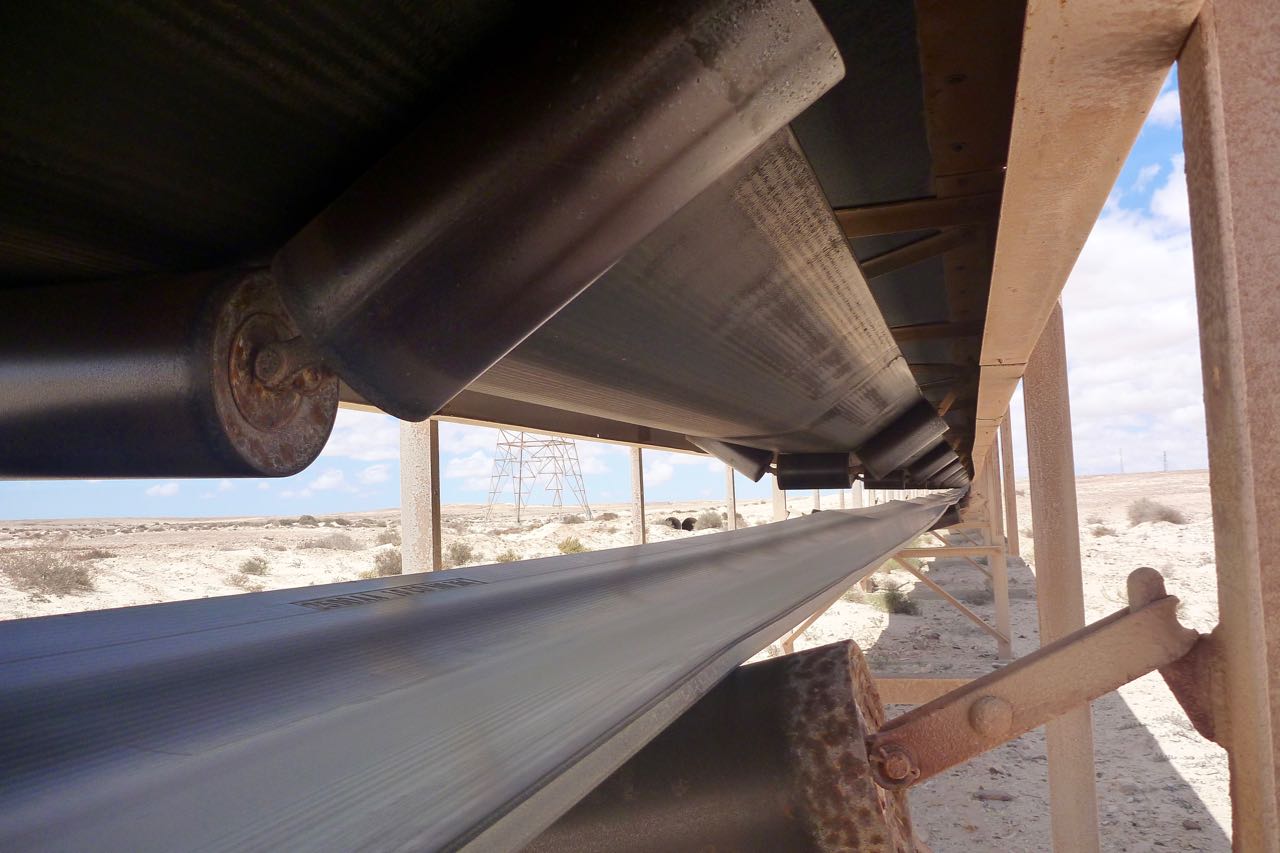
I inspect the half-inch-thick belt and polished rollers. If the rozzers caught me looking and taking photos of this they’d flip their lid. I was told later it only runs of windless days so the phosphate doesn’t end up like the trees.
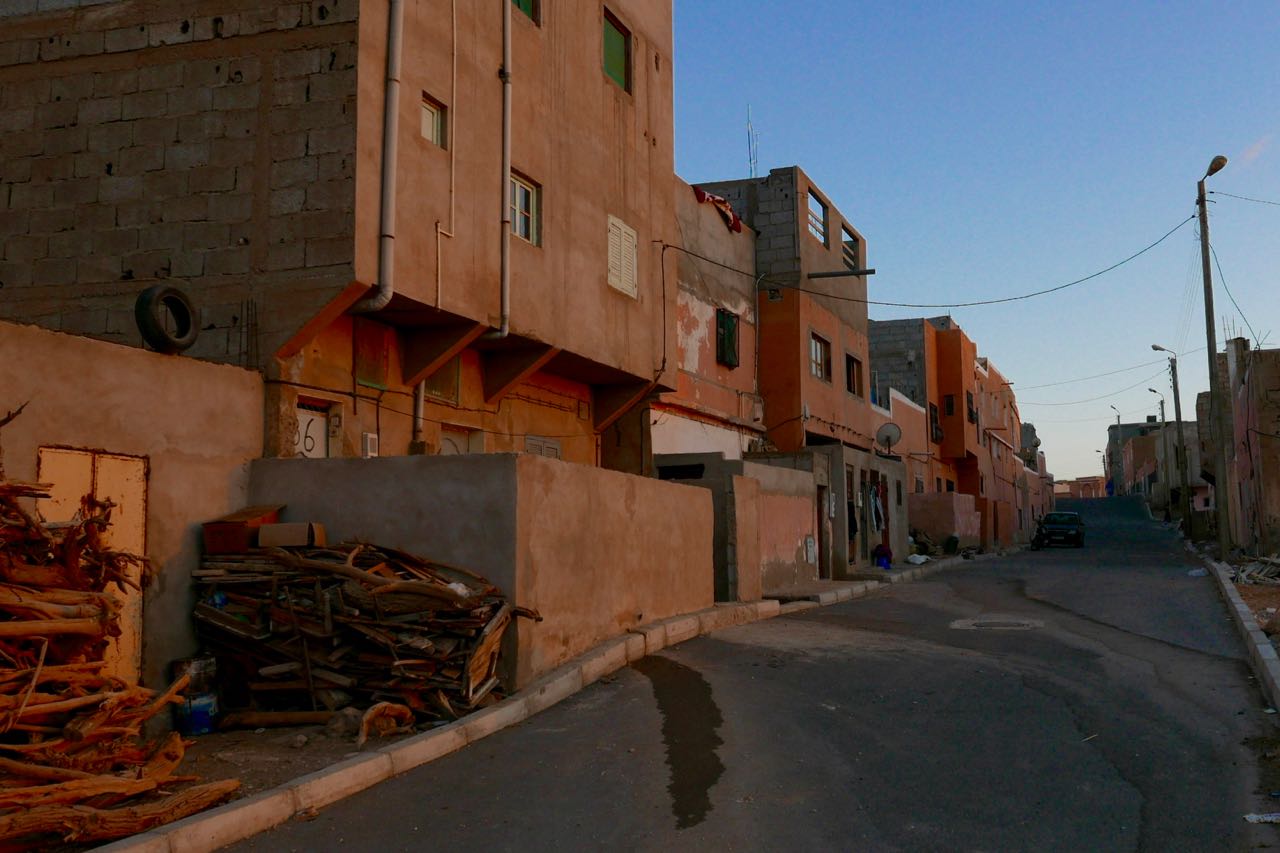
Someone very generously offers me a stay in their house in Layounne. I get my laundry done, am fed like a fois gras goose and catch up on admin.
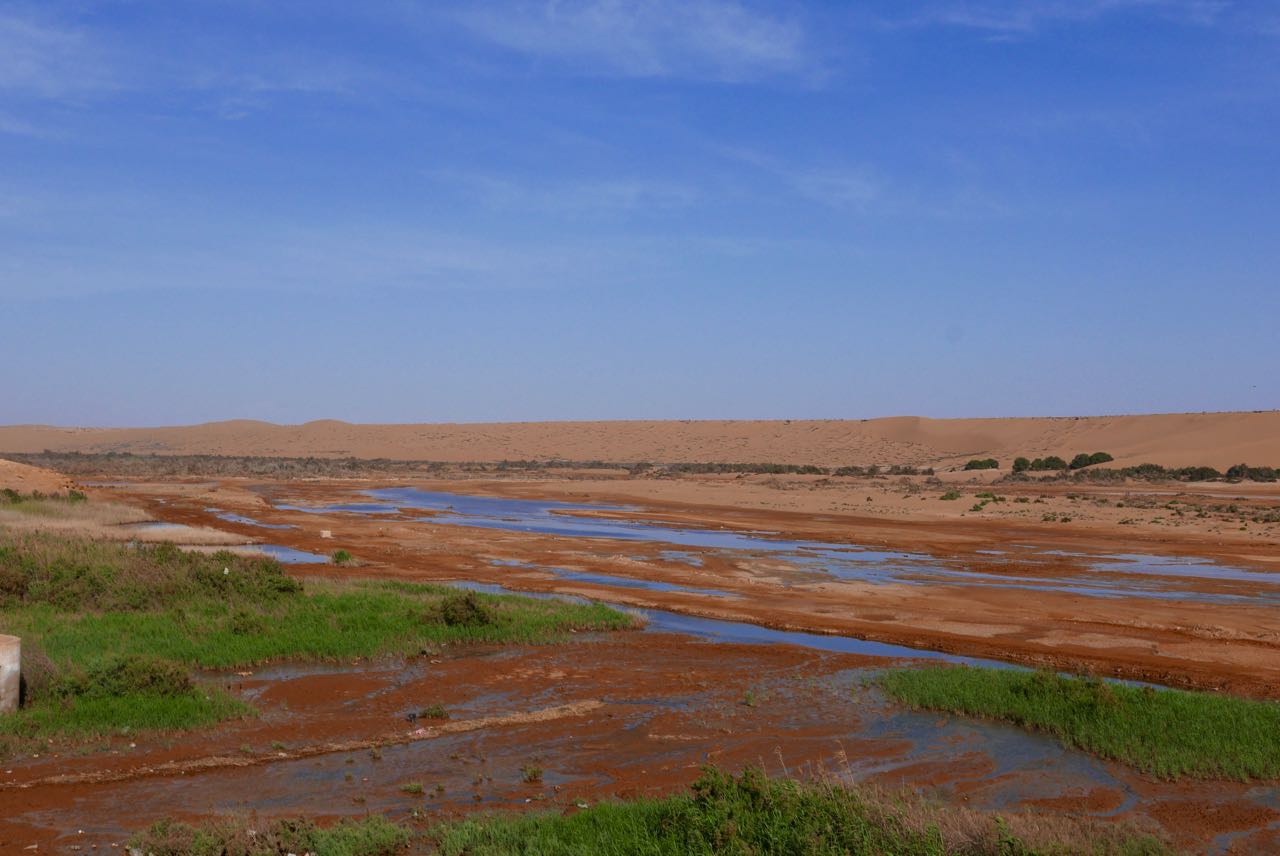
The house is on the very edge of the city, overlooking the Saguia el Hamra (‘red river’).
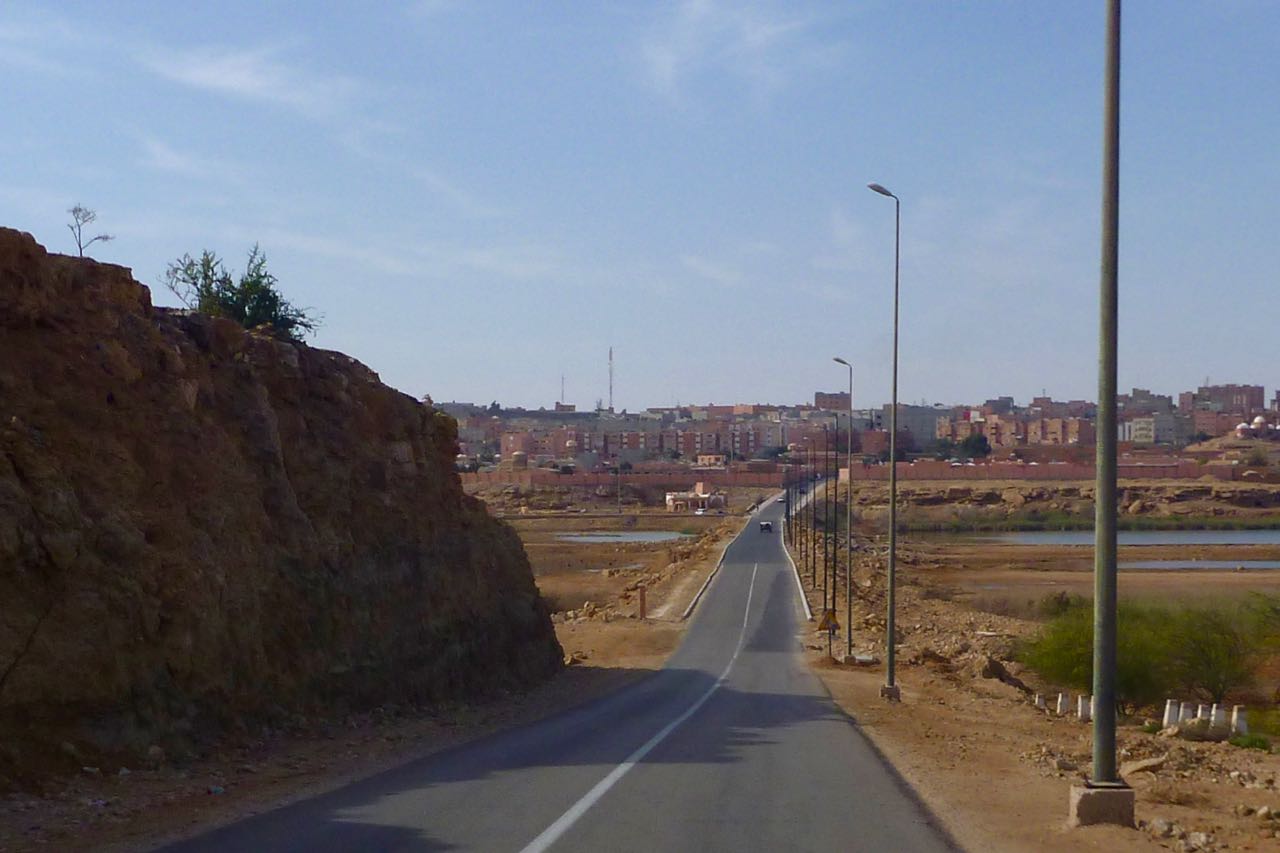
Recent storms (which brought on the desert wildflowers), broke through this dam-bridge on the N1 highway into Layounne.
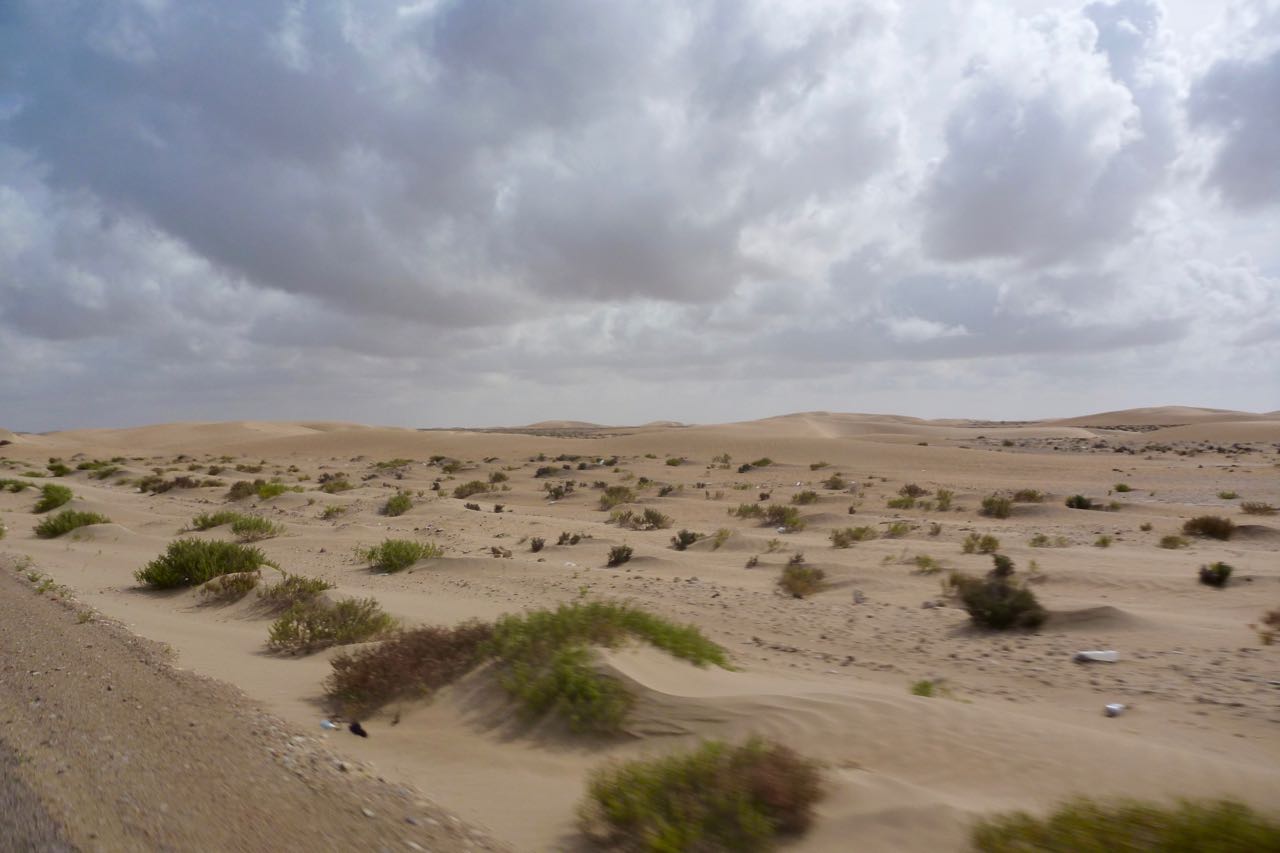
Hold on, I’m going the wrong way if I want to take the new coast road north to Tarfaya, not the main N1 desert highway. The Garmin map puts me right. It’s a marvel to have routeability in the desert.
Initially the coast backroad is not so interesting.
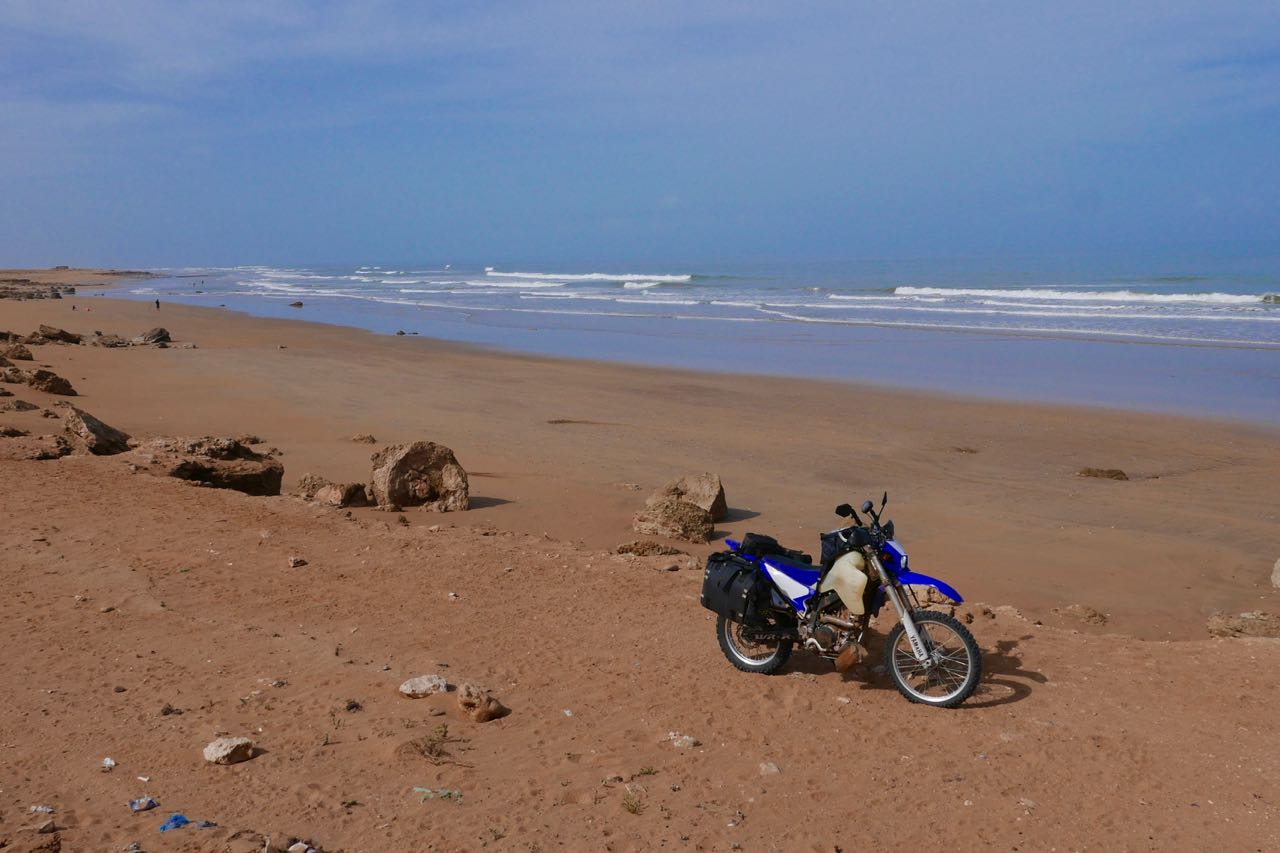
Lots of grubby fishing shacks and the Atlantic.
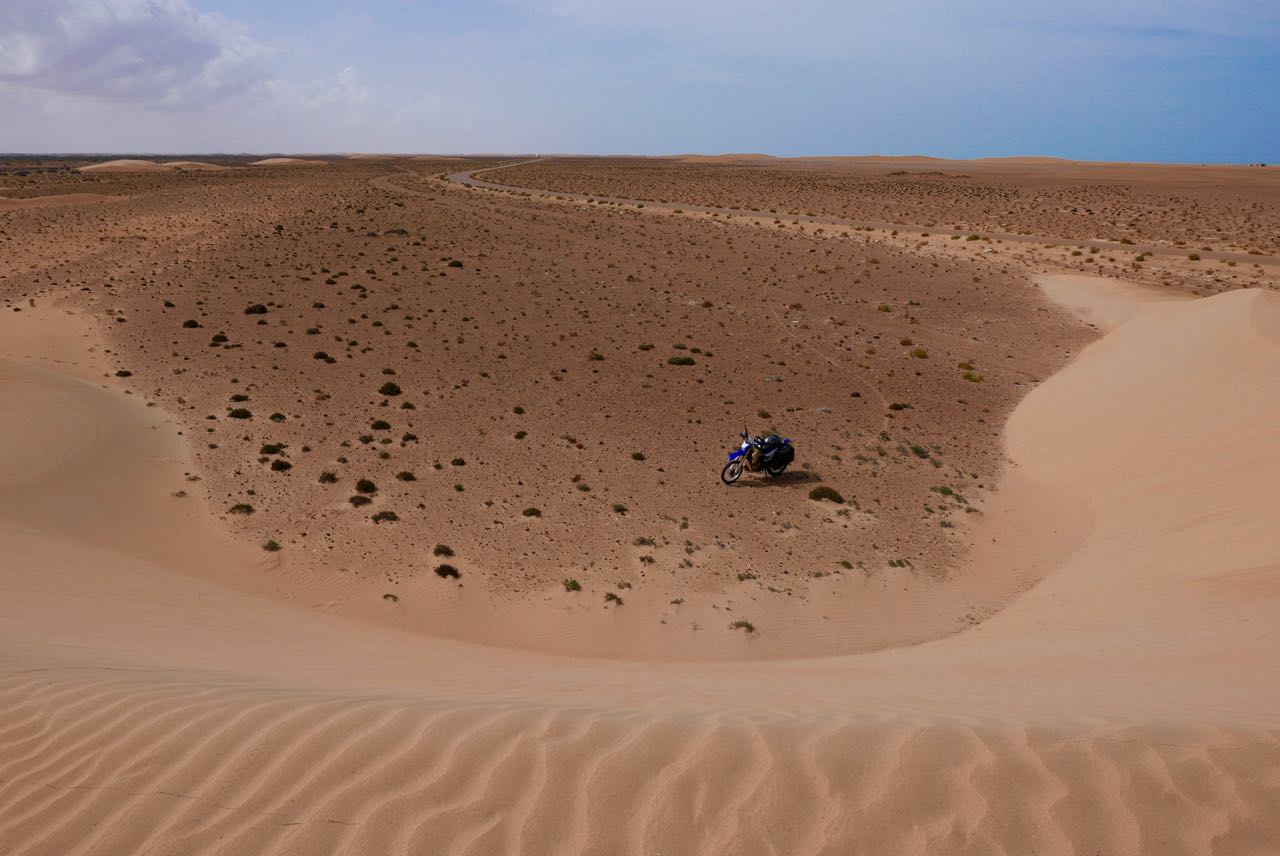
I pull into the lee of a barchan (crescent) dune on its southward march. Yes, it’s a new direction now but the headwinds adjust themselves and turn on me again. What gets me is why don’t all the barchans end up in Mauritania? It is the mystery of the dunes – or maybe the Atlas mountains are a huge reserve of raw rock to grind down into grains?
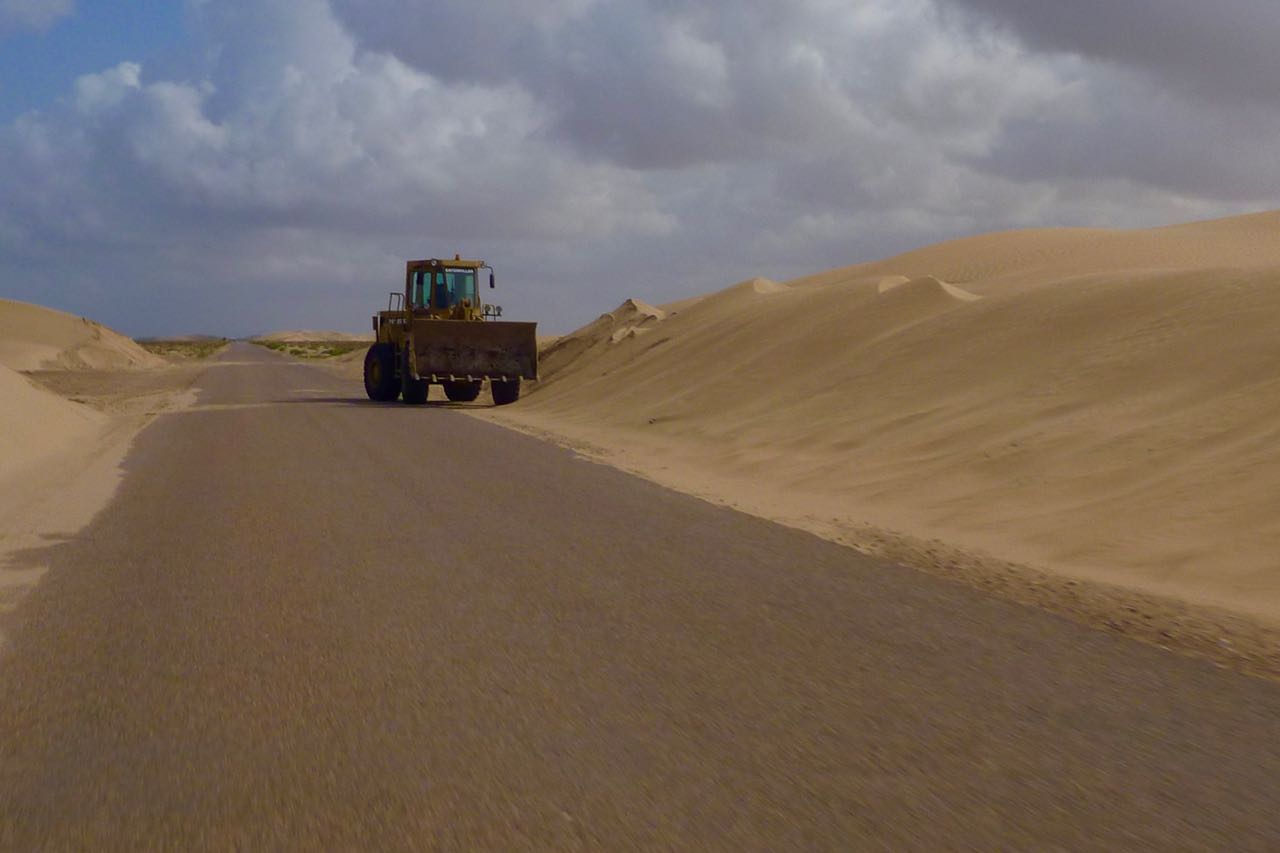
Diggers keep rogue dunes off the road.
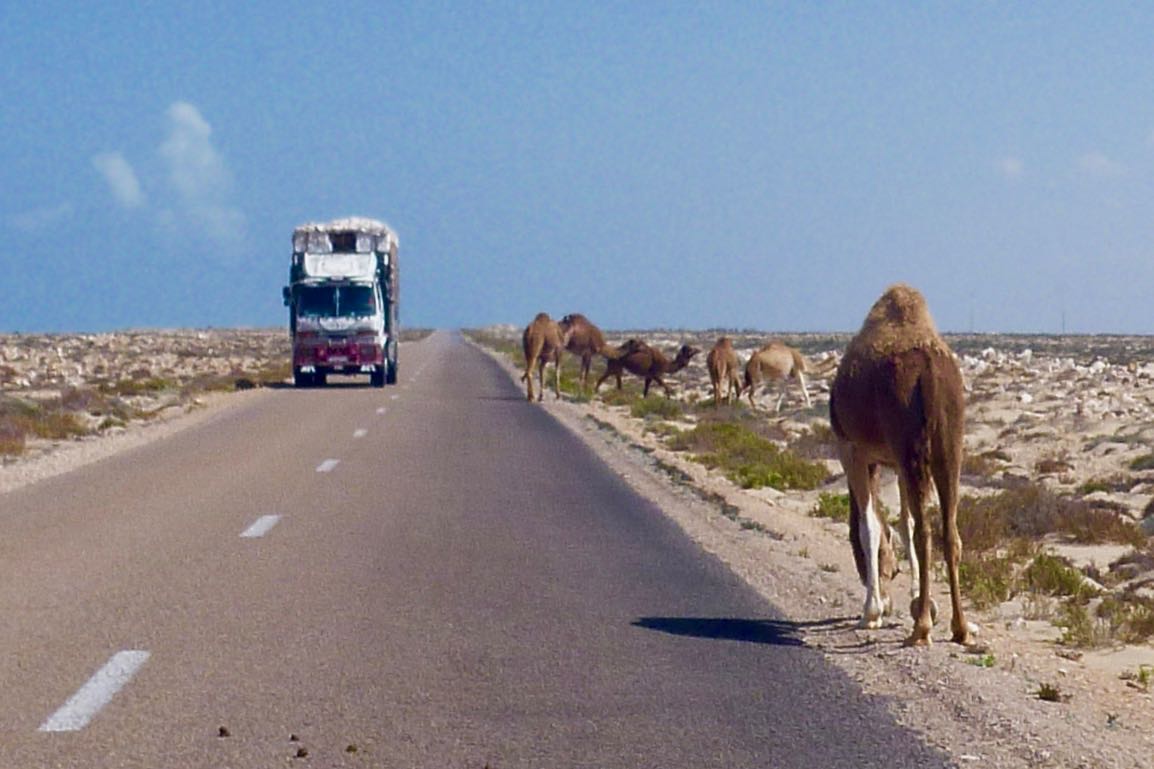
Trucks use this road from Tarfaya as it bypasses the steep climb in and out of Layounne if headed far south.
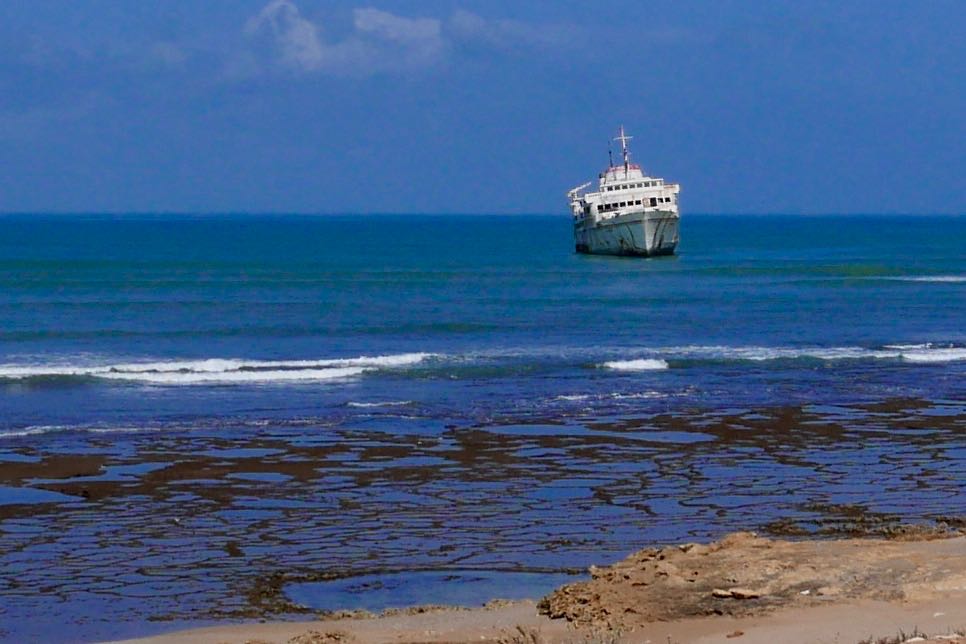
Up ahead I spot a strange thing in the sea, is it an island? Turns out to be the famous beached Armas ferry which ran aground a few years ago.

Iirc, it was to serve a a route to the Canaries which lay less than 100km northwest of Tarfaya, but it didn’t make it past it’s maiden voyage. Smells a bit of a fishy insurance job. Plus a ferry to Spanish Canaries would bring up all sort of issues with migrants trying to get to Europe. Up north, Tan Med port is like Alcatraz. So are the Spanish enclaves of Ceuta and Melilla.
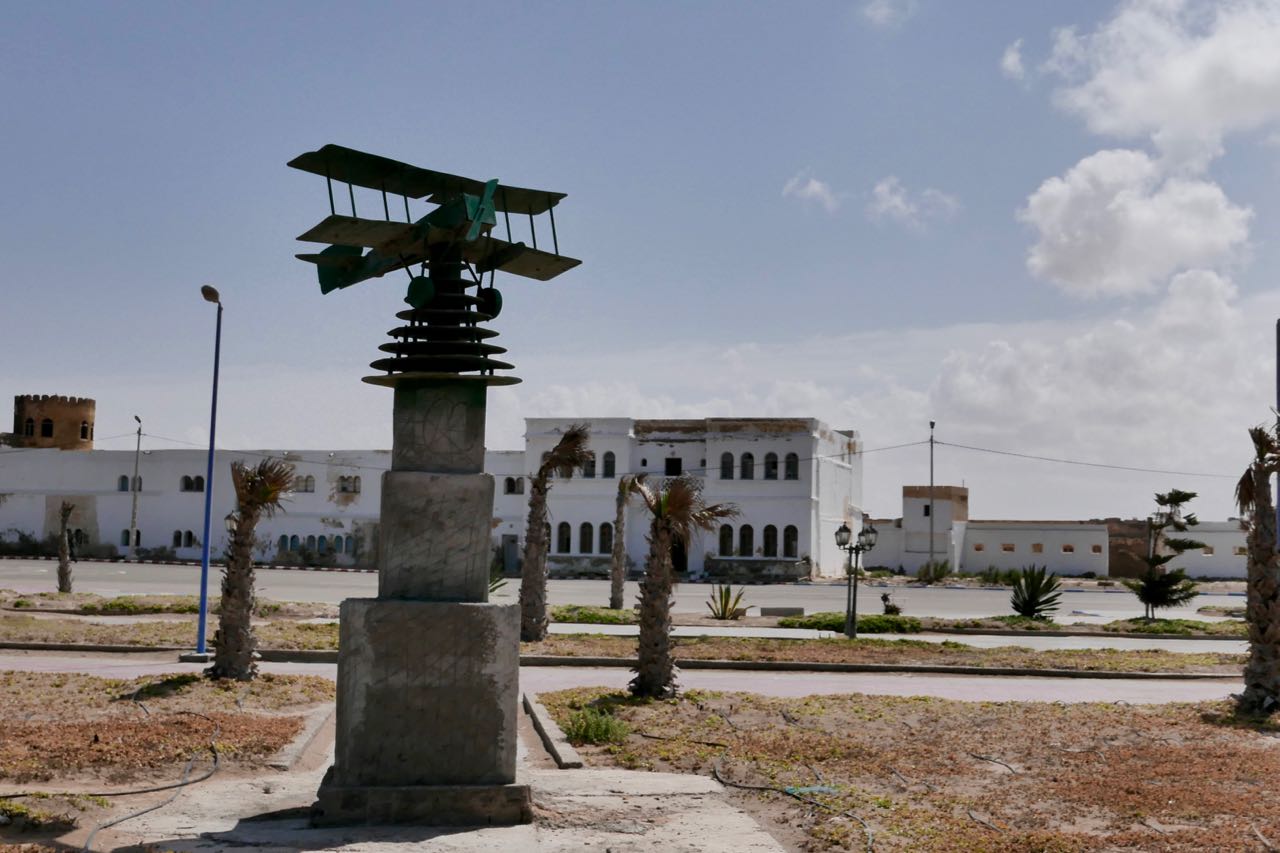
Tarfaya was known as Cape Juby in the French era, a refuelling stop on the early Aeropostale service to Dakar (or St Louis) in Senegal. St Exupery wrote of it evocatively in Wind Sand & Stars mentioned earlier – an existentialist classic, fyi. He would have been based in the white fort behind the monument.
St Ex was lost at sea during WWII and they built this plane sculpture in commemoration, but it looks a bit crap, like a big toy. Maybe its supposed to; he also wrote the famous Little Prince childrens’ book about a pilot lost in the desert (as happened to St Ex one time). Its one of the most read or translated books in the world which I finally read recently. I didn’t get it. W, S&Stars was more my thing.
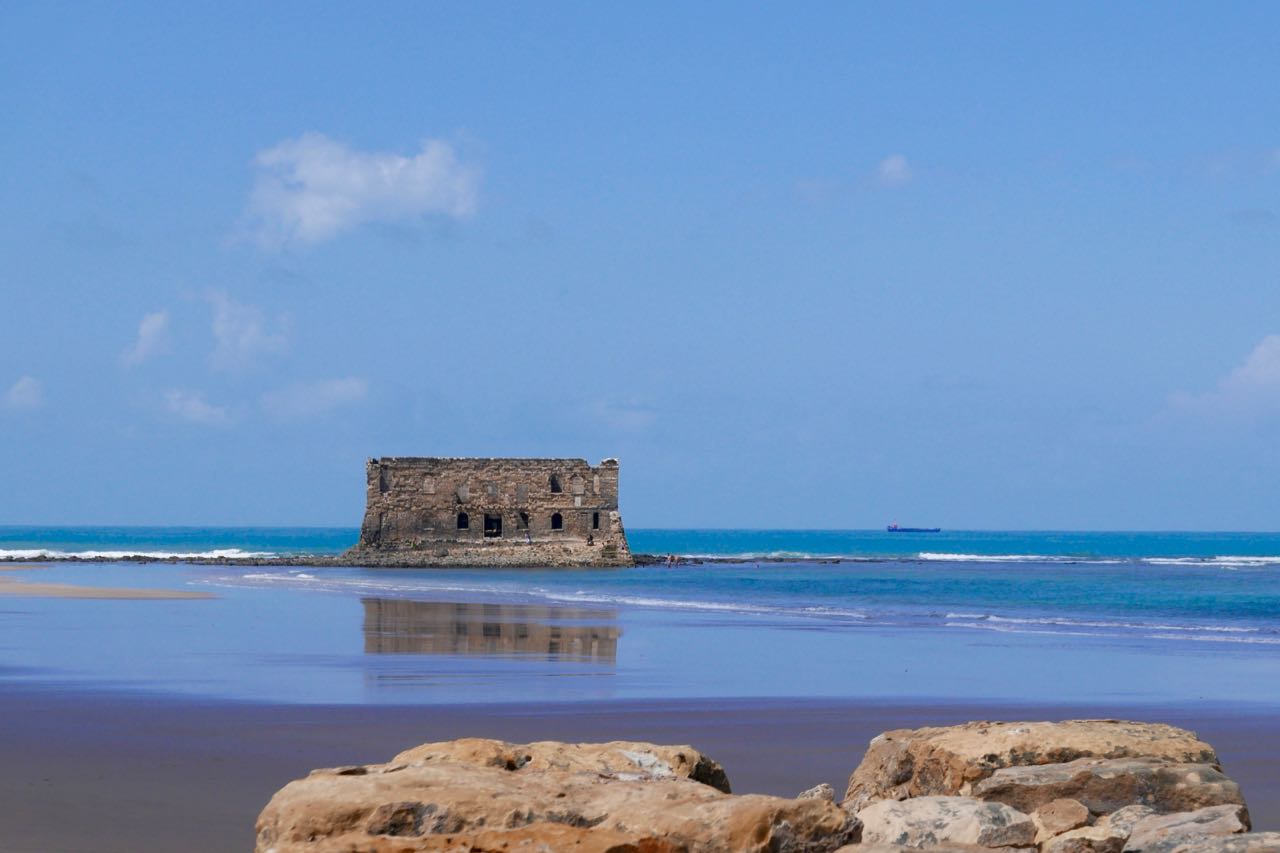
And just off shore there it is: the famous Mackenzie trading post set up by an enterprising Scot in the late 19th C. Built on a tidal reef, if was perhaps exempt from taxes, or at least immune to Reguibat raids.
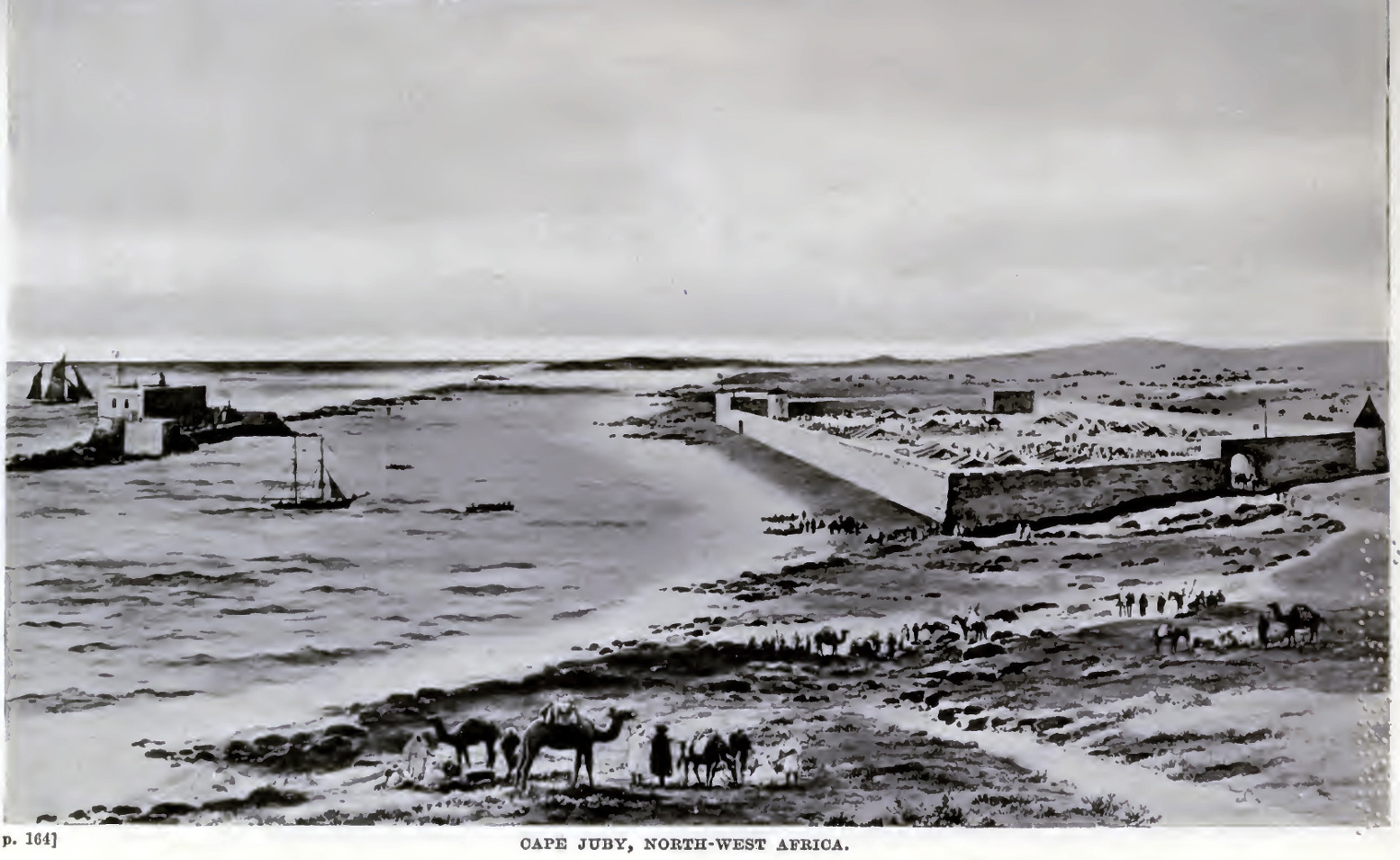
This is how it looked back in the day. I approach the ruin for a better picture. Locals boys are gallivanting on the rocks and, seeing my camera, assume I’m some sort of perv. They start shouting and throwing rocks: ‘Fak-off, peado-scum!!’
I ignore the onslaught; they don’t realise I’m much more fascinated in the historical monument behind them than their skimpy beachwear. Been wanting to see this place for years, a few jibes won’t stop me. I get my shot and scarper before they call the police. Mackenzie cooked up a bat-shit scheme to flood the Sahara so freighters could sail to Timbuktu. Read more about that here.
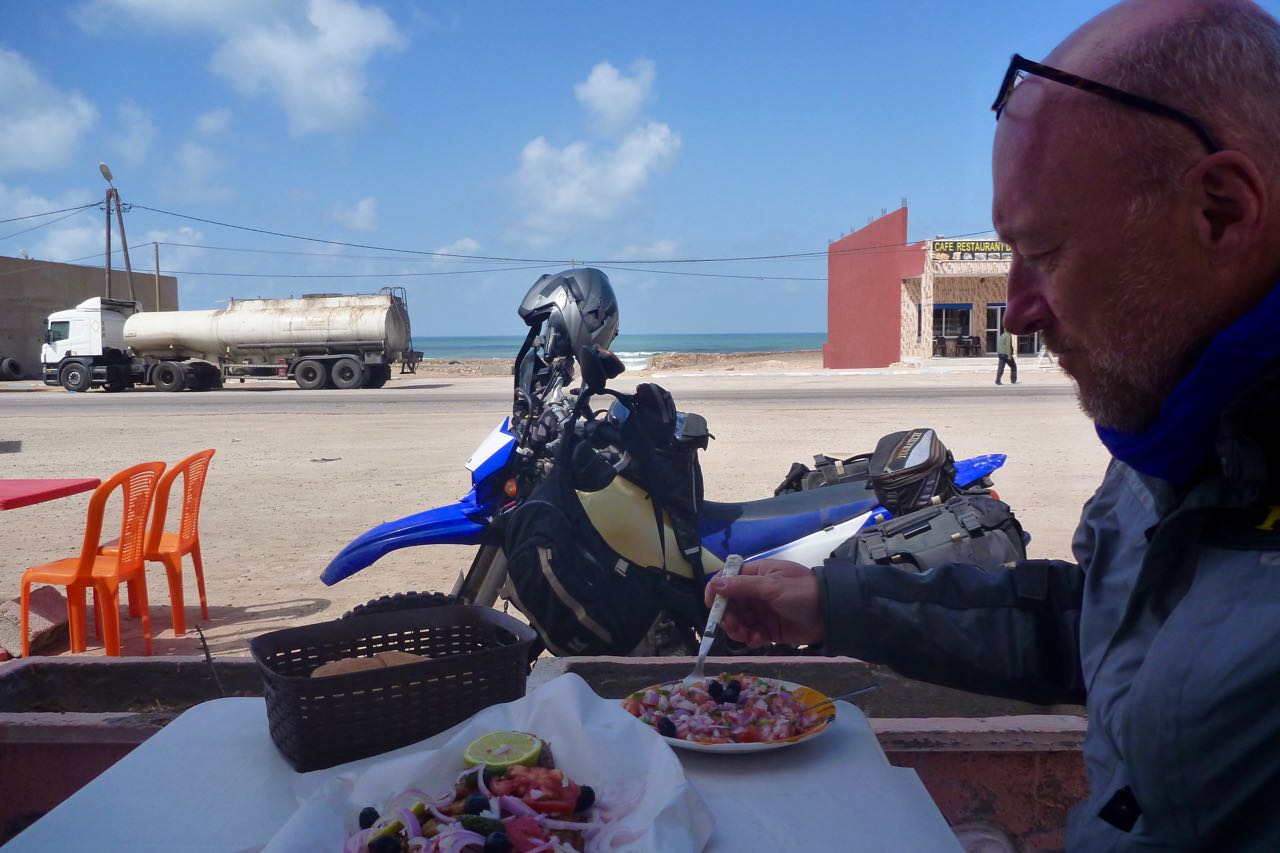
Up the road I pull in for the last cheap fuel in Afkhenir. Normally I try to skip lunch, but after the generous gorging in Layounne my stomach has expanded and will take a day or two to re-shrink. I order an omelette, the guys suggests fish. Oh, go on then, I’m right by the seaside after all.
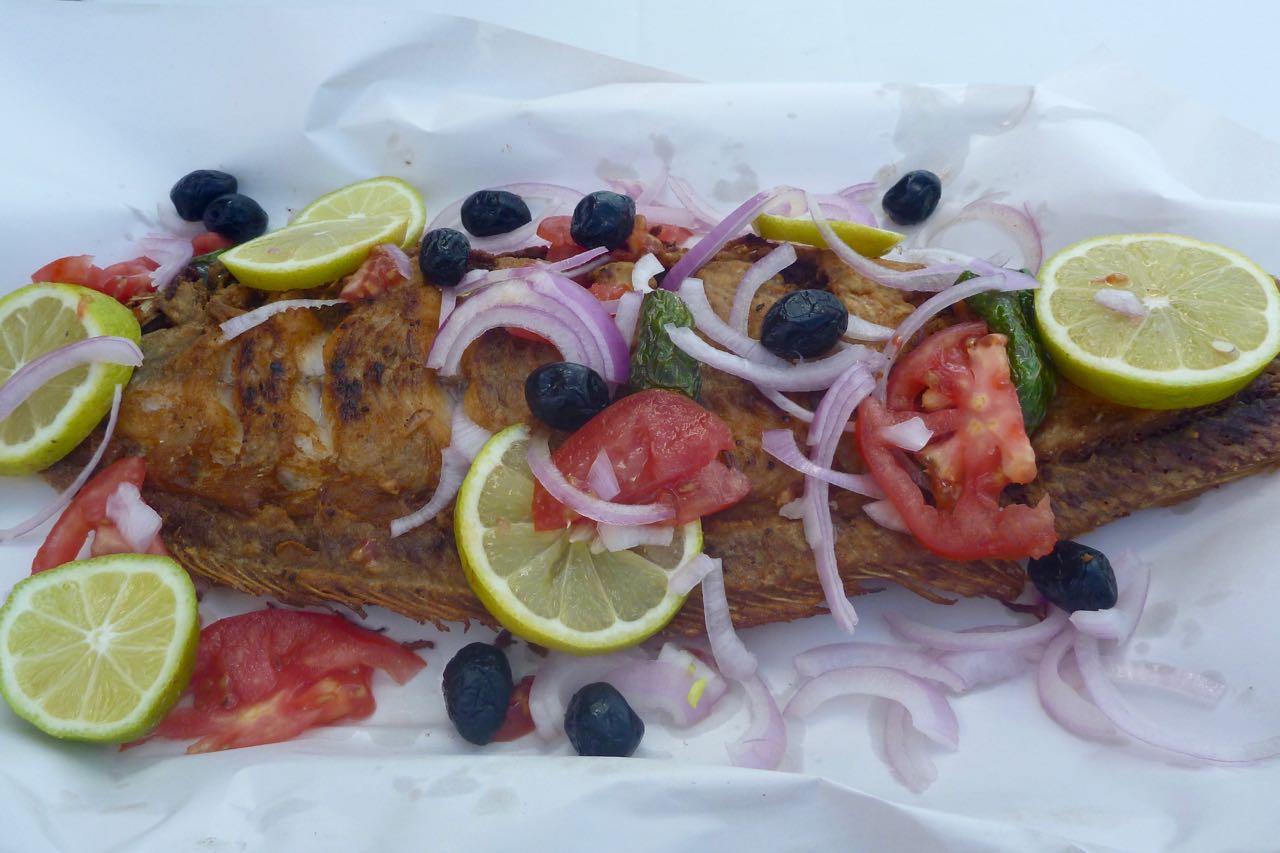
He yanks a sole out of the fridge, grills it and brings it over with lots of lemon. Seven quid for a whole battered sole with side salad. Quite a lot but well worth it for a treat.
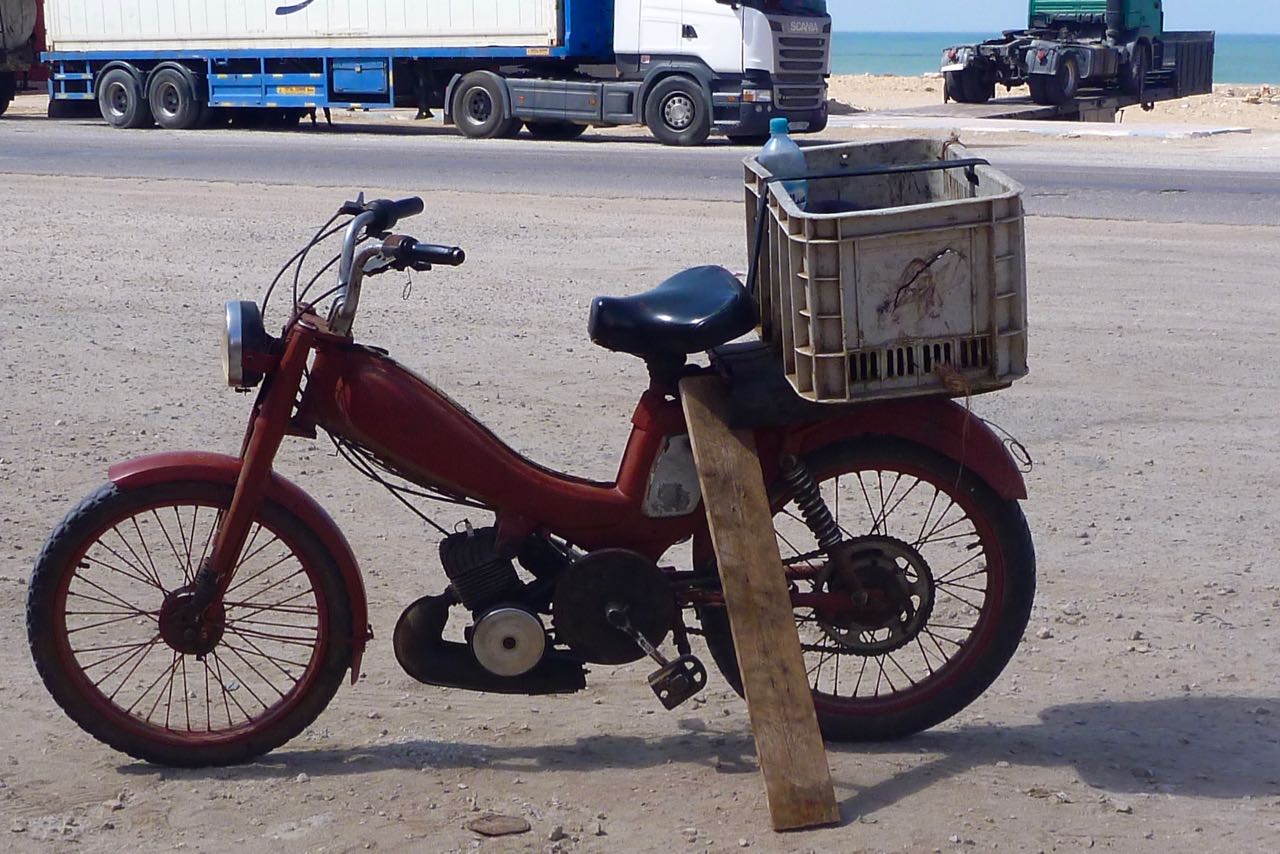
A fisherman drops in with his catch and rests his Moby on a plank.
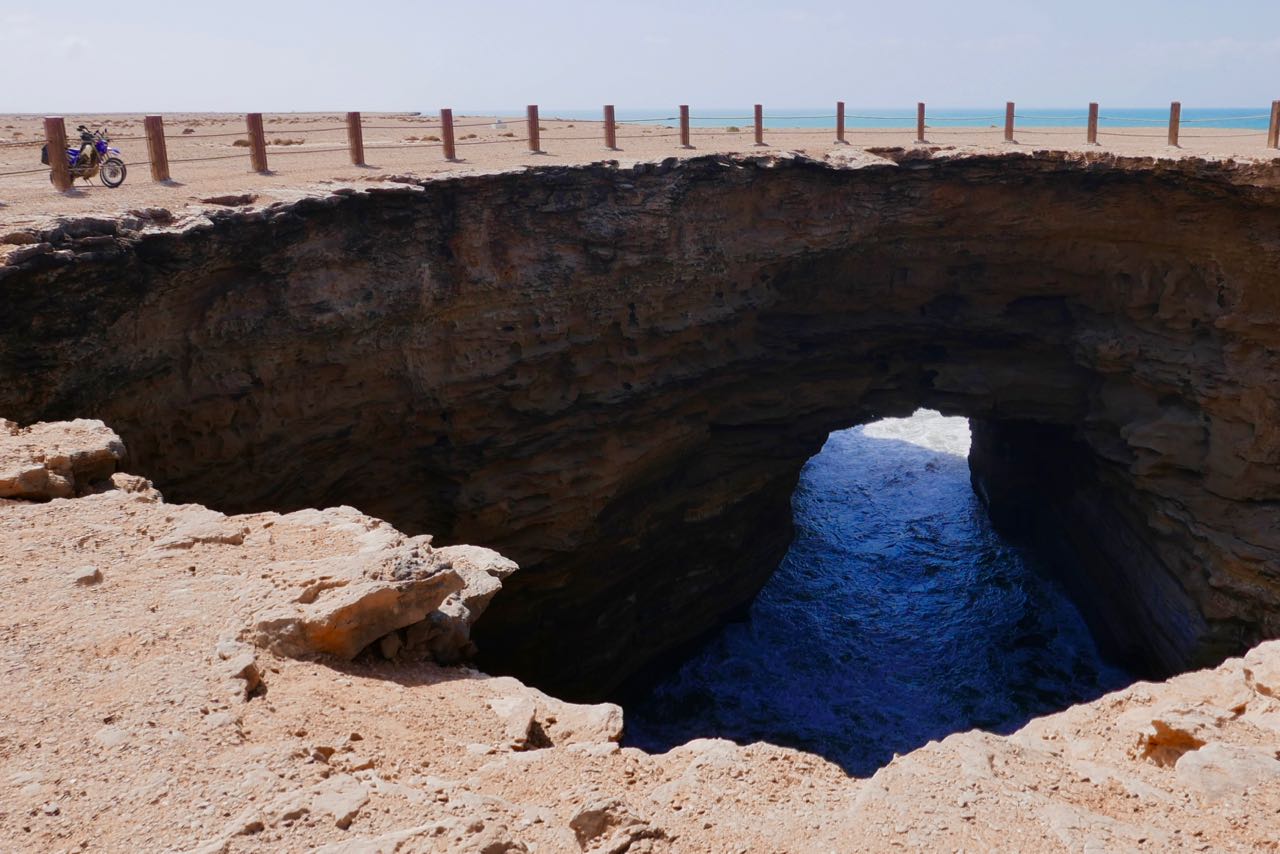
Just up the road is the Gouffre Afkhenir, a collapsed sea cave fenced off right by the road.
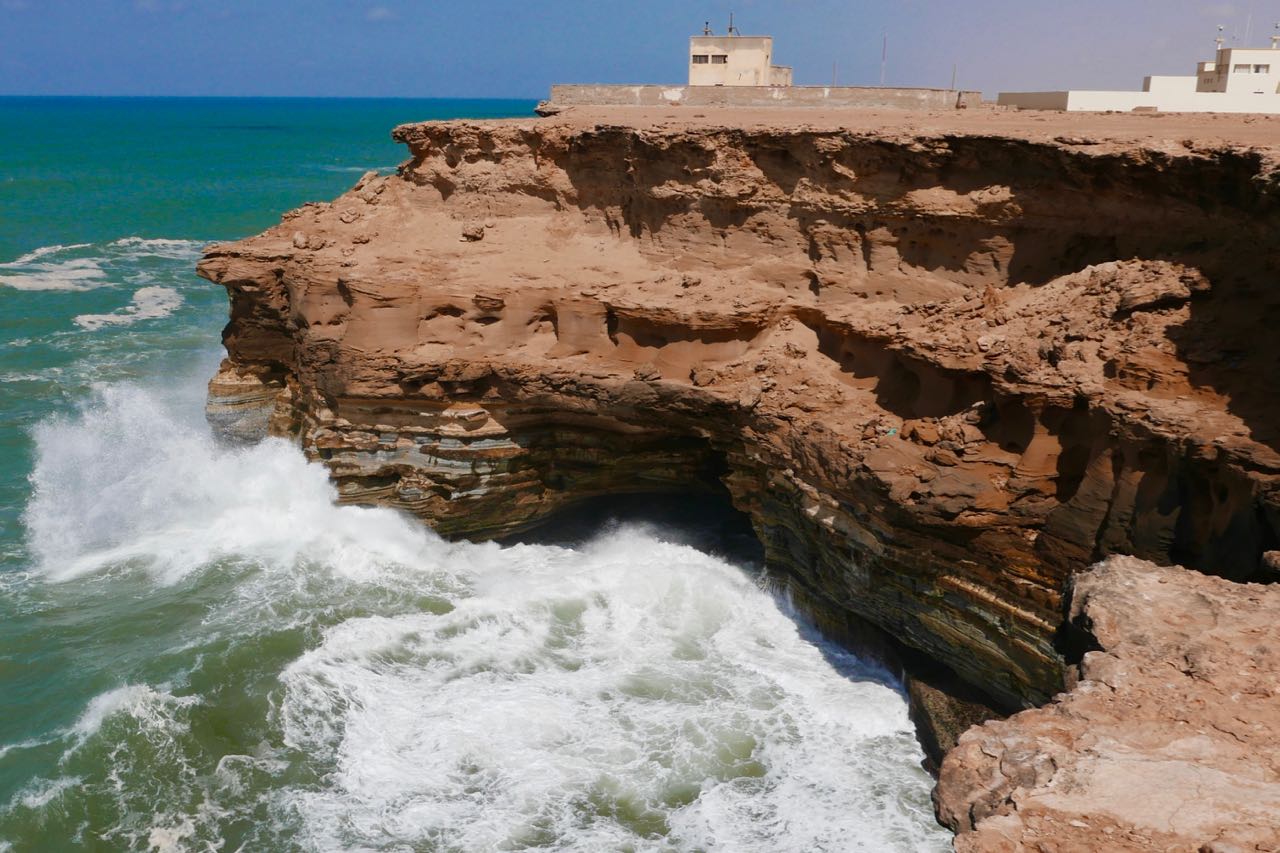
Below the cliff edge the heavy Atlantic swell is booming against the wave-worn cavities, crashing in and rebounding in all directions. Nice to watch. Hypnotic.
That’s a radar station on top. I think they built the new whiter one back from the edge a bit, just it case it got ‘gouffred’.
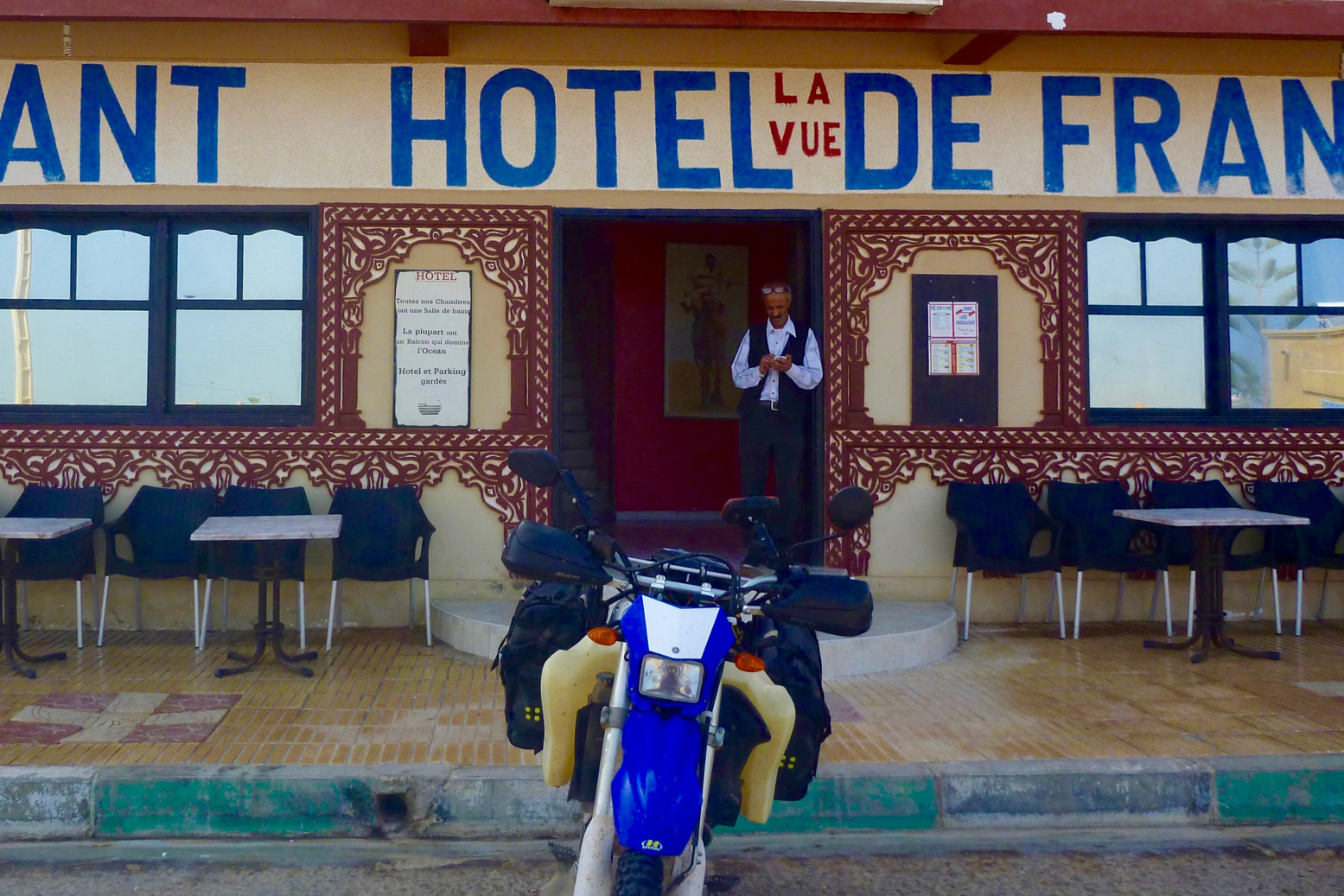
Where shall I stay tonight? I can go back to the place in Tan Tan, but that would be too easy. Let’s see what El Ouatia, right by the sea, has to offer? Hotel de France? That will do nicely. 230d half board, great wi fi and a nice Spanish-continental ambience and old-school waiter. (Spanish influence still persists on this coast).
They help me push my bike up the steps for the night.
And proper coffee too. Nice spot.
Part 7  > > >

WR-ing about in Morocco – 5

WR250R 4000-km review
WR Introduction
WR250R Stage 1
WRing about in Wales

WR250R ready for the desert
Morocco trip report, 1–9
Fuel log

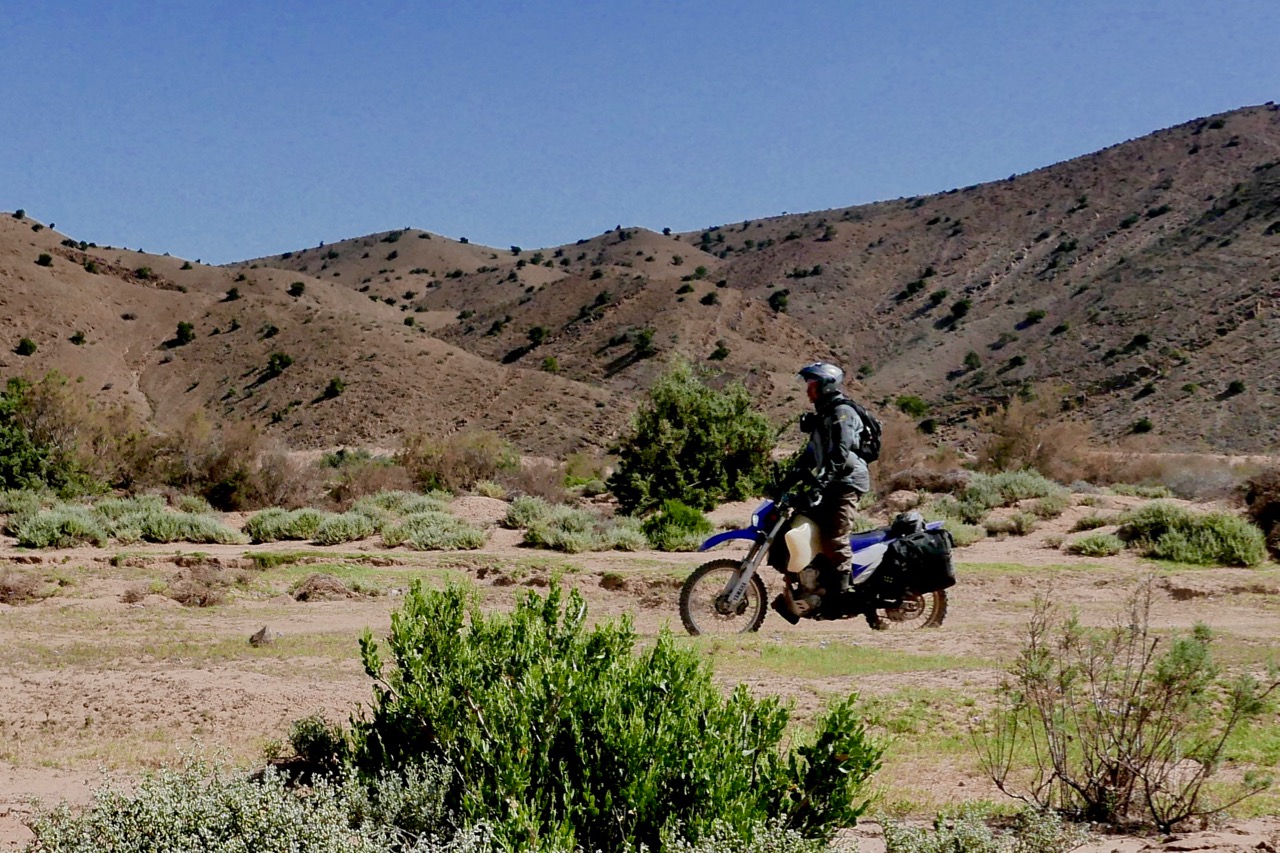
I drop down, turn west and and plough into the oued, hoping for the best, but it’s not going to happen. Soon I’m paddling madly in first, like something out of a Roadrunner cartoon, engine screaming. The temp gauge reaches 134°C. Normally 100-110.
With vigorous paddling and feathering the throttle I  j u s t  manage to keep creeping forward. On firmer terrain the bike grabs traction and leaps ahead, then sinks at the next soft patch. The rear spins, the clutch creaks, I’m panting and my mouth is parched.
I inch towards some shade to let it all cool down. This shouldn’t be this hard – I’ve made a mistake somewhere. Those nomads upstream use old landrovers and wouldn’t camp in such a hard-to-reach place.

I set off on foot to try to find the track or recce a firm, rideable route. I’ve been lured in by a couple of car tracks – a common mistake to make when the way ahead isn’t clear. Thorny acacias and stony river banks limit options, but I work out a way to the south bank where I want to be.

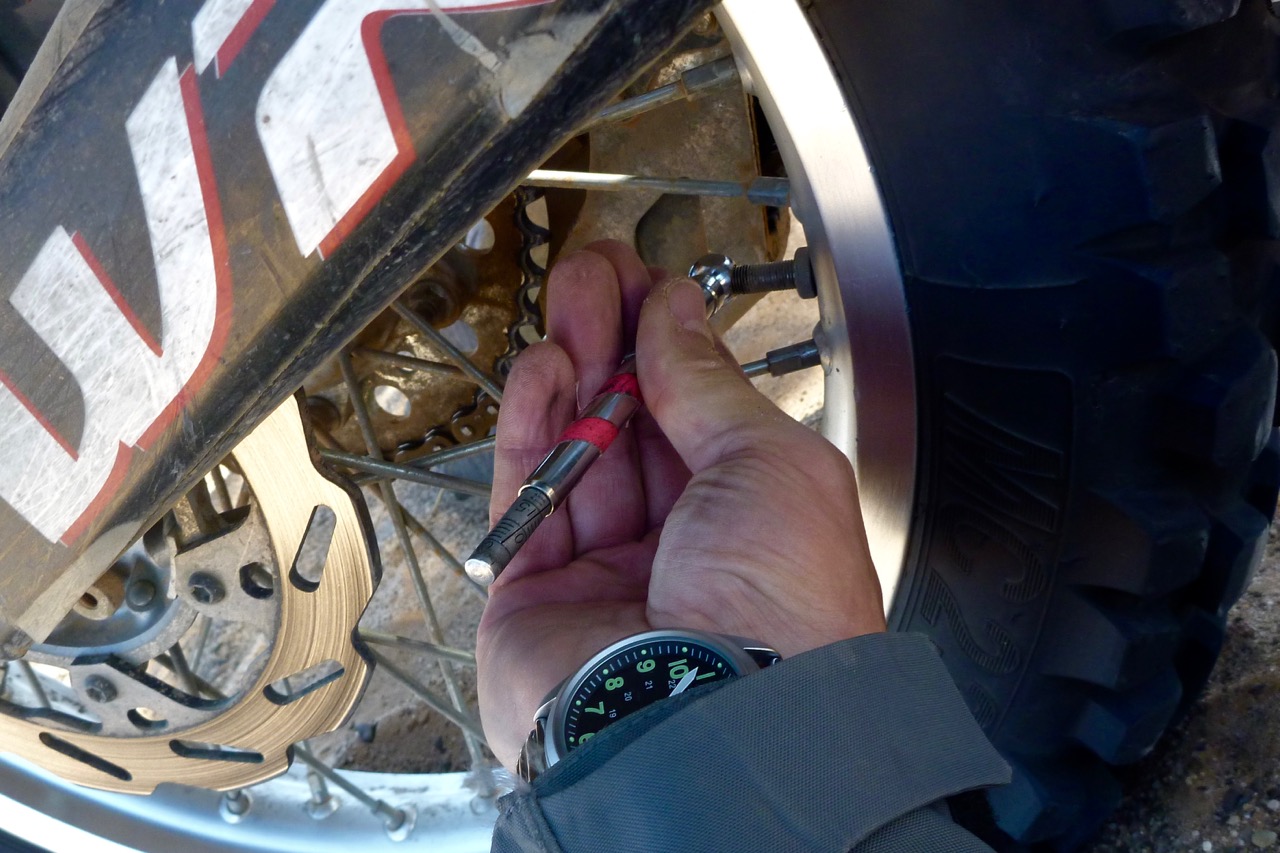
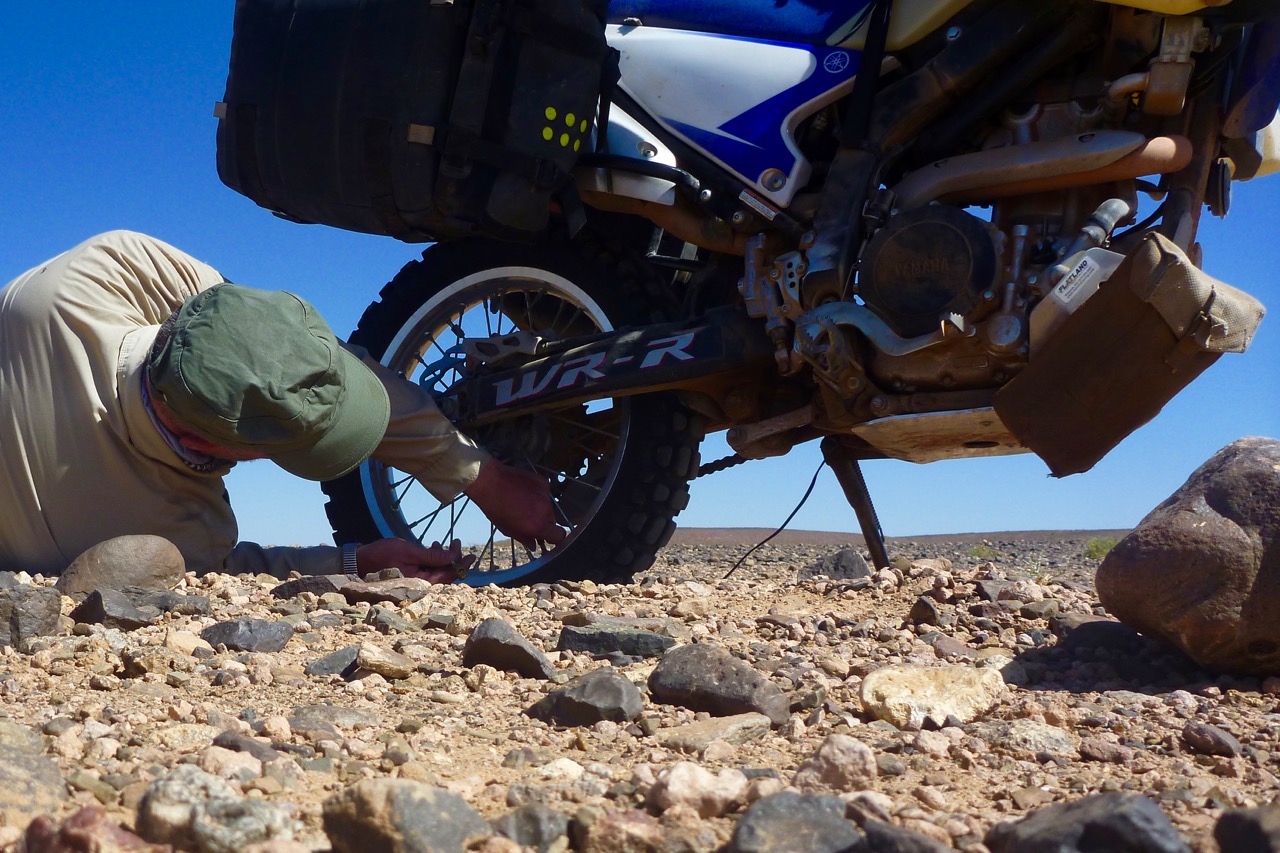
Back at the bike I drop pressures to 1 bar – it can make a huge difference. I’ll need it as a 250 lacks the grunt of a 600 to hook up on soft sand.
Suddenly it’s all got a bit challenging, but if I ride short sections then rest, recover and cool the motor, I’ll make it out in a hour or two. Plus there are waterholes and even nomads if something like the fuel pump goes wrong.

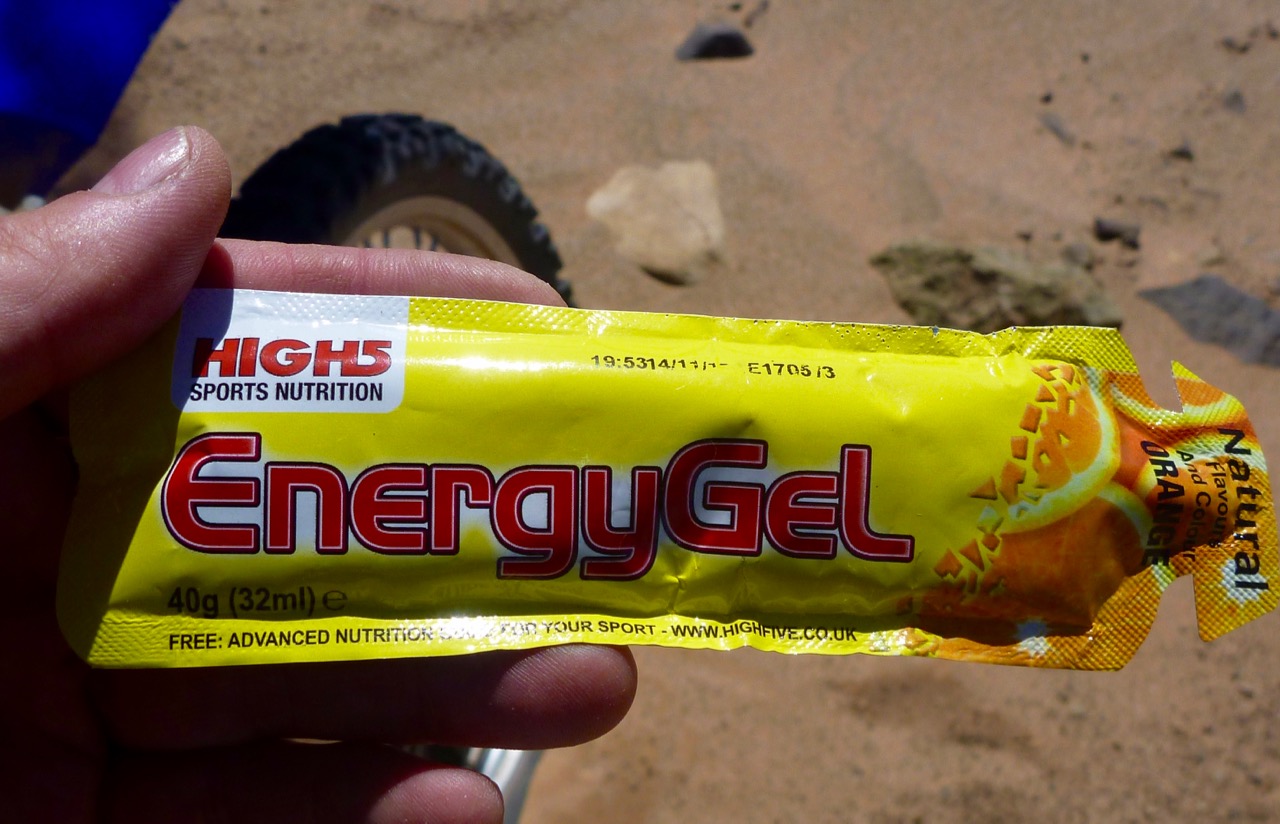
Before setting off I suck down one of these gels; they were going cheap on Wiggle. I’m not usually into this stuff but it’s worth a go. The soft tyres transform the bike: traction makes faster forward progress – actual riding not paddling – and less spinning and revving and more airflow = less heat: win-win.
I climb onto the south bank and ride gingerly among the rocks on the flat tyres, working my way along the valley

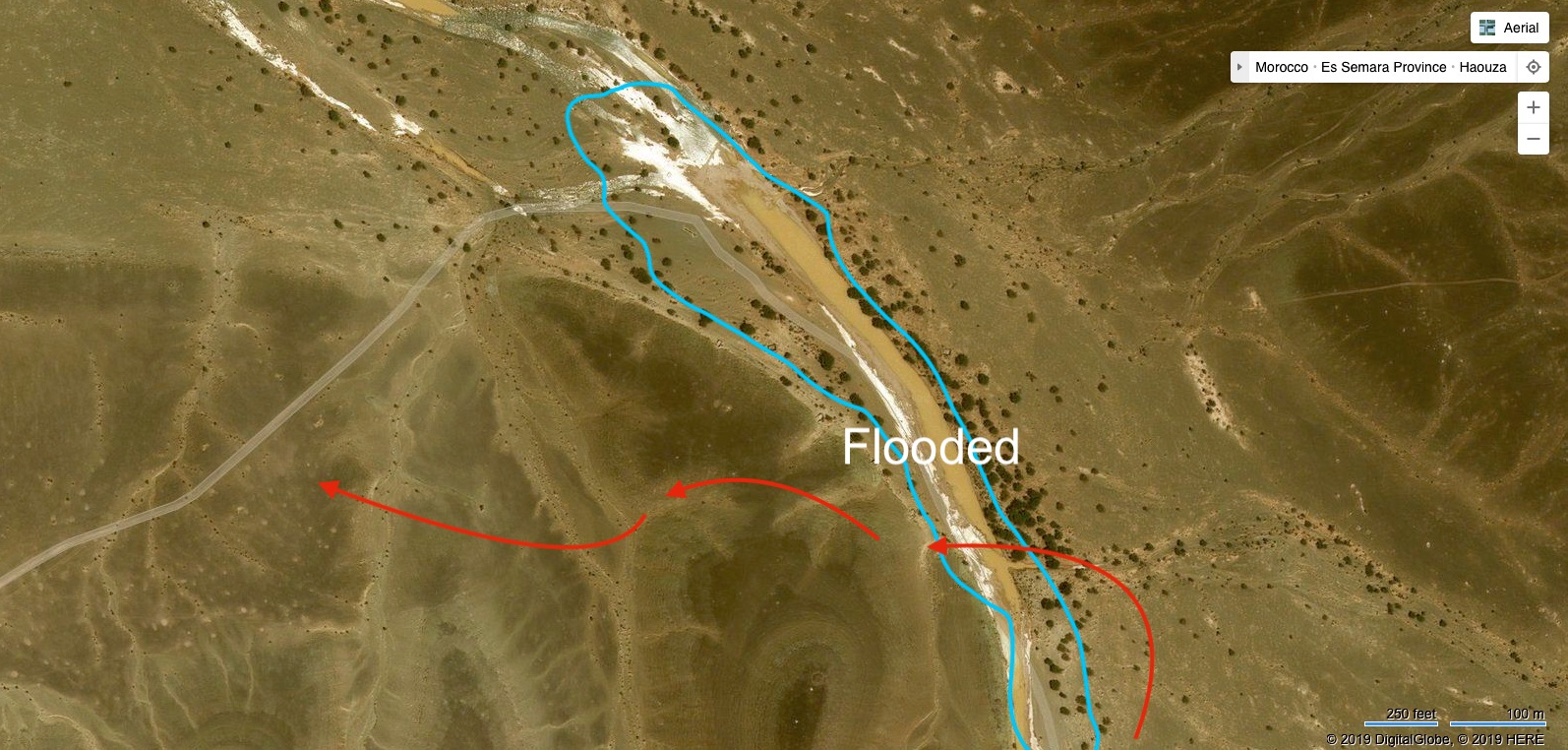
I find and follow a stretch of track but it soon ends in a huge mound of flood-churned sand by a big waterhole (MW6-KM256). I set off on another foot recce to see if it gets better or worse and like they do, a nomad pops out of the scrub. Another tourist in a pickle, and he’d be right.
We do the greeting thing then I ask him “Hawza? [nearby army base]. Piste?”
He points across a spit of sand bridging the waterhole where the track once was (above; Bing image below).
That’ll do me. I check it for firmness as I already trod in some quicksand. I start the bike, reach the waterhole and shoot over, but see no track on the far bank. Sod it, I take off up the rocky hillside to cut the last bend in the oued, hoping the soft tyres don’t pinch.
Elevation is always useful when lost: from the top I see the track continuing south across the stony plain towards a pass.

Two years later I was in the same place on the Himalayan and a 4×4. I’d made much less of a mess of the oued, but this time the gorge was a dry mass of deep sandy ruts which the bike would definitely not manage. I aired-down the rear and tried to walk and push around, but the torque of the heavy bike had the chain slipping on the front sprocket. Not a good sound. Luckily the two in the car saw me panting like a dog, came back and helped push me across. Once back on firmer sand, I took off over the stony hill, as I’d done with the WR. Alone, I suppose I’d have managed eventually, as I did on the WR.
The trick is knowing when to stop and rest and drink – every couple of minutes if necessary. Don’t burn yourself out: a frazzled brain makes mistakes.

The sandy gorge from hell, as seen on Bing aerial.

Gnarly episode over, I air up with my trusty Cycle Pump. Generally I don’t mess around with tyre pressures too much, but that oued needed 15psi.

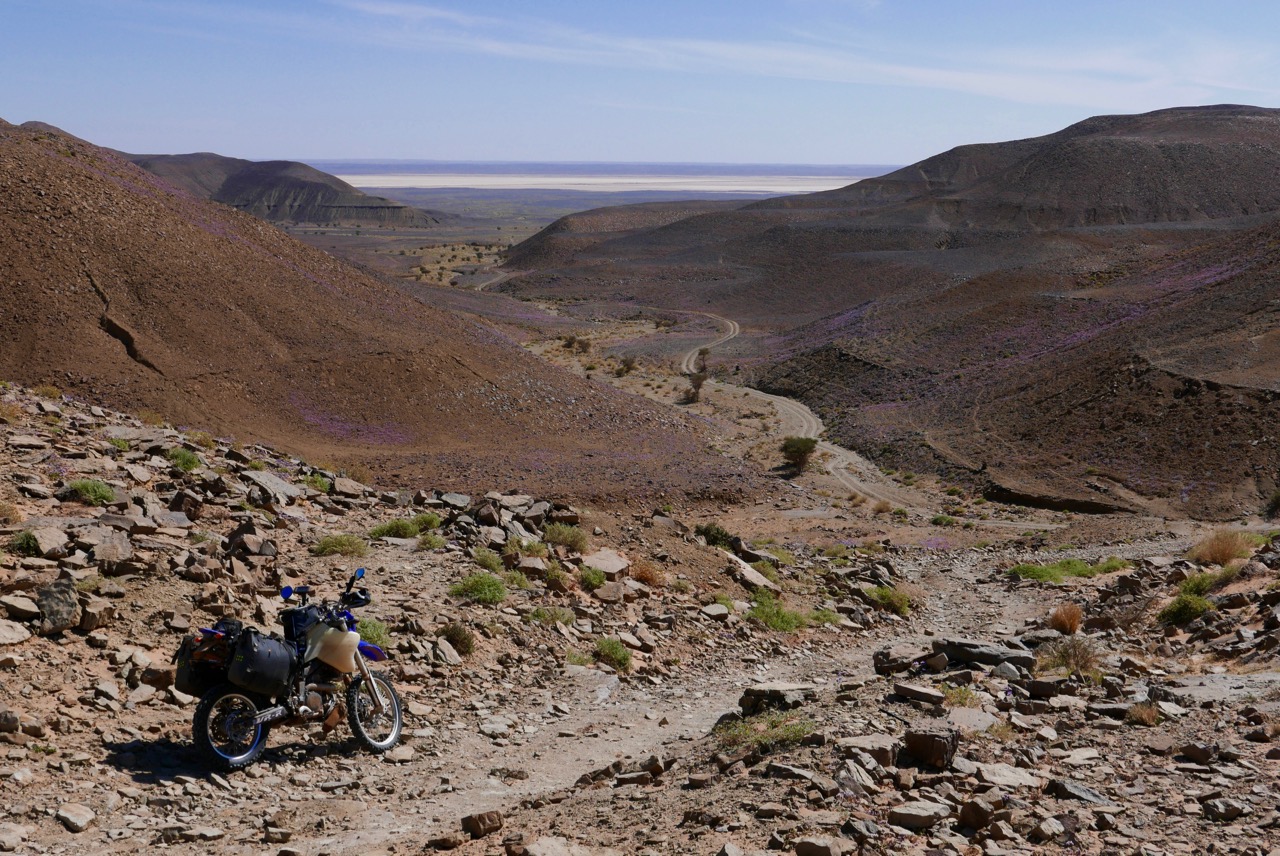
And very soon I reach another thing I’d forgotten about – an amazing view from the escarpment down to the chott (dry lake bed). If you have edition 2 of Morocco Overland you’ll see a picture of a 101 camper which stripped its gearbox trying to get up this steep climb.

That’s the climb from the base. Even on the WR it would be an all-or-nothing launch to get up it.

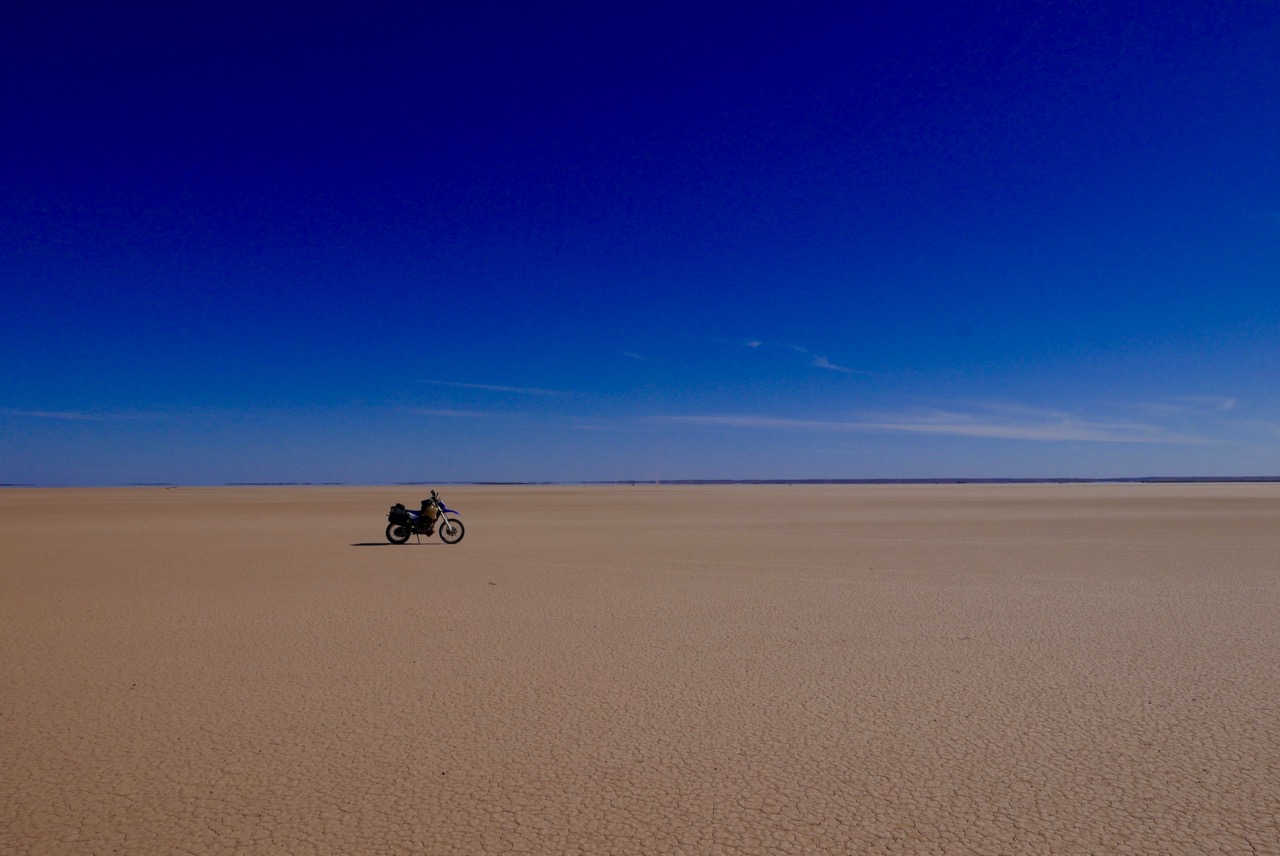
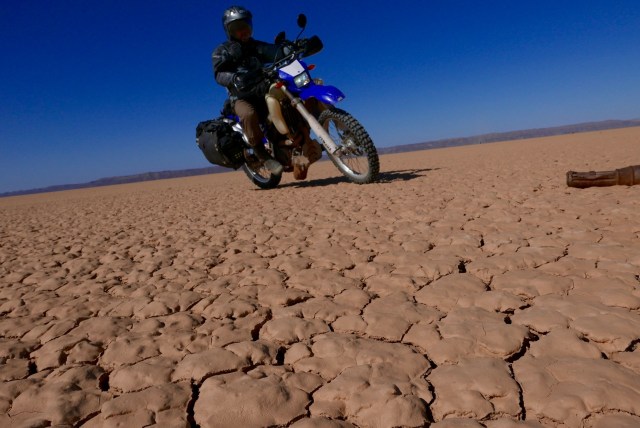
Behold the sun-baked chott. Surely, no more dramas.

On the chott. Like the famous Bolivian Salar, but without the electrics-eating salt.

Like you do, I get a bit carried away, looping some loops, but realise I need to head for some specific Dakar mounds on the south side to reach the track to the road.
Soon I’m back on the blacktop, the continuation of the restricted border road I was turned back from at Zag.

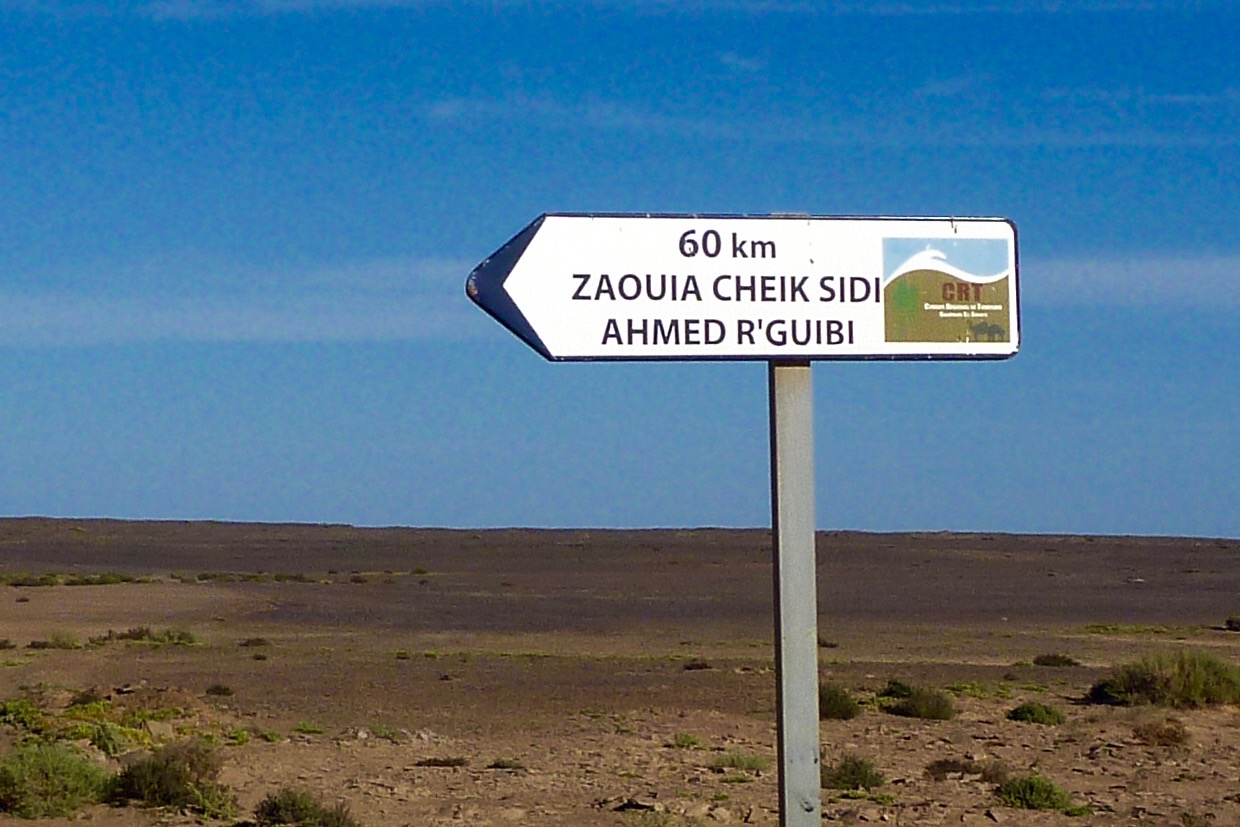
It’s another two hours to Smara. I pass a turn-off for the remote shrine of old Sheikh Sidi Ahmed Rguibi, the ancestral Yemeni forefather who led his people to this promised land, 500 years ago. The Arab Reguibat are the dominant tribe among the Saharawi nomads of Western Sahara.

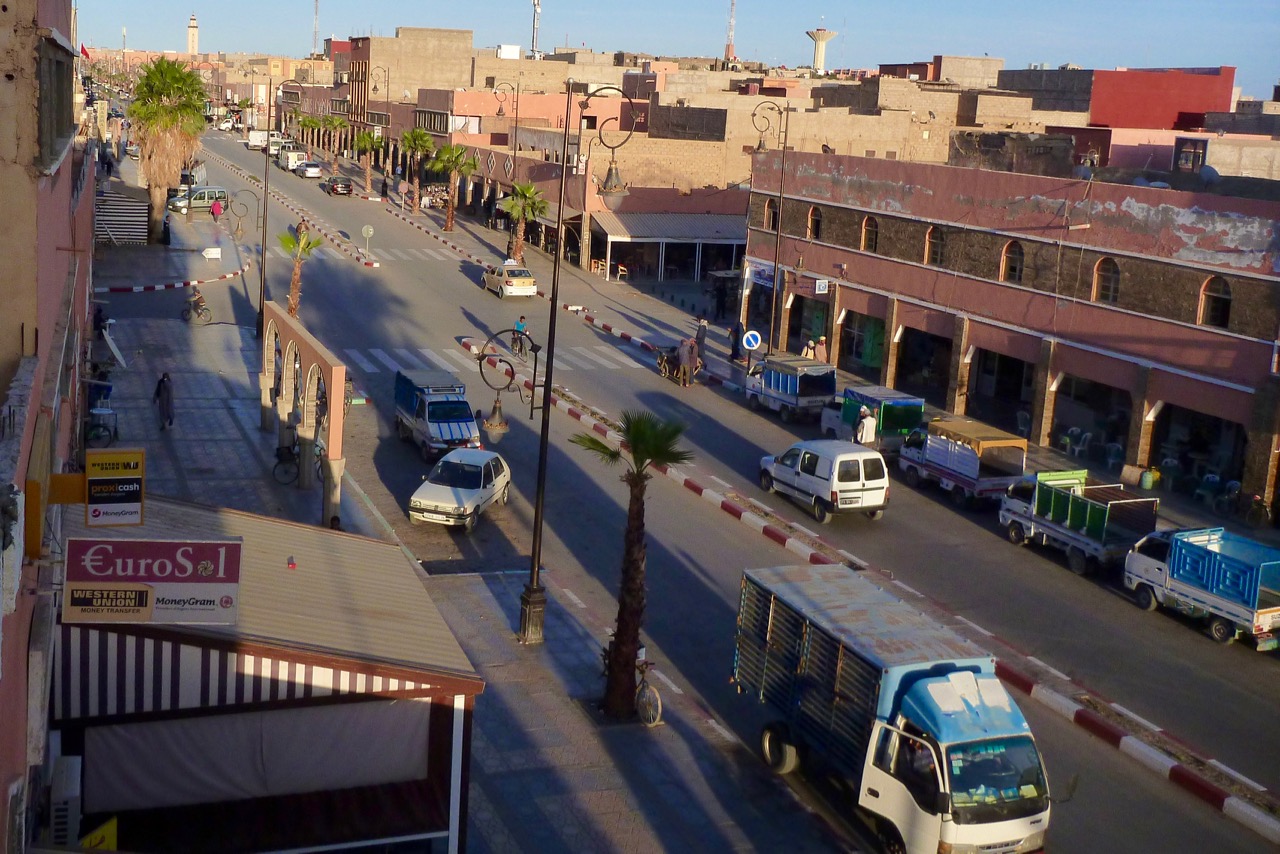
Smara: road’s end at the Polisario front line, but looking quite prosperous for a garrison town. I roll up and down the high street and spot a few rough-looking joints.
I brace myself and pick the ‘Golden Sands’. The bloke in the office picking his nose is a bit bemused to see a sweaty Nasrani (‘Nazarene’ or Christian; ie: foreigner). Nevertheless he leads me to a windowless cell resembling a deleted scene from Homeland: a heavily soiled mattress and a dim bulb hanging on bare wires. Oh well, I’ve lodged as bad in Pakistan and elsewhere, and it’s only one night and three quid.
I’m just unpacking when the boss rocks up.
‘Come on mate, you can’t sleep here. Look at it, it’s shit!. Let us take you to a nicer place over the road. They got showers and everythink.’

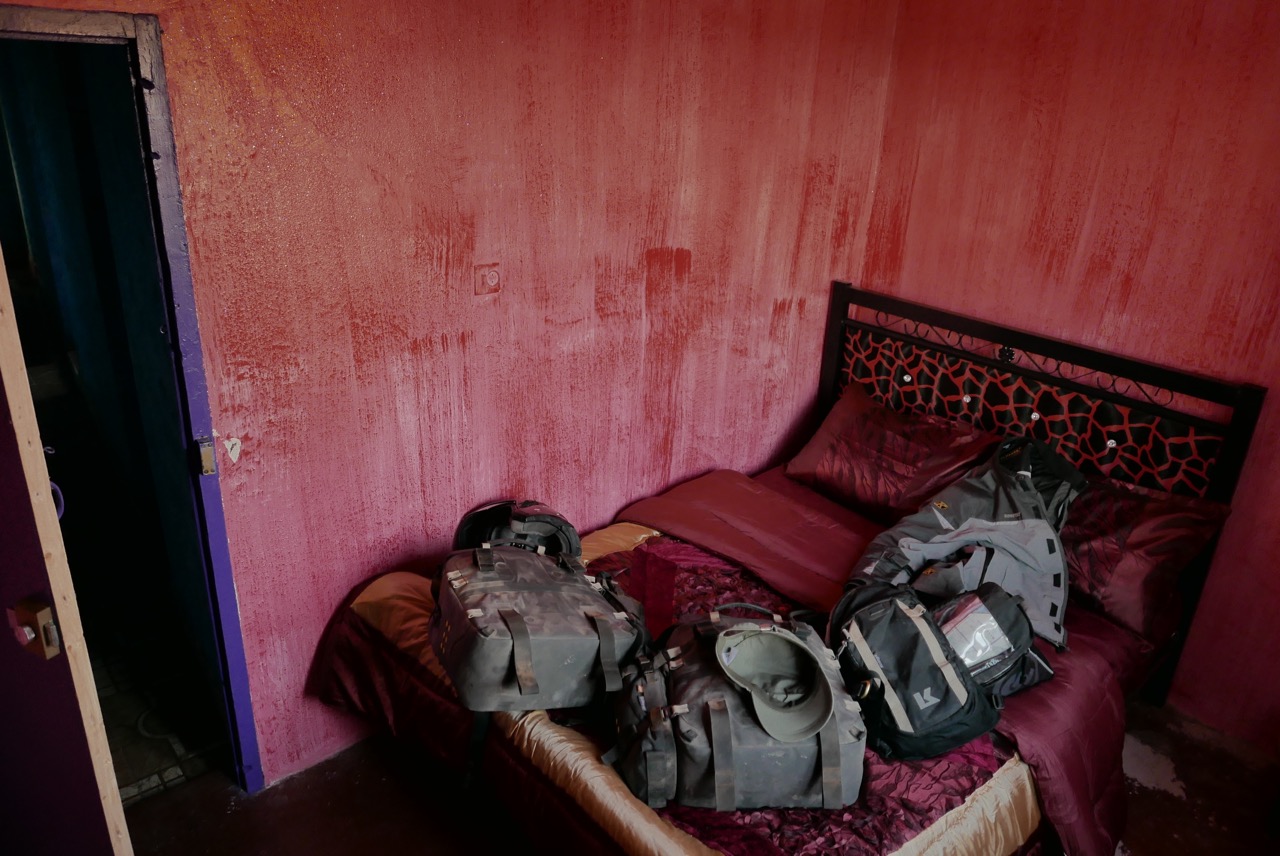
Over the road feels a bit odd. My room has walls lacquered in ripe pig’s blood sprinkled with sequins, plus a matching satin duvet. And out in the corridor a highly scented lady gives the place the ambience of a knocking shop. Not sure this is what the g-friend had in mind when I told her I was off for some WR-ing about in Morocco.

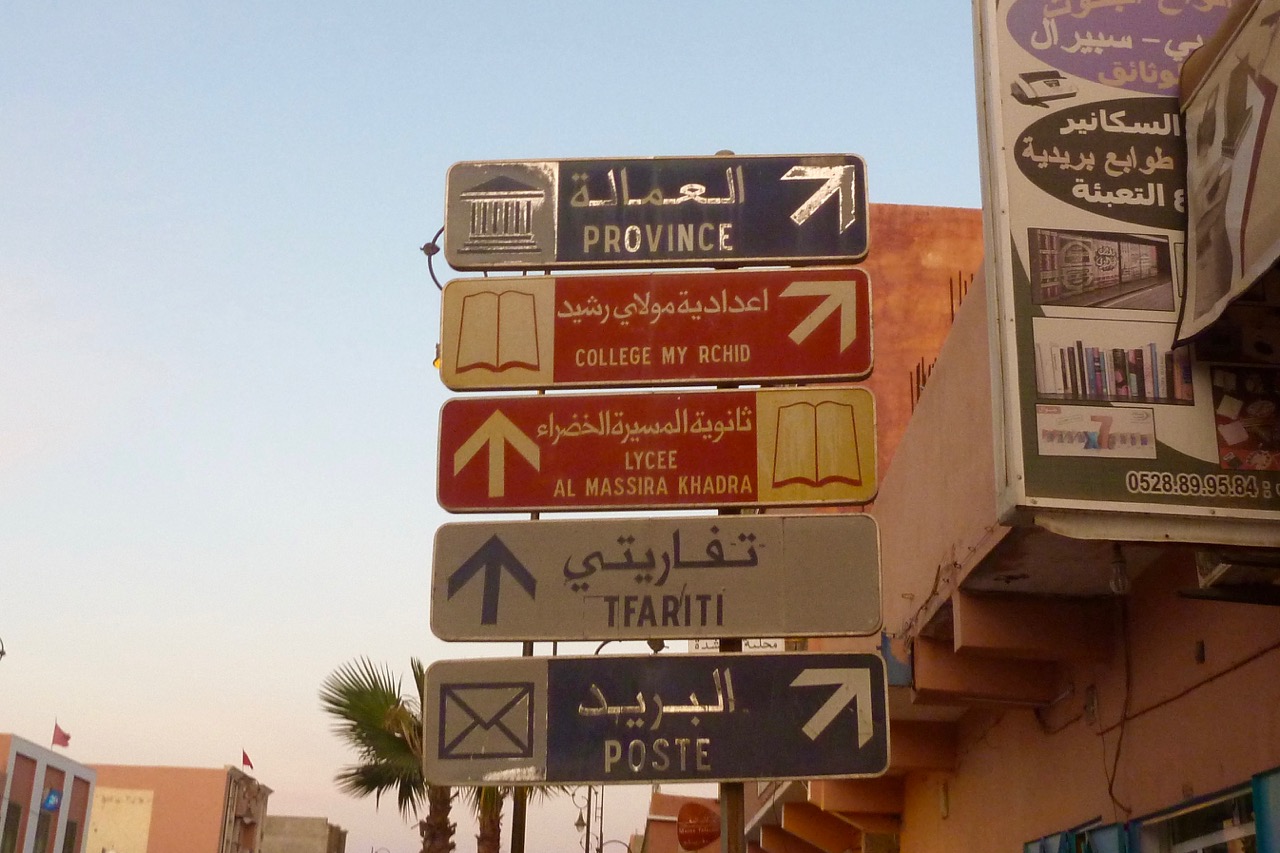
I go for a wander and see a sign for Tfariti on the other side of the Berm, in the Polisario Free Zone. The Dakar Rally used to cross here to get to nearby Mauritania, but I always wondered how that was negotiated. Since the actual fighting ended, Morocco has pursued a full-time propaganda war against the Polisario, with all sorts of fake websites making out they’re pork-eating, drug-taking smugglers and terrorists.

As always in these towns, I have trouble recognising a place to eat. Cafes packed with blokes watching football while twiddling their smartphones over a fag are everywhere, but they only serve tea or coffee.
People stare at me: ‘how did he get here?’
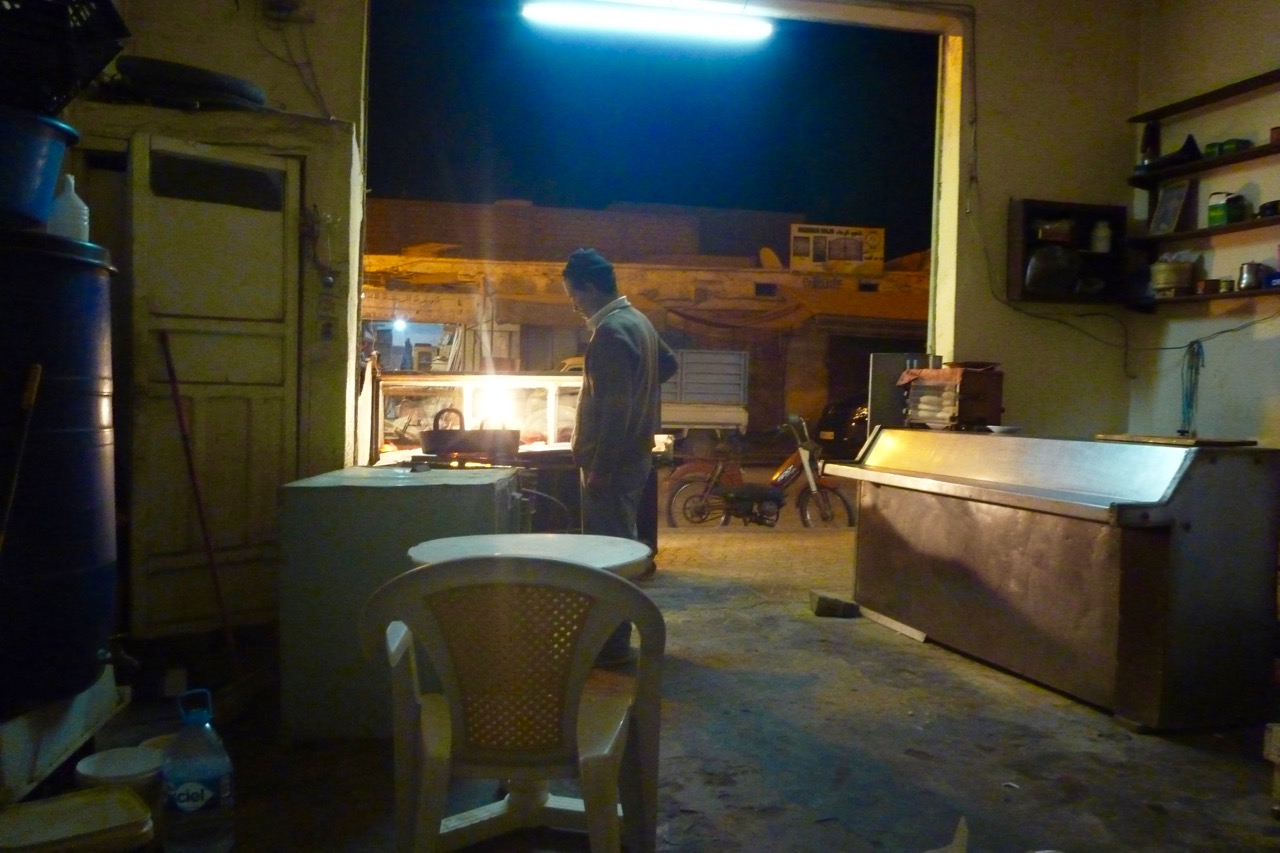
I try a couple of places – “sorry mate, we repair typewriters” – then stumble into this place, rough as a granite toothbrush.
‘Got anything to eat?’
‘Sure, take a seat.’

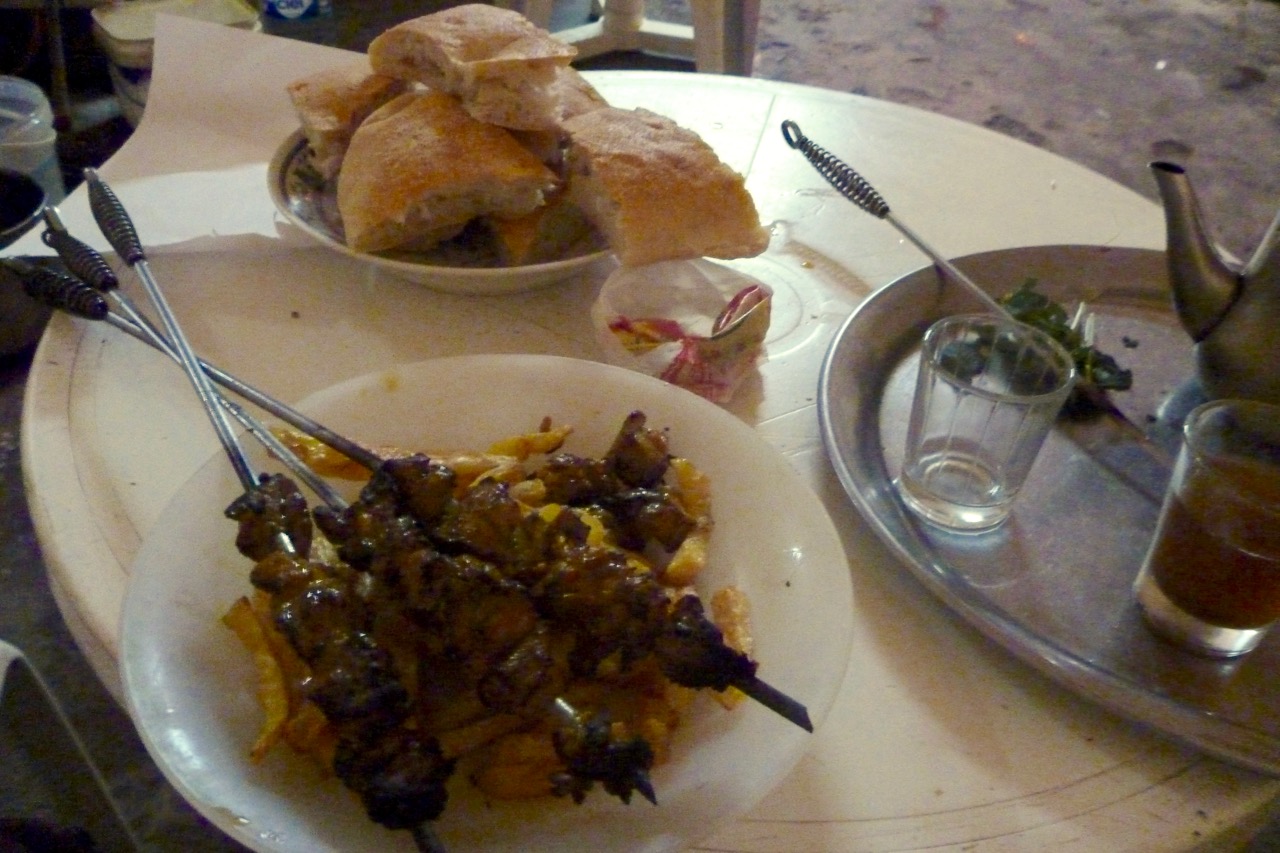
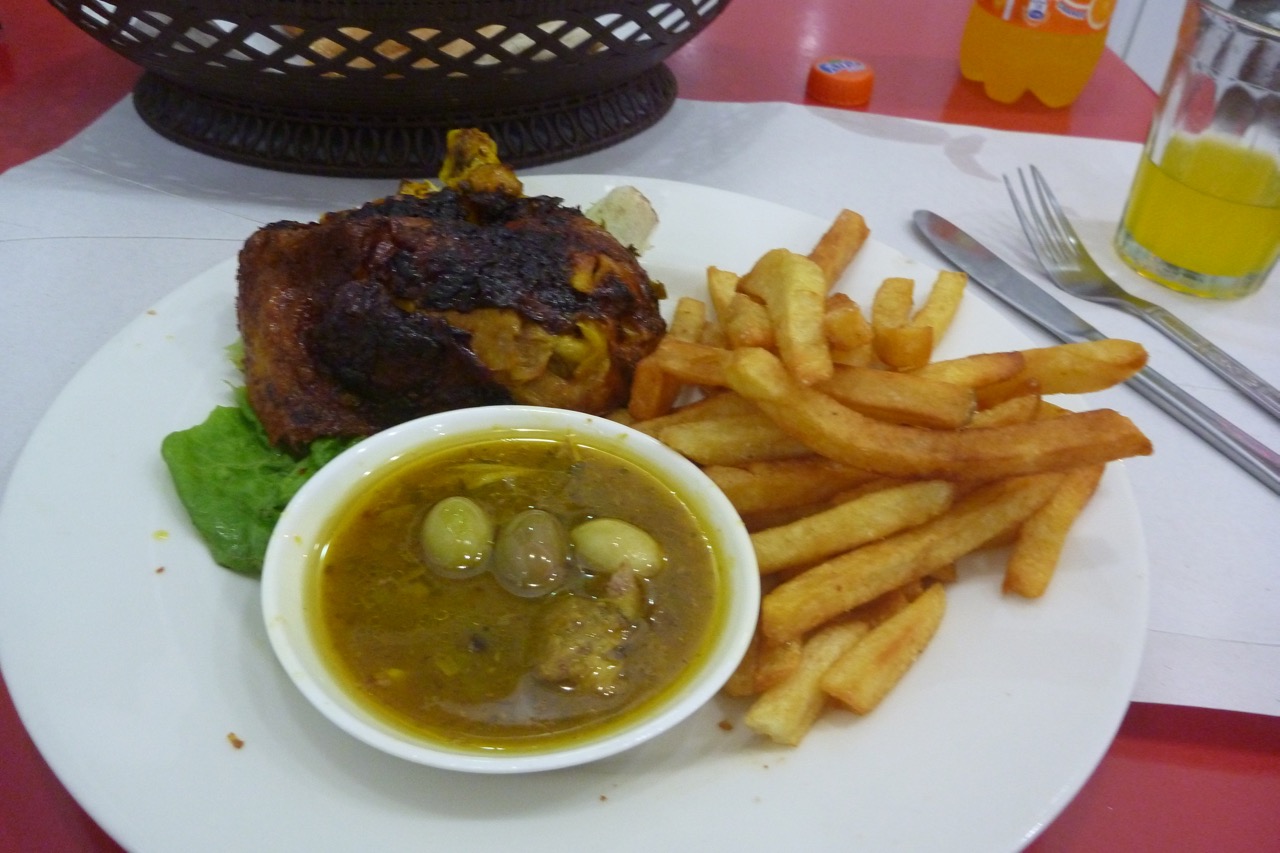
My brochette arrives. One thing I like about these basic places is the total lack of pretension, a genuine welcome plus the food is cooked right in front of you so you know what you’re getting – not yesterday’s warm-overs.
Ok, so there’s no fork to pull the brochettes off the skewer. He sees me struggling, comes over and just grabs the meat with his fist and pulls them off the skewers. That’ll work!

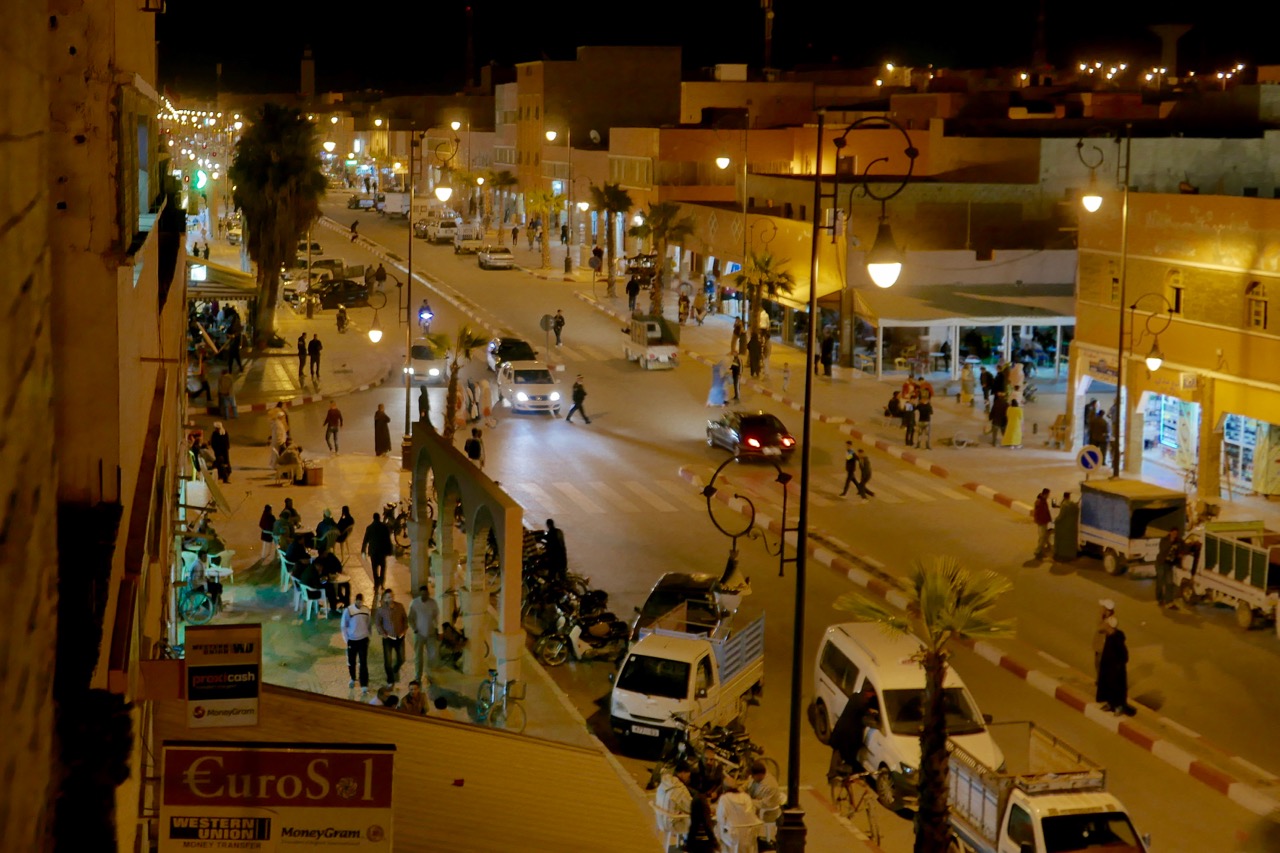
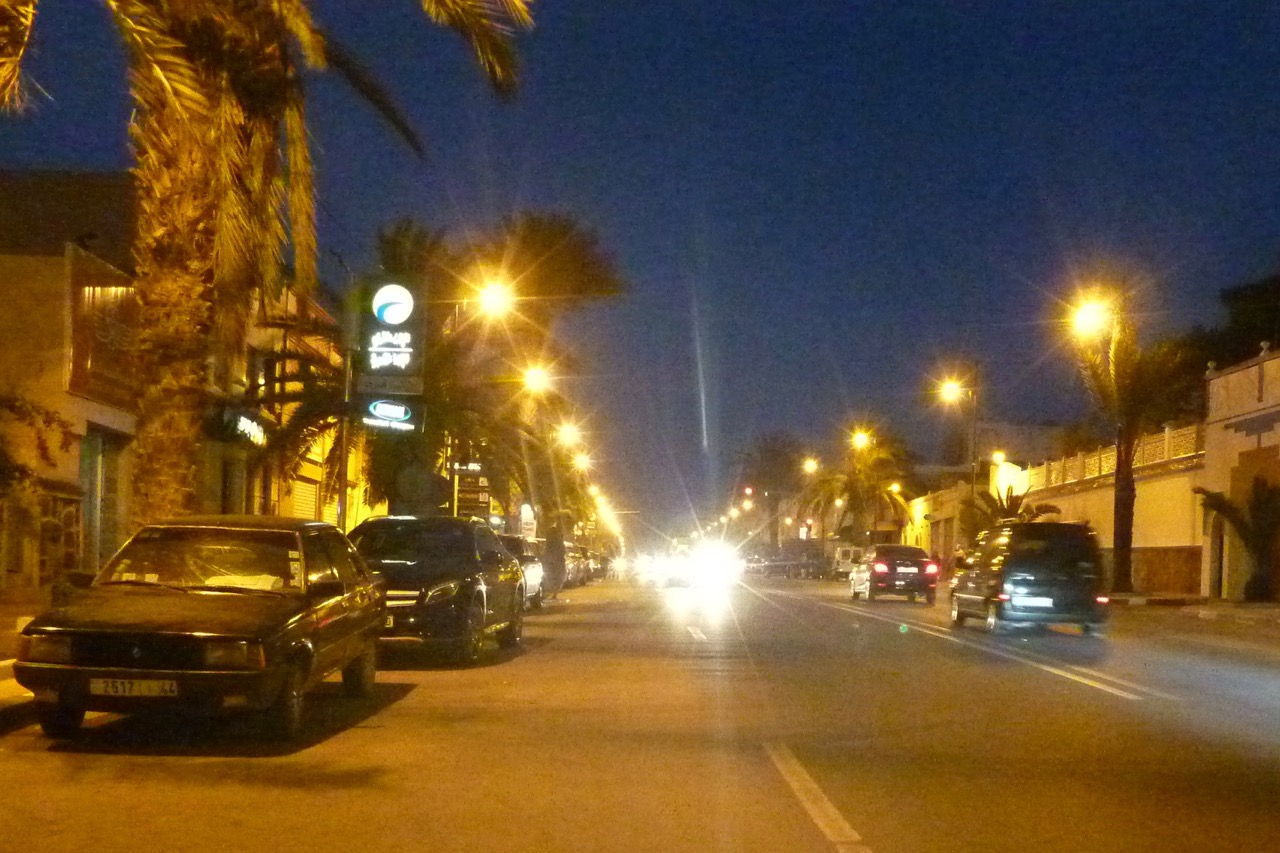
Smara by night.

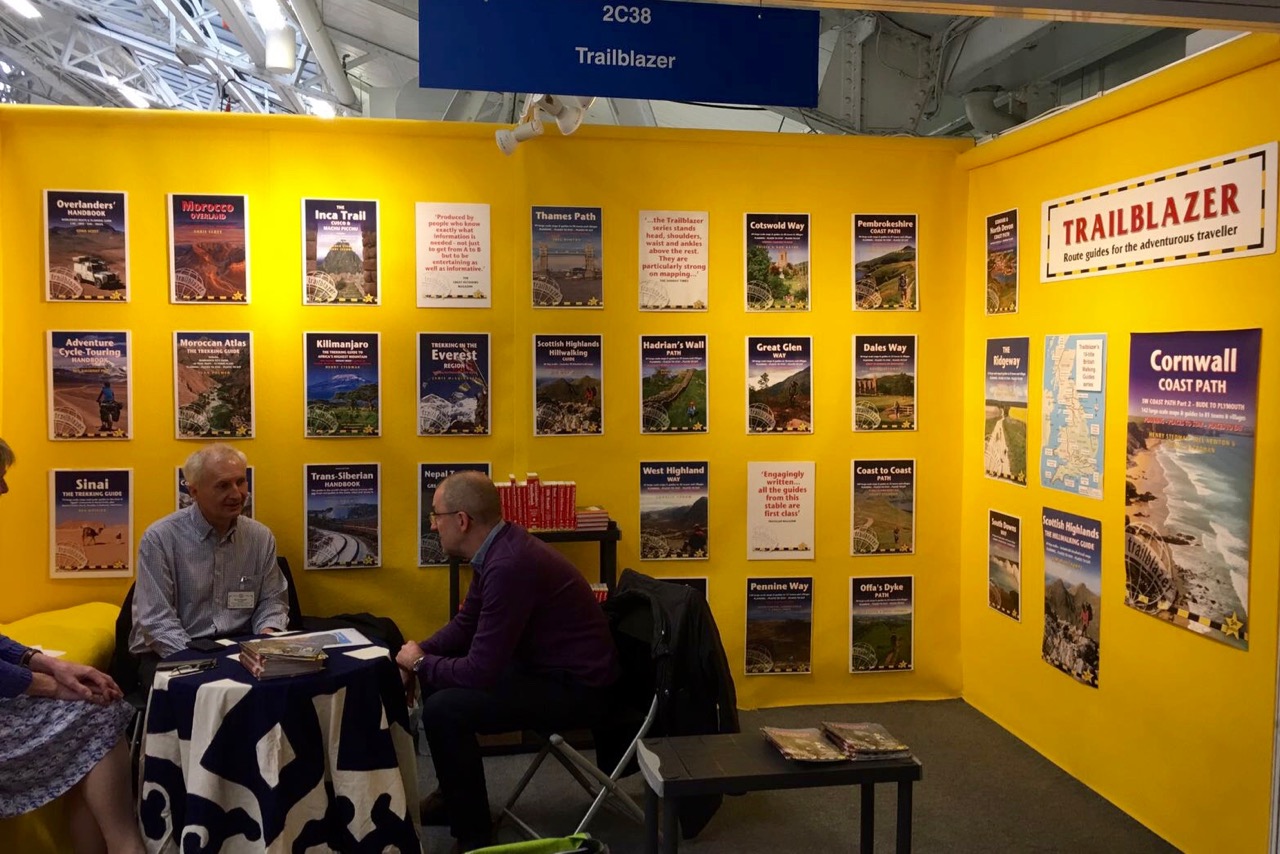
Meanwhile a spy informs me my publisher was spotted at the London Book Fair, spreading the word.

Part 6  > > >

WR-ing about in Morocco – 4

WR250R 4000-km review
WR Introduction
WR250R Stage 1
WRing about in Wales
WR250R ready for the desert
Morocco 4000-km trip report, 1–9
Fuel log

After two full days off in Tan Tan, I’m up for more.
I decide to try a new but slightly shorter route to Smara, only 330km; half piste.
I set off for Mseid, passing the village of Tilemsen.

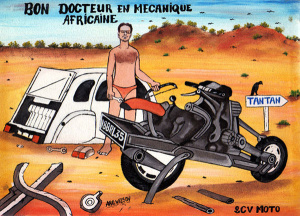
Some of you may recall a fake news story from a few years back about a French bloke whose 2CV ‘broke down in the Sahara’.
From what I recall of the version I read, it was ’staged’ just out of Tilemsen where his only choice (apart from simply walking back to town?) was to merrily pass him time cutting and welding his car into a ‘Scrapheap Challenge’ motorbike, ride out and live to tell his amazing tale. Just like James Stewart in ‘The Flight of the Phoenix’ movie. Knowingly or otherwise, all the news feeds lapped up up this epic of desert survival. The 2CV bike was real – the bloke built them for a hobby, iirc. The survival yarn, most quickly deduced, was faked.
My PoV here.

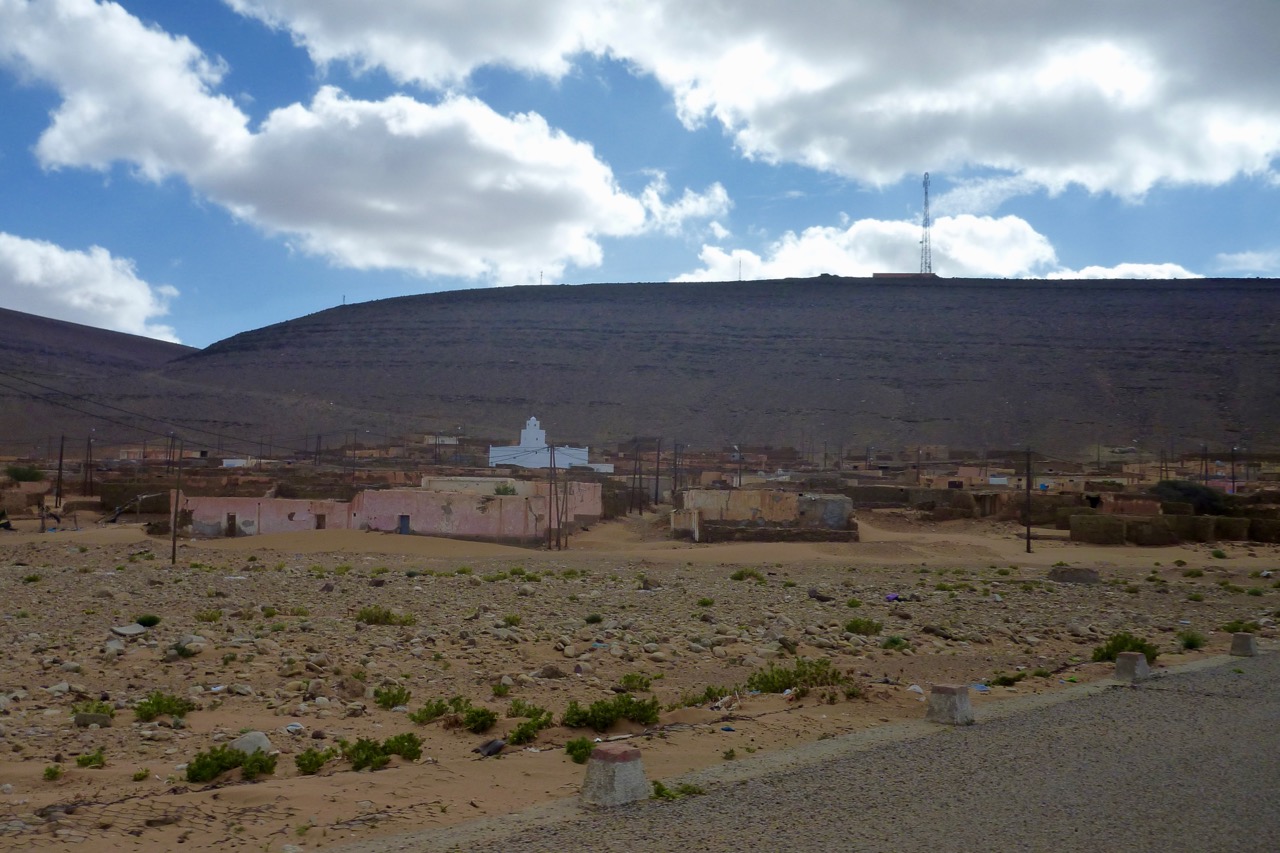
The road ends at Mseid, looking even more abandoned than usual. Someone told me later that, following recent massive rains (which broke a dam and cut the road bridge at Layounne), every nomad and his dog is out pasturing their camels and goats while the going is good. These villages are more storehouses, occupied only in summer.

I head through the gap in the range and pass these wind-bent trees, like you get in west Cornwall.
Good windsurfing in Western Sahara, I’m told.

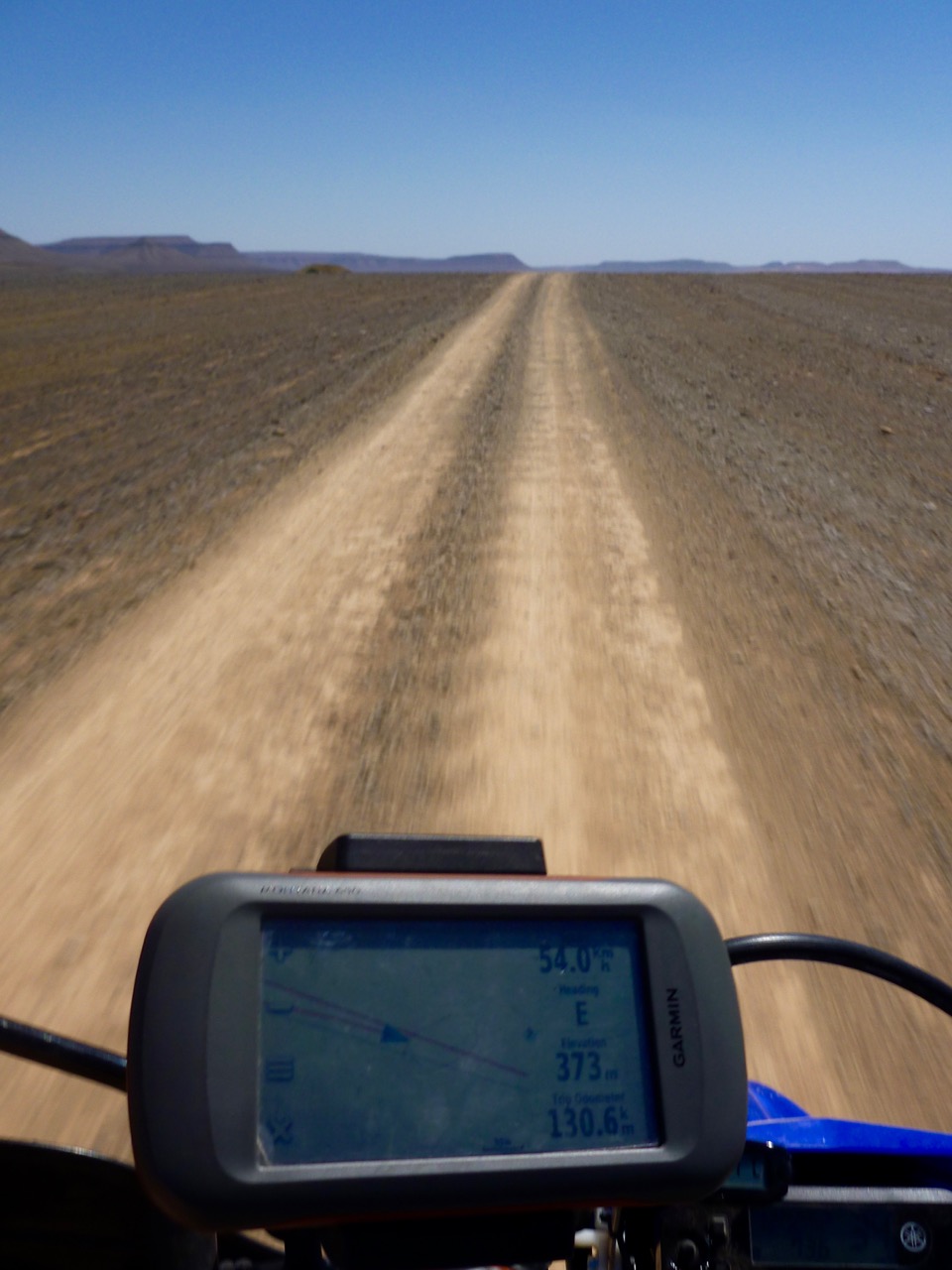
Without a GPS tracklog traced off Google Earth last night, my faint turn off to the southeast would be barely noticeable. No cairns of anything. GPS means you can attempt more adventurous stuff and literally string together your own routes.
In the pre-GPS era, unless you resorted to astro-nav or hired a local guide, all we did was follow main tracks, which of course felt pretty darned adv at the time.

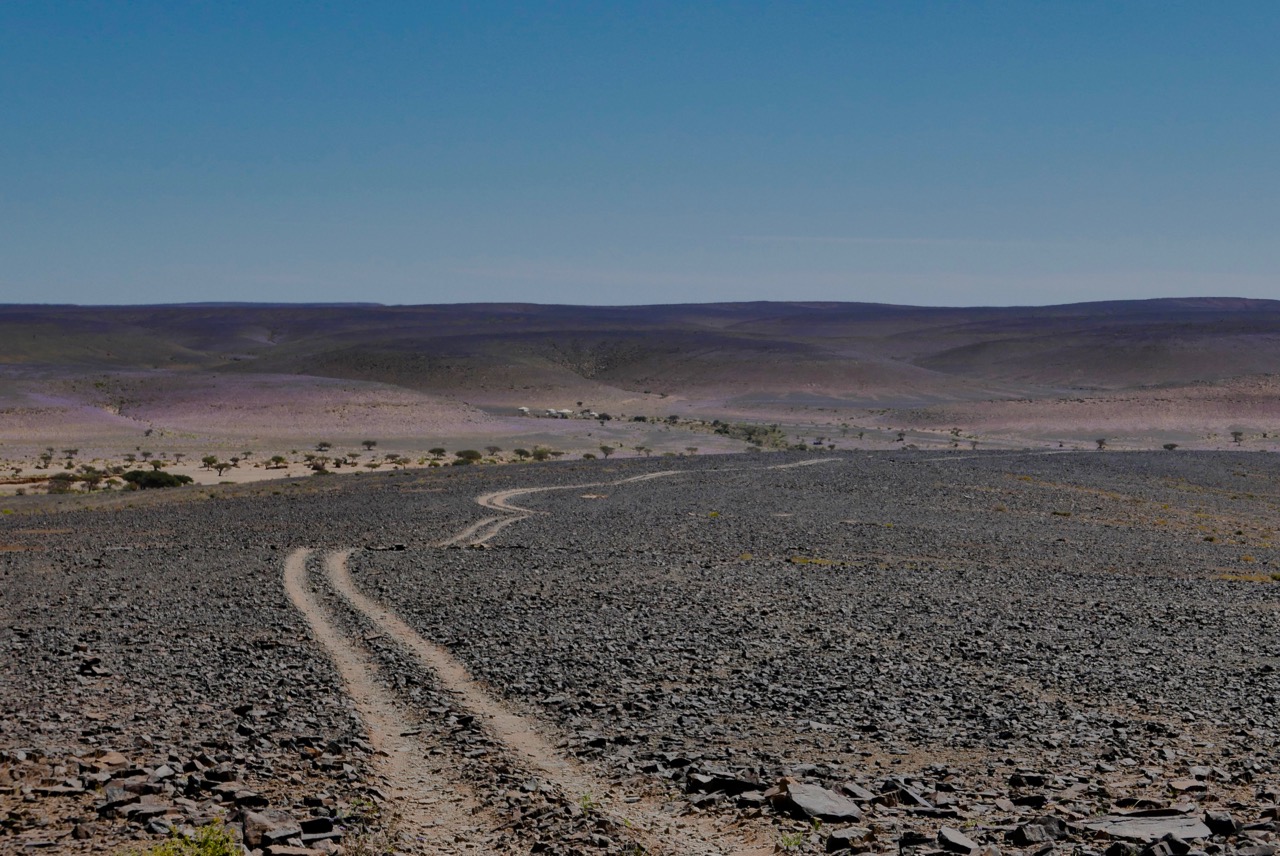
The track is clear which is reassuring, as I don’t expect to see anyone. That’s the Jebel Ouarkaziz on the horizon and the Oued Draa behind it. They form a natural barrier separating Western Sahara from what I call ‘mainland Morocco’. Tbh the best scenery and riding is on the mainland, but out here you get a sense of space and solitude.

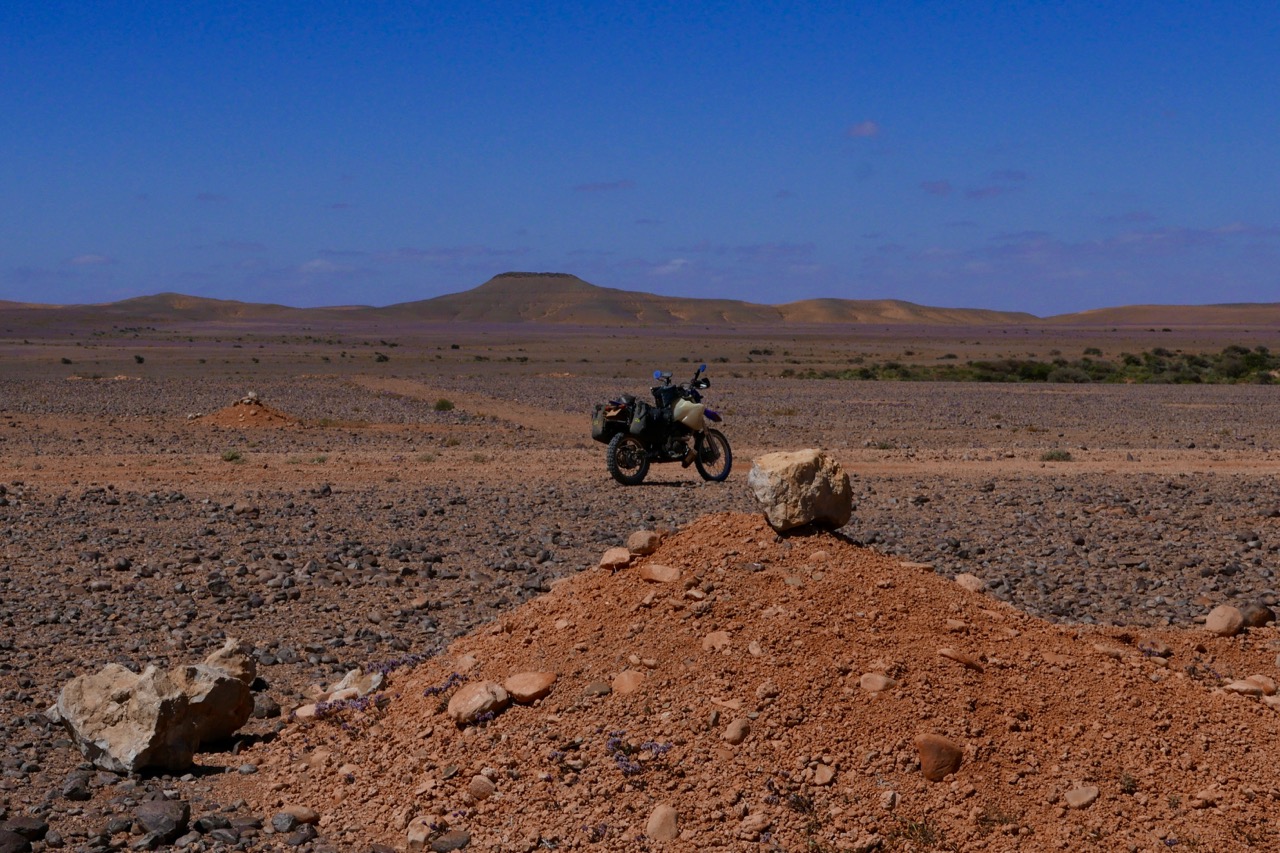
This must have been a former Dakar Rally stage as there are what I call ‘Dakar mounds’ straddling the track every kilometre or so. All helps with the nav.

But as always, riding one of two foot-wide twin ruts with loose rubble a few inches to either side takes concentration. You can’t look away for more than a second. At one oued crossing I dither over which track to take. The bike wanders onto the middle hump and flips out. I brace myself to be force-fed a dirt sandwich, but luckily it corrects itself this time. That’s another good thing with light bikes; they don’t get carried away by their momentum.
WTF happened there? I think I looked left and the bike drifted with me. The deadly target fixation. It’s all over in a second but it takes just one second to blow it. And there are a lot of seconds in a day.

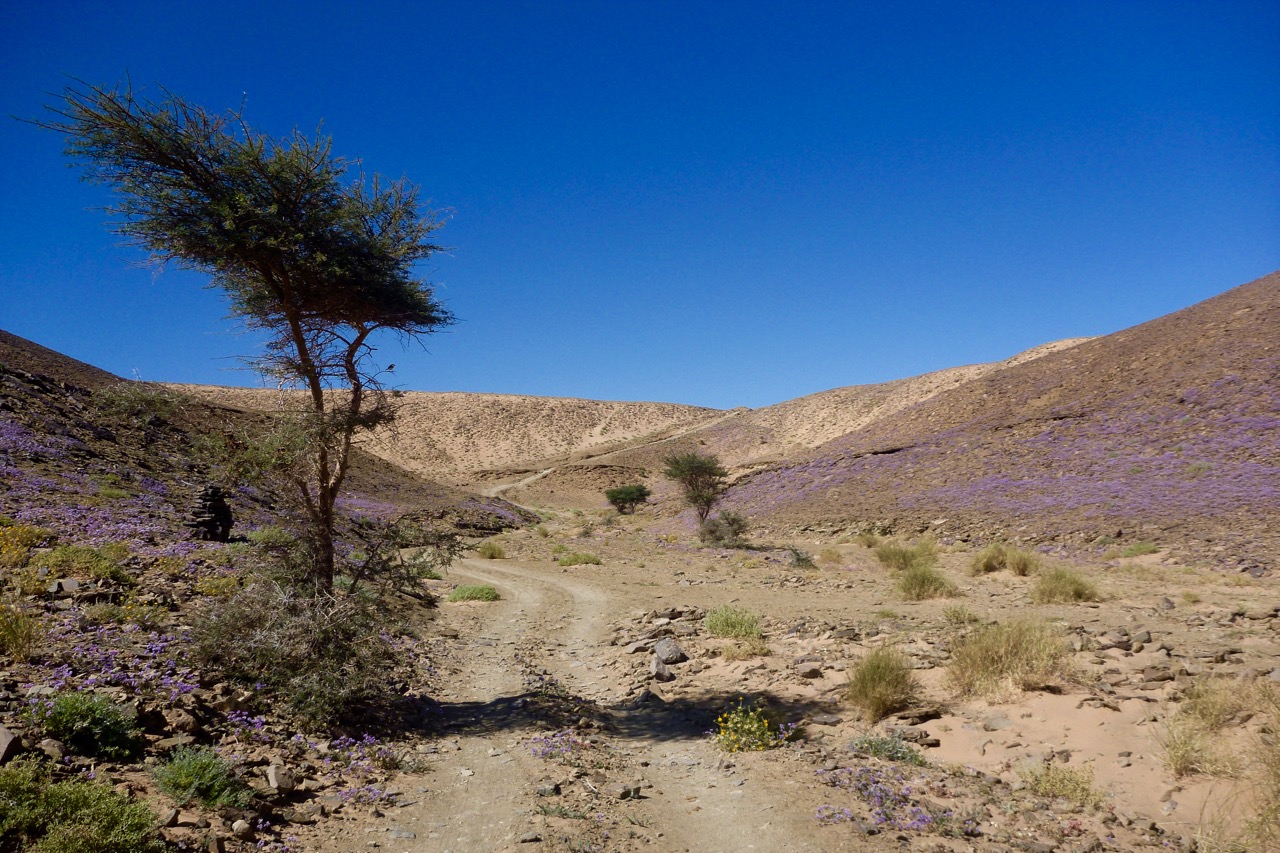
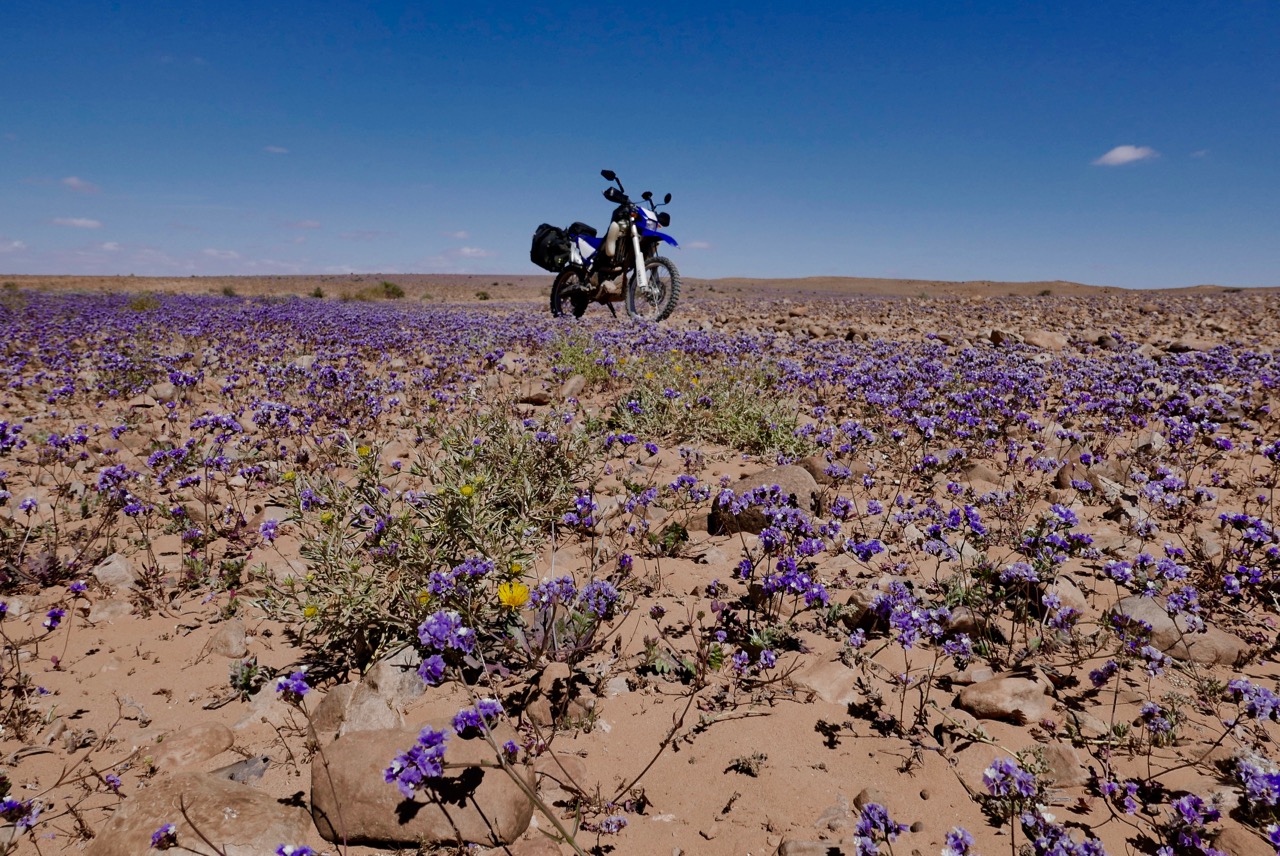
Wildflowers are out after the rains.

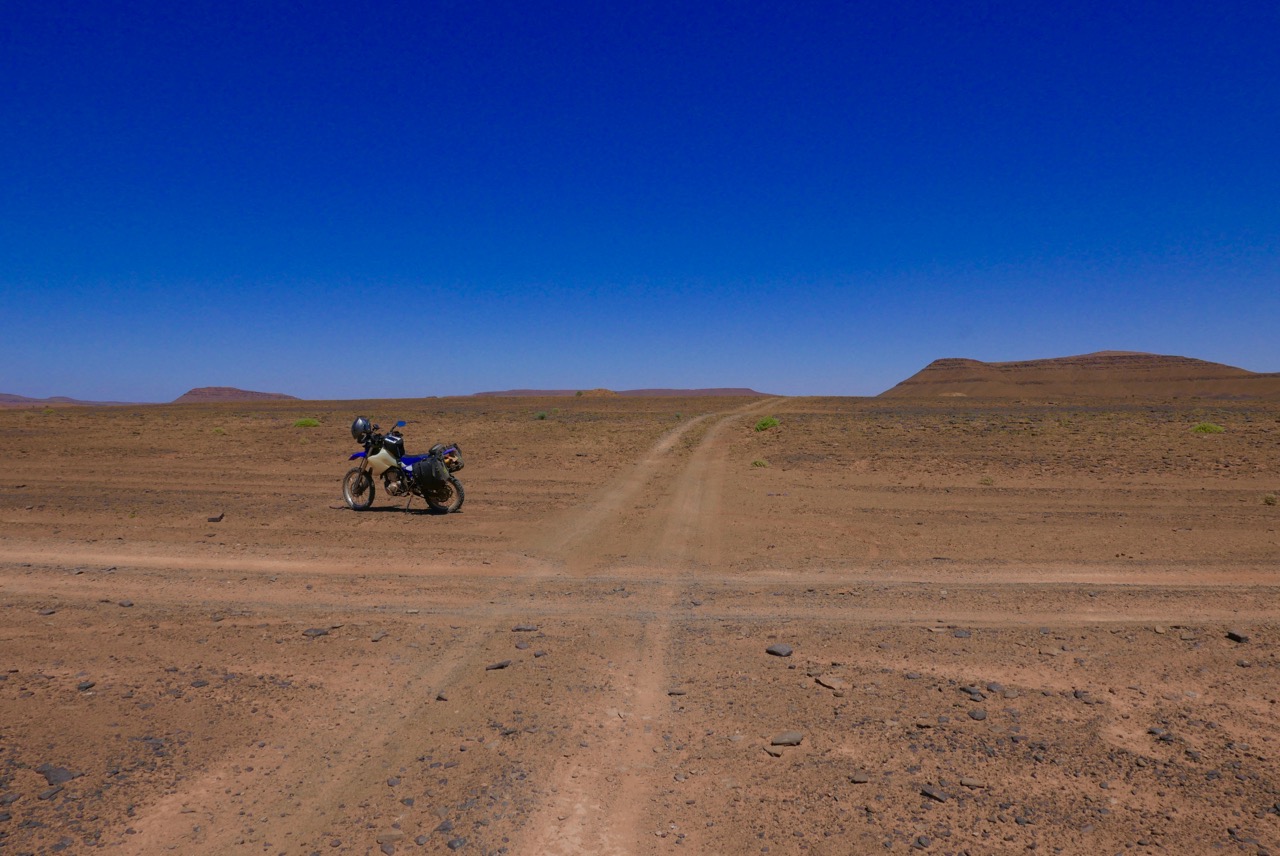
Bang on my 145km estimate I reach the crossroads with MW6 coming down from Labouriat where I camped a week ago. You could play noughts and crosses on that!
I now turn south along MW6. It’s more washed out so probably less used, but it’s only 50km to the road. Nearly there.

I get to a fork. Old Olaf GPS map points left but the right fork might be a shorter, newer route. I crest a stony rise and see the big oued ahead with some nomad raimas (tents) at the back. Ah yes, I forgot about the sandy oued. That’s the worst sort of desert terrain for a bike.
It’s never over till it’s over, as I’ve learned to say in the Sahara…

Part 5  > > >

WR-ing about in Morocco – 3

WR250R 4000-km review
WR Introduction
WR250R Stage 1
WRing about in Wales
WR250R ready for the desert
Morocco trip report, 1–9
Fuel log

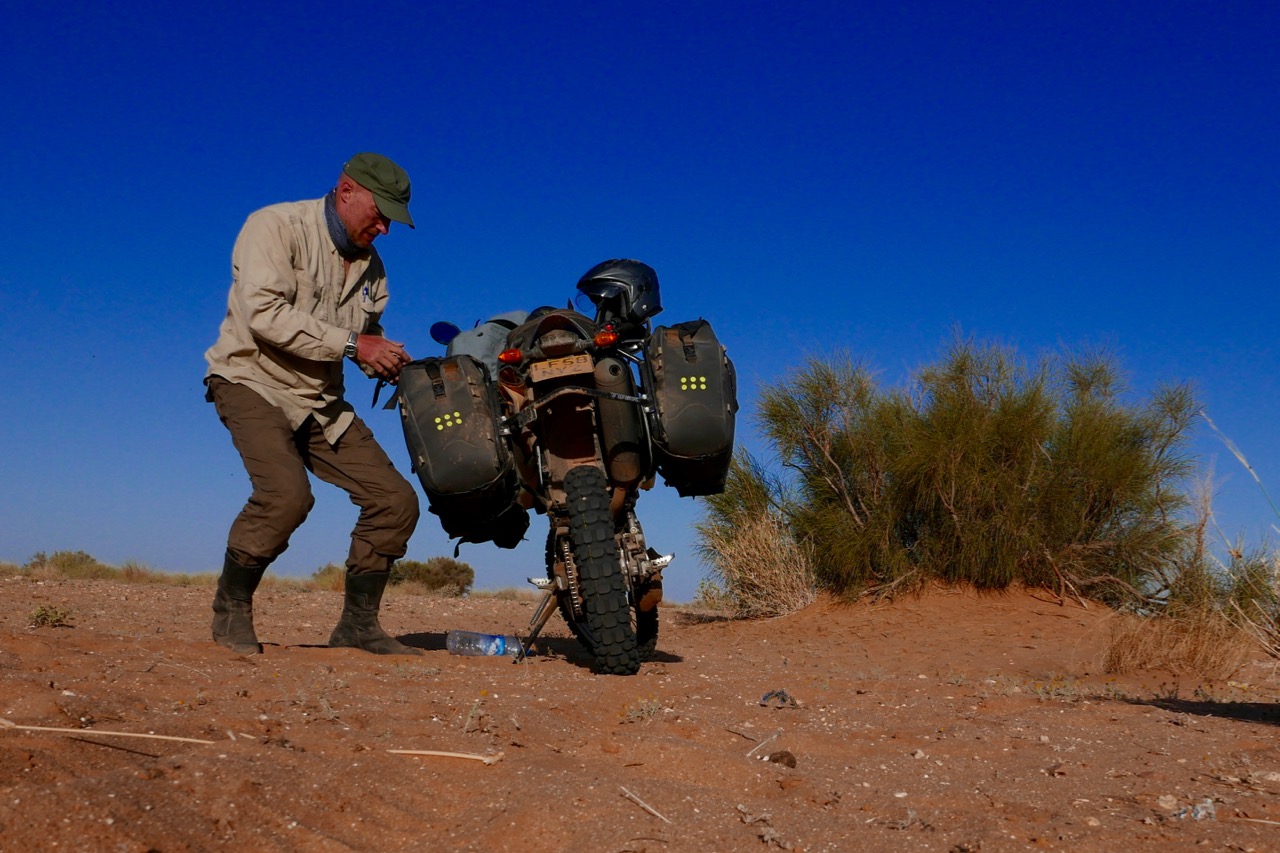
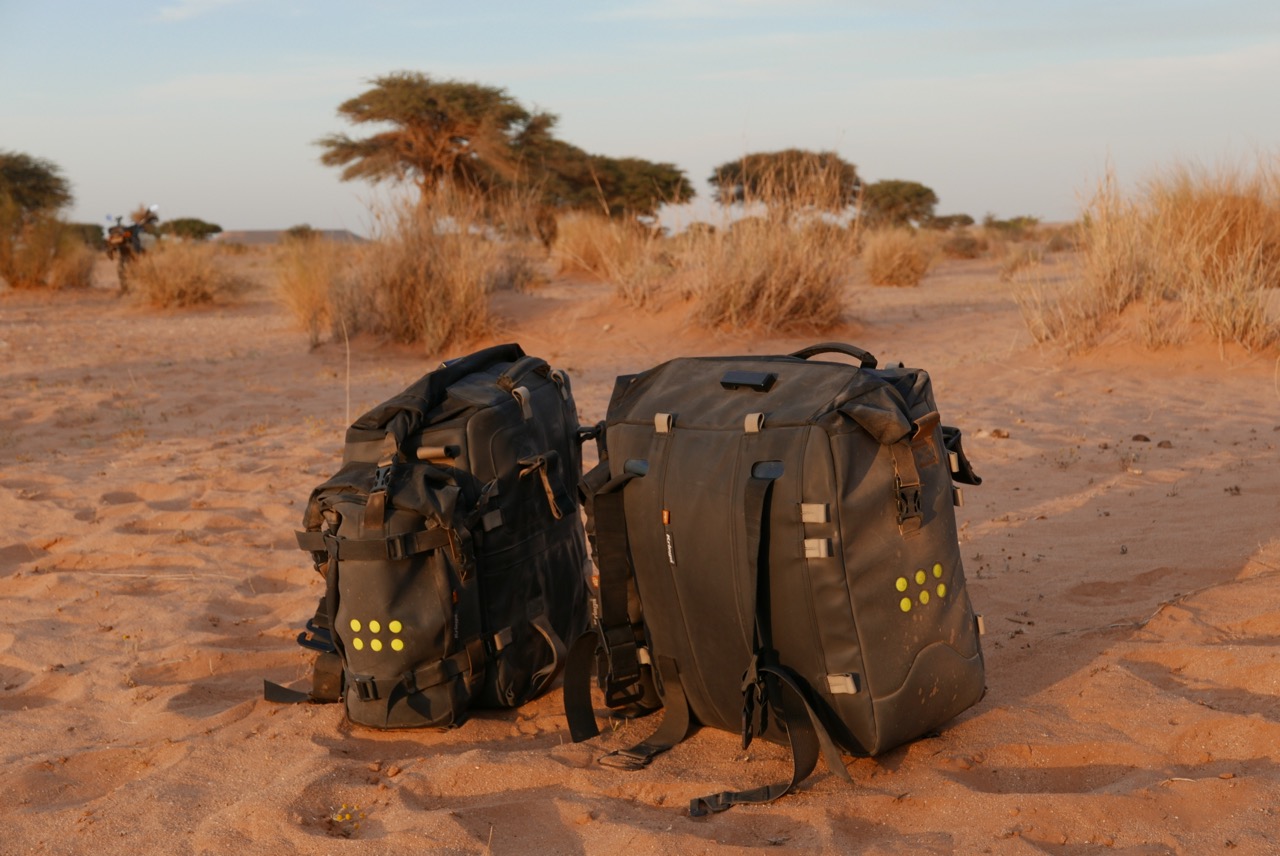
I’m testing prototypes of Kriega’s new OS32 panniers on a Tusk rack. All good so far: rack is solid, bags are massive and rugged, strap on securely and easily via a plate, but come off with minimal faff too.
On a par with Magadan throwovers, but secure fitting included.

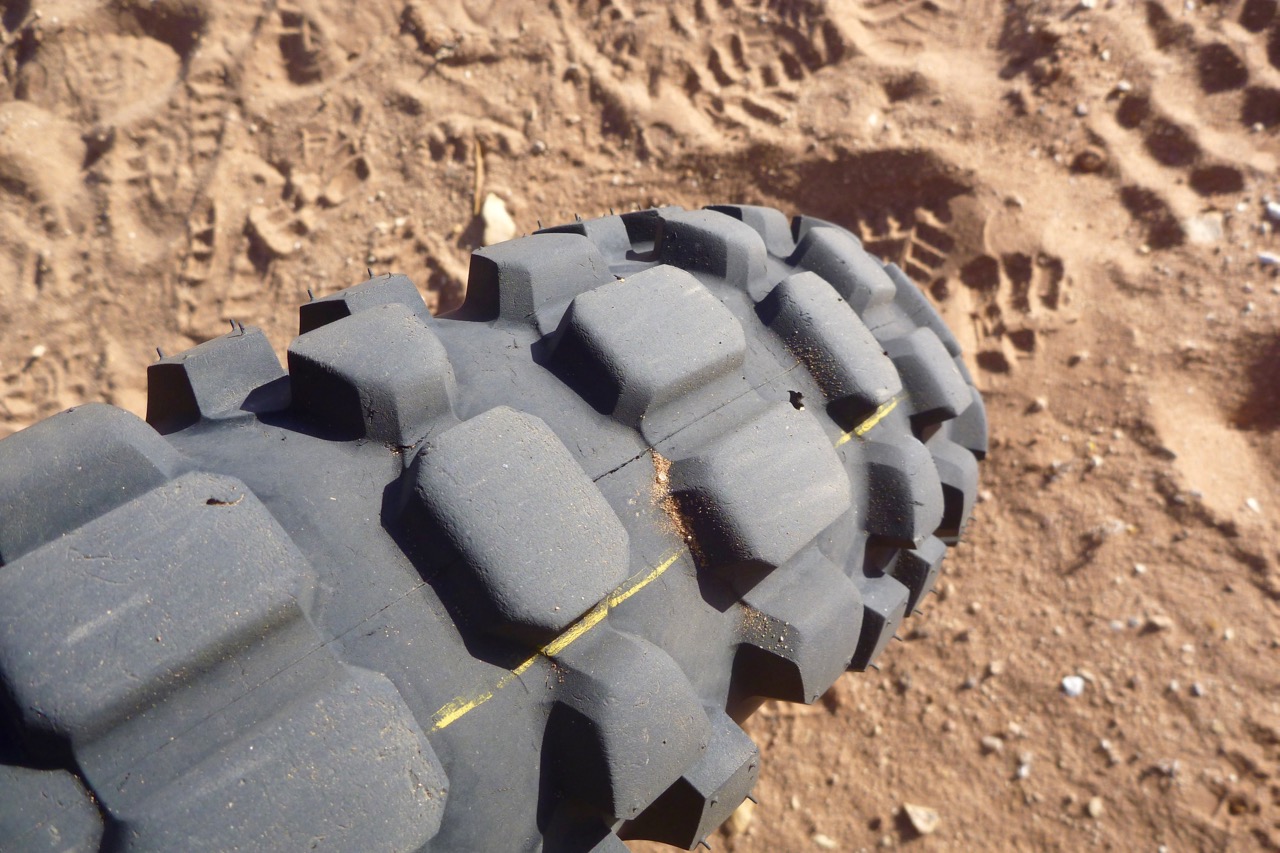
Mitas MC23 Rockriders not doing so well after ~2000km, but what do you expect from a knobby? Fine on the road and great to have grip in the dirt – means you can relax more and saved me many times.

El Bouriat – the Marie Celeste of the Sands.

I swing off MW6 northwards and ride crossing-county to pick up MW3 at the base of the jebel. This is real ‘off-road’ riding – fun but can get technical, so (at my age) a light bike is ideal to stave off exhaustion.

Back on the pistes. I recall this spot from 2008 in the Mazda.

I pass through an old fortified berm from the Polisario war. In fact there are still landmines hereabouts, I learn later. Cross-country riding was not such a good idea.

It’s darn hot – mid-30s? In Assa I hop in the town trough for a splash-down.
Ten minutes later I’m sweating like a kipper again.

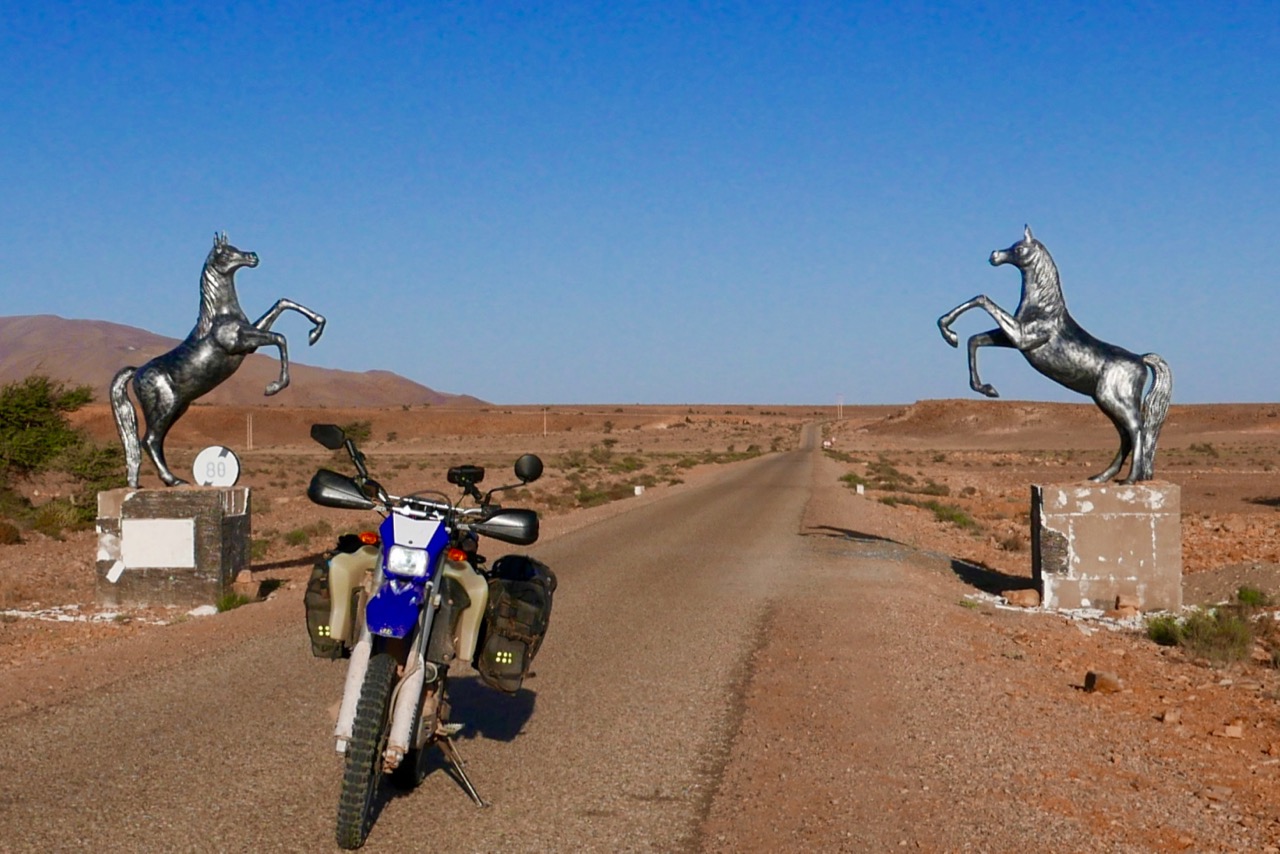
The incongruous gateway to Aouinat Lahna

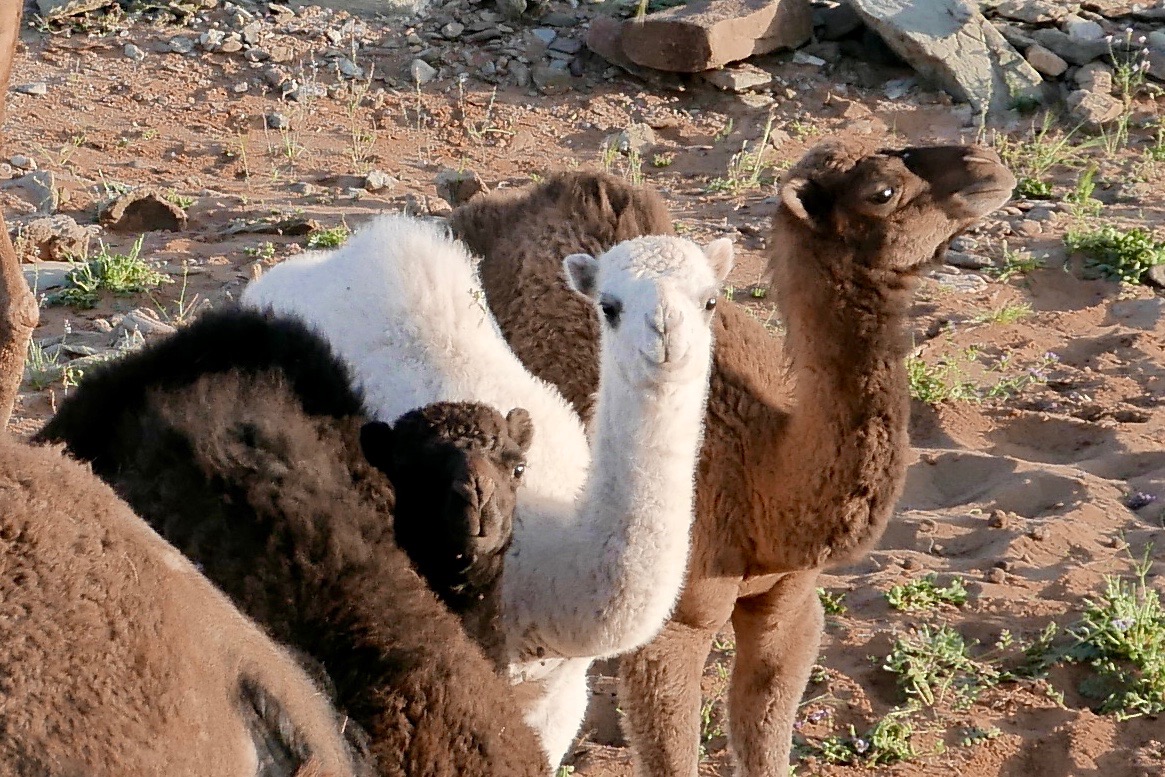
Newly born camies

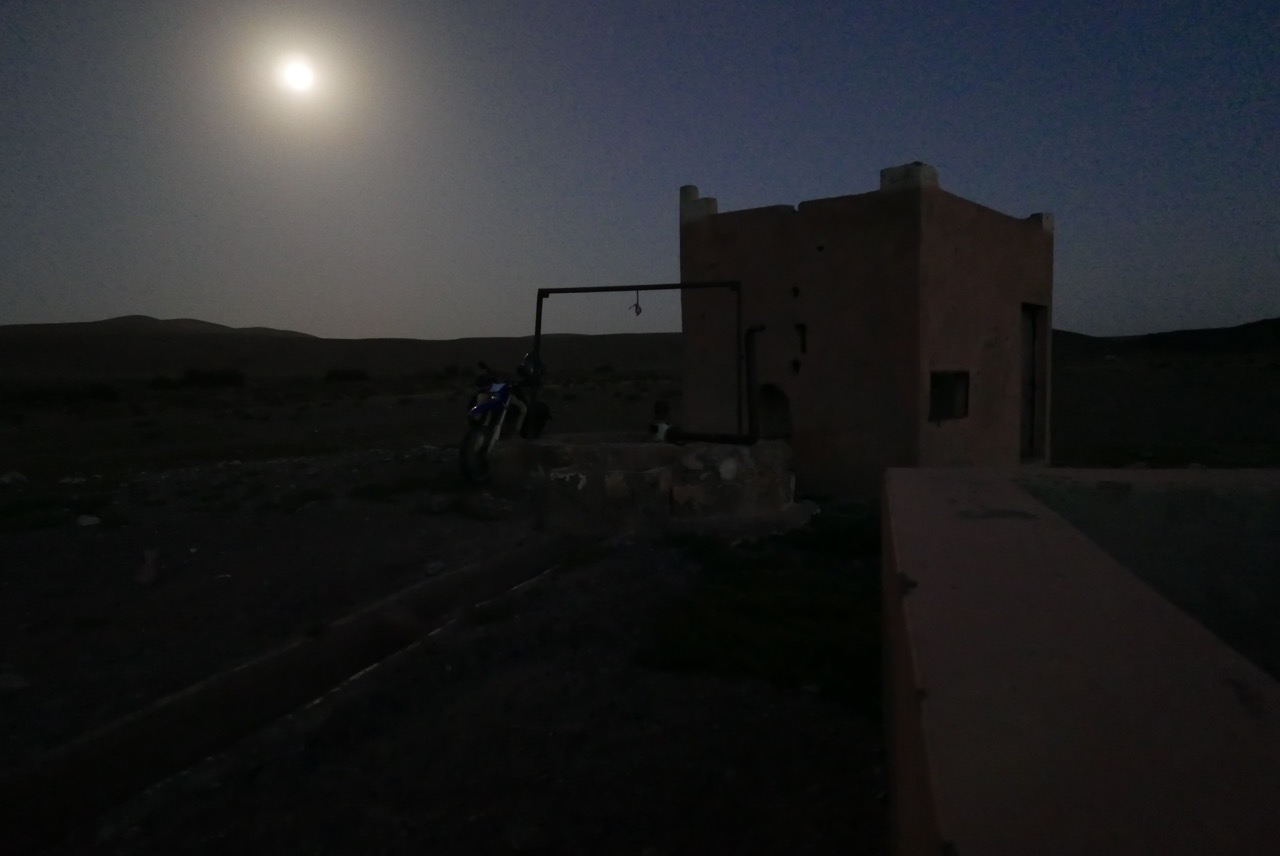
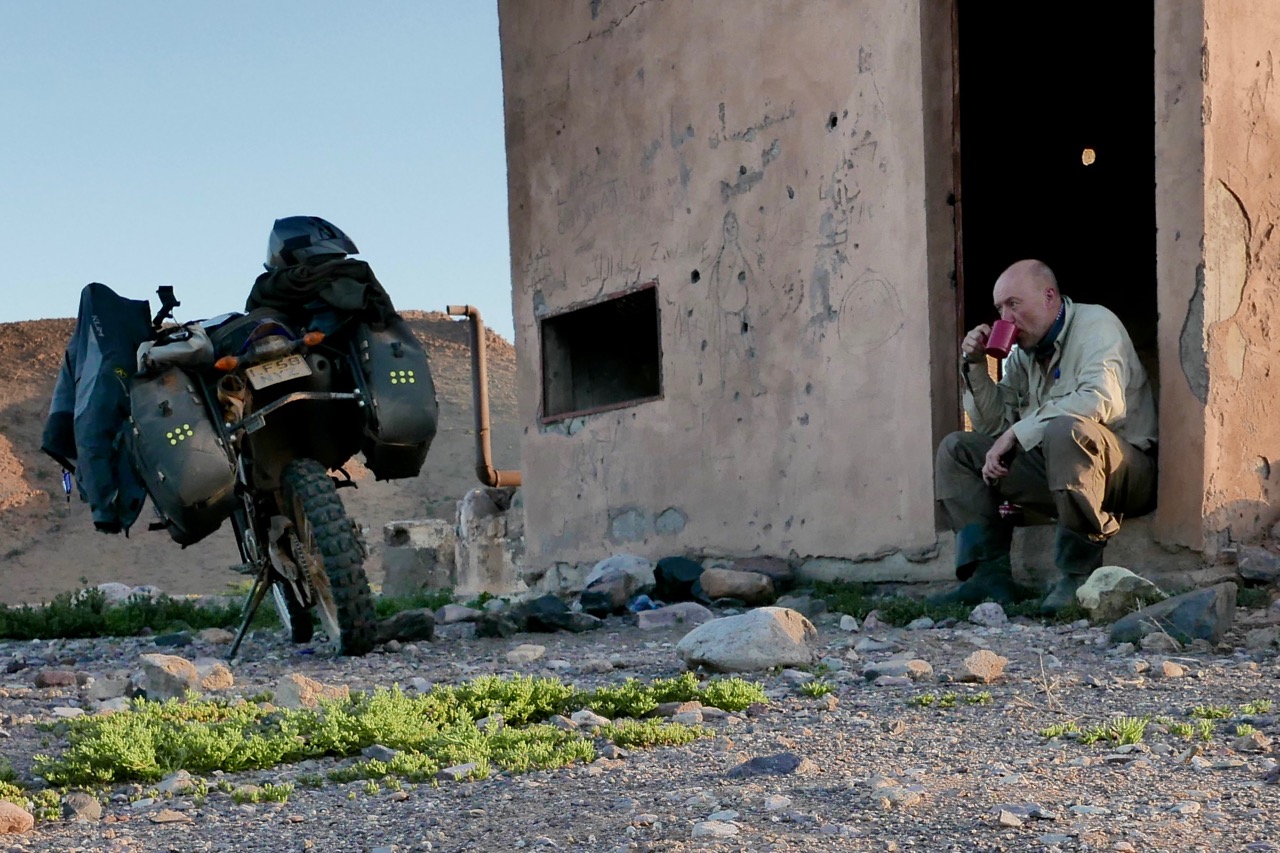
I spend a windy night in an old pump house

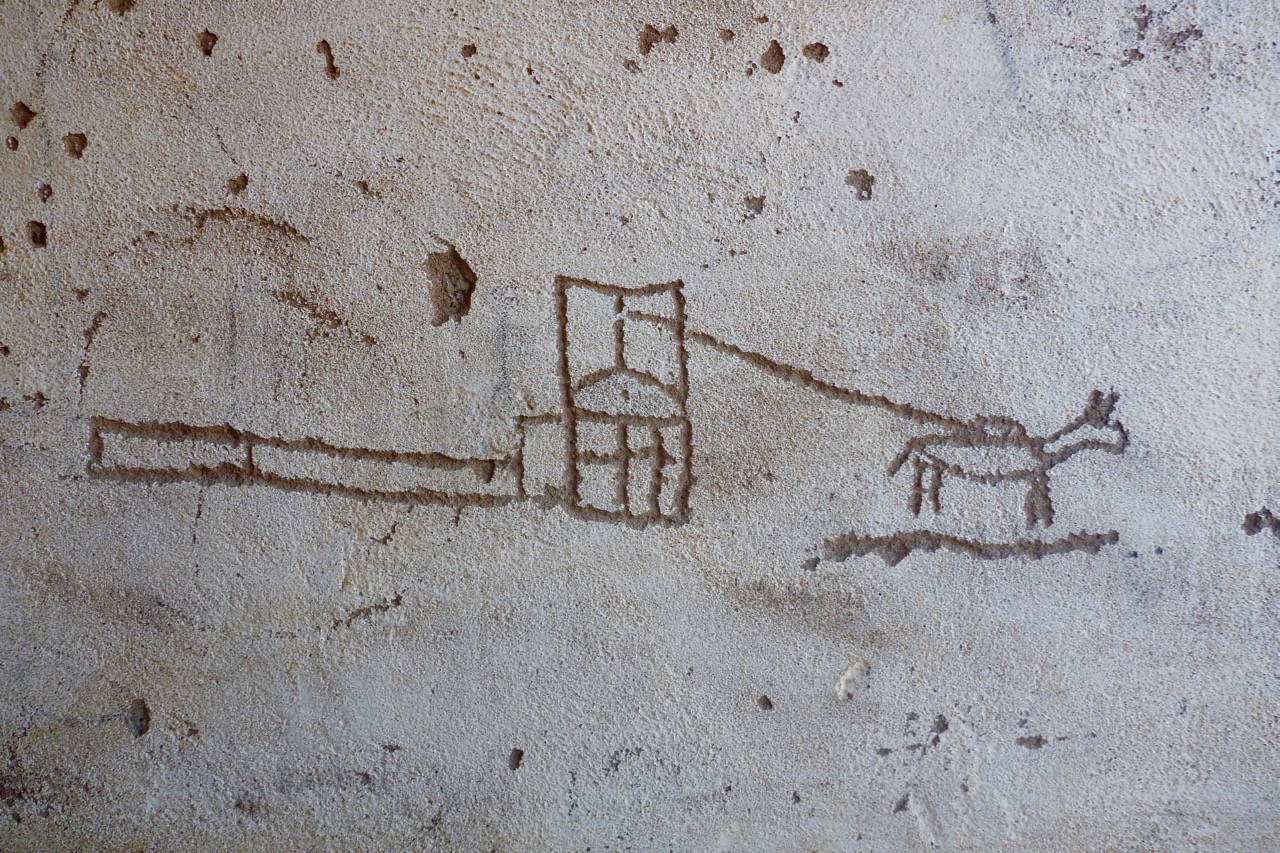
Ancient pictograph of the the original one horse power.

The best thing with camping is it gets you on the road early – ideal when its hot.
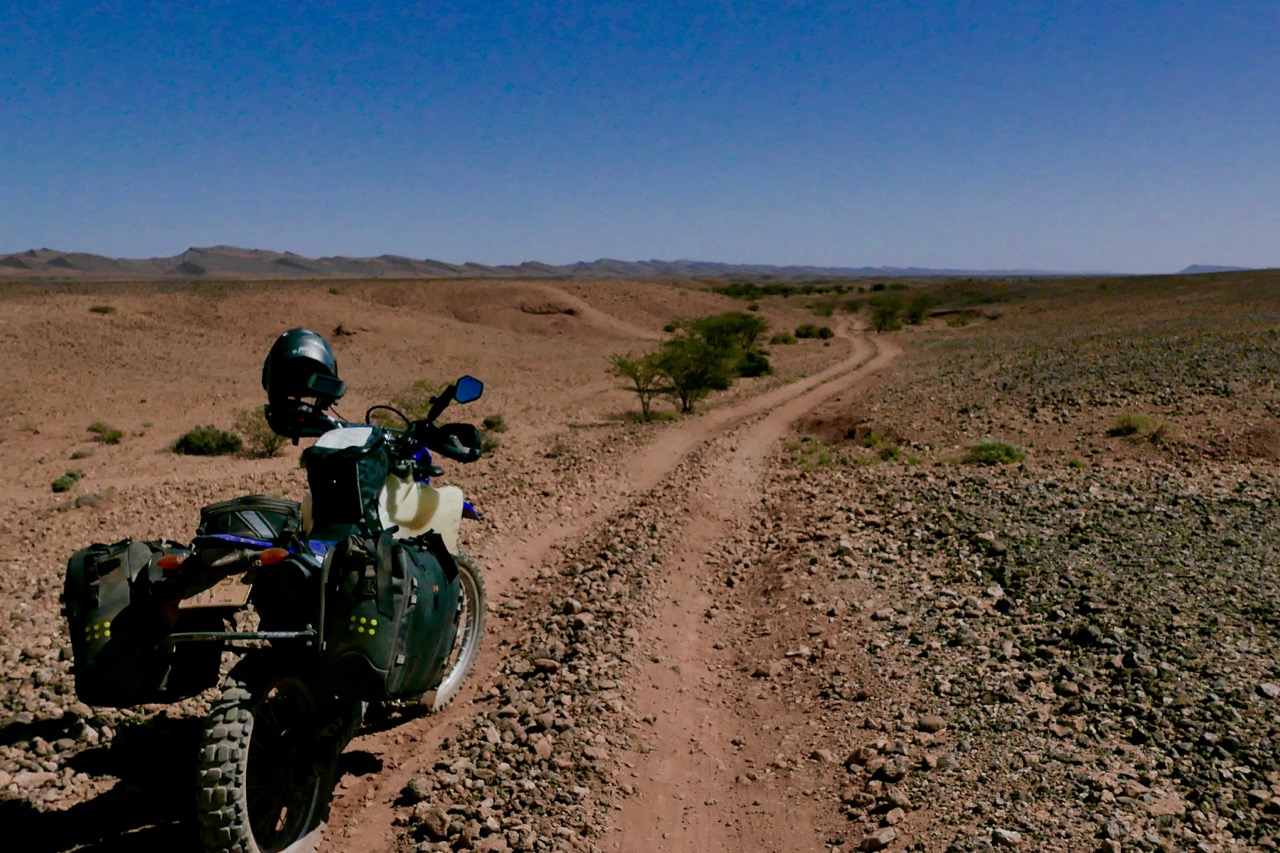
Cool ride to Aouinat Igoumane – that’s route MW3.

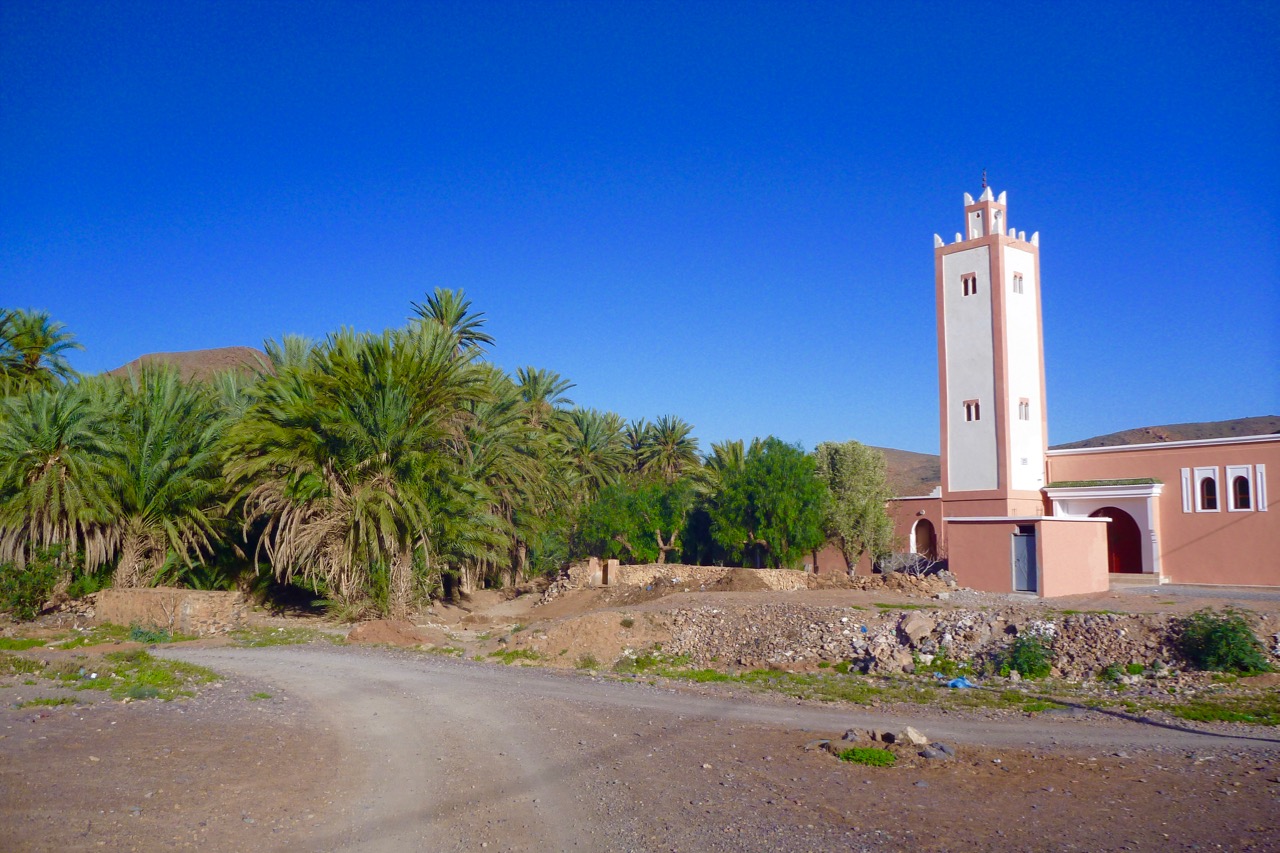
The new road ends at the mosque by the oasis. Pass through the gap in the hills and carry on west

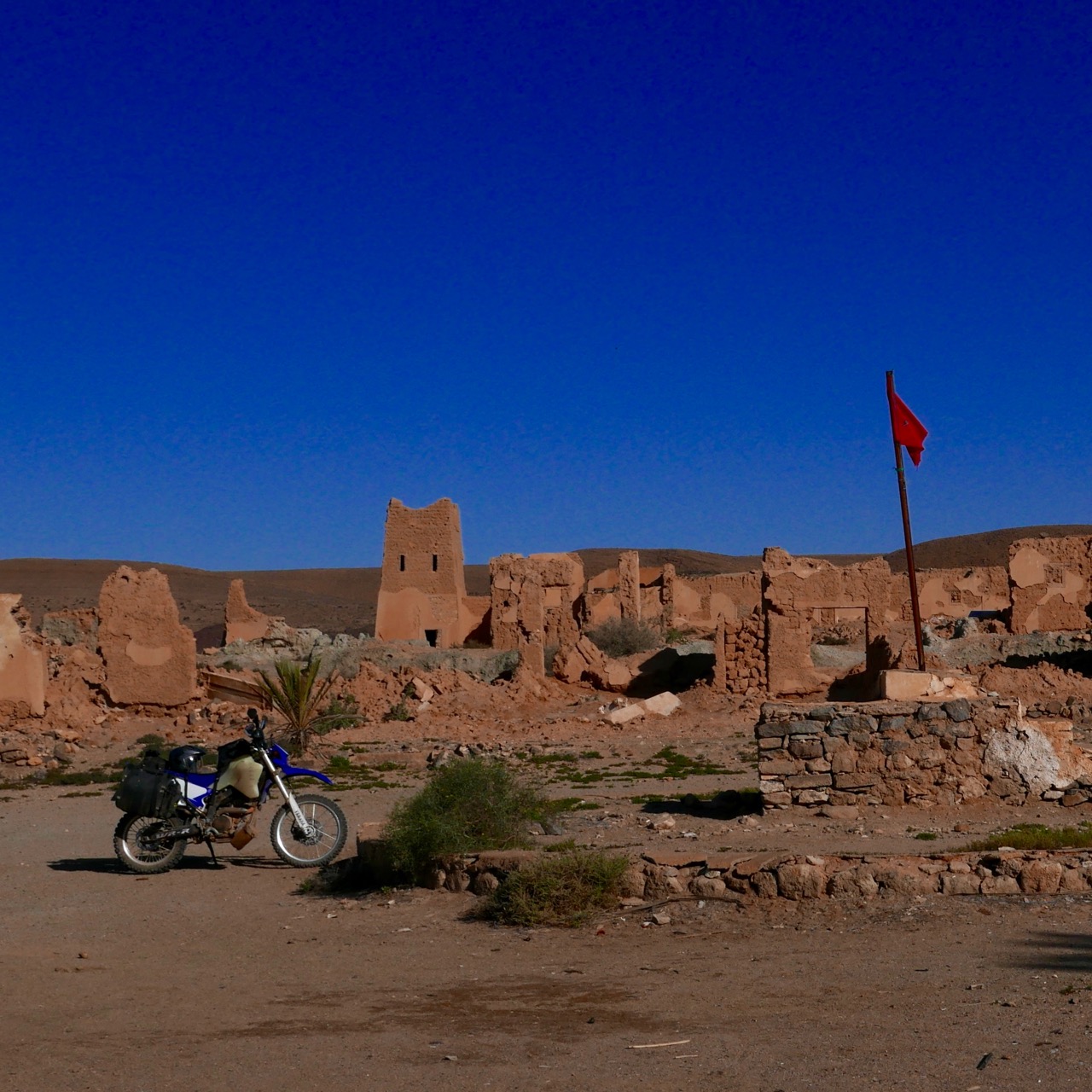
The abandoned fort of Ayoun du Draa

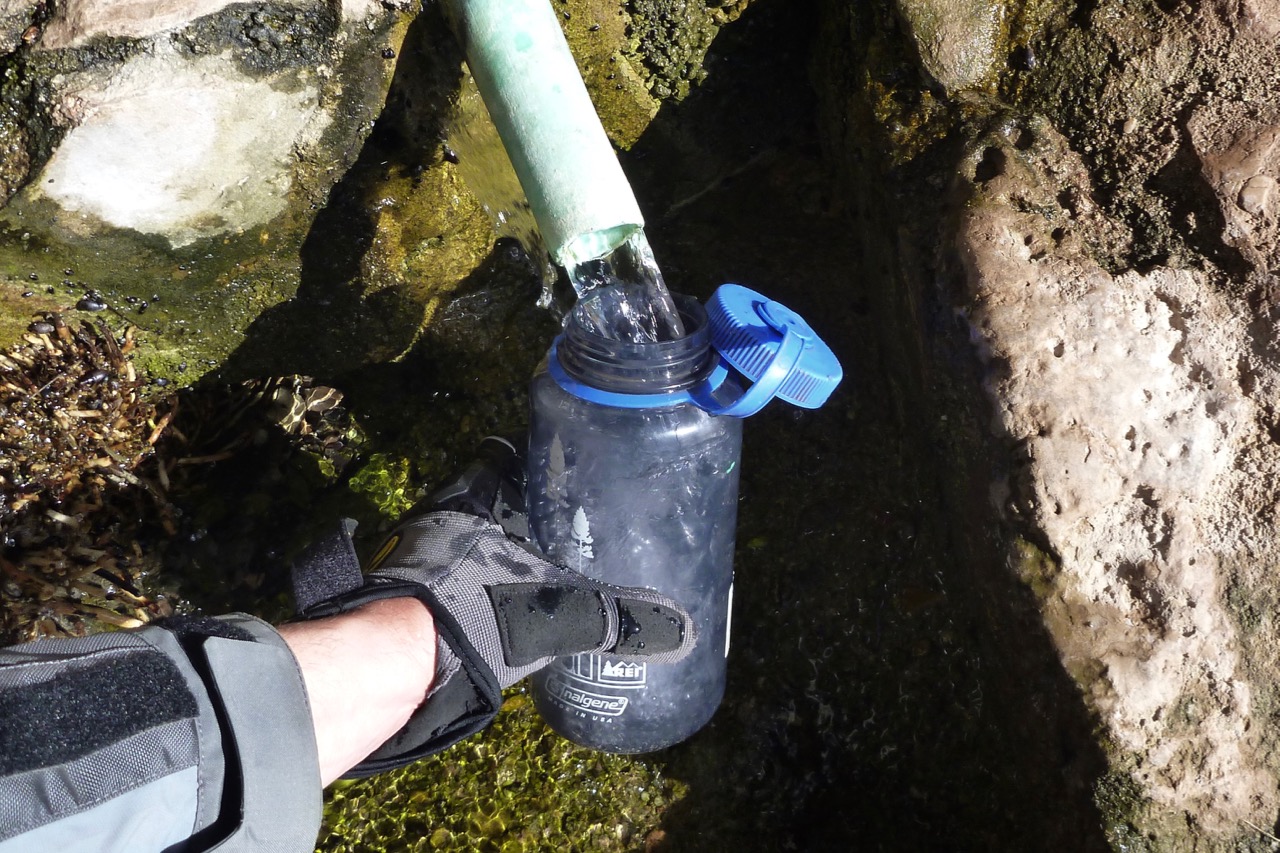
There’s a lovely spring here; water as fresh as you like. On this trip I’m trying to avoid bottled water. Just like at home, tap water is fine (except Foum Zguid and other low-elevation desert towns).

The WRs horn could not hoot its way out of a wet paper bag

Track gets a bit rough up to Ain Kerma pass. Coastal ‘fog’ vegetation begins.

From here you can see the coastal dunes.

And I’m back in the Oued Draa riverbed, but now just a few miles from its estuary into the Atlantic.

Tan Tan by night – unrecognisable since my last stay in ’97.

£2.50? That will do nicely. I have not been eating enough. But then at home I eat too much, so waistband harmony ought to be restored.

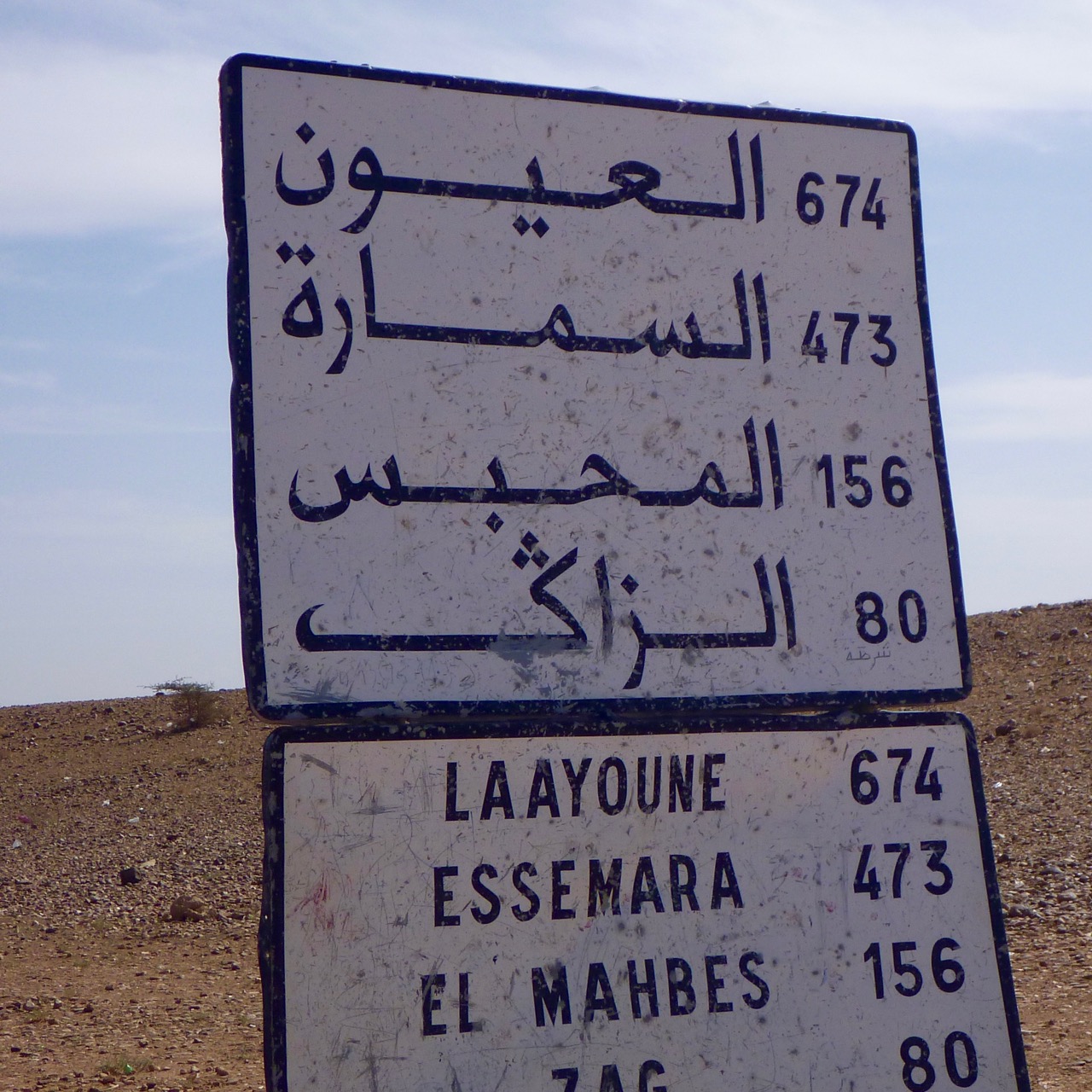
I tried to get to Es Semara (Smara) via El Mahbes but got turned back at Zag.
Will try Smara again via Mseid along an old Dakar piste, then swing up on Laayoune (or maybe even Dakhla) from the interior. Inch allah.

Part 4  > > >

WR-ing about in Morocco – 2

WR250R 4000-km review
WR Introduction
WR250R Stage 1
WRing about in Wales
WR250R ready for the desert
Morocco 4000-km trip report, 1–9
Fuel log

West to Tata I ride the stony reg alongside the road. The WR takes the transition like a duck to water

Why is the chain so slack? Because you fitted a 13T, idiot! The old brane is going.
I pull in at Tagmout to blag an open 12 which I forgot too. Barely accessible chain adjusting lock nuts look cheap. Bring back snail cams!

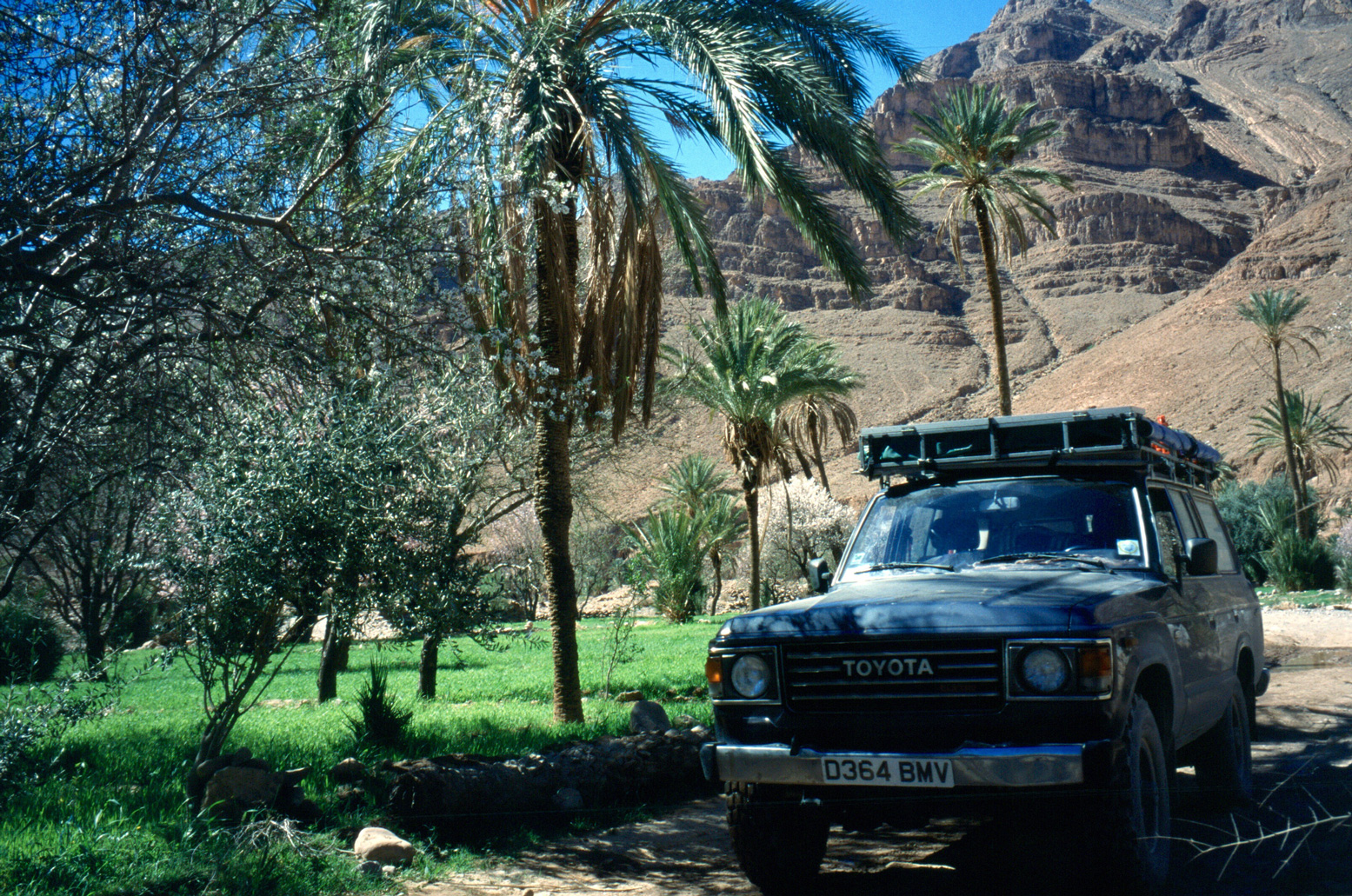
A lovely spot up the road to Igherm I recall from 1999 in our HJ61 (below), before it was a road.

Nightfall in Igherm. But within an hour a riot flared up and the whole place got torched. Crazy!
I buy a 12mm for 80p. Morocco is easy like that.
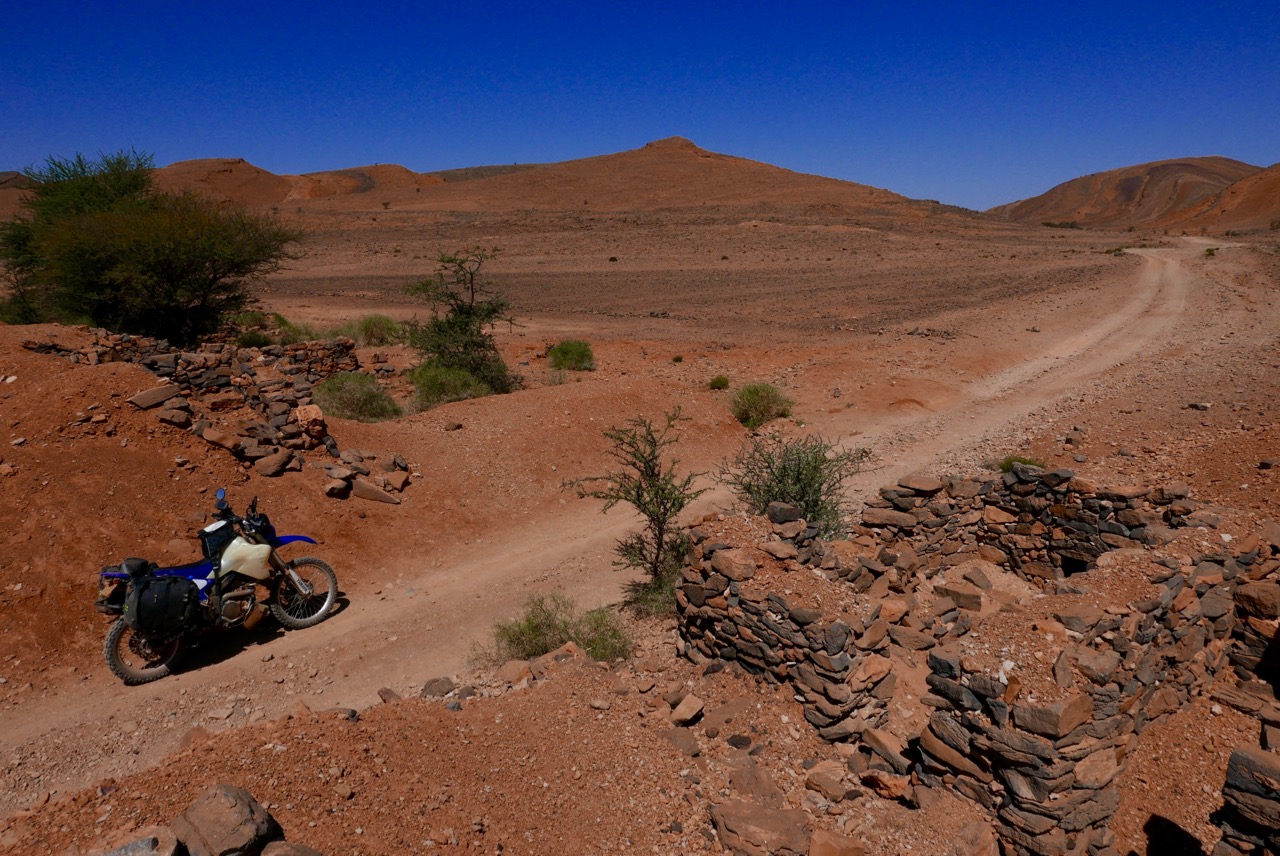
Been looking forward to doing the lovely MW3/8 route again via Tazalaght.
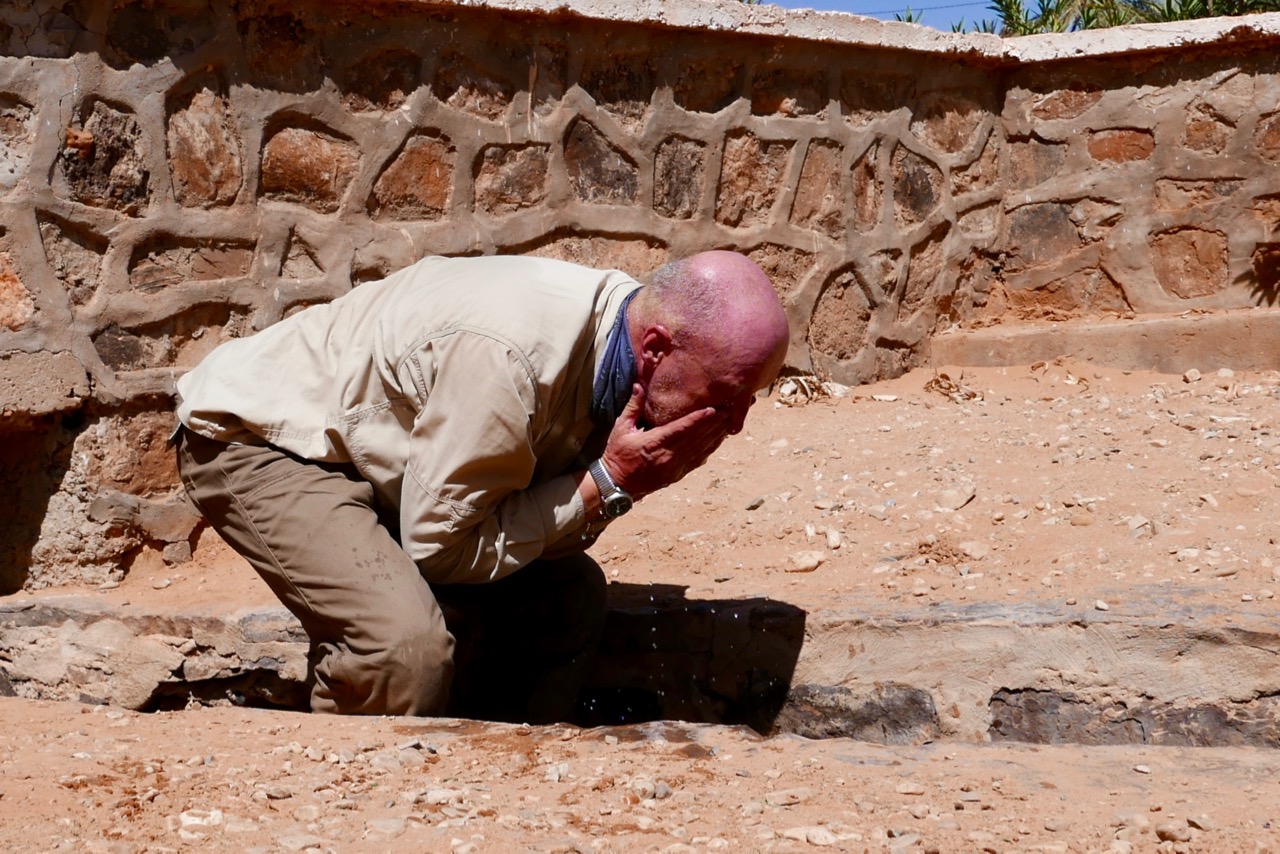
Last did it in 2008 on the XT660Z.  It was the so-so cover of the original edition of Morocco Overland.

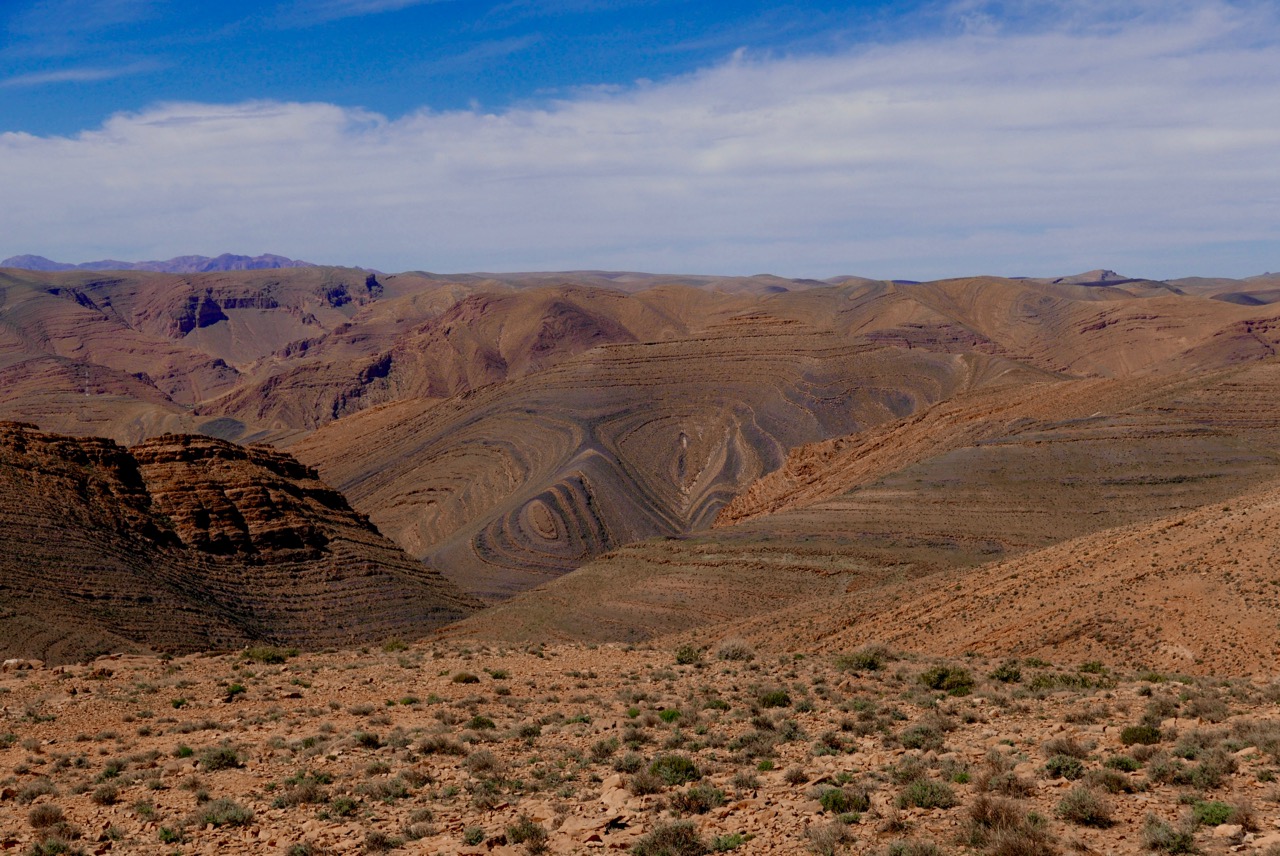
My camera has got better now. You ride the river bed past palms and folded rock strata. It gets narrower later on, with big trackside boulders – not the best piste to ride on a flat twin on road tyres.

Up on the Tizkhit plateau.

I come across a new haul road and get totally confused. I follow it anyway – a good fast ride. Amazing western Anti Atlas; you can keep your Erg Chebbi ;-)

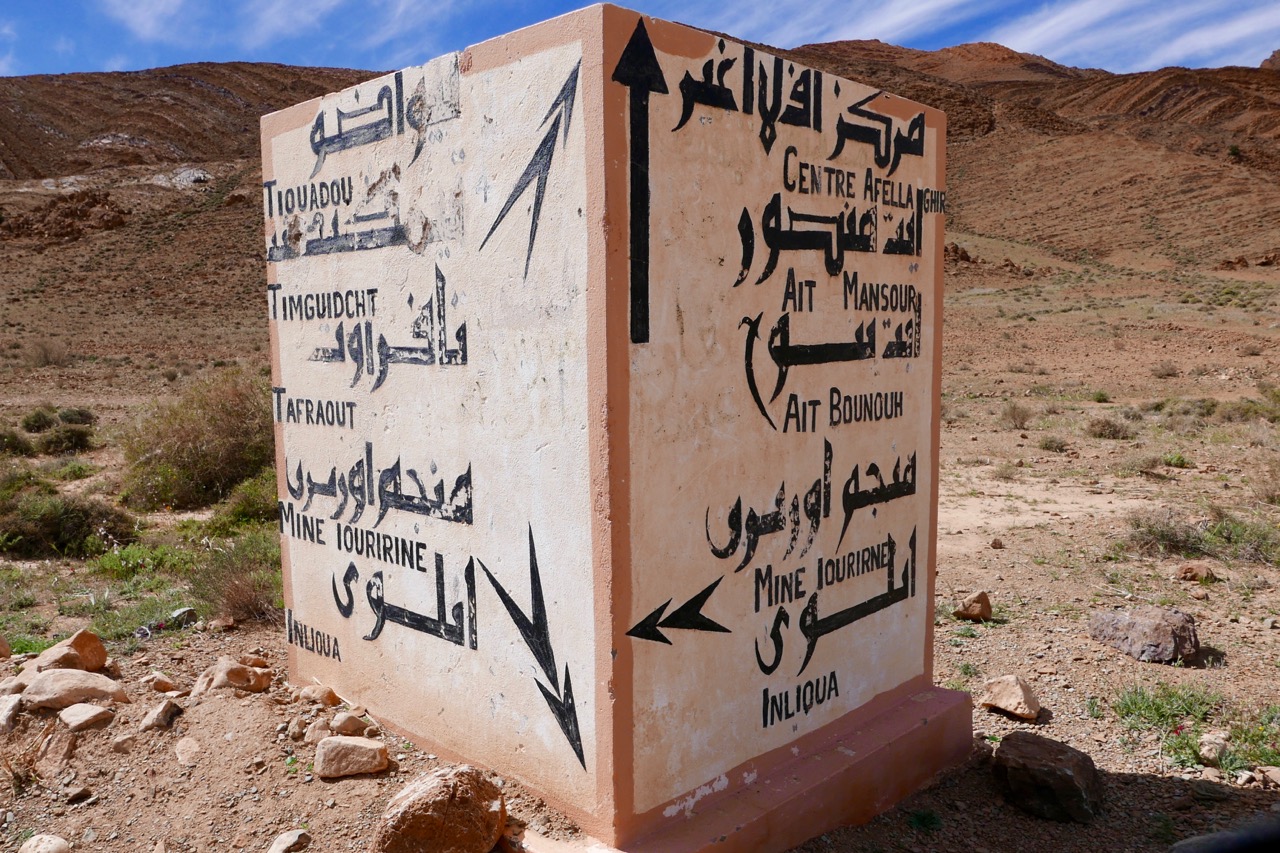
Ah ha, that clears it all up then!

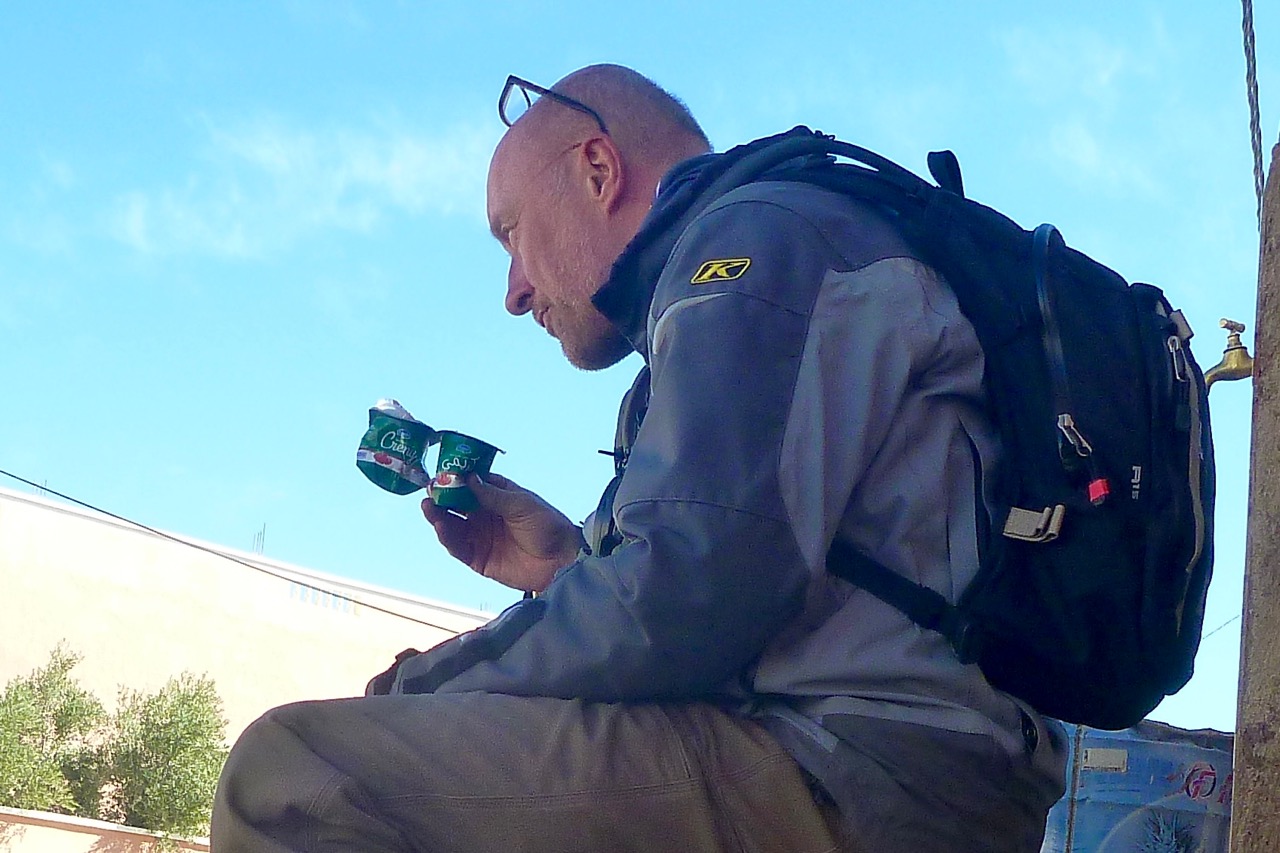
I back up to a tap to refill the hydrator while eating yoghurts and bananas. I am a master of multi-tasking.

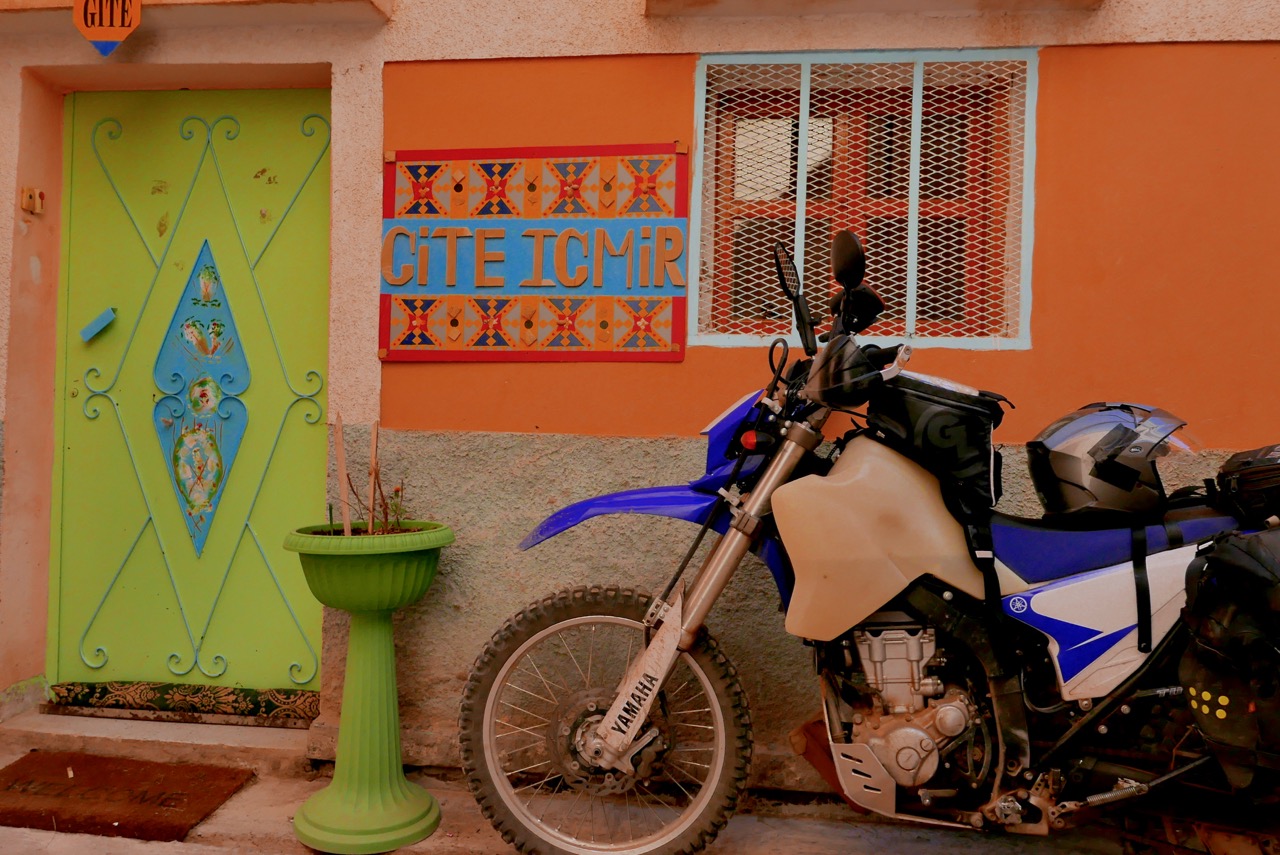
The lovely, tranquil gite at Igmir.
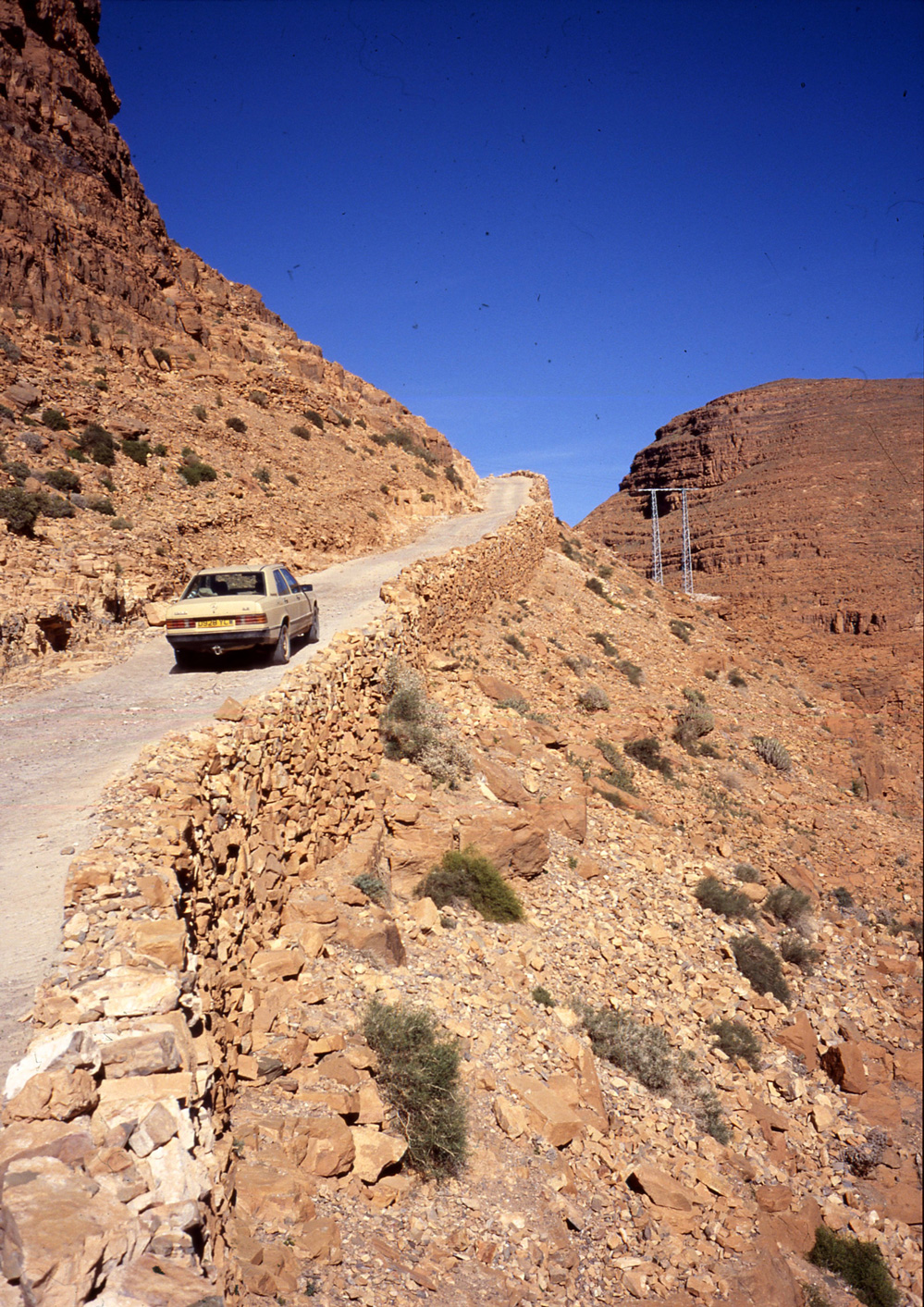
We were last here in a dog of a Merc 190D.
Took an hour to get out of the steep gorge, to let it cool down.
The road is sealed by the time you read this, but still a spectacular climb.

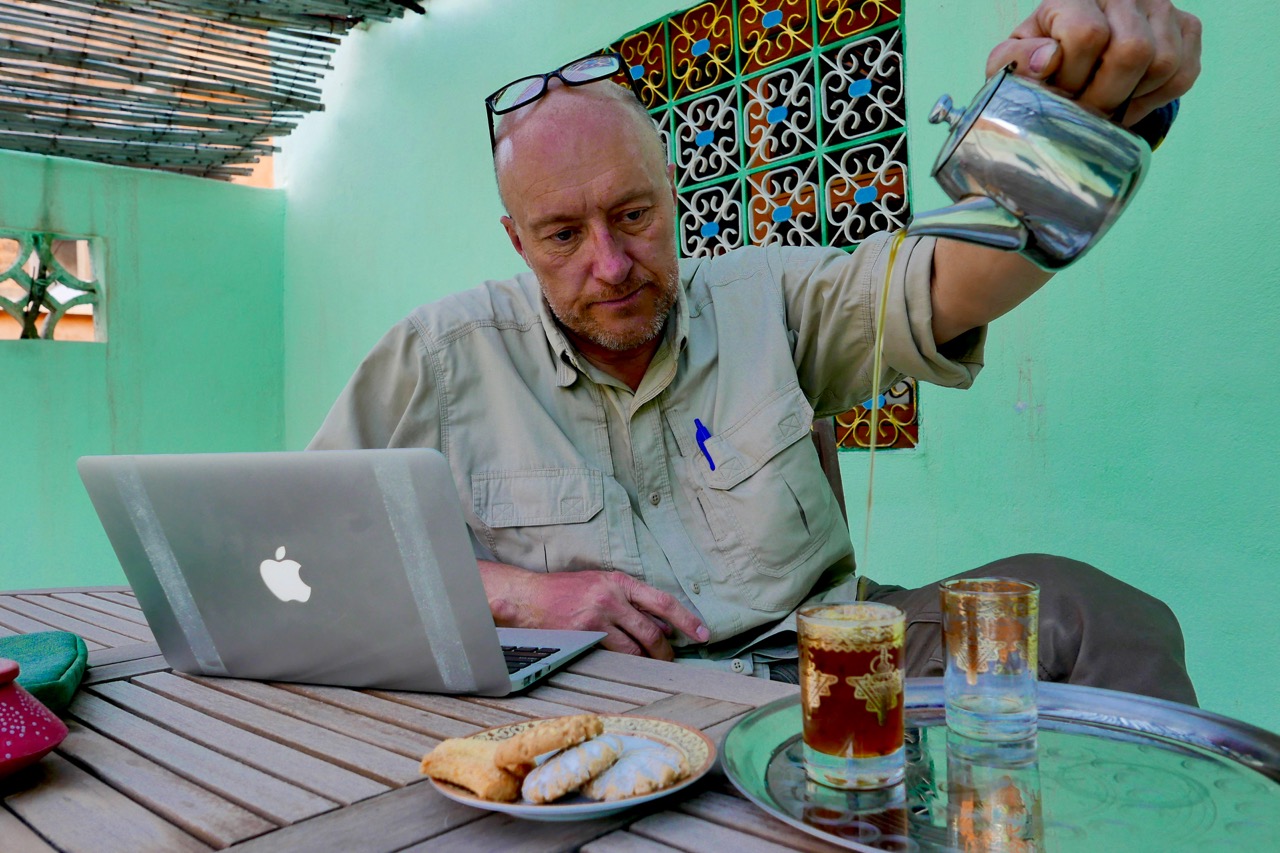
Tea and bix are served and the day’s writing up begins. Notice my sunburned hands; need to wear gloves.

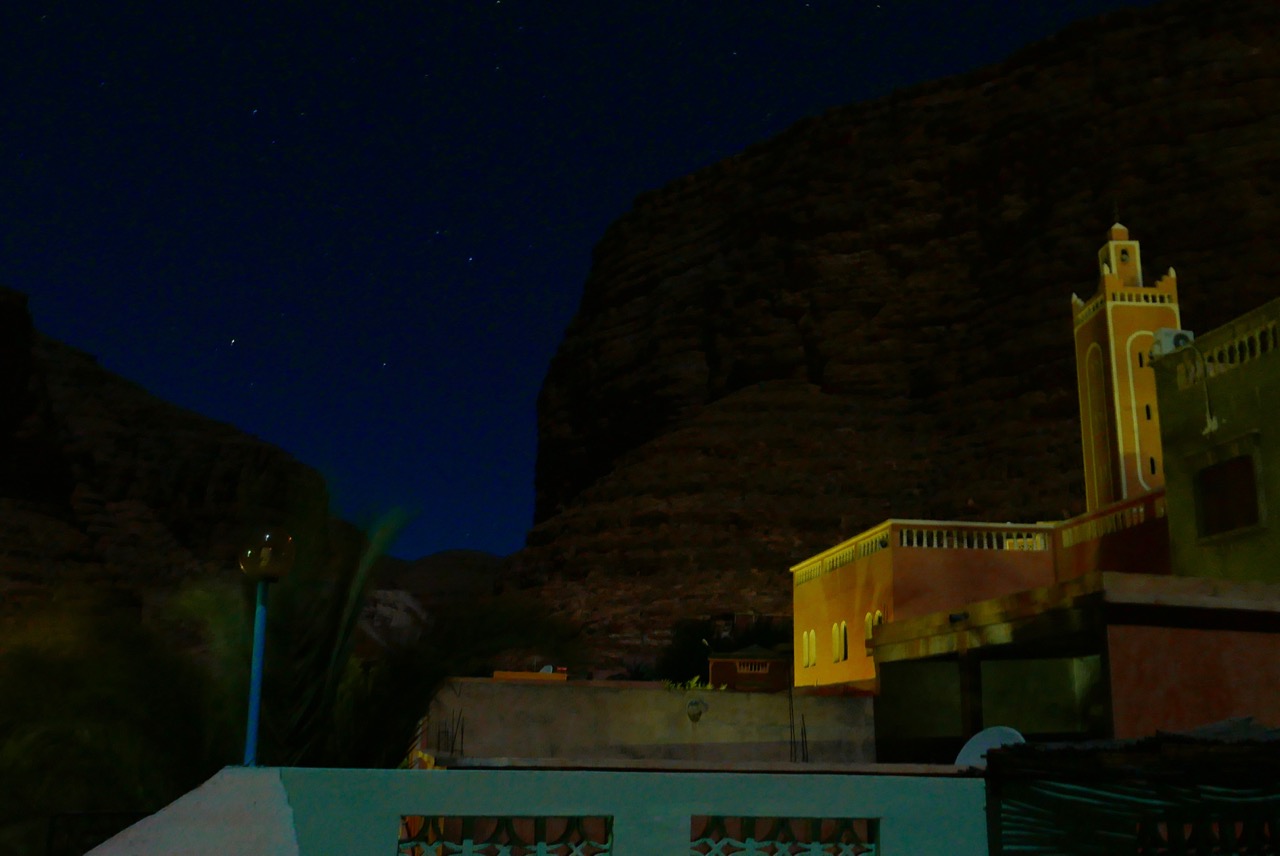
Nightfall in Igmir. But it’s a Thursday so an hour of repetitive chanting from the mosque ensues.

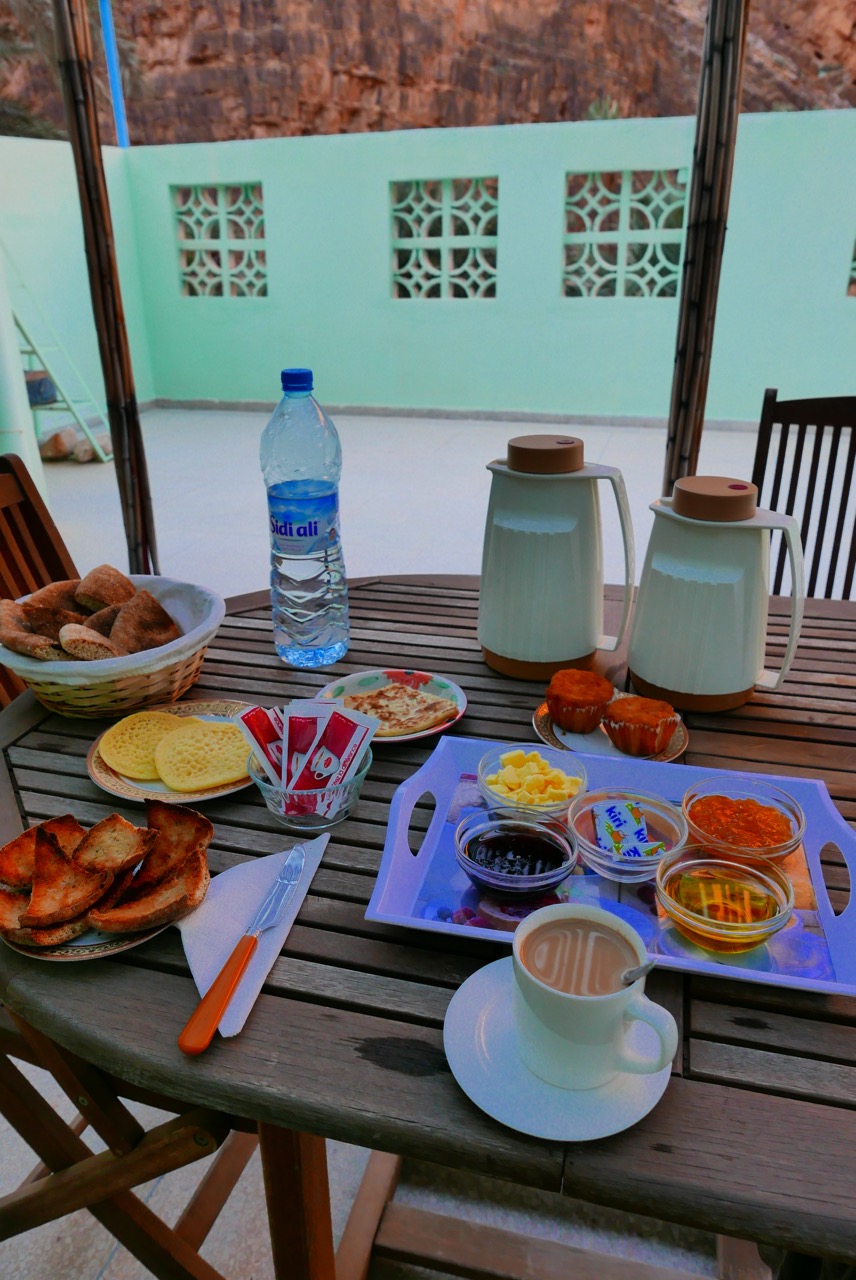
Now that’s what I call a Full Moroccan brekkie!

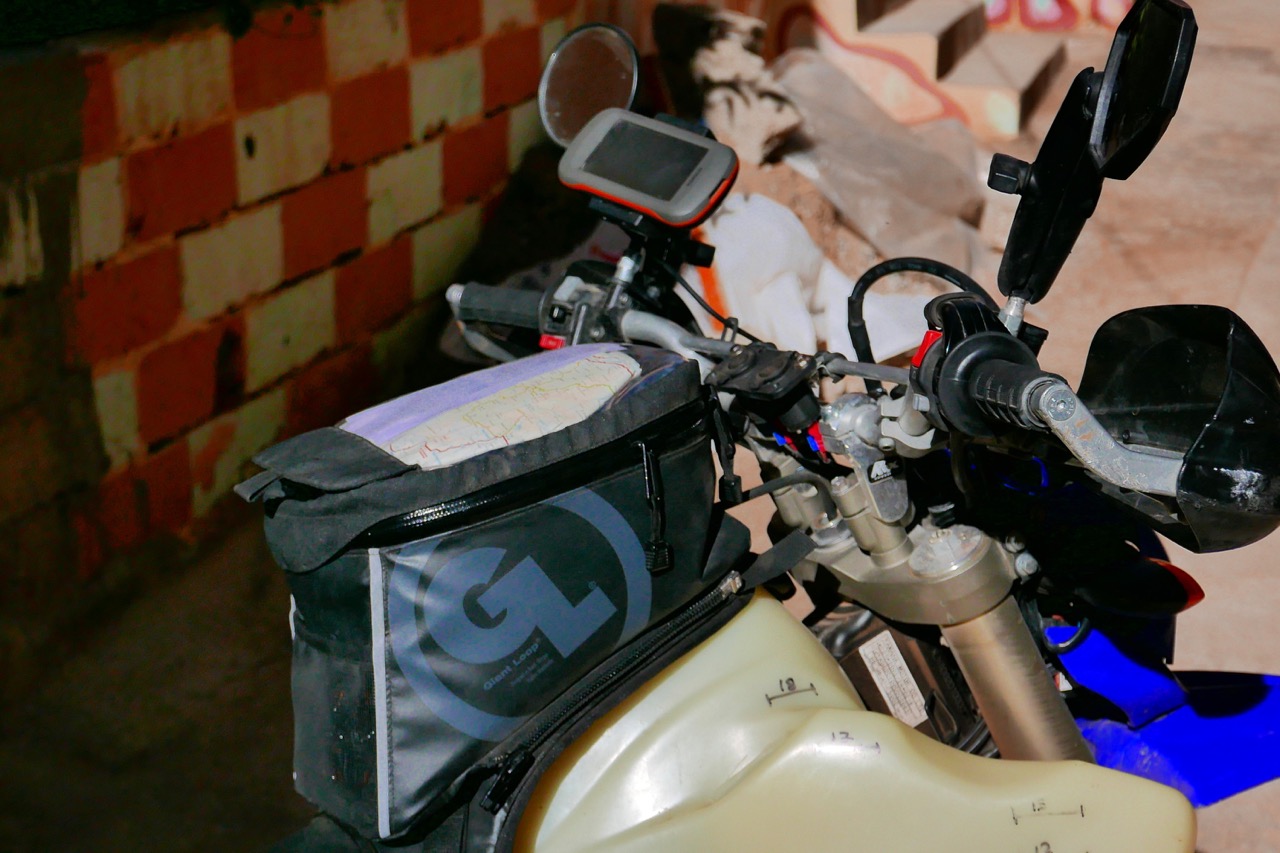
Trying a tank bag for the first time in years. I think they might catch on.

They’ve nearly finished a road through the MA2 Smouguene valley, but it now bypasses the villages so takes the soul out of the original route. Same story all over Morocco but locals won’t be complaining.

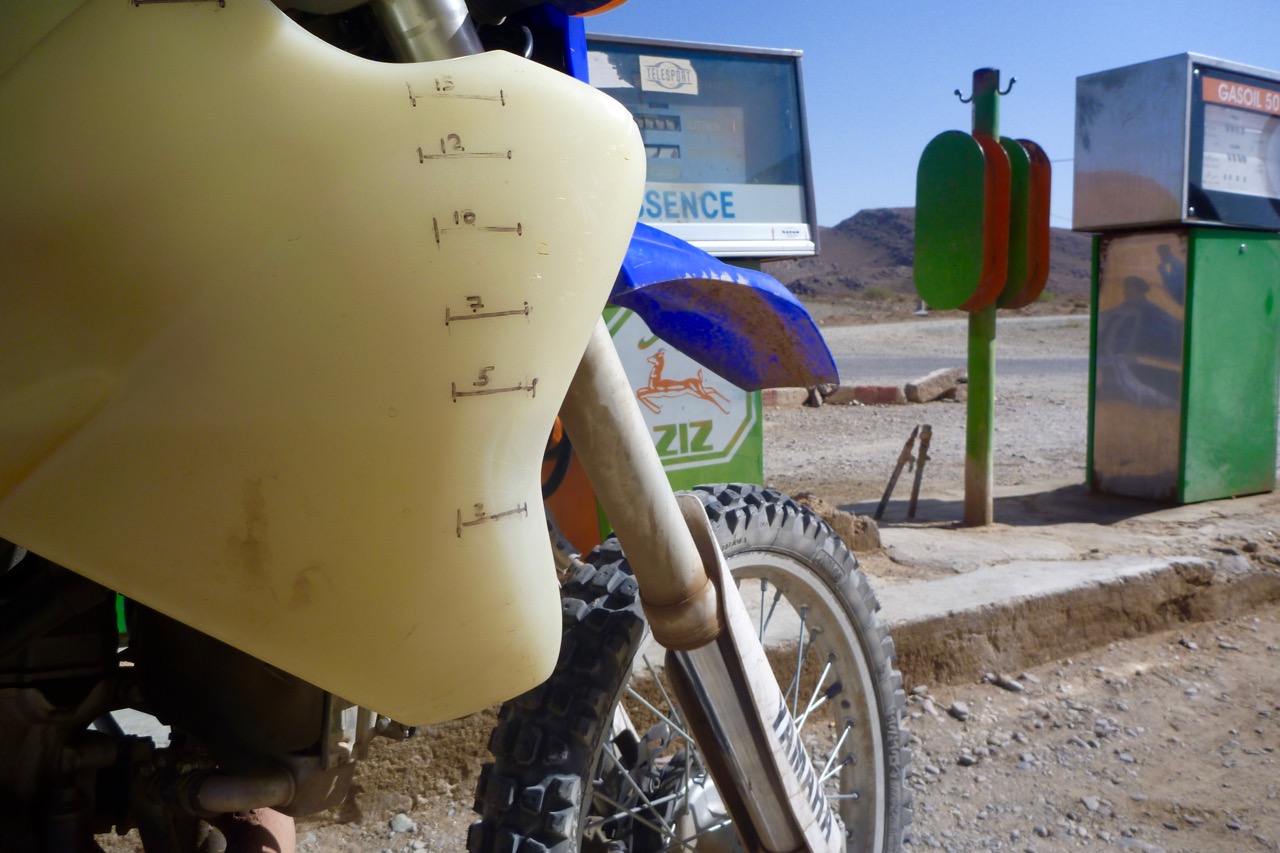
The bike is on a steady 84mpg, with one burst up at 95 on that slow, over-Atlas day from Demnate. But then last year’s Honda CB500X RR did about the same AND could sit on 80mph, gale or no gale. The real (only?) benefit is 60kg (or some 30%) less weight. On the dirt that is a big, big plus.
This is why we want a ‘CRF450L’ but based on a detuned RX (or Dakar) motor.
Or a WR450R. Or a modern injected DRZ450. Or…. or…
550km to a tank is dead handy. It means you can wing it up some unknown track like that haul road just to see where it goes.

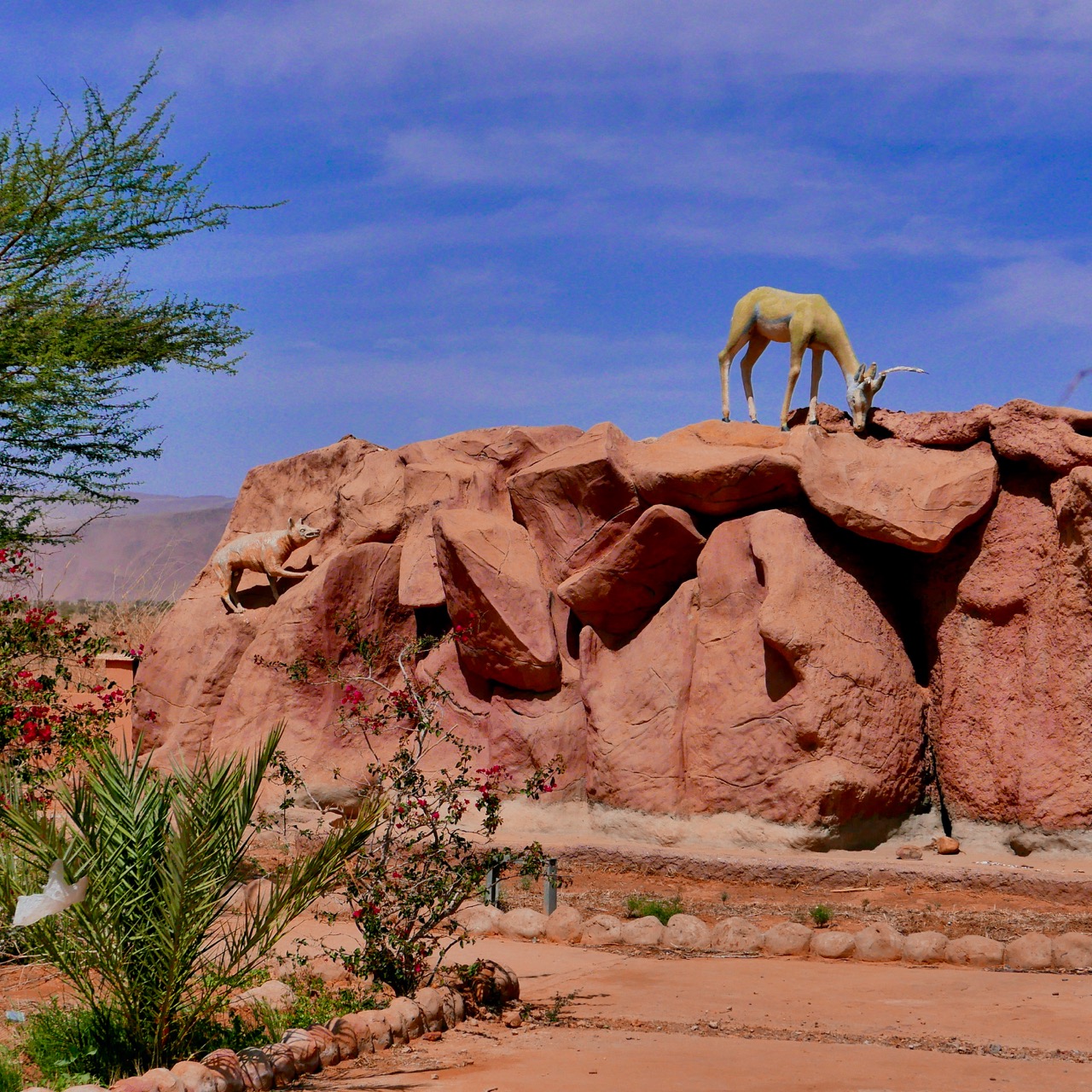
Some days I feel more gazelle than jackal.

I light out to Zag on the off chance, but as expected, get cordially turned back at the checkpoint (closed section of border road too close to Polisario HQ in Tindouf, Alg).
Should have left him the passport and had a quick look in town, anyway.

So I swing in down MW6 for Smara. Too risky to try this one alone in this heat, so I camp a 100 clicks in.
I realise it’s my first solo moto desert camp since Libya ’98 on a Funduro. I need to get out more.

Part 3   > > >