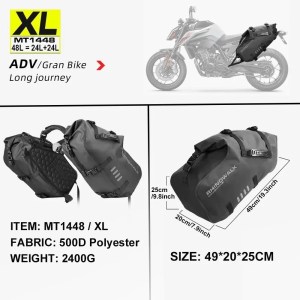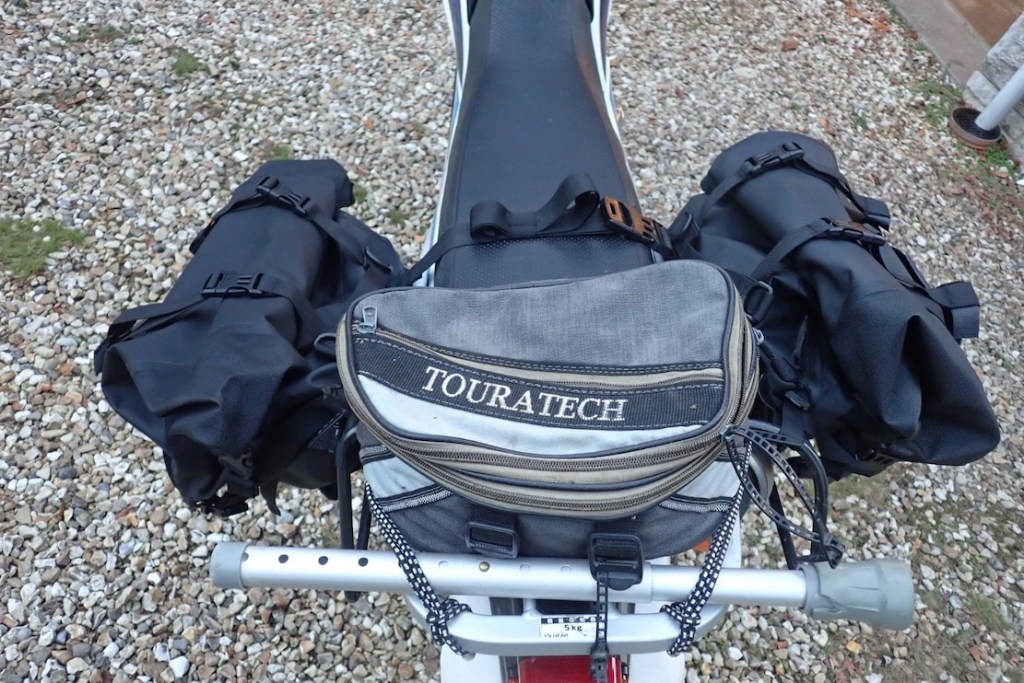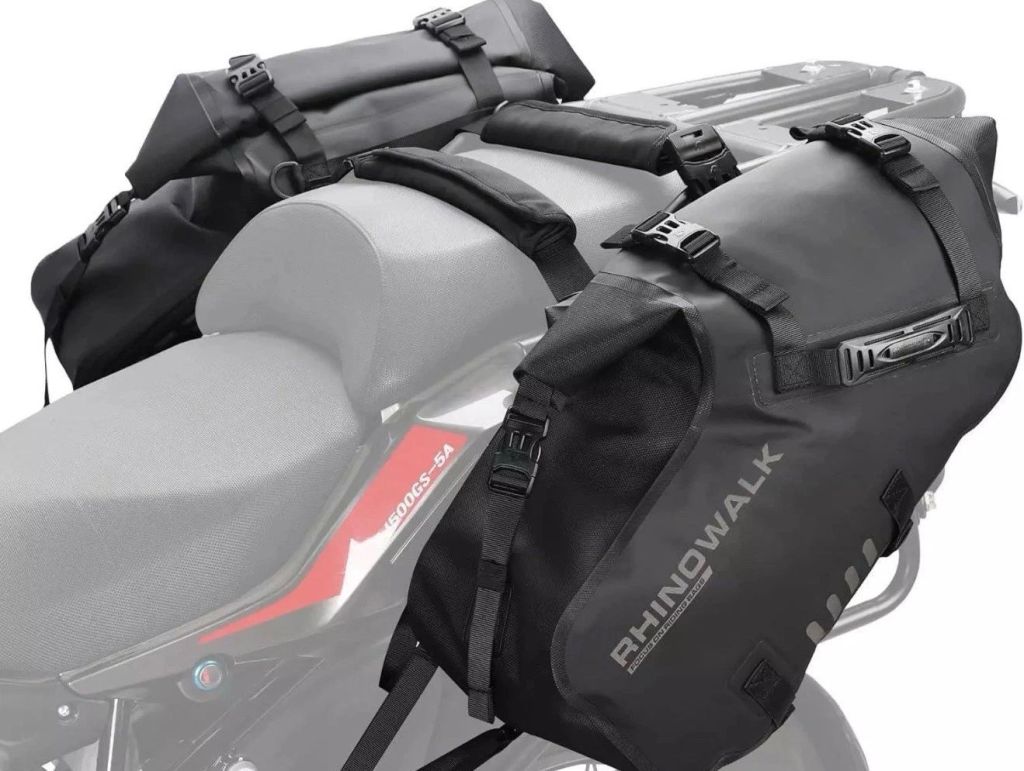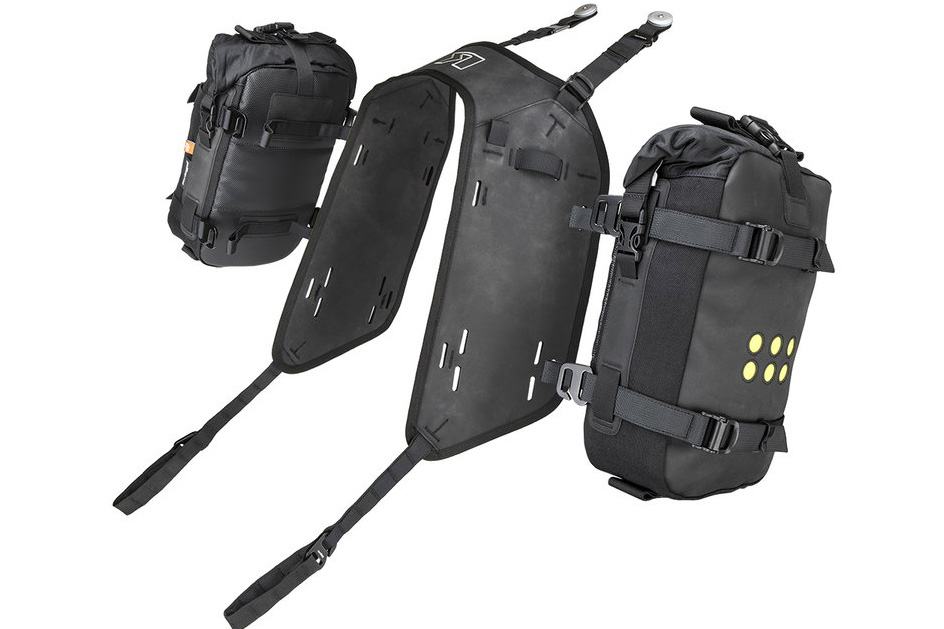
IN A LINE Inexpensive basic 500D PVC throwovers with more straps than the gimp in Pulp Fiction.
WHERE TESTED Nowhere really.
COST & WEIGHT £110 unused off ebay (from £140 new). 2900g est.
WHAT THEY SAY (shortened) ✔ EXCELLENT WATERPROOF: The motorcycle saddle bag is made of 500D PVC tarpaulin material, which is 100% waterproof and the most stand wear and tear motorcycle material. The roll-up design provides waterproof guarantee while supporting quick opening and closing. ✔ LARGE CAPACITY FOR DAILY NEEDS: Waterproof motorcycle bag is specially designed for those who like to travel by motorcycle, outdoor adventure. 2 side pockets with a total of 24L large capacity to meet your daily needs. ✔ STAND WEAR AND TEAR MATERIAL: Different from ordinary waterproof material, we use PVC tarpaulin as motorcycle bag shell material, which is stand wear and tear and suitable for daily use. High-density PVC resists dust and is easy to clean.
Cheap
Light
Simple
Loads of long strapping
Can mount low and forward with a rack
Inner padding may be OK without a rack
500D PVC is not particularly thick
May not survive heavy loads off road
Understraps for more external gear get in the way
Despite rackless claim, best with a rack in this XL size
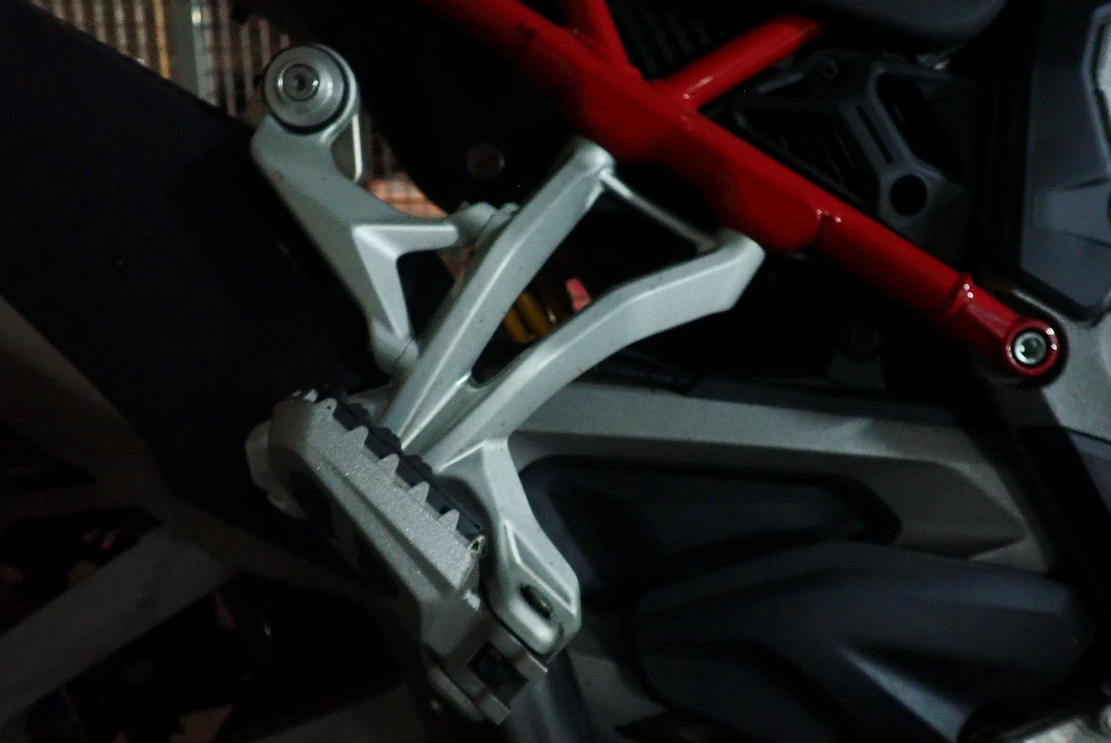
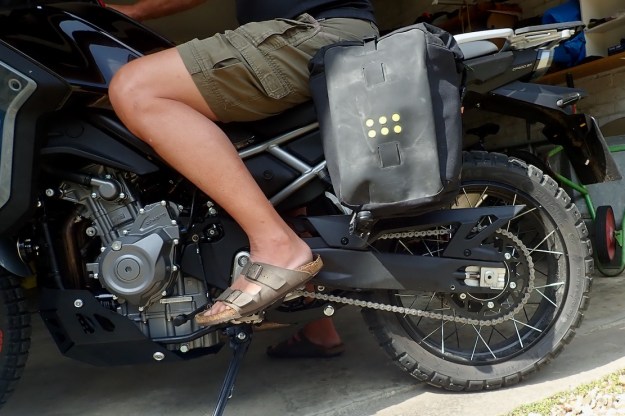
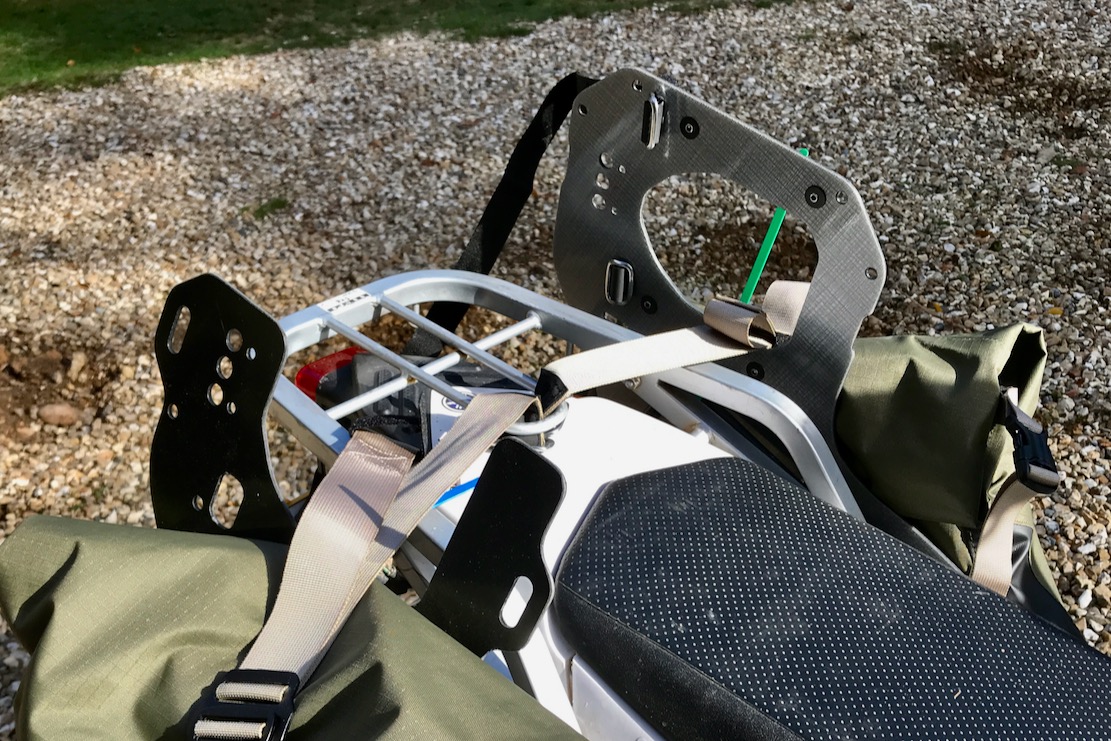
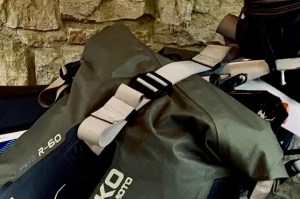
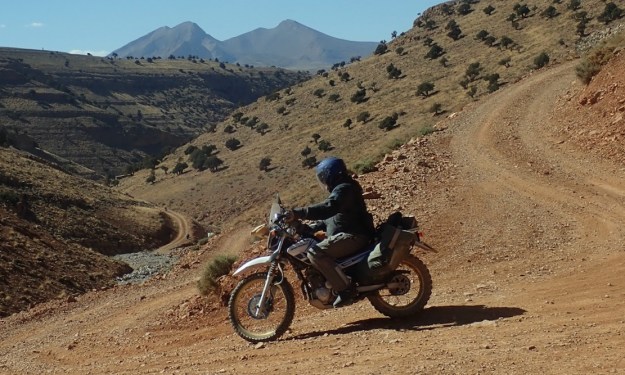
REVIEW Rackless side bags from the well-known soft luggage manufacturers have been a thing for years. It will vary from bike to bike, but without a rack they have to be mounted high, almost on the side of the seat (right), to stop them swinging about into the wheel or bouncing on the pipe. For better handling on the trail, low and forward is the way I like to do it, like the Kriega OS18 resting on the pillion footpeg on last year’s 450MT. Sadly this rackless innovation went unnoticed in the biking world.
Low and forward
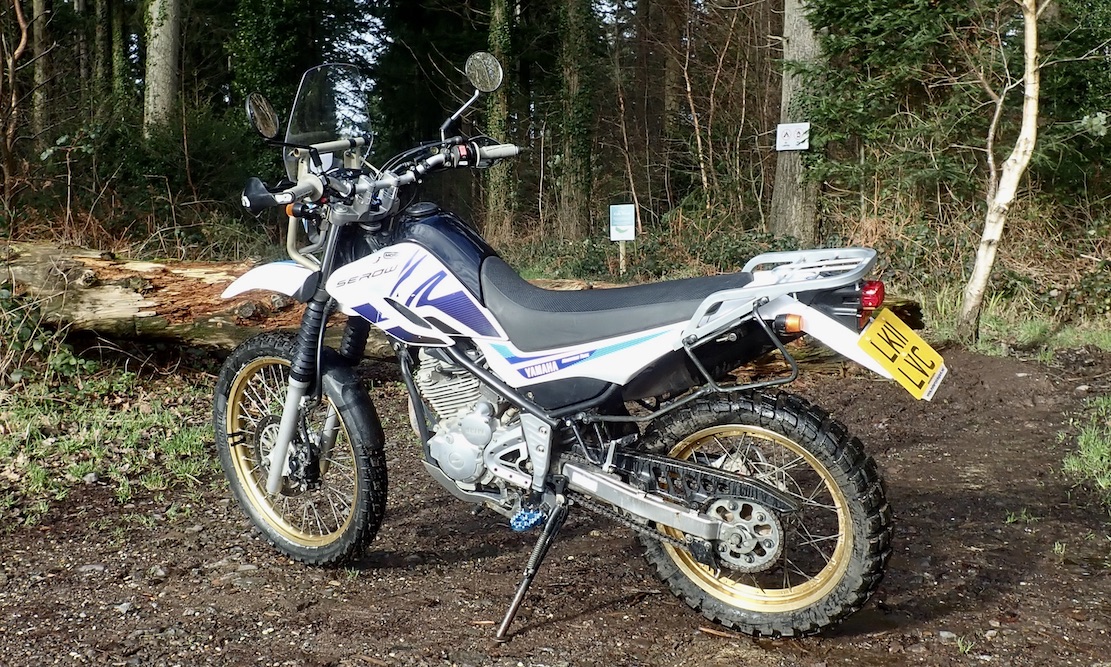
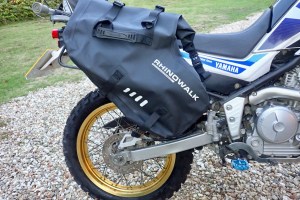
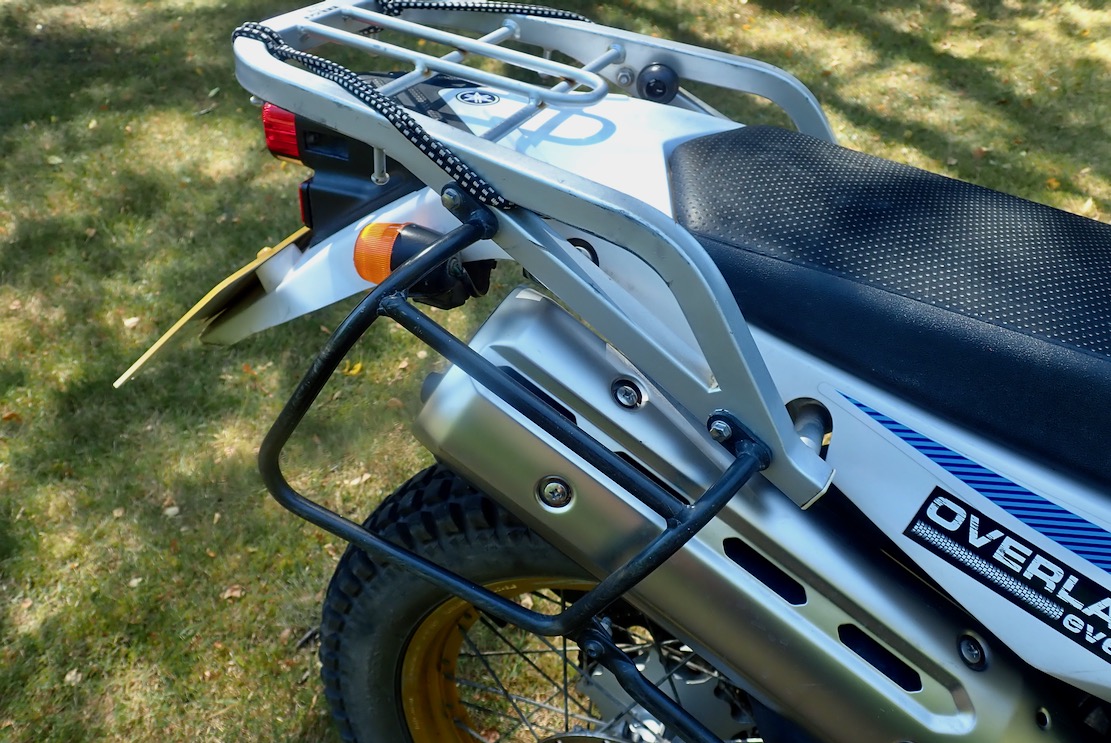
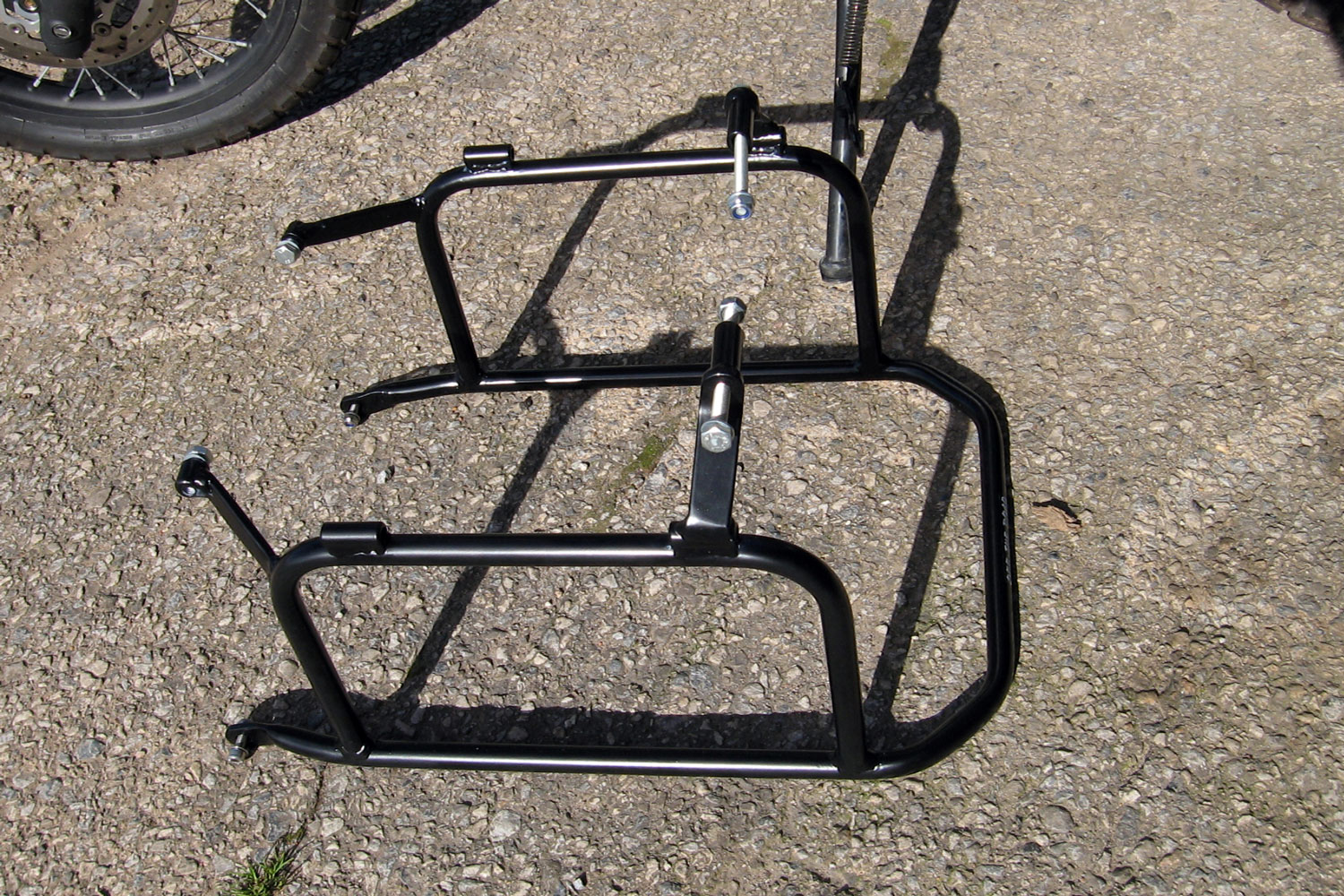
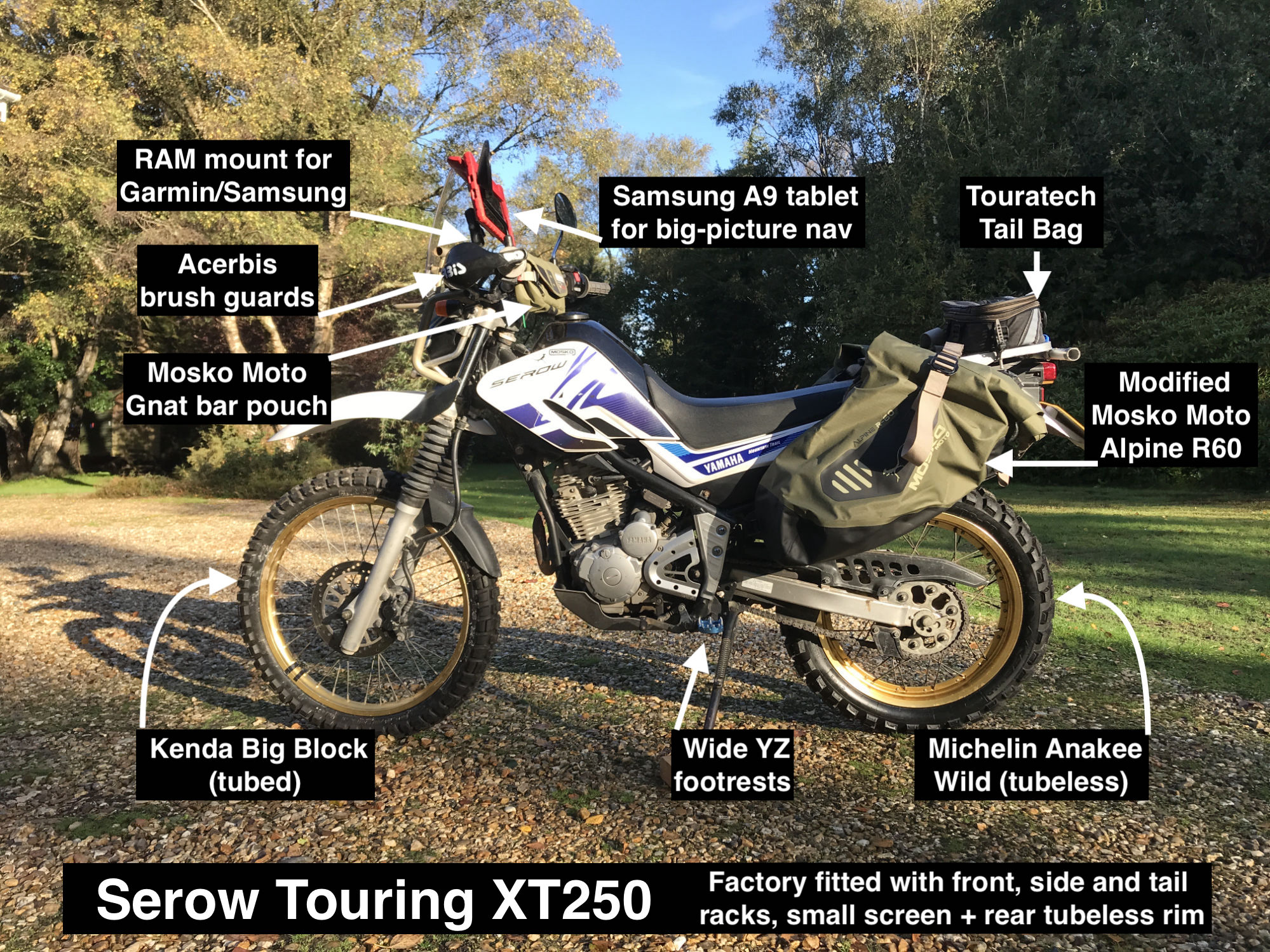
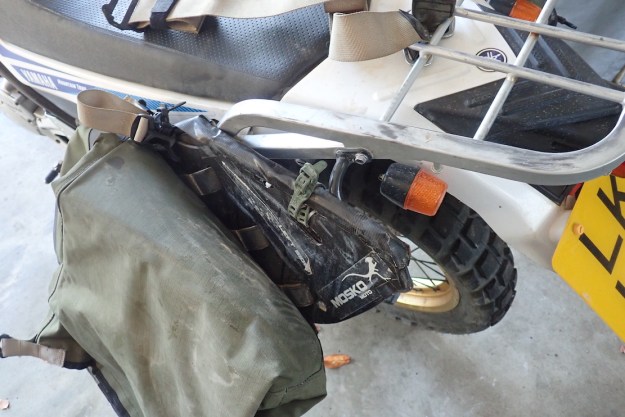
My Serow Touring came stock with light side racks (left). They’re a bit far back (like so many racks) but are just the job to support throwovers which would otherwise swing into the wheel or melt on the pipe. Without a rack you’d need to hang them high on the side of the seat to avoid swinging, but that means a higher mass; less good for handling. I was eyeing up these Rhinos for a while and got a barely used XL set on ebay, at 24L a side. The rationale being I won’t need any other bags bar a tank bag (though I admit, many bags or pockets makes quick day-access easier). As one reviewer observed, they’re like a pair of giant socks, the upper part rolling down to clip down the sides and over the top
Lashing on was dead easy once you get your head round the mass of long straps. (Better too long than too short.) Over the seat, I removed the unnecessary padding sleeves and cinched them up through a loop in my tail rack with cam and clip plastic buckles I’ve not seen before. At the lower ‘toe’ end, another ridiculously long strap loops through the pillion peg mount, or is long enough to go round the main frame to connect back to a metal cam lock buckle. As said, at the back my over-seat straps went through the tail rack to stop them sliding forward. But there’s another metal buckle at the ‘back ‘heel’ of each bag to do the same job. Use a loose strap supplied to cross and loop over the tail rack (or whatever you got) from one rear bag’s rear cam buckle to the other. Instead, I used a knotted offcut from the front strap to lash this rear point to my rack to better support it all Once bouncing loaded up along the trail, the more weight you can take off the over-seat straps the better.
External lashing. Hmm
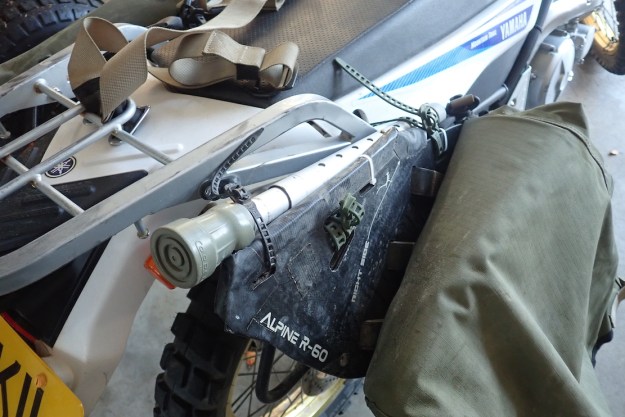
There are also some long straps for lashing more gear on the outside under the bags, like the tripod shown right. But unsupported, I can’t see anything staying there for long (or staying clean) on the trail. Molle webbing would be better, or a pocket. Or just lash on top where it’ll stay put.
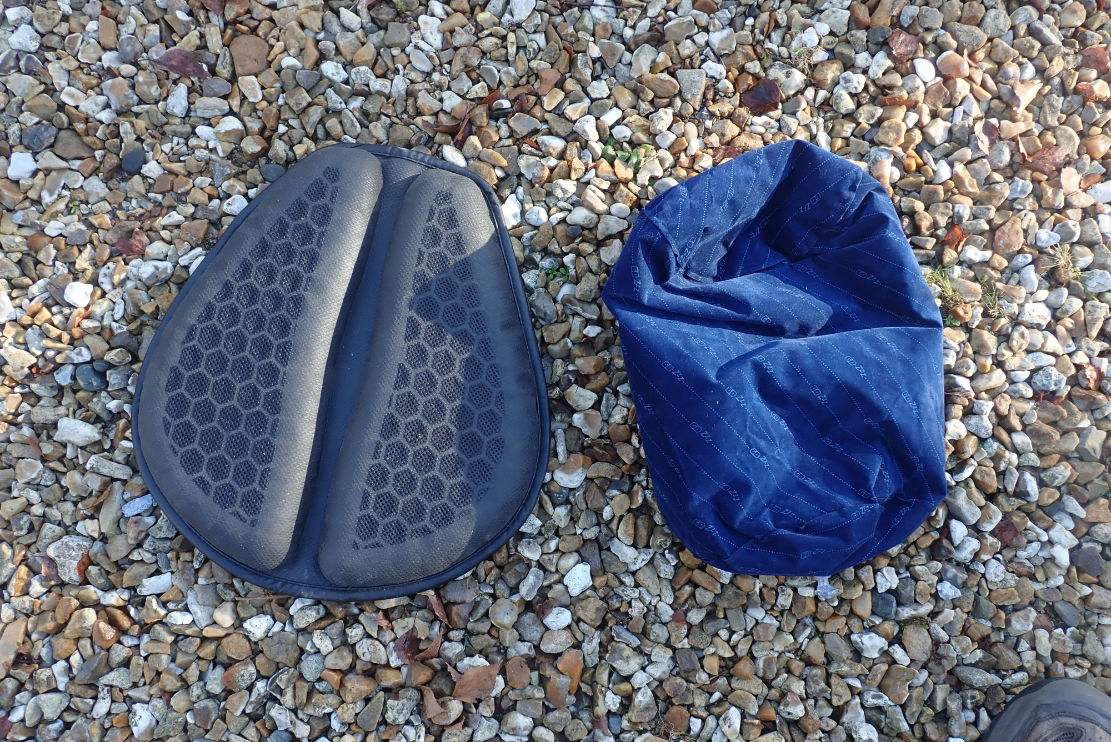
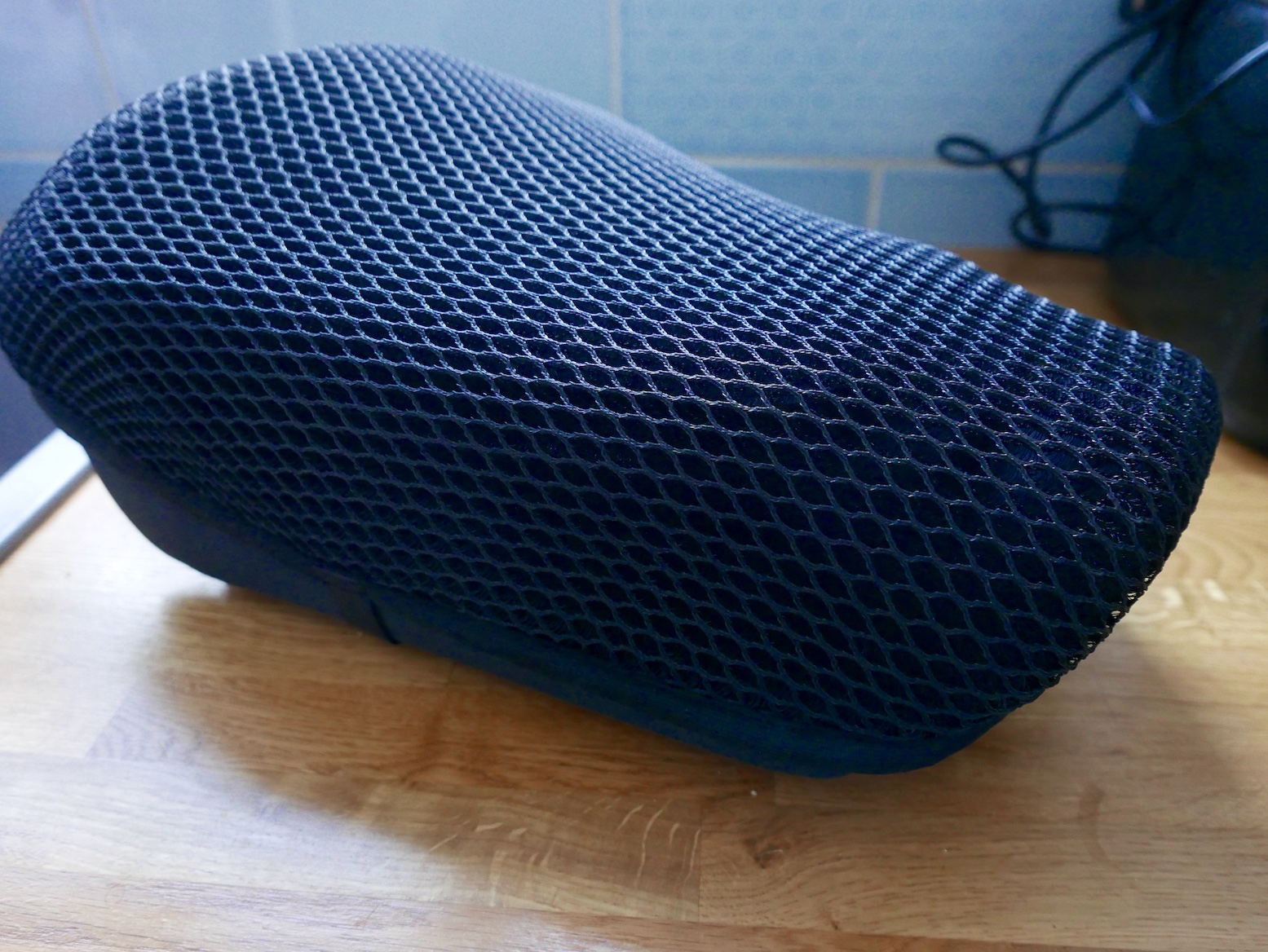
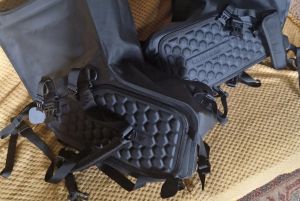
The honeycomb padding on the inner surface (left) claims to resist 160°C and looks OK but once splattered with gritty mud will rub on your plastics if you’ve no rack. On the trail I was not expecting to carry more than 10kg in each bag which ought to make them last. But in the end Mosko Moto sent me some of their new Alpine R60s to try so I went with them and resold the Rhinos.
In a line Mounted separately and semi-permanently to a light rack and without rear duffle – not as Mosko intended – but was exactly what I wanted.
Price and verified weights Bags £476. Right side 1350g; left 1530g; hardware 130g, Duffle 650g. Total: 3.7kg/8.1lbs Gnoblin q/d mount (optional; £39) 182g. As mounted (no duffle or Gnoblin): 2.5kg
Mounts low and forward, ideal shape for optimal load distribution
Well put together and clever design elements
Light: my adapted set-up just 2.5kg
Looks more than 22 litres per side
The outward flex of the CURV board (not used) limits pressure on sidepanels
With CURV board sits high on some bikes
If you want the q/d element make sure the CURV board suits your bike
OTT strap hard to cinch down with changing bag volumes
Alpine R60s supplied free by Mosko for testing and review
What they say The Alpine 60L Rackless is Mosko Moto’s lightest weight dual sport and ADV luggage setup with the capacity for multi-day trips. Designed for riders who seek minimalist, lightweight luggage, it provides the three-bag organization and packing system of a traditional pannier setup (two side panniers and a rear duffle) in a lightweight, waterproof, abrasion-resistant ripstop nylon rackless bag. Featuring our super durable CURV® chassis, the universally-mounting A60 can be easily swapped between multiple bikes, and can be packed and checked for fly-to-ride adventures.
Alpine Style For this autumn’s recce of the High Atlas Traverse I wanted to try something different. Though never a fan of the one-piece Giant Loop Coyotes and the like, I’ve been interested in separate throwover side-bags which can manage without a full racktangle™ (right). I also like the idea of tough drybags sleeved in a holster, as on Mosko’s Rackless 40 and 80, although these look a bit heavy and over-designed for my little Yam 250 on this trip. ‘You should make something in between the 40 and 80, and simpler‘, I suggested to Roel as Mosko EU. ‘Give it a month or two and I’ll have our new Alpine 60L to show you‘, he replied.
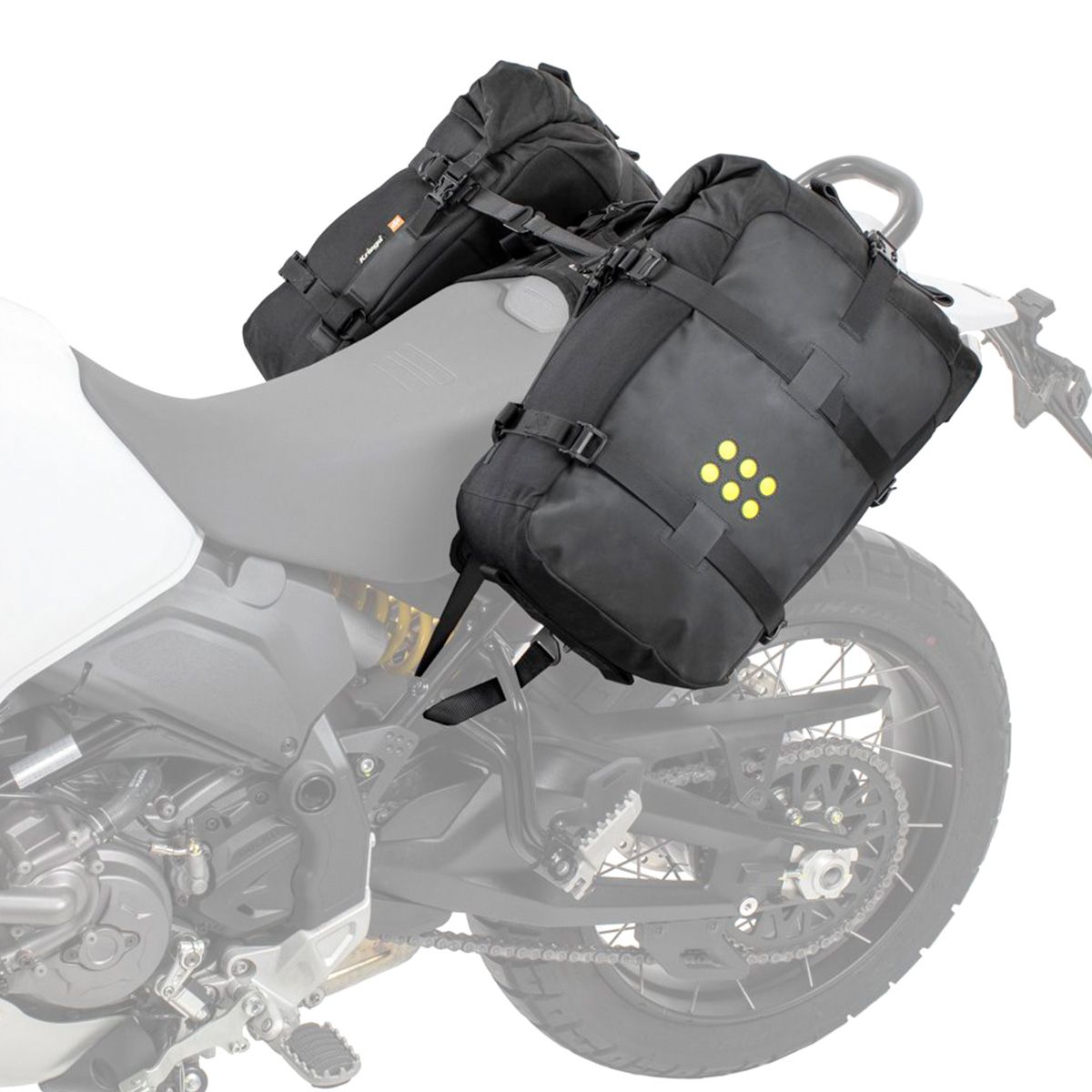
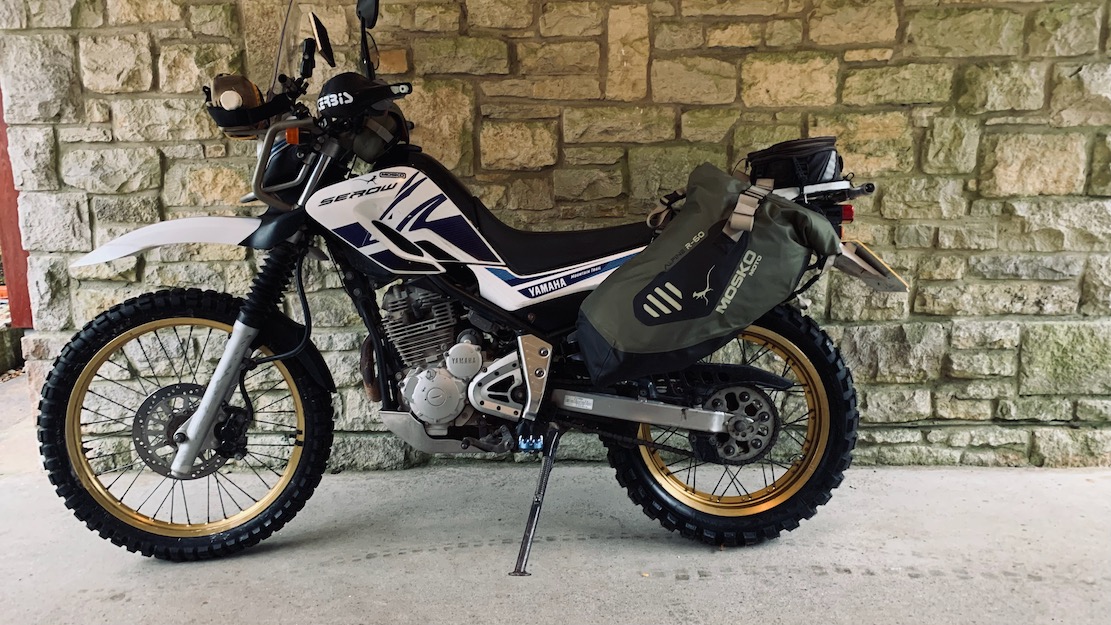
A week before wheels-up and Mosko’s Alpine R60 arrive in Woodland Green and Black. Two sidebags of 22 litres (but look bigger), plus a 15-litre top duffle which I didn’t plan to use. Each bag comes mounted on a bendy, two-piece U-shaped composite CURV® backplate which you bolt together with supplied hardware. That straps to the bike at the pillion pegs or rear downtube, to be tensioned from the tail rack, either with an optional and neat peg called a Gnoblin (below), or just a strap or two. Result: a quickly detachable 3-point fitting using the backplate to part-stabilise the load. Mosko are pitching the Alpine 60s at the harder-riding, ‘light-is-right’, crowd, but anyone who appreciates a minimalist, light throwover that’s easily removable will like the R60.
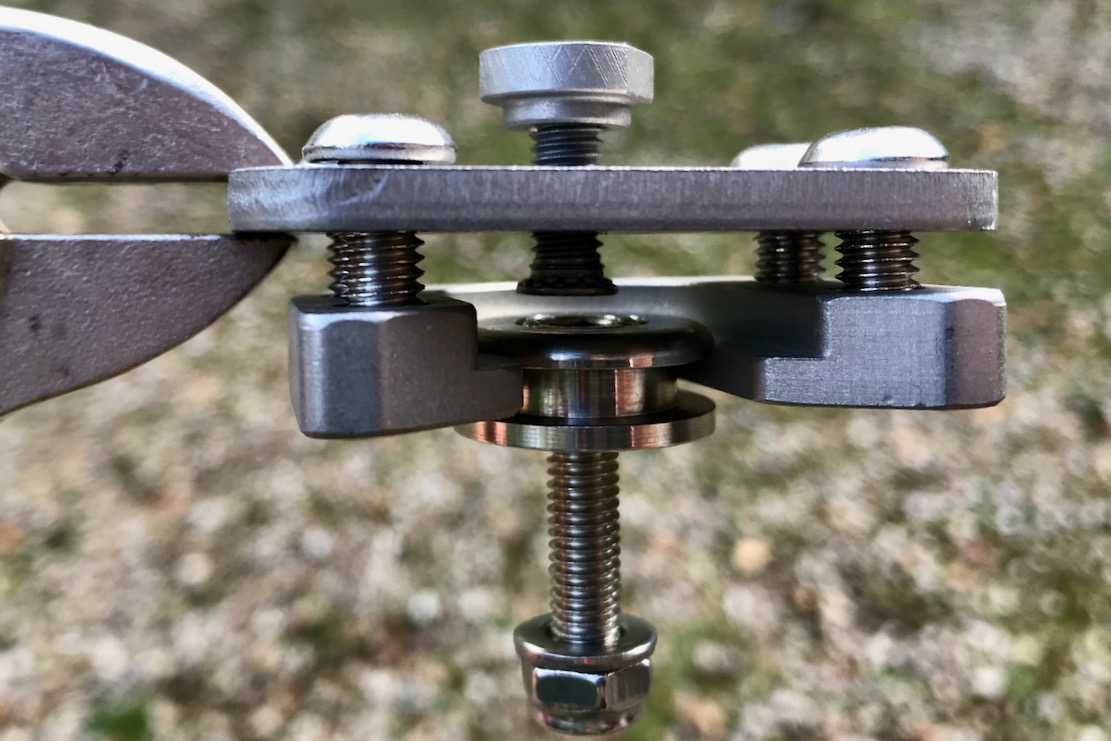
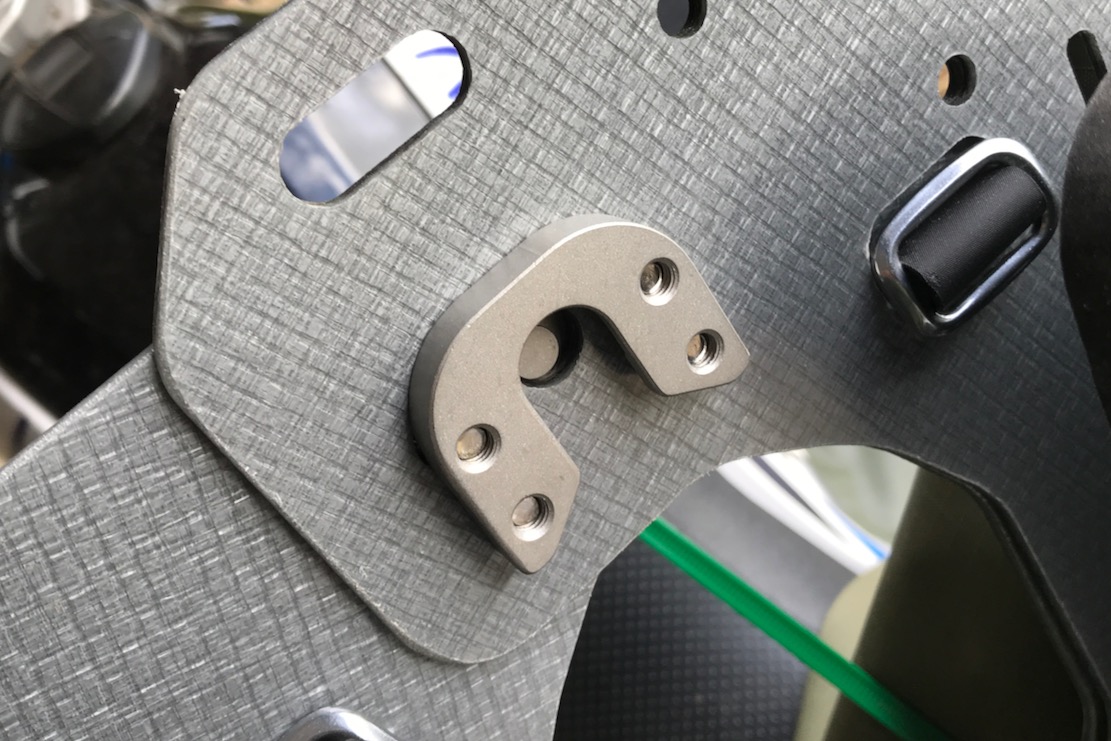
Gnoblin: peg on rack, U-clamp on panelU-clamp on the panel. Hook to peg and tension
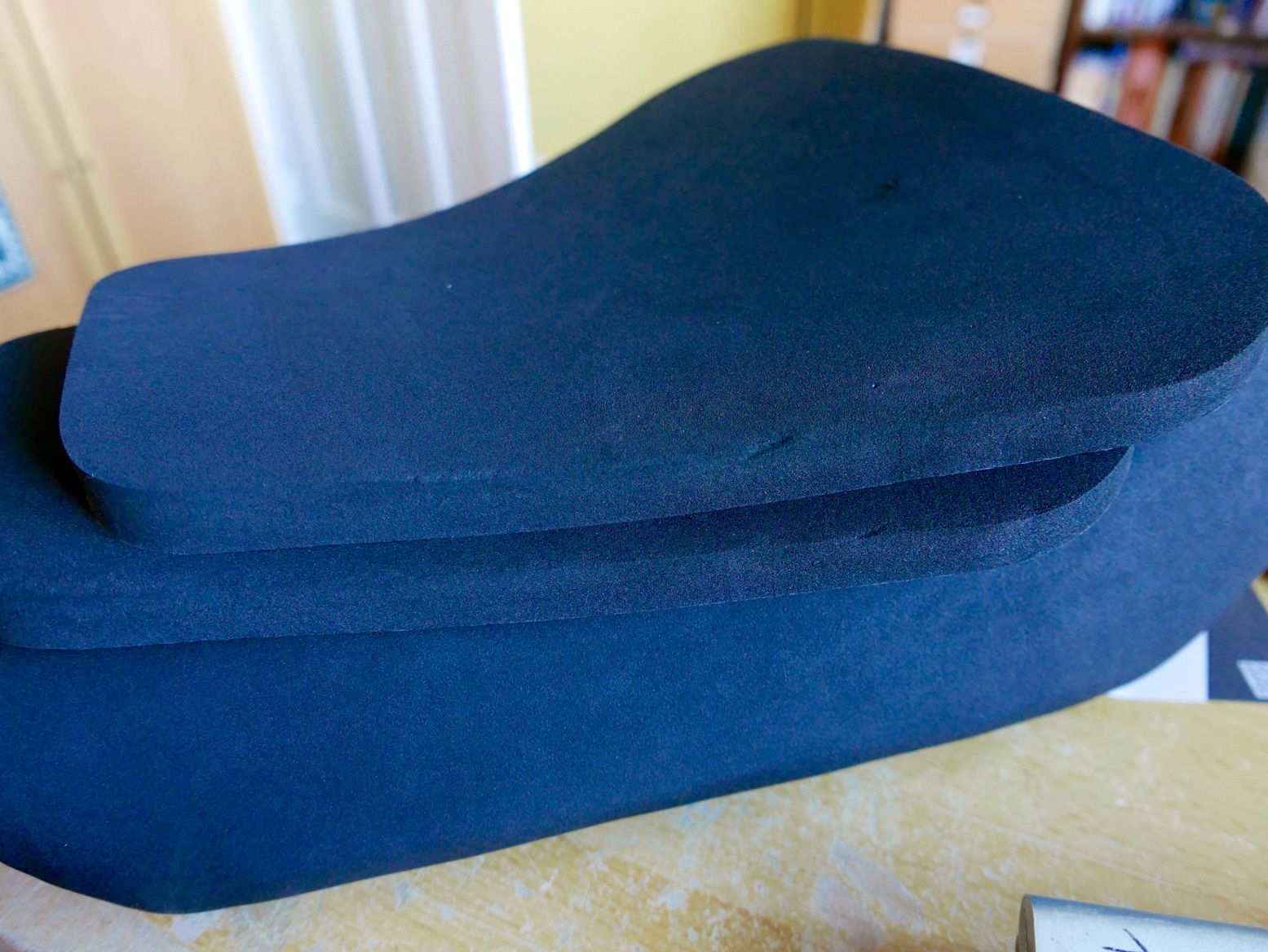
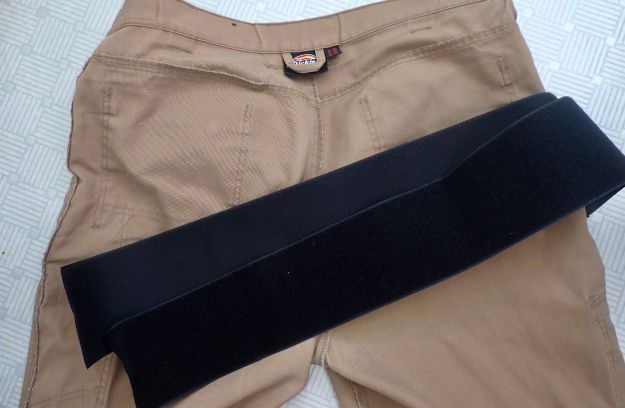
The clever thing about the composite CURV® plate to which each bag is semi-permanently buckled, is that the flexible board naturally bows outwards to resist pressing on the sides of the bike causing rubbing; a quasi-rack. A replaceable, full-length, 8-mil EVA foam pad is velcro’d to the plate. The bags come securely anchor-buckled to the plate which is velcro’d to the EVA pad. To avoid pipeburn use the Mosko heatshield, at only £22 it’s cheaper and neater than a C-channel off-cut and clips. Set up this way, removing the whole rig is a 10-second job (discounting the duffle), while secure mounting in the morning might take as long as 30 seconds, so make sure to set the alarm. I’ll take q/d soft bags if they have a bombproof and foolproof attachment system which can be used daily without thinking too much. Otherwise, most nights in Morocco I leave partly loaded bags on the securely parked bike and bring what I need into the room.
Too far back as usual… sigh
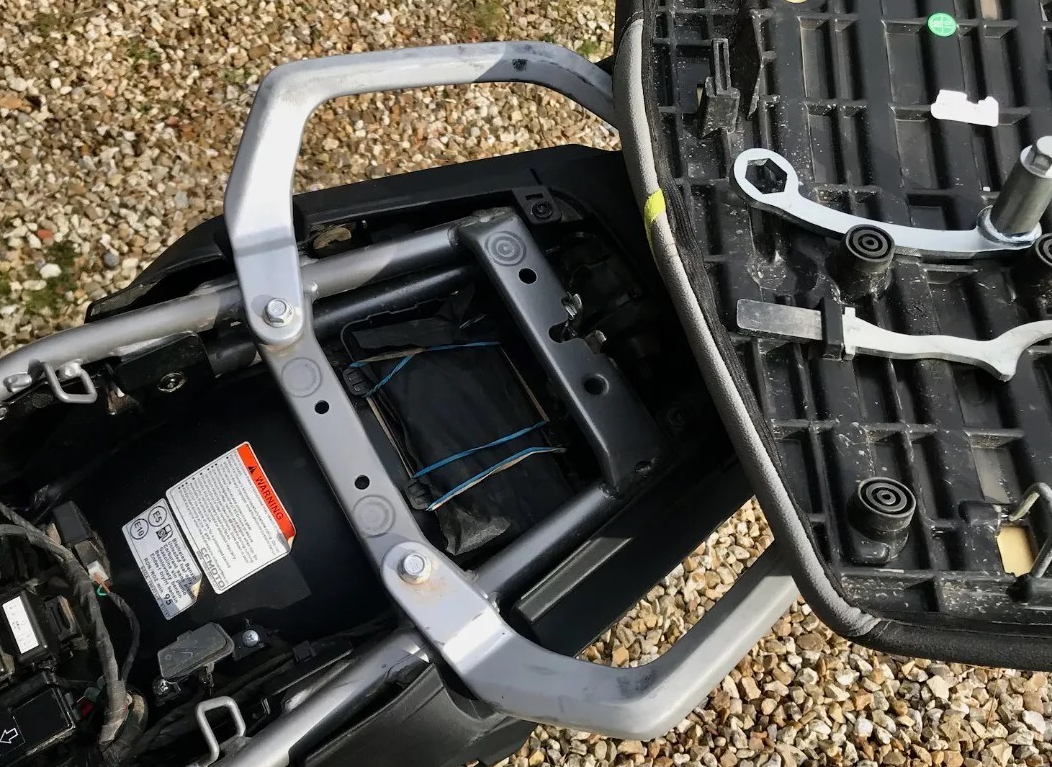
My Serow Touring came stock with an old-school alloy tube tailrack and light-gauge steel side frames (left) which are way too far back as usual, but otherwise ideal for stabilising the low weights I typically carry in Morocco, lodging each night, as I do. Out of the box I could see issues fitting the Alpine 60s onto my racking, but could also see a solution.
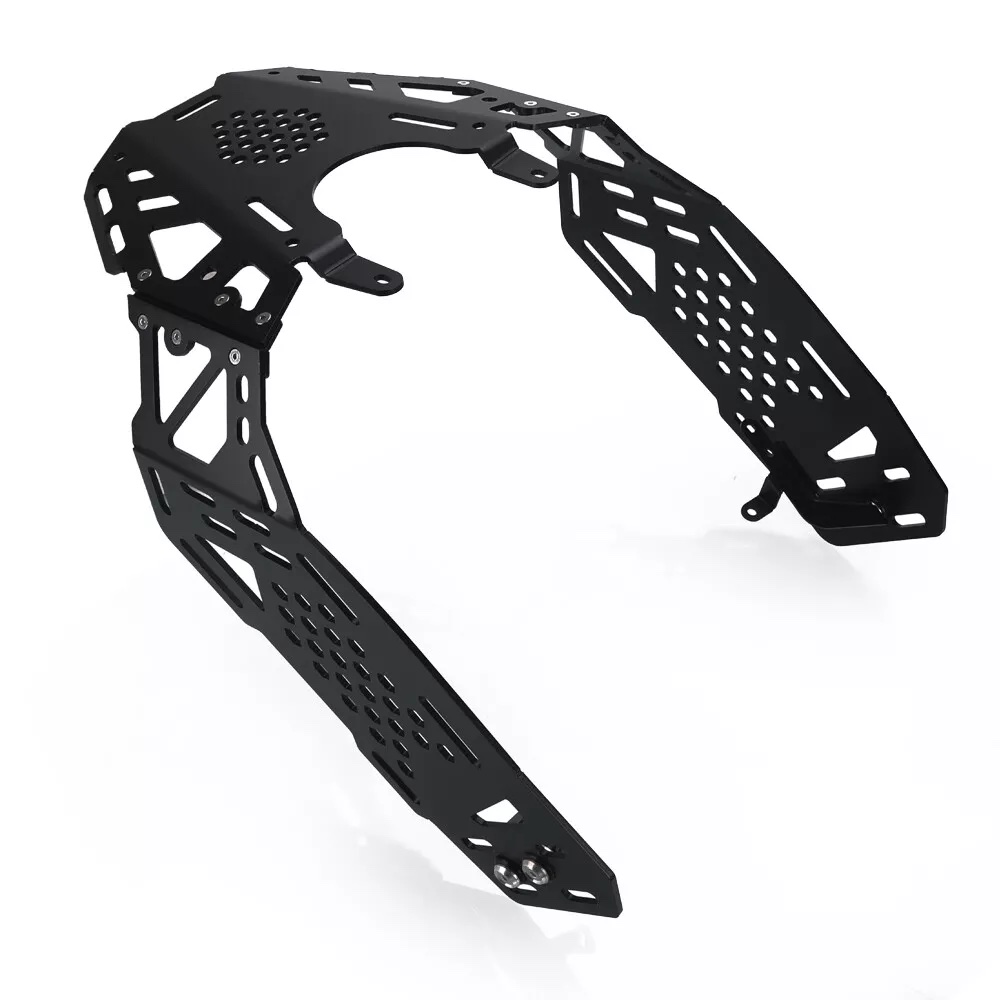
Looking at the vid above. Either those bags are full to overflowing, or the stiffness of the flexible backplate means they sit high on that Kove, even without the duffle which might be hidden from view. “The A60 is a rackless system” says our man Coleman at 0:52, but at that point you can see the Kove has been fitted with a CNC FishRacing integrated full rack system (right), or the 25-quid Ali-X knock-off. It’s much wider than my Serow set up which may explain why the bags sit so high. I’m not a fan of this current, easily cut (aka: cheap) CNC trend, when hand-formed and braised tubing uses less metal for half the weight (rant ends ;-). As said the R60 baggage appears to sit high on the racked Kove, but it also does in the Mosko video (below), fitted to a Moroccan T7 rental with only a tail rack. I think it’s a seat-width thing. As we know modern pipes are huge.
There are some long-winded R60 video reviewers out there. MoskoPete is not one of them. Job done in 3:29.
Last year I tried to fit the Kriega OS-Base Universal harness (below left) for my 450MT but the one-piece grab handles/tail rack got in the way. I could have swapped in an aftermarket CNC tail rack (and lost the handy handles), or cut a hole in the harness for the alloy handle to pass through, before rebolting. I liked the idea of being able to lash anything to the harness, not just Kriega’s OS bags, but again, their fitted bags seem to sit high, effectively resting on the side of the seat (below right) to limit swinging about in the rack-free void below. This is the weak spot of the rackless idea on monoshockers: the side panels become a necessary but over-high support point. For me the ethos has long been as low and forward as possible – or ‘AL&FAP if you’re in a hurry. These set ups may save rack weight, but are higher and further back than ideal. With minimal loads it’s not critical, but it’s not great for CoG and bike control, especially weaving around off road, picking up or when getting out of shape.
Kriega Universal fabric harness450MT grab handle/rack gets in the wayToo high
This is where panniers should sit when not two-up.
I returned the Kriega harness and went with the usual tailpack-sat-on-a-tailpack, plus my novel and as yet unrecognised 3P idea, as well as small tankside bags on radiator crash bars (left). Baggage ends up all over the bike which is handy for daytime access and organisation, but a bit of a faff to bring it all in overnight (if necessary), plus a messy look.
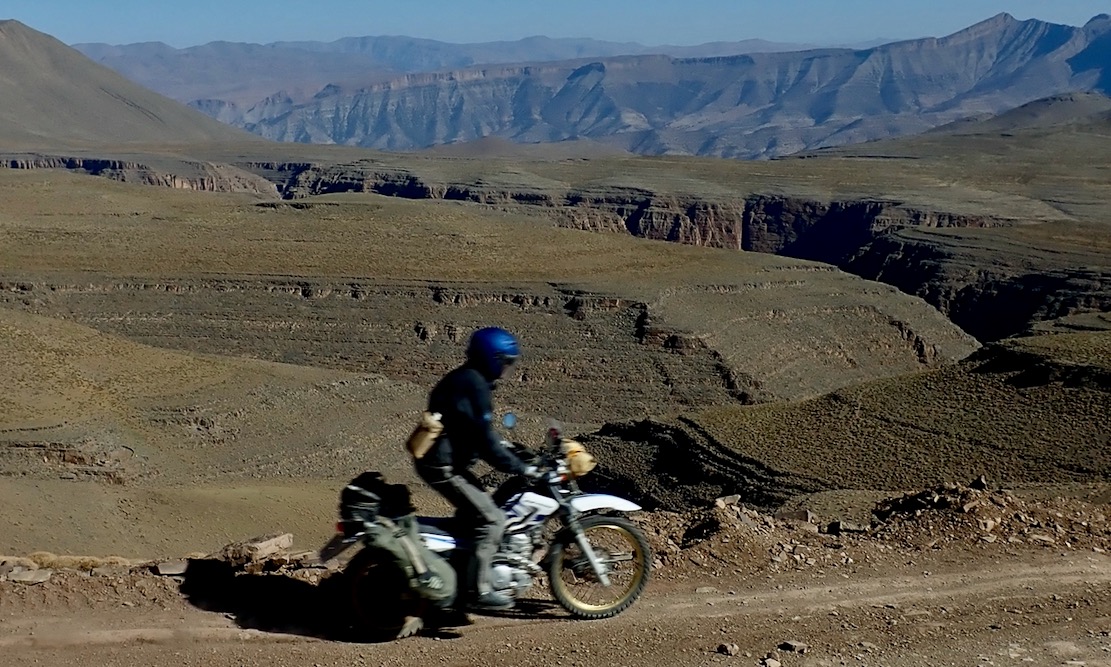
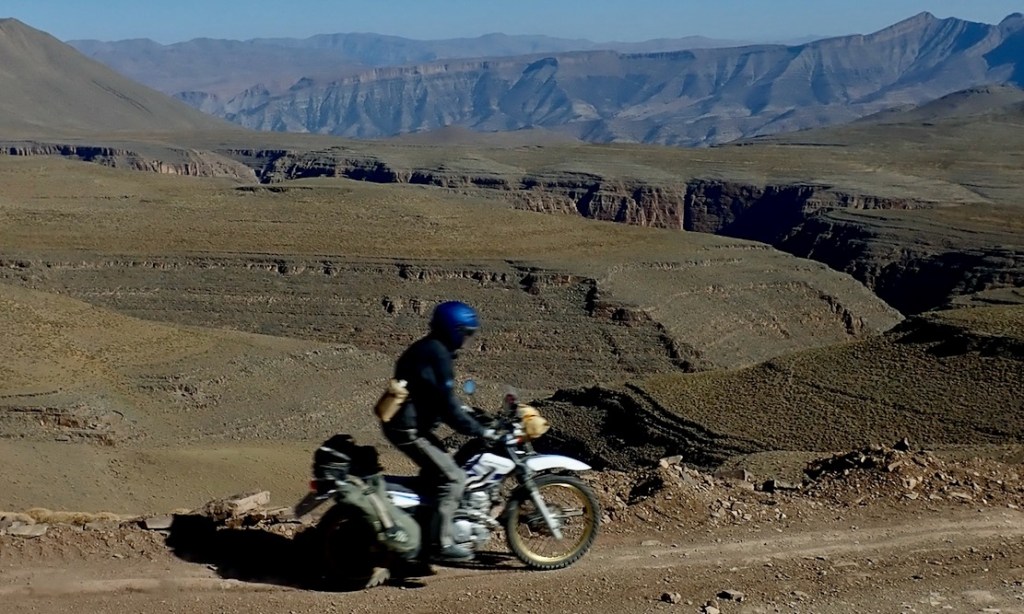
Up at 3200 metres on the High Atlas Traverse
This time I wanted to try everything in one place. I could see the R60s might not sit well on my bike but I liked the bag shape more than the q/d feature. The R60’s ‘short sock’ shape potentially puts loads in the right place. Heavy or rarely used Items like tools and tubes can go it the bag’s ‘toe’; light stuff up top with all the rest in between.
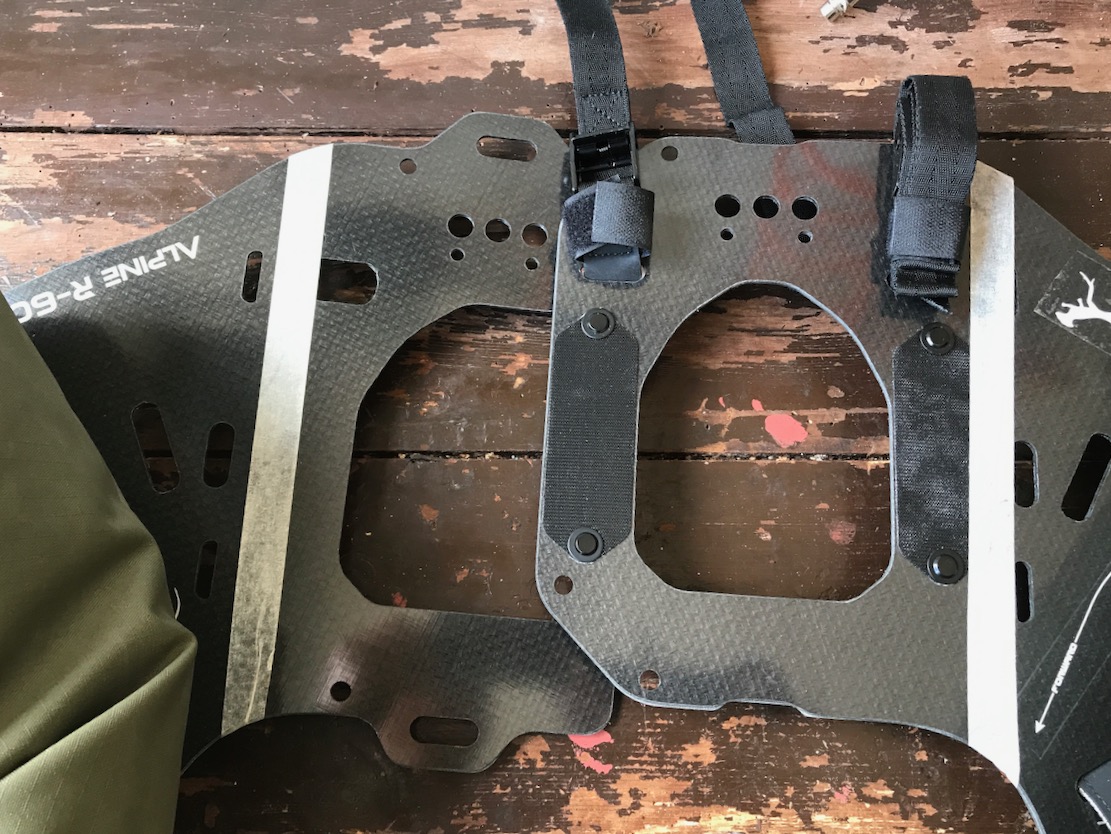
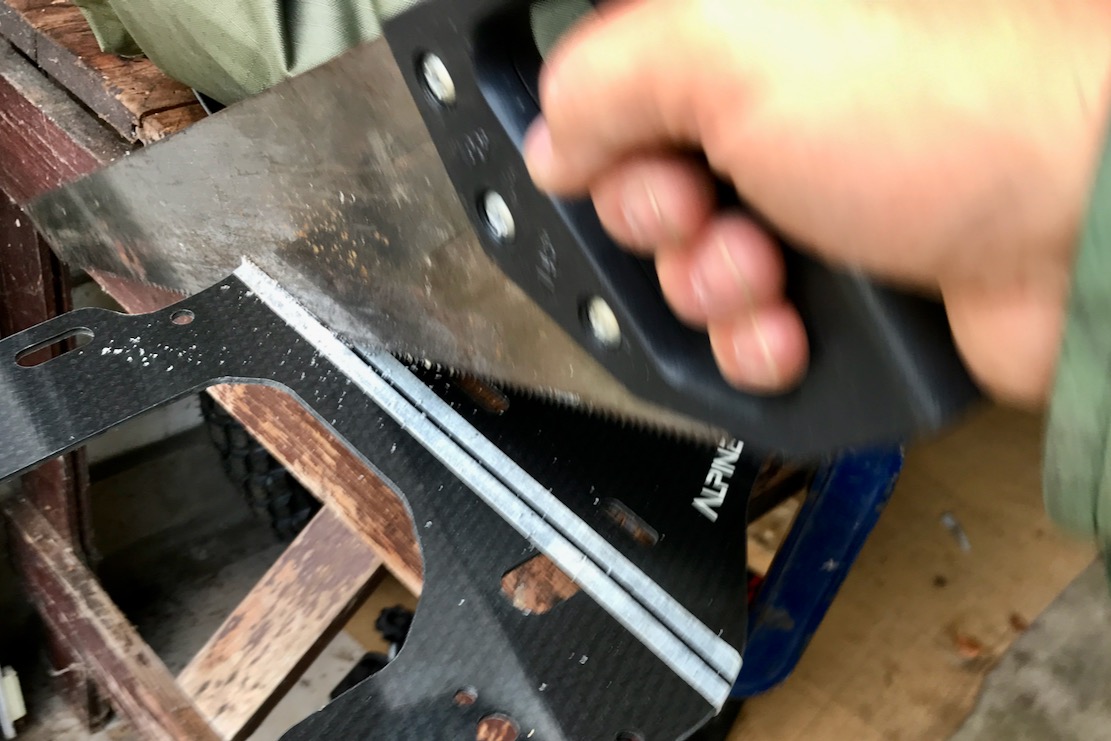
Unjoined CURVplatesCut along taped line
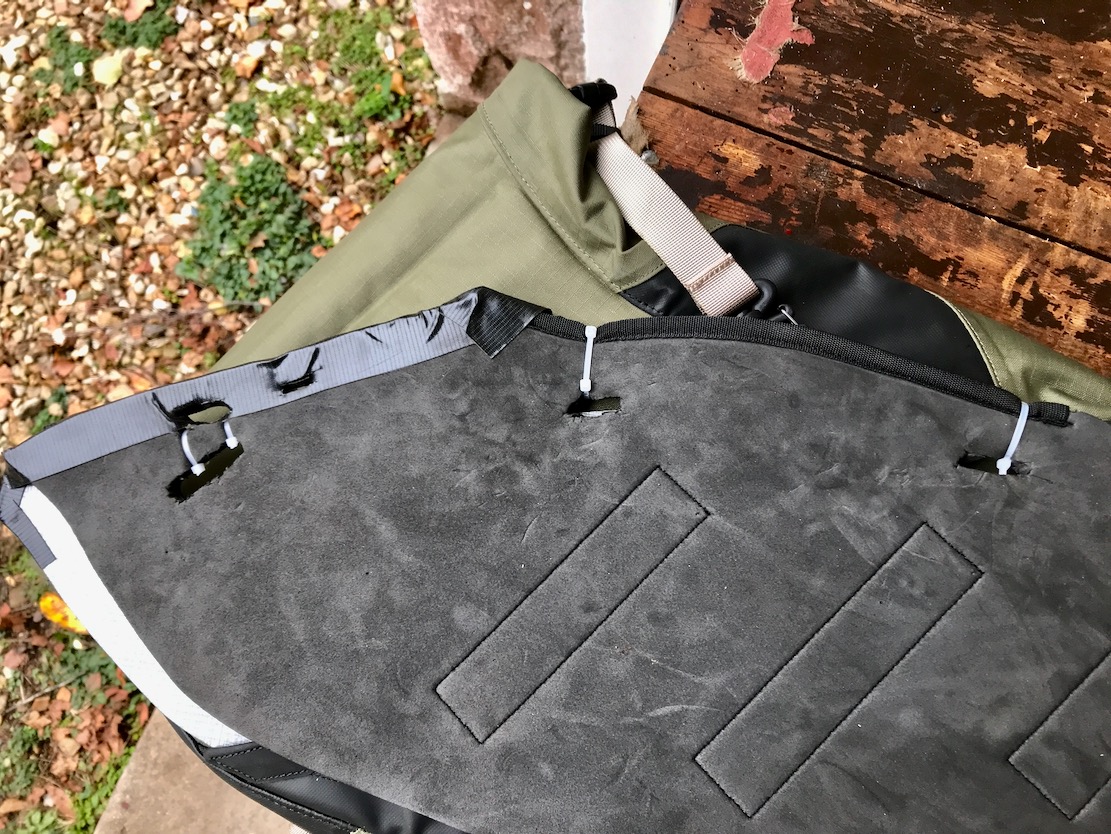
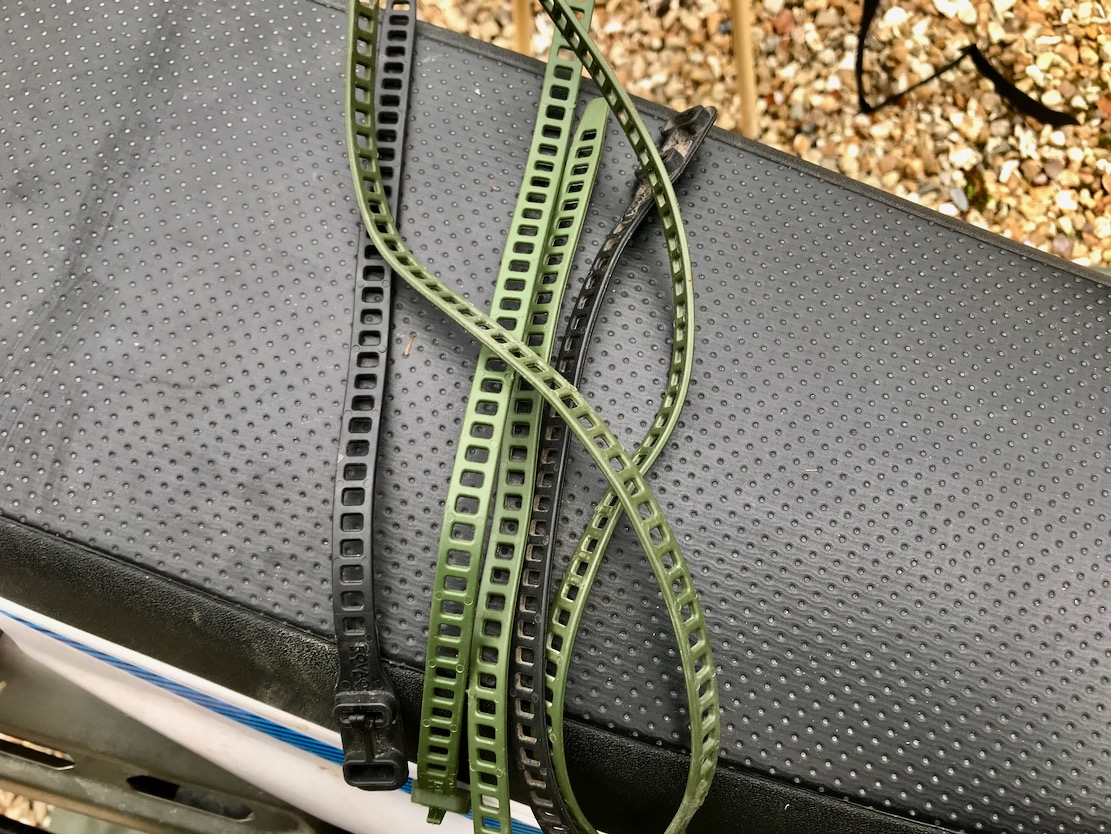
I test mounted the unjoined Alpines with zip ties; holes pre-cut into the CURV-plate make this easy. After seeing that it could all fit very well, I removed the bags and sawed off the rear parts of the plate and EVA pad, making two separate panniers. I then taped and zip-tied the trimmed board and foam (below left) and re-attached each 1.25-kilo bag using the much shortened strap to the front of the pillion peg hanger and at three more points along the upper edge of the board with reusable TPU RovaFlex SoftTies (below right) which adorn just about all of my outdoor gear.
Trimmed backplateI’m never far from RovaFlex SoftTies
By chance, the bag’s lowest point also rested on the Serow’s unfolded pillion peg, additionally supporting heavy weights positioned in that area, reviving my unsung 3P idea mentioned above and effectively giving up to five contact points per side.
The 50-mil OTT-straps anchored themselves through a gap in my tail rack (left) to pull the bags close in against the rack. There was no need to run an additional strap around the whole bag and rack to hold it in, as Adv Spec suggest with their Magadans. As it’s set up now, the seat can be removed as normal, the side panel can be accessed by undoing the pillion strap and lifting each bag. For insecure overnight parkings, I just fill a light 70-litre sack with what I need for the night.
All in all, the trimmed R60s could not have fitted better: secure, low, forward and as light as you’ll get for the volume and durability. In Morocco a couple of tumbles didn’t affect the bags, though we didn’t have any pelting rain to test the waterproofing. On the road load volumes vary from day to day depending on what you’re wearing an so on. So the only complaint I have was that it was hard to cinch down the 50-mm male metal anchor buckle to pull the top down tightly. The strap was jammed too tight. It was more easily done on the upper part of the strap which is less intuitive for a good yank. Other than that, the OTT strap and two clips per side made things easily to access during the day. You soon learn to pack a day-access bag on one side so the other can be left till the evening. Everything in several pouches or bags shoved down inside easily, using all the space. Once I get the Serow sorted, I’m looking forward to taking out the R60 for another run.
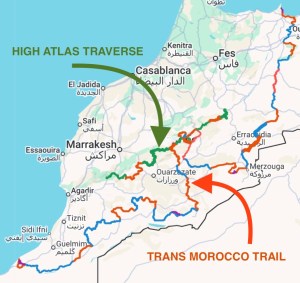
It didn’t take much, but my 250 Serow Touring is ready to wheel into a van and head down to Morocco for a recce of the High Atlas Traverse (left). The H.A.T is a new route I’ve cooked up to parallel our very popular, coast-to-coast Trans Morocco Trail. When the H.A.T map and tracklogs are up, they’ll be hosted on the same TMT website.
Following the Atlas watershed over the highest motorable peaks and passes for 900km, the H.A.T will probably become harder than the TMT. With elevations exceeding 12,000′, we’re not certain every planned track will be passable, but that’s why they call it a recce. Whatever happens, my lithe, low-saddled Serow ought to be ideal for the task, joined by Simon on his TTR 333 and Bob on a brand new KTM 390 Enduro R to add some Vit C to the photos. I’ll be posting the odd photo on the TMT Insta page and maybe elswhere. If it all pans out, the route will be online to download for free by the New Year.
Garmin’s dominance in satnavs has surely peaked now that offline nav is yet another task we can do on our phones. I’ve been moaning about my flakey Garmin Montana 680 for years: screen too small and murky, occasional freezing, slow loading, and newer Garmins way too pricey for what they are. But along with travel biking, the rugged Montana remains usable for green laning, walks, MTBing and even paddling, while shrugging off the shaking, occasional dropping and salt water. It won’t overheat in the sun and batteries last all day, but trying an app on an inexpensive device I already own and use is a low risk experiment. Recently I bodged a way of attaching my £85 Samsung A9 tablet in its child-proof case to RAM handlebar hardware using velcro, plywood and sticky-backed plastic. The A9 has loads of screen space – a bit too much, even; a 7-incher would do. A trail ride round the local lanes on the Serow and MTB proved my fittings held up, though weather and time might see to all that.
That done gave me a chance to try GaiaGPS (~£60 a year) which I know a little from Morocco, plus Ordnance Survey (£35) and DMD2 (£19) which I don’t. This isn’t really a like-for-like comparison. The OS is pitched at non-vehicular, UK-only recreation, GaiaGPS and DMD2 maps cover the world; the former again more for hikers but with overlandy adds-ons, the latter is made by and for motards. But you can use switch from app to app on your device.
Ian Haslop
DMD do make their own DMD-T865Xrugged tablet (right) for 850 quid. A mate is already on his second one. Then again, I’m on my third A9 in as many years; the motherboard or something packs up doing nothing more rugged than sitting on the bedside table.
Based on the crowd-sourced or volunteer contributed Open Street Mapping database (‘the free wiki world map’), in the UK, neither Gaia or DMD2 accurately differentiate between the few legal byways and the zillions of footpaths.
That said, with an imported and verified green lane gpx tracklog, you’re probably following a legal trail, so how the background map looks is less important. Meanwhile in southern Morocco and similar places, whether a track is actually passable on your machine is more important than rights of way – and that can change from season to season. Even in Morocco I nearly always ride new routes with tracklogs traced off sat imagery in advance (above left), sometimes even the night before. As you’ll read, the trails that appear on OSM-derived maps out there are too inconsistent and unreliable.
Ordnance Survey (£35 a year) For UK green laning Ordnance Survey mapping is a no brainer, even if you didn’t grow up using OS paper maps and can still read them like a copy of the Beano. Thirty five quid a year is a great deal if you do a lot of UK outdoorsing in addition to motorbiking, I’ve found myself referring to it nearly daily, either planning MTB rides from home, or when out and about to check directions with the A9 or the Mrs’ phone (it will run on multiple desktops and devices). One reason I stick with my Montana is that it came with a ropey old copy of OS 50k UK mapping (new, an ‘all UK maps’ miniSD from OS costs 300+ quid). On an OS I know what most things mean at a glance, and in the UK Rights of Way (RoW) are important when it comes to touchy Byways and similar off-road trails. Tap Map and the OS app transitions from the big-picture/motoring 250k map to the well known 50k and 25k sheets, The image on my Samsung (below) is crystal clear, although the red location/direction arrow is fixed at a tiny size (usually in the middle, of course). If you forget your RoW hierarchy, the OS legend tab is easily accessed offline, and downloading a map for offline use is also dead easy, though it’s limited to about 45km wide or ~300mb.
Importing a gpx file is also intuitive and once loaded, you can view an elevation profile in a side bar (like on Garmin BaseCamp and Google Earth), plus do a 3D fly-through over aerial imagery (internet needed). I couldn’t work out how to do this over a less gimmicky OS map, not aerial – I think it’s not possible. Another thing OS won’t do is show more than one of your imported routes at a time. Nor will it do A to B road directions like a sat nav; it’s a recreational mapping app. But using the ‘road cycling’ option under Activities will snap to roads and so could work for motos, though it might be scenic backroads rather than ‘shortest’ or ‘fastest’, like a satnav. One thing I often use on my Garmin is tapping the screen to instantly get the straight line distance to a nearby point from my location. On the OS app you have to go to Create Route, then select a non trail Activity like `Paddle’ or ‘Other’ which won’t snap to a path or roadway. This ‘snap to path’ (or byway) feature can be hard to control off road, though I’ve learned small hops work. Set on MTB (roads/tracks), it routed me into an army tank training area, though it did try and keep me out of a nearby firing range – and to be fair the map was plastered with ‘Danger Area’ labels and irl there would be similar signs and fences. Recording your own route, saving it and sharing/exporting is also intuitive. Because the mapping is so familiar to most Brits, for UK use it’s easy to get your head round the OS app, and unlike DMD it knows when to draw a line with ‘just-because-we-can’ added features which can just go too far. But other Open Street Map based apps will have endless POIs, and more functionality, like directions. You can of course switch to other apps on your device to find nearest fuel, for example.
GaiaGPS ($60 p/a subscription) Produced (or owned) by Outdoor magazine in the US, normally I’d not look twice at Gaia, assuming, like other US entities, they don’t ‘get’ mapping in my parts of the world. But their Morocco Topo map is preternaturally better than many other also OSM based maps, showing loads of real trails with outstanding legibility. Someone there gets how to design a map. And there are loads more in the layers.
Gaia: nice enough but unlike OS, you can’t tell the BOATs from the trees.
While offering routing options for every scenario under the sun (‘ice fishing’, ‘turkey hunting’, ‘streaking’ and ‘white water’), the app interface is clearly pitched towards hikers who can easily read the screen on the move with device in hand. On a moto (or anything similar at speed) the info across the top (speed, distance, etc) is just too small to be easily read and can’t be enlarged. Even the Montana is better at this.
Top info data designed for phones in walker’s hand; barely readable on a moving moto
But it sure is nice to have all that space to foresee the twists and turns of a loaded gpx trail, and with good brightness. Wearing a dark main visor on the HJC took the edge off this; next time I’ll fit the clear visor and use less good but in-built tinted visor. When I’d done enough green lane exploring I decided to try out the routing feature to get me home. It didn’t seem to work, even when set for ‘buffalo rustling’. I worked out later you need to tap the map exactly on a road for it to calculate a route. There’s probably a very lengthy list of other features on GaiaGPS, but me I’m just navigating trails from A to B, not trying to calculate my average elevation while ice fishing before the sun sets. All I know is that the Morocco map is one of the best out there.
DMD (£19 p/a map subscription) Made by motorbikers and loved by motorbikers. How would DMD2 stack up for UK green laning? £19 is quite cheap but this is only to open the maps and route yourself – good enough for most. There’s a Roadbook plug in to save on lunchboxes and rolls of paper, and an OBD plug which opens up the whole world of bike telemetry – TPMS, coolant temp, mpg – a lot of stuff that’s probably on your dash menu, assuming you’re not riding an air-cooled dinosaur. You download maps by the country. I did UK and Morocco, some parts which I know well, and did a test. It looks like DMD have simply loaded everything off the OSM base map with little filtering. In Morocco it’s evident from the many disconnected scraps of track added by pedantic contributors misinterpreting aerial imagery or the meaning of useful contributions. What use is 450m of ‘track’ on a remote hillside going from nowhere to nowhere? Actually, I see Gaia (below right) is the same, but makes them far less conspicuous – the key to legible cartography – while often managing to get the real, useful or main tracks right. This extraneous clutter is something that’s unique to little-scrutinised Morocco on OSM. In Europe, such nonsense would never go unchallenged, as the UK map below shows.
The comparative screenshot in the UK below looks a bit skimpy compared to the Gaia and OS versions above, but two zooms in shows a lot more track detail. I do like the ‘globe’ icon which toggles when online, most usefully satellite view as well as ‘OS Maps’ in the UK (not real OS maps, as above, who protect their copyright like the crown jewels), plus wind, rain and temperature (aka: ‘weather’).
DMD2 UK map. Not so legible
Even then, I find DMD2 look cluttered compared to the Gaia and in the UK would obviously use OS, Amazingly, there is no key or legend built into the app to work out what the multi-coloured tracks mean. Searching online gives this page, and a DMD Facebook user condensed it into the image below left.
Condensed DMD2 legendMasses of brown tracks; none moto legal
It seems difficulty – always subjective, weather and moto dependant – is prioritised over rights of way, but my UK DMD2 map certainly doesn’t relate to what I know locally. Green and blue are footpaths, purple is supposedly a bridleway, but rarely corresponds with OS data. Meanwhile, there are masses of brown tracks (as in southern Morocco). Of brown tracks DMD says: …it should be unpaved but no further information is present. Difficulty: Some of the hardest tracks are ungraded, so expect anything!‘ Afai can see, there’s no designation for a legal UK Green Lane/Byway. I know the few around here and they’re all brown or don’t exist. So without a verified gpx to follow, DMD2 would be unusable for off roading on UK Byways, but in Morocco (for example) a brown track ought to be a real track. Just make sure it is connected to other roads or trails.
I was going to try to get to grips with DMD2 and Gaia on my tablet this autumn, but in the end just used my long proven Montana loaded with a couple of good maps. It’s fun to experiment but in the end, why complicate things. I’ll stick with Montana for Morocco and a tablet running OS for UK trails.
Do we have PotWs here on AMW? We do now. You know a good shot when you see one, even if you don’t know the backstory. I happen to know Karim H, and this shot led a selection of his 20 favourite photos on his Insta page covering his west coast trans Africa earlier this year on his ’84 XT600Z. Looks like a hot, dusty day somewhere in Mauritania, probably the roadhouse midway to Nouakchott which doesn’t always have pump fuel. The Moorish bloke on the right sets off the symmetry with the bike as well as the two green pumps – probably the only greenery for miles. The pinkish haze over the dunes reflects the maroon signage mast. It’s the desert at its least glamorous: choking, dreary hot middle of the day but with the vital fuel to keep the show on the road.